What Is a Synovial Joint? Anatomy, Function, and Common Problems

Synovial joints are freely movable joints found in areas such as the knees, shoulders, hips, elbows, and fingers. Their main parts include cartilage, synovial fluid, a joint capsule, and ligaments that help reduce friction and support movement.
Key Takeaways
- Synovial joints are freely movable joints found in areas such as the knees, shoulders, hips, elbows, and fingers.
- Their main parts include cartilage, synovial fluid, a joint capsule, and ligaments that help reduce friction and support movement.
- Common problems include osteoarthritis, rheumatoid arthritis, sprains, bursitis, and injury-related inflammation.
- Symptoms often include pain, stiffness, swelling, reduced range of motion, or a feeling that the joint is unstable.
- Diagnosis may involve a physical examination, imaging tests, and sometimes blood tests or joint fluid analysis.
- Many joint problems improve with a combination of activity modification, physical therapy, medicines, and, in some cases, procedures or surgery.
A synovial joint is the body’s most movable type of joint, designed to allow smooth, flexible motion while supporting everyday activity. Understanding its anatomy helps explain why problems such as arthritis, sprains, and inflammation can affect movement and comfort.
Overview
A synovial joint is a joint that allows bones to move smoothly against one another. It is the most common type of joint in the body and plays a major role in everyday movements such as walking, reaching, bending, gripping, and turning the head.
These joints are built for mobility, but they also need protection. Their structure includes a joint capsule, articular cartilage, synovial fluid, and supportive ligaments that work together to reduce friction and absorb stress. When any of these parts are injured or inflamed, pain and stiffness may develop.
Common examples of synovial joints include the shoulder, hip, knee, elbow, wrist, ankle, and the joints of the fingers and toes. Because they are used so often, they are also frequent sites of wear, overuse, injury, and inflammatory disease.
Symptoms of Synovial Joint Problems
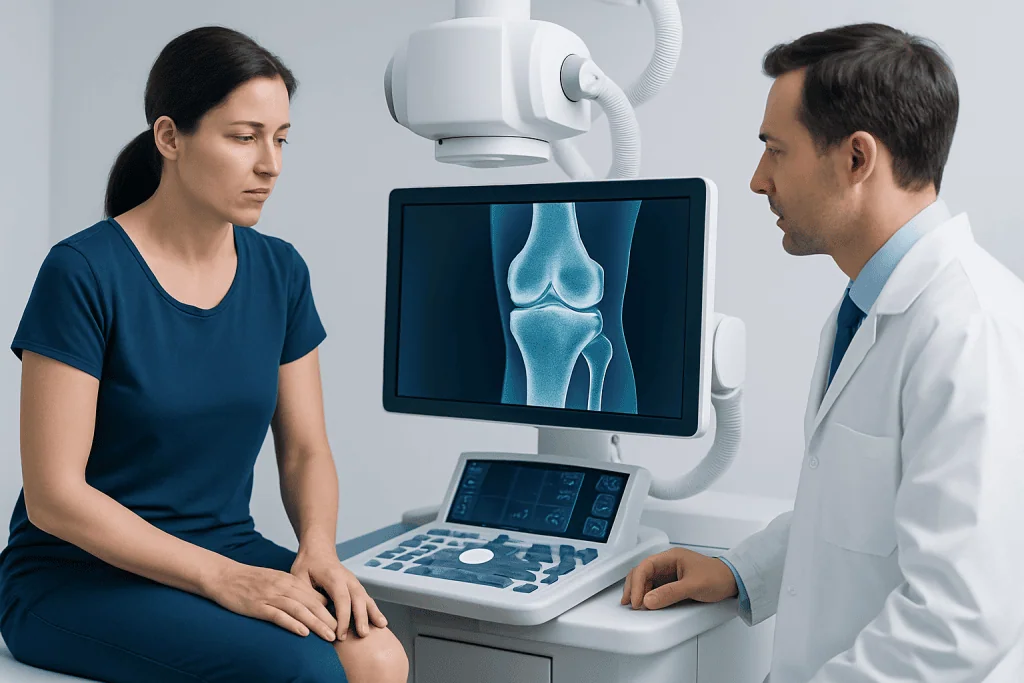
Symptoms depend on the cause, the joint involved, and how severe the problem is. Pain is often the most noticeable symptom, and it may appear only during movement at first or persist even at rest in more advanced conditions.
Other common symptoms include swelling, warmth, stiffness, clicking or popping, tenderness, and a reduced ability to move the joint fully. Some people also notice weakness, instability, or difficulty bearing weight if the knee, hip, or ankle is affected.
- Joint pain that worsens with activity
- Morning stiffness or stiffness after rest
- Swelling or a sense of fullness around the joint
- Reduced range of motion
- Redness or warmth in inflammatory conditions
When symptoms last for more than a short time, recur often, or interfere with daily tasks, the joint should be evaluated by a qualified doctor.
Synovial Joint Anatomy and Function

A synovial joint is designed to move freely. The ends of the bones are covered with articular cartilage, a smooth tissue that helps bones glide without rubbing directly against each other. This cartilage is important for shock absorption and joint protection.
Inside the joint is synovial fluid, a slippery substance made by the synovial membrane. It lubricates the joint, nourishes the cartilage, and helps movement stay smooth. Around the joint, the capsule and ligaments provide stability while still allowing motion.
Different synovial joints allow different types of movement. The shoulder and hip are ball-and-socket joints, the elbow acts mainly as a hinge joint, and the wrist allows a combination of motions. The specific shape of each joint matches the kind of movement the body needs.
Causes and Risk Factors
Synovial joint problems can develop from many causes. Some are related to injury, such as sprains, dislocations, cartilage damage, or repetitive strain. Others are linked to long-term wear and tear, autoimmune disease, infection, or crystal buildup in the joint.
Age is a major risk factor for degenerative joint problems because cartilage can gradually wear down over time. Repetitive motions, heavy physical work, sports injuries, obesity, and previous joint trauma can also increase stress on the joint.
Inflammatory conditions such as rheumatoid arthritis may affect the synovial lining itself, causing swelling and pain. Infections are less common but need prompt attention, especially if a joint becomes suddenly hot, swollen, and difficult to move.
Risk can also be influenced by family history, joint alignment, muscle weakness, and certain metabolic or autoimmune conditions. The exact pattern often helps doctors determine the underlying cause.
Diagnosis
Diagnosis usually begins with a medical history and physical examination. A doctor may ask when the symptoms started, which movements worsen them, whether there was an injury, and whether swelling or stiffness changes during the day.
Imaging tests can help evaluate the joint structure. X-rays are often used to look for bone changes, joint space narrowing, or signs of arthritis. Ultrasound or MRI may be recommended when soft tissues, cartilage, ligaments, or inflammatory changes need closer assessment.
In some cases, blood tests are used to look for signs of inflammation or autoimmune disease. If a joint is very swollen, a sample of joint fluid may be taken to help check for infection, crystals, or inflammatory cells.
Careful evaluation is important because many joint conditions can look similar at first. The goal is to identify the specific cause so treatment can be chosen appropriately.
Treatment Options
Treatment depends on the cause and severity of the problem. For many people, the first steps include rest from aggravating activities, ice or heat as appropriate, and gentle movement to prevent stiffness. Physical therapy is often helpful for improving strength, flexibility, and joint control.
Medicines may be used to ease pain and inflammation, depending on the diagnosis and the patient’s overall health. For inflammatory arthritis or certain other conditions, doctors may recommend targeted medical therapy to reduce joint damage and symptoms. In some cases, injections or procedures are used to relieve persistent pain or swelling.
When a joint is severely damaged or no longer functioning well, surgery may be considered. Depending on the joint and the problem, this may involve repairing soft tissue, removing damaged tissue, or replacing the joint. If surgery is being discussed, patients may find it helpful to review options such as joint replacement surgery or other orthopedic approaches with a specialist.
Non-surgical care is still an essential part of treatment for most synovial joint conditions. Even when a procedure is needed, rehabilitation usually plays a key role in recovery and return to function.
Prevention and Self-care
Not all synovial joint problems can be prevented, but many can be reduced with healthy habits. Maintaining a healthy body weight lowers stress on weight-bearing joints such as the knees, hips, and ankles. Regular exercise helps keep the muscles around the joints strong and supportive.
Low-impact activities such as walking, swimming, cycling, and structured stretching can help preserve mobility. It is also useful to warm up before activity, use proper technique during sports or work tasks, and avoid sudden overloads when possible.
People with recurring joint symptoms may benefit from pacing activities, alternating rest and movement, and using supportive footwear or assistive devices when recommended. If a doctor prescribes exercises, it is important to follow them consistently, since joint function often improves gradually.
Self-care should be gentle and realistic. The aim is to protect the joint without becoming inactive, because too little movement can make stiffness and weakness worse over time.
When to See a Doctor
Medical evaluation is recommended if joint pain lasts more than a few days, keeps returning, or limits work, sleep, exercise, or daily tasks. Swelling, stiffness, or reduced movement that does not improve should also be checked.
A doctor should be seen promptly if the joint becomes suddenly hot, very swollen, red, or difficult to move, especially after an injury or if fever is present. These symptoms can suggest a problem that needs timely treatment.
It is also important to seek evaluation if there is deformity, a feeling that the joint is giving way, numbness, or trouble putting weight on the joint. Early assessment can help protect joint function and guide the right treatment plan.
At Acibadem International, multidisciplinary specialists and JCI-accredited hospitals diagnose and treat joint conditions for international patients with coordinated, patient-centered care.
Synovial Joints in Everyday Life
Synovial joints make many ordinary activities possible, from turning a key to climbing stairs. Because these joints combine movement with stability, even small problems can have a noticeable effect on comfort and independence.
Understanding how they work can help patients make sense of symptoms and treatment recommendations. When pain or stiffness develops, it is often the result of irritation in one or more of the joint’s moving parts rather than the joint as a whole.
With the right diagnosis, most synovial joint problems can be managed effectively. A careful plan that matches the cause usually offers the best chance to reduce pain, preserve motion, and support long-term joint health.
Frequently asked questions
What makes a synovial joint different from other joints?
A synovial joint has a fluid-filled space that allows smooth movement between bones. It also includes cartilage, a capsule, and synovial fluid, which help reduce friction and support motion.
Which joints in the body are synovial joints?
Most movable joints are synovial joints. Common examples include the shoulders, hips, knees, elbows, wrists, ankles, and finger joints.
Why do synovial joints become painful or stiff?
Pain and stiffness may happen when cartilage wears down, the synovial lining becomes inflamed, ligaments are injured, or the joint is overused. Arthritis, sprains, bursitis, and infection are some possible causes.
Can synovial joint problems improve without surgery?
Yes, many do. Rest, physical therapy, activity changes, and appropriate medicines often help, depending on the cause and how advanced the problem is.
What tests are used to check a synovial joint problem?
Doctors often start with a physical exam and may order X-rays, ultrasound, or MRI. Blood tests or joint fluid analysis may also be used if inflammation or infection is suspected.
How can someone protect their synovial joints every day?
Regular low-impact exercise, healthy body weight, and good movement habits can reduce stress on the joints. It also helps to avoid repeated strain and to address symptoms early rather than waiting for them to worsen.
References
- National Institute of Arthritis and Musculoskeletal and Skin Diseases
- American Academy of Orthopaedic Surgeons
- Mayo Clinic
- Arthritis Foundation
- Merck Manual Consumer Version
This article is for general information only and is not a substitute for professional medical advice. Please consult a qualified doctor about your individual situation.
Joint and spine care in Turkey — expert assessment & treatment
JCI-accredited · board-certified surgeons · reply within 24h
Add us as a Preferred Source to see more of our trusted health content across Google Search, AI Overviews and Discover.

More from the Health Library



Related Specialists

Dt. Alen Palancıoğlu
Oral Dental & Maxillofacial Surgery
Dr. Ramiz Ahmadov
Neurosurgery
Prof. Dr. Akin Sabanci
Neurosurgery
Prof. Dr. Fatih Dikici
Orthopedic Surgery & Traumatology