What Is a VI Peel and How Does It Work?

A VI Peel is a professional chemical peel that combines exfoliating acids and other active ingredients. It may help selected people with acne, uneven tone, sun-related discoloration, fine lines and rough texture.
Key Takeaways
- A VI Peel is a professional chemical peel that combines exfoliating acids and other active ingredients.
- It may help selected people with acne, uneven tone, sun-related discoloration, fine lines and rough texture.
- Peeling, dryness, redness and temporary skin sensitivity are common during recovery.
- Results and risks depend on the skin concern, skin tone, peel formulation, preparation, application technique and aftercare.
- A dermatologist or appropriately trained medical professional can determine whether a chemical peel is suitable and help reduce complications.
A VI Peel is a branded chemical peel applied to the skin to promote controlled exfoliation and renewal. Most expected effects, including redness, tightness and visible peeling, are temporary; however, severe pain, blistering, swelling, infection or persistent pigment changes should be assessed by a qualified clinician.
What Is a VI Peel?
A VI Peel is a branded, in-office chemical peel designed to remove superficial layers of damaged skin and encourage skin renewal. In simple terms, a clinician applies a chemical solution to the skin for a set time. The skin then becomes temporarily dry and may peel over several days, revealing smoother-looking skin as healing progresses.
Most people experience expected, short-lived effects such as mild redness, tightness, flaking and visible peeling. These are usually harmless when the peel has been appropriately selected and performed. A clinician should be contacted promptly for severe or increasing pain, marked swelling, blisters, drainage, fever, spreading redness, or changes in skin color that persist beyond expected healing.
VI Peel products contain combinations of ingredients that may include trichloroacetic acid, salicylic acid, retinoic acid, phenol and vitamin C. Formulas vary, and some are marketed for concerns such as acne, pigmentation or signs of photoaging. Despite the name, a VI Peel is not one single standardized treatment experience: the appropriate formula, number of sessions and expected response differ from person to person.
What Can a VI Peel Help With?
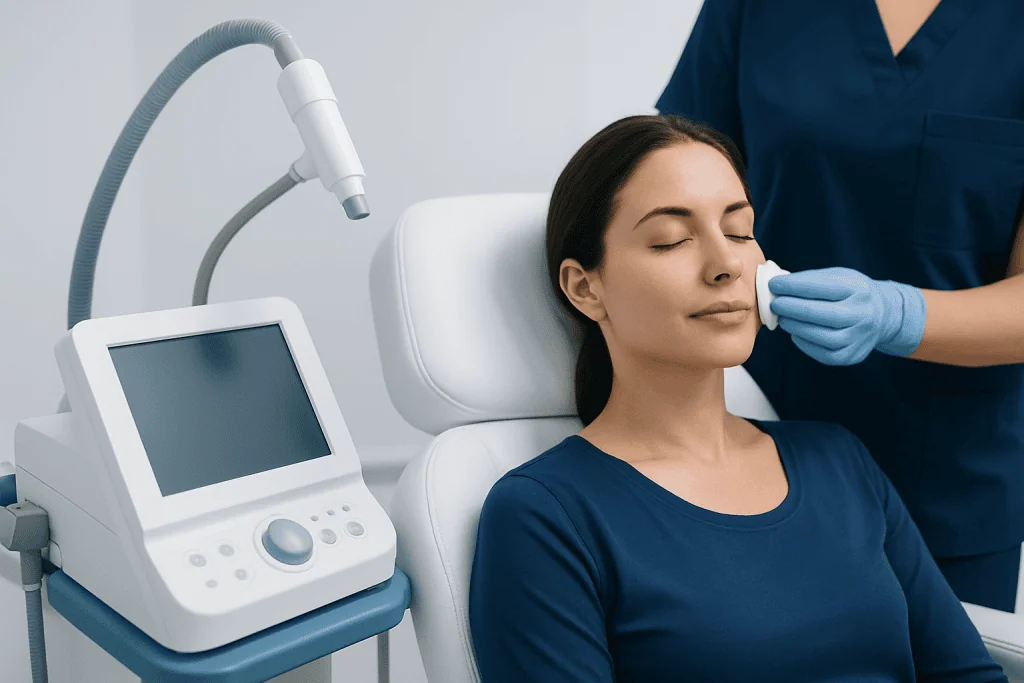
Chemical peels can improve the appearance of certain superficial skin concerns. Depending on the formulation and the individual’s skin, a VI Peel may be considered for uneven pigmentation, dullness, fine lines, rough texture, enlarged-looking pores, mild acne and some acne-related marks. It may also be used as part of a broader skin-care plan for sun-related changes.
The available evidence supports chemical peels as an option for selected dermatologic and cosmetic concerns, particularly acne and some forms of hyperpigmentation. However, research is generally stronger for chemical peel ingredients and peel depths as categories than for any individual brand. Outcomes also vary with the underlying cause of the concern, the patient’s skin type and tone, prior treatments, and consistent use of sun protection.
A peel does not permanently stop acne, erase scars, remove deep wrinkles or replace treatment for an underlying skin disease. For example, active inflammatory acne may need a medical plan alongside procedures; readers can learn more about acne and its treatment options. Deeper scars, pronounced laxity and more advanced sun damage may require different approaches.
What Happens During and After Treatment?

Before treatment, the clinician should review the person’s medical history, current medicines, skin-care products, allergies, previous cosmetic procedures and history of cold sores. They should also assess the skin concern and discuss realistic goals. In some cases, patients may be advised to pause irritating topical products beforehand or to use a skin-preparation routine; this should only be done under professional guidance.
During a VI Peel, the skin is cleansed and the solution is applied in one or more layers. A person may feel tingling, warmth or stinging. The procedure is generally brief, and the exact instructions for washing the product off, moisturizing and avoiding certain products depend on the formula used and the clinician’s protocol.
Peeling commonly begins after a short delay and may continue for several days. It is important not to pull, pick or scrub peeling skin, as this can increase irritation, bleeding, infection and pigment changes. Gentle cleansing, bland moisturizer and daily broad-spectrum sunscreen are central parts of recovery. A clinician may recommend avoiding other exfoliants, retinoids, waxing, excessive heat and strenuous activities for a limited period.
Risks, Side Effects and Who Needs Extra Caution
Temporary redness, dryness, itching, tightness, flaking and sensitivity are common after a chemical peel. Some people may develop acne-like breakouts or temporary darkening or lightening of the skin. The chance of unwanted pigment change can be higher in deeper skin tones and in people prone to post-inflammatory hyperpigmentation, particularly if the skin becomes inflamed or receives sun exposure during healing.
Less common but more significant complications include prolonged redness, persistent discoloration, infection, scarring, allergic reactions and reactivation of herpes simplex infection in people with a history of cold sores. Chemical peels should be performed by trained professionals who can select an appropriate peel depth, recognize risks and provide clear aftercare instructions.
Extra caution is needed for people with active skin infection, eczema or severe irritation in the treatment area, a tendency to develop raised scars, recent tanning or sunburn, or a history of pigment changes after injury. Pregnancy, breastfeeding, use of certain medicines, and recent procedures may also affect suitability. The clinician may recommend delaying treatment or choosing a gentler alternative. People with recurrent cold sores may need preventive management prescribed by their clinician.
- Do not apply a professional-strength peel to broken, infected or sunburned skin.
- Do not combine a peel with unapproved at-home acids, scrubs or retinoids during recovery.
- Tell the clinician about prescription acne medicines, immune-suppressing medicines and any history of keloid scarring or pigment changes.
How Clinicians Assess Skin Concerns Before a Peel
Good treatment begins with identifying the cause of the skin concern rather than assuming a peel is the answer. A dermatologist or qualified clinician will ask when the problem began, whether it changes with hormones, medications or sun exposure, and whether there are symptoms such as pain, itch, scaling or bleeding. They may examine the distribution, color and texture of the affected skin and review prior reactions to products or procedures.
Most cosmetic concerns can be assessed through a clinical skin examination. If a lesion is changing, asymmetrical, bleeding, crusting or difficult to identify, the clinician may advise a dermatologic evaluation before any cosmetic procedure. In selected cases, additional testing, dermoscopy, photographs for monitoring, or a biopsy may be appropriate to clarify the diagnosis.
For brown patches on the face, a clinician may distinguish post-inflammatory hyperpigmentation from melasma or other causes of discoloration. Melasma often needs a long-term approach that includes strict photoprotection and targeted topical treatment; a peel may be helpful for some people but can also trigger worsening if it causes excessive irritation.
Evidence-Based Alternatives and Complementary Care
A chemical peel is only one option for skin renewal. Daily broad-spectrum sunscreen, gentle cleansing, appropriate moisturization and a clinician-guided topical routine can make a meaningful difference for many concerns. Depending on the diagnosis, topical retinoids, azelaic acid, benzoyl peroxide, pigment-targeting agents or other prescribed medicines may be recommended.
For acne, treatment often focuses on preventing new lesions as well as improving existing marks. For pigmentation, minimizing ultraviolet and visible-light exposure is especially important. A dermatologist can help balance benefits and risks when combining topical therapies with procedures, since using too many active products at once can disrupt the skin barrier.
Other office-based options may include superficial peels, microneedling, laser or light-based treatments, and prescription dermatology care. Chemical peel treatment may be tailored by peel depth and active ingredient rather than chosen by brand alone. The safest choice depends on the diagnosis, skin tone, healing tendency, lifestyle and desired downtime.
When to Seek Medical Care
After a professionally performed peel, mild tightness, flaking and peeling are generally expected. Medical review is advisable if symptoms are more intense than expected or fail to improve. Prompt assessment can help prevent a minor reaction from becoming more serious and can guide appropriate treatment.
Seek urgent medical advice for severe burning or pain, rapidly increasing swelling, large blisters, pus or drainage, fever, spreading redness, facial swelling, trouble breathing, eye involvement, or signs of an allergic reaction. A person should also contact the treating clinician if they develop persistent dark or light patches, a cold sore outbreak, or redness and irritation lasting longer than the advised recovery period.
People considering a peel should arrange an assessment first if they have a changing mole or unexplained lesion, active rash, frequent cold sores, a history of scarring, or darker skin that has previously developed pigment changes after irritation. Acibadem International’s multidisciplinary specialists and JCI-accredited hospitals can assess skin concerns and provide individualized dermatologic care for international patients.
Frequently asked questions
Is a VI Peel painful?
A person may feel tingling, warmth or stinging while the solution is applied. Discomfort is usually temporary, but severe or worsening pain is not expected and should be reported to the treating clinician.
How long does peeling last after a VI Peel?
Visible peeling often starts after a short delay and can last several days, although recovery varies by formula, skin type and aftercare. The skin may remain somewhat dry or sensitive for longer. Picking or manually removing peeling skin should be avoided.
Can a VI Peel treat acne scars?
A peel may improve superficial discoloration and texture associated with acne, but it is less likely to substantially improve deep or indented scars. A dermatologist can identify the scar type and discuss suitable options, which may include a combination of treatments.
Is a VI Peel safe for darker skin tones?
Chemical peels can be used in darker skin tones, but careful selection and preparation are important because irritation can lead to post-inflammatory hyperpigmentation. An experienced clinician should assess the individual’s skin, history of pigment changes and treatment goals before proceeding.
Can someone use retinol after a VI Peel?
Retinol and other retinoids can be irritating during peel recovery, so they are commonly paused until the skin has healed and the clinician says it is appropriate to restart. The timing depends on the peel, the person’s skin response and other products being used.
How many VI Peel treatments are needed?
The number of treatments depends on the concern being addressed, the peel formulation and how the skin responds. Some people may see a change after one treatment, while others need a series or benefit more from another treatment plan. A qualified clinician can set realistic expectations after assessment.
References
- American Academy of Dermatology
- U.S. Food and Drug Administration
- American Society for Dermatologic Surgery
- Mayo Clinic
- DermNet
This article is for general information only and is not a substitute for professional medical advice. Please consult a qualified doctor about your individual situation.
Explore treatments in Turkey — costs, top hospitals & a free quote
JCI-accredited · board-certified surgeons · reply within 24h
Add us as a Preferred Source to see more of our trusted health content across Google Search, AI Overviews and Discover.

More from the Health Library



Related Specialists

Dr. Nadire Sevda İdil
Gynecology & Obstetrics
Dr. Sezgi Güllü Erciyestepe
Gynecology & Obstetrics
Dr. Hülya Yıldız Bayar
Neurology
Prof. Dr. Serkan Şener
Emergency Service