What Is an Infusion Nurse: Procedure, Recovery and Results

Infusion nurses administer prescribed therapies through intravenous lines, central lines or implanted ports. They assess patients before, during and after treatment and respond promptly to infusion-related reactions.
Key Takeaways
- Infusion nurses administer prescribed therapies through intravenous lines, central lines or implanted ports.
- They assess patients before, during and after treatment and respond promptly to infusion-related reactions.
- An infusion appointment varies by medication, condition, access type and the individual treatment plan.
- Many people can return to usual light activities after an infusion, although temporary tiredness or other treatment-specific effects may occur.
- Urgent symptoms such as breathing difficulty, facial swelling, chest pain or fainting need immediate medical attention.
An infusion nurse is a registered nurse with specialized skills in giving medicines, fluids, blood products or nutrition through a vein while monitoring patient safety and comfort. They work with physicians, pharmacists and other healthcare professionals in hospitals, clinics, outpatient infusion centers and home-care settings.
What Is an Infusion Nurse?
An infusion nurse is a registered nurse (RN) who has training and experience in giving treatments through a vein, a process called intravenous or IV infusion. These professionals prepare patients for treatment, safely administer prescribed therapies, observe for side effects and provide clear advice about care after the appointment. An infusion nurse may also be called an infusion RN, infusion registered nurse, IV therapy nurse or infusion therapy nurse.
Infusions can deliver medicines, fluids, electrolytes, blood products, nutrition or certain biologic treatments directly into the bloodstream. This route is used when a treatment needs to work steadily over time, cannot be taken by mouth, or requires close monitoring. The nurse follows the prescribing clinician’s plan and works closely with pharmacy, laboratory and specialist teams.
Infusion nursing is not limited to one medical specialty. It may support people receiving cancer treatment, immune therapies, antibiotics, treatments for inflammatory conditions, hydration, iron replacement, or therapies after surgery. The treatment itself is prescribed for a specific health need; the infusion nurse’s role is to make its delivery as safe, accurate and comfortable as possible.
How Infusion Treatment Works and Who May Need It
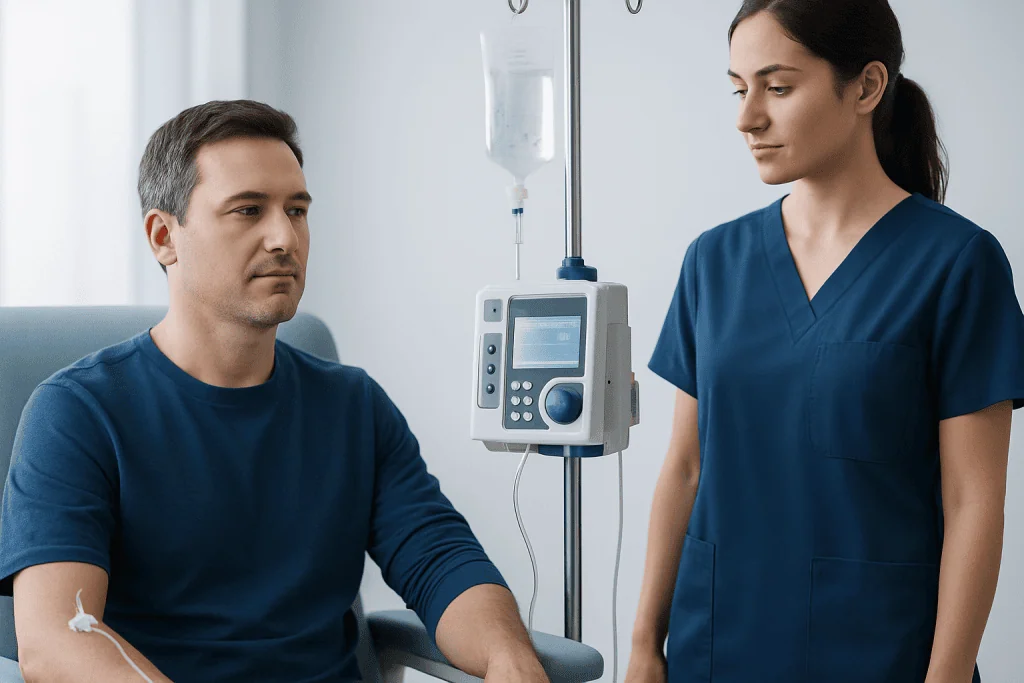
What is the procedure for an infusion? In simple terms, a clinician prescribes a treatment, a qualified professional confirms that it is appropriate to give, and the medication or fluid is delivered through a small tube placed into a vein. The infusion may use a short peripheral IV in the hand or arm, or a longer-term device such as a central venous catheter or implanted port when repeated treatment is needed.
Infusion therapy may be recommended for people who need medication that is not suitable or effective by mouth, require a controlled delivery rate, or benefit from observation during treatment. The decision depends on the diagnosis, treatment goals, previous responses, vein access, medical history and practical needs. A doctor or specialist team explains why an infusion is being considered and what alternatives may exist.
What is an infusion after surgery? It is commonly an IV treatment used during the early recovery period to provide fluids, pain relief, antibiotics, nutrition or other prescribed medicines. Not every surgical patient needs the same infusion or duration. The care team adjusts treatment according to the operation, recovery progress, ability to drink and eat, laboratory results and any medical conditions.
Before beginning, patients should tell the clinical team about allergies, prior infusion reactions, pregnancy, current medicines, supplements, kidney or liver problems and recent illness. This information helps the team plan monitoring and reduce avoidable risks.
The Infusion Procedure: Step by Step

Although details vary by treatment, an infusion visit usually begins with a check-in and clinical assessment. The infusion nurse confirms the patient’s identity, reviews the prescription, asks about new symptoms and allergies, checks relevant observations and may review laboratory results. For some therapies, a doctor’s assessment or pre-treatment medicines are needed before the infusion can start.
The nurse then prepares the IV access using careful infection-control procedures. A small cannula may be inserted into a vein, or an existing port or central line may be accessed. The prescribed product is checked according to safety protocols and connected to an infusion pump or gravity line. Pumps help deliver the treatment at the intended rate.
During the infusion, the nurse checks the IV site and monitors how the person feels. Depending on the therapy, monitoring may include blood pressure, pulse, temperature, oxygen level and symptoms such as itching, rash, nausea, headache, chills or discomfort at the access site. If an adverse reaction is suspected, the nurse can slow or stop the infusion, provide initial care under established protocols and involve the prescribing clinician promptly.
At the end, the line is flushed or removed when appropriate, and the nurse reviews discharge instructions. These can include expected effects, fluid intake, activity guidance, medication reminders, follow-up tests and symptoms that should prompt medical advice. Patients should ask questions whenever instructions are unclear.
What Does an RN Infusion Nurse Do?
An RN infusion nurse combines technical IV skills with ongoing clinical assessment. Their responsibilities include verifying orders, checking treatment safety, establishing and maintaining venous access, administering infusions, monitoring response and documenting care. They also educate patients and families so they understand the purpose of treatment and know what to report after leaving the clinic.
Infusion nurses play an important role in preventing errors. They use identity checks, medication safety processes, infection-prevention measures and prescribed observation procedures. They also recognize signs of problems such as infiltration, where fluid enters tissue around the IV rather than the vein, phlebitis or vein inflammation, and possible allergic or infusion reactions.
What is an infusion nurse practitioner? An infusion nurse practitioner is an advanced practice nurse who may have broader clinical responsibilities than an infusion RN, depending on local regulations and qualifications. They may assess symptoms, order or interpret certain tests, prescribe or adjust treatments within their authorized scope, and coordinate care with physicians. An infusion RN generally administers and monitors treatment under a prescribed plan rather than independently prescribing it.
Infusion nursing can be demanding because it requires focused attention, accurate medication administration, good communication and readiness to respond to changing symptoms. However, structured protocols, teamwork and specialist training support safe practice. Whether infusion nursing is difficult depends on the setting, therapy complexity and the nurse’s experience, but it is a skilled and highly patient-centered role.
What Is a Typical Day for an Infusion RN?
A typical day for an infusion RN starts with reviewing the schedule, prescribed treatments, laboratory requirements and any special precautions. The nurse prepares the treatment area, checks emergency equipment and coordinates with pharmacy and medical teams to ensure that ordered medicines and supplies are available. Some patients need brief assessments before every visit, while others require more extensive review because of complex conditions or recent symptoms.
Throughout the day, the nurse inserts IV lines or accesses ports, starts infusions and monitors several patients at different stages of treatment. They answer questions, provide reassurance, document observations and communicate important changes to the medical team. Timing can vary considerably: some infusions take less than an hour, while others involve pre-medication, observation and a longer administration period.
Patient education is also central to the role. An infusion RN may explain how to protect an IV site, identify symptoms of infection, manage common treatment effects, arrange follow-up appointments and prepare for the next dose. In hospital settings, nurses may also coordinate infusions around scans, surgery, meals, mobility needs and discharge planning.
At Acibadem International, multidisciplinary specialists and JCI-accredited hospitals support international patients who need coordinated infusion-based care as part of a broader treatment plan. The appropriate service depends on the underlying condition and the therapy prescribed by the treating clinician.
Benefits, Risks and Recovery After an Infusion
The main benefit of infusion treatment is that it delivers a prescribed therapy directly into the bloodstream in a controlled setting. This can be useful for medicines that need reliable absorption, gradual administration or close observation. The infusion nurse’s monitoring helps identify side effects early and gives patients an opportunity to discuss symptoms and practical concerns during treatment.
Risks depend mainly on the specific medicine or fluid, but may include pain, bruising or irritation at the IV site; infiltration; infection; nausea; headache; dizziness; or an infusion reaction. Some reactions are mild and improve with treatment adjustments. Serious allergic reactions are uncommon but require immediate care, which is why monitoring and emergency preparedness are important parts of infusion services.
How do you feel after an infusion treatment? Some people feel no different and can continue normal daily activities, while others may feel temporarily tired, light-headed, cold, nauseated or achy. These effects may relate to the medicine, the original condition, hydration, the length of the visit or pre-treatment medicines. The care team can explain the effects most likely with a particular infusion.
Recovery has no single timeline. After a simple fluid infusion, a person may feel better the same day. After a treatment used for infection, cancer, immune disease or postoperative care, recovery and symptom changes may unfold over days or longer. Following the individual care plan, resting when needed and reporting concerning symptoms are more useful than comparing one person’s response with another’s.
When to Seek Medical Care
Patients should contact their treating team promptly if they develop increasing pain, redness, warmth, swelling, drainage or fever after an IV line or port has been used. They should also seek advice for persistent vomiting, worsening weakness, severe headache, new rash, or symptoms that are not listed as expected effects in their treatment instructions.
Emergency medical care is needed for trouble breathing, wheezing, swelling of the lips, tongue or face, chest pain, fainting, severe confusion or rapidly worsening symptoms during or after an infusion. These signs may indicate a serious reaction or another urgent medical problem. Patients should not drive themselves if they feel faint or severely unwell.
Before a planned infusion, patients should let the clinic know about a fever, active infection, new antibiotic use, recent hospital admission or possible pregnancy. Depending on the medication, the appointment may need additional assessment or rescheduling. It is safer to ask the care team than to assume a new symptom is unrelated.
For ongoing treatment, patients should keep scheduled blood tests and specialist reviews. These checks help the team assess whether treatment remains safe and effective and whether the infusion plan should be changed.
Frequently asked questions
Is infusion nursing difficult?
Infusion nursing is a specialized area of registered nursing that requires strong IV-access skills, medication safety knowledge and close patient observation. Nurses must be able to recognize potential reactions and communicate effectively with patients and the wider clinical team. Training, protocols and experience help support safe care.
What does an RN infusion nurse do?
An RN infusion nurse administers prescribed IV medicines, fluids, blood products or nutrition and monitors the patient during treatment. They check treatment orders, assess symptoms, manage IV or port access, respond to side effects and provide aftercare education. They work under the treatment plan established by the responsible clinician.
How do you feel after an infusion treatment?
Feelings after an infusion vary according to the treatment and the person’s health condition. Some people feel unchanged or improved, while others experience temporary fatigue, nausea, headache, chills or light-headedness. The treating team can explain expected effects and should be contacted about severe, persistent or unexpected symptoms.
What is a typical day for an infusion RN?
An infusion RN reviews treatment plans, assesses patients, prepares IV access, administers therapies and monitors patients throughout the day. They also coordinate with pharmacists and clinicians, document care and teach patients about side effects and follow-up. The pace and responsibilities differ between hospitals, outpatient units and home-infusion services.
What is the procedure for an infusion?
An infusion usually involves a clinical assessment, placement or access of an IV line, and controlled delivery of the prescribed treatment through a pump or drip. The nurse observes the patient and IV site during treatment, then provides instructions before discharge. The length of the procedure depends on the medicine, dose, access type and monitoring requirements.
What is an infusion after surgery?
An infusion after surgery is IV treatment given to support recovery, such as fluids, pain medicine, antibiotics, nutrition or other prescribed therapies. Its purpose and duration depend on the operation and the patient’s recovery needs. The surgical team decides when IV treatment can be reduced or stopped.
References
- Infusion Nurses Society
- American Nurses Association
- U.S. Food and Drug Administration
- National Cancer Institute
- World Health Organization
This article is for general information only and is not a substitute for professional medical advice. Please consult a qualified doctor about your individual situation.
Explore treatments in Turkey — costs, top hospitals & a free quote
JCI-accredited · board-certified surgeons · reply within 24h
Add us as a Preferred Source to see more of our trusted health content across Google Search, AI Overviews and Discover.
Check your numbers in seconds
BMI, calories, due date, blood pressure and 30+ more clinical calculators — free, instant, doctor-reviewed ranges.

More from the Health Library



Related Specialists

Fzt. Dilek Küçükvardar
Physical Medicine & Rehabilitation
Dr. Mehmet Can Şahin
Inpatient Clinic Physicians
Assoc. Prof. Dr. Tansel Türkoğlu
Cardiovascular Surgery
Prof. Dr. Derya Eroğlu
Gynecology & Obstetrics