What Is Brain Physiology? How the Brain Controls Signals, Senses, and Movement

Brain physiology focuses on how nerve cells and brain networks communicate. The brain controls movement, sensation, memory, emotion, and automatic body functions.
Key Takeaways
- Brain physiology focuses on how nerve cells and brain networks communicate.
- The brain controls movement, sensation, memory, emotion, and automatic body functions.
- Electrical and chemical signals allow different parts of the brain to work together.
- Healthy sleep, exercise, nutrition, and vascular health support normal brain function.
- Changes in movement, speech, sensation, or consciousness should be medically assessed.
Brain physiology describes how the brain receives information, processes it, and sends signals that guide movement, sensation, thought, and vital body functions. Understanding these processes can help explain how the nervous system supports daily life and what happens when brain pathways are disrupted.
Overview: What brain physiology means
Brain physiology is the study of how the brain functions. It looks at how brain cells create and transmit signals, how different brain regions communicate, and how these processes allow the body to sense, think, feel, move, and maintain essential automatic functions such as breathing and heart rate regulation. In simple terms, it explains how the brain does its job every moment of the day.
The brain is part of the central nervous system, along with the spinal cord. It receives information from the eyes, ears, skin, muscles, and internal organs. It then interprets this information and sends instructions back through nerve pathways. This constant exchange helps a person respond to the environment, maintain balance, remember experiences, and perform both simple and complex actions.
Brain physiology also includes communication at the microscopic level. Billions of nerve cells called neurons send electrical impulses and chemical messages to one another. Supporting cells, blood vessels, and protective barriers all help create the conditions the brain needs to function well. Because these systems are closely connected, changes in one area can affect many aspects of health.
How the brain sends and receives signals
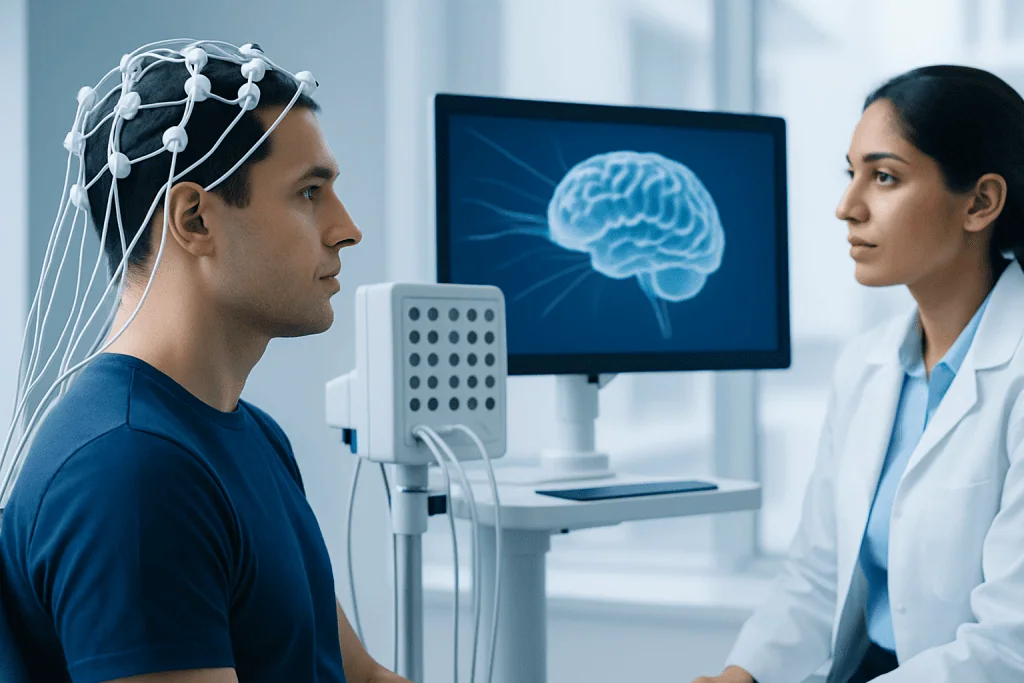
The brain works through specialized cells called neurons. A neuron receives input, processes it, and passes a signal onward. These signals travel as tiny electrical impulses along the nerve cell and then cross small gaps between cells, called synapses, using chemical messengers known as neurotransmitters. This is the basic language of the nervous system.
Different neurotransmitters have different roles. Some help activate brain circuits, while others help calm or regulate them. Balanced signaling is important for attention, mood, movement, sleep, and learning. Brain physiology therefore depends not only on whether a signal is sent, but also on its timing, strength, and coordination across networks.
The brain also relies on highly organized pathways. Sensory pathways bring information in from the body and the outside world. Motor pathways send commands out to muscles. Other networks connect areas involved in memory, planning, language, and emotion. These circuits are not isolated; they interact continuously, allowing a person to make decisions, adapt behavior, and carry out purposeful actions.
In addition, the brain is protected and supported by several important systems. Cerebrospinal fluid cushions the brain, blood vessels provide oxygen and glucose, and the blood-brain barrier helps control which substances can enter brain tissue. When blood flow, oxygen delivery, or metabolic support is interrupted, brain function can change quickly.
How the brain controls the senses
Sensory processing is one of the clearest examples of brain physiology in action. The brain receives signals related to sight, hearing, touch, taste, smell, body position, and pain. These signals first arise in sensory receptors, then travel through nerves and relay stations before reaching the brain areas that identify and interpret them.
The cerebral cortex contains regions that are especially important for sensory awareness. For example, the occipital lobe is mainly involved in vision, the temporal lobe plays a major role in hearing, and the parietal lobe helps process touch and spatial awareness. However, perception is not handled by one area alone. The brain combines information from many regions so a person can recognize an object, understand speech, or react to danger.
Brain physiology also explains why sensation is more than simple detection. The brain filters, prioritizes, and interprets incoming signals based on attention, past experience, and current needs. That is why the same sound may be ignored in one situation but noticed immediately in another. It also helps explain symptoms seen in some neurological conditions, where sensation may be normal at the receptor level but processing in the brain is altered.
When sensory pathways are affected by injury or disease, symptoms can include numbness, tingling, vision changes, hearing changes, dizziness, or difficulty recognizing stimuli. In some cases, doctors may use neurological examination and tests such as electroencephalography (EEG) or imaging studies to better understand how brain activity and sensory pathways are functioning.
How the brain controls movement and coordination
Movement begins in the brain before a muscle contracts. Areas in the frontal lobe help plan, initiate, and control voluntary movement. Signals then travel from the motor cortex through the brainstem and spinal cord to the nerves that activate muscles. This process allows a person to speak, walk, write, swallow, or raise a hand.
Efficient movement depends on more than muscle strength. The cerebellum helps fine-tune movement, balance, posture, and coordination. The basal ganglia help regulate movement patterns and smooth initiation. Sensory feedback from muscles, joints, and the inner ear tells the brain where the body is in space, allowing constant adjustment. Brain physiology therefore links movement closely to sensation and timing.
When these systems work together well, movement appears effortless. When they do not, symptoms may include tremor, stiffness, poor balance, slowed movement, weakness, clumsiness, or involuntary movements. These patterns can help doctors identify whether a problem may involve the motor cortex, cerebellum, peripheral nerves, or other pathways.
Some disorders affecting movement are tied directly to changes in brain physiology, including Parkinson's disease and conditions that affect motor pathways after brain injury. Clinical assessment may include neurological examination, gait testing, and in selected cases tests such as electromyography (EMG) to help evaluate muscles and the nerve signals that control them.
Brain functions beyond senses and movement
Although sensation and movement are central parts of brain physiology, the brain also regulates many higher and automatic functions. The frontal lobes support planning, decision-making, impulse control, and aspects of personality. The temporal lobes contribute to memory and language. Deeper structures, including the limbic system, help regulate emotion, motivation, and stress responses.
The brainstem and hypothalamus are essential for life-sustaining functions. They help control breathing, sleep-wake cycles, blood pressure, temperature regulation, hunger, thirst, and hormone signaling. Many of these processes happen automatically, without conscious effort, yet they depend on precise coordination within the nervous system.
Brain physiology also includes neuroplasticity, the brain’s ability to adapt. Brain networks can strengthen with learning and practice, and in some situations they can partly reorganize after injury. This is one reason rehabilitation can be effective after neurological illness. It also helps explain why sleep, repetition, and stimulation are so important for learning and recovery.
Changes in brain physiology can affect cognition and behavior as well as physical function. Difficulty with attention, memory, language, mood, or problem-solving may reflect changes in brain networks. These symptoms can occur in many conditions, from temporary metabolic disturbances to degenerative diseases such as Alzheimer's disease.
What can affect normal brain physiology
Brain function can be influenced by many internal and external factors. Adequate oxygen, stable blood flow, normal blood sugar, good sleep, hydration, and proper nutrition all support healthy brain activity. Even short-term disruptions, such as severe sleep deprivation, dehydration, or low blood sugar, can temporarily affect concentration, reaction time, and mood.
Medical conditions may also disrupt brain physiology. Stroke, seizures, infections, inflammation, traumatic brain injury, tumors, autoimmune disorders, and neurodegenerative diseases can change how brain cells and networks work. Some problems affect the brain directly, while others reduce its support systems, such as blood supply or chemical balance. For example, abnormal electrical activity is central to epilepsy.
Medicines, alcohol, toxins, and recreational drugs can alter brain signaling as well. In some cases these effects are expected and therapeutic, such as medicines used for pain control, sleep, or neurological disorders. In other cases they may cause side effects like drowsiness, confusion, slowed reaction time, or impaired coordination.
Age is another factor, but normal aging and disease are not the same. Some slowing in processing speed can occur over time, yet major changes in memory, language, mobility, or consciousness should not be dismissed as normal aging. A proper medical evaluation can help distinguish everyday variation from a neurological problem.
How doctors assess brain physiology
Assessment usually begins with a detailed medical history and neurological examination. A doctor may ask about symptoms such as weakness, numbness, headache, balance problems, speech changes, memory concerns, blackouts, or unusual movements. The examination often checks strength, reflexes, sensation, coordination, eye movements, balance, and mental status.
Depending on the concern, additional tests may be used to study brain structure and function. Brain imaging such as MRI or CT can help identify bleeding, stroke, tumors, inflammation, or structural changes. Functional tests may be used to evaluate electrical activity or nerve conduction. In some situations, sleep studies, blood tests, or cognitive assessments are also helpful.
Neurophysiological testing is especially useful when doctors need to understand how signals are traveling through the nervous system. This may include EEG for brain wave activity, nerve conduction studies, evoked potential tests for sensory pathways, or EMG for muscle and nerve function. The choice of test depends on the symptoms and suspected cause.
For international patients seeking evaluation of neurological symptoms, Acibadem International offers multidisciplinary care in JCI-accredited hospitals, where specialists in neurology, neurophysiology, imaging, and rehabilitation work together to diagnose and treat disorders affecting brain function.
Supporting brain health and knowing when to seek care
While not every neurological condition can be prevented, many everyday habits help support healthy brain physiology. Regular physical activity promotes blood flow and vascular health. Good sleep supports memory, attention, and metabolic recovery. A balanced diet, social engagement, mental activity, and control of blood pressure, cholesterol, and diabetes can also help protect long-term brain function.
Avoiding smoking, limiting alcohol, and using medicines only as directed are also important. Protecting the head during sports, cycling, and driving can reduce the risk of traumatic brain injury. People who live with chronic neurological disorders may benefit from structured follow-up, rehabilitation, and education about symptom triggers and warning signs.
Medical advice should be sought promptly for sudden weakness, facial drooping, speech difficulty, new confusion, seizure-like activity, severe or unusual headache, loss of consciousness, or a sudden change in vision or balance. These symptoms do not always mean a serious emergency, but they should be evaluated without delay because quick treatment can matter.
For ongoing concerns such as progressive memory changes, tremor, numbness, persistent dizziness, or unexplained coordination problems, a scheduled neurological assessment is also important. Early evaluation can help identify reversible causes, guide treatment, and improve day-to-day function and quality of life.
Frequently asked questions
What is brain physiology in simple terms?
Brain physiology is the study of how the brain works. It explains how brain cells send signals, how different brain regions communicate, and how these processes allow a person to move, feel, think, remember, and regulate automatic body functions.
How does the brain send messages to the body?
The brain sends messages through networks of nerve cells called neurons. These cells use electrical impulses and chemical messengers to pass information through the brain, spinal cord, and peripheral nerves to muscles and organs.
Which parts of the brain control movement?
Movement depends on several brain regions working together. The motor cortex helps start voluntary movement, the cerebellum supports balance and coordination, and the basal ganglia help regulate movement patterns and smooth control.
How does the brain process the senses?
Sensory receptors collect information such as light, sound, touch, and smell, then send it through nerve pathways to the brain. The brain interprets these signals, combines them with memory and attention, and creates meaningful perception.
Can brain physiology change over time?
Yes. The brain can adapt through a process called neuroplasticity, which supports learning and recovery. Brain physiology can also change because of aging, sleep, medications, stress, injury, or neurological disease.
What tests evaluate brain physiology?
Doctors may use a neurological examination, brain imaging, EEG, nerve conduction studies, EMG, or evoked potential tests. The best test depends on the symptoms and whether the concern involves brain activity, sensory pathways, or movement control.
When should someone see a doctor about possible brain function problems?
Medical care is important for sudden changes such as weakness, speech problems, confusion, seizures, fainting, severe headache, or sudden vision loss. Ongoing issues like memory decline, tremor, numbness, or balance problems should also be professionally evaluated.
References
- World Health Organization
- National Institute of Neurological Disorders and Stroke
- MedlinePlus
- National Institute on Aging
- Centers for Disease Control and Prevention
This article is for general information only and is not a substitute for professional medical advice. Please consult a qualified doctor about your individual situation.
Heart care in Turkey — expert evaluation and treatment
JCI-accredited · board-certified surgeons · reply within 24h
Add us as a Preferred Source to see more of our trusted health content across Google Search, AI Overviews and Discover.
Check your numbers in seconds
BMI, calories, due date, blood pressure and 30+ more clinical calculators — free, instant, doctor-reviewed ranges.

More from the Health Library



Related Specialists

Pdg. Fulya Sari
Podiatry & Foot Health
Prof. Dr. Taner Güneş
Orthopedic Surgery & Traumatology
Dr. İpek Yıldız Tüzken
Anesthesiology
Dr. Fatmanur Yildirim
Physical Medicine & Rehabilitation