What Is Interventional Neurology?

Interventional neurology treats certain brain and spinal conditions through tiny catheters guided inside blood vessels. It is commonly used for stroke, brain aneurysms, arteriovenous malformations, and narrowed blood vessels.
Key Takeaways
- Interventional neurology treats certain brain and spinal conditions through tiny catheters guided inside blood vessels.
- It is commonly used for stroke, brain aneurysms, arteriovenous malformations, and narrowed blood vessels.
- These procedures may reduce the need for open surgery and can shorten recovery time for selected patients.
- Imaging tests such as CT, MRI, and angiography help specialists decide whether treatment is appropriate.
- Fast medical evaluation is essential when symptoms of stroke or sudden neurological change appear.
Interventional neurology is a subspecialty that uses image-guided, minimally invasive procedures to diagnose and treat conditions affecting the brain, spine, head, neck, and blood vessels. It is often used in emergencies such as stroke, as well as for planned treatment of aneurysms, vascular malformations, and other neurovascular disorders.
Overview of Interventional Neurology
Interventional neurology is a highly specialized field focused on diagnosing and treating disorders of the brain, spinal cord, head, neck, and blood vessels using minimally invasive techniques. Instead of making a large surgical opening, the specialist usually inserts a thin tube called a catheter through a blood vessel, often starting in the wrist or groin, and carefully guides it to the area that needs treatment using real-time imaging.
This approach is especially important for neurovascular conditions, meaning problems involving the blood vessels that supply the brain and nervous system. It may be used to remove a blood clot during an acute stroke, seal a brain aneurysm, treat an abnormal connection between blood vessels, or open a narrowed artery. Some procedures are done urgently, while others are planned after detailed evaluation.
Interventional neurology often overlaps with neurology, neurosurgery, neuroradiology, emergency medicine, and intensive care. Because many neurological conditions are complex, care is commonly delivered by a multidisciplinary team. The aim is to provide precise treatment while reducing trauma to the body, preserving healthy tissue, and supporting the best possible recovery.
What Conditions Can It Treat?
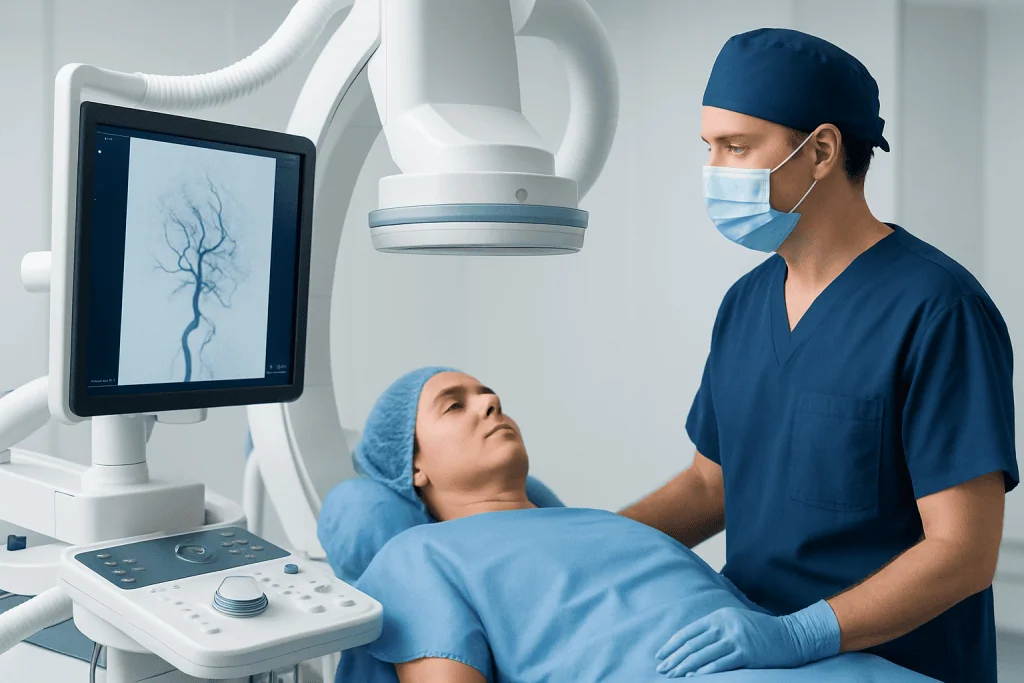
Interventional neurology is most often used for conditions that affect the blood vessels of the brain and spinal cord. One of the best-known examples is acute ischemic stroke, which happens when a blood clot blocks blood flow to part of the brain. In selected patients, a catheter-based procedure may be used to remove the clot and restore circulation quickly. This can be part of emergency stroke treatment planning when imaging shows that the patient may benefit.
Another major area is the treatment of brain aneurysms, which are weakened, bulging areas in a blood vessel wall. Some aneurysms can be treated from inside the blood vessel using coils, flow-diverting stents, or other devices, rather than open surgery. Interventional neurology may also help manage arteriovenous malformations and fistulas, which are abnormal blood vessel connections that can lead to bleeding or other neurological symptoms.
Other possible uses include opening narrowed carotid or intracranial arteries, evaluating unexplained bleeding, and treating certain vascular causes of headaches, pulsatile tinnitus, or spinal cord symptoms. In some settings, specialists may also perform advanced diagnostic angiography to map the blood vessels in great detail before a treatment decision is made.
- Acute ischemic stroke caused by a large vessel blockage
- Brain aneurysms
- Arteriovenous malformations and dural arteriovenous fistulas
- Carotid artery narrowing and some intracranial stenoses
- Certain causes of brain hemorrhage or vascular compression symptoms
Common Procedures in Interventional Neurology

Procedures in interventional neurology are performed with the help of imaging guidance, such as fluoroscopy, CT, MRI, or angiography. A common emergency procedure is mechanical thrombectomy, in which the specialist uses tiny devices to remove a clot from a blocked artery in the brain. This treatment may improve outcomes in carefully selected patients when performed within an appropriate time window and after imaging confirms suitability.
For aneurysms, one option is endovascular coiling, where small coils are placed inside the aneurysm to reduce the risk of bleeding. In some cases, a stent or flow-diverting device is used to redirect blood flow and help the vessel heal. Patients who need more information about brain aneurysm treatment may learn that the best technique depends on the aneurysm’s size, shape, and location, as well as the person’s overall health.
Embolization is another important procedure. During embolization, the specialist blocks abnormal or problematic blood vessels using tiny particles, liquid agents, coils, or other materials. This may be done for vascular malformations, fistulas, or selected tumors. Diagnostic cerebral angiography, though not always a treatment itself, is also a key procedure because it provides detailed images that help guide decisions about whether a minimally invasive approach or another treatment is most appropriate.
How Patients Are Evaluated and Diagnosed
Before interventional treatment is recommended, doctors first determine exactly what condition is present and whether a catheter-based approach is suitable. The evaluation usually begins with a detailed medical history, a neurological examination, and urgent symptom assessment when needed. In emergencies such as sudden weakness, speech difficulty, facial drooping, or loss of vision, every minute matters and rapid imaging is essential.
Common imaging tests include CT scans, MRI scans, CT angiography, MR angiography, and catheter angiography. These tests help show whether there is a blocked artery, bleeding in or around the brain, a narrowed vessel, or an aneurysm. They also help estimate how much brain tissue may still be at risk but salvageable. This information is important because not every patient benefits from the same treatment.
Doctors also review general health factors such as blood pressure, heart rhythm, kidney function, bleeding risk, medications, and previous medical history. For example, patients taking blood thinners may need special planning. The final treatment decision usually reflects a combination of imaging results, symptom timing, anatomy, overall health, and the expected balance of benefit and risk.
Benefits, Risks, and Recovery
The main advantage of interventional neurology is that it offers treatment through very small access points rather than large incisions. For many patients, this can mean less tissue disruption, shorter hospital stays, less postoperative discomfort, and quicker recovery compared with open surgery. In urgent situations such as stroke, the greatest benefit may be the chance to restore blood flow and protect brain function as quickly as possible.
However, these procedures are still advanced medical interventions and they do carry risks. Depending on the condition and the procedure, possible complications may include bleeding, damage to a blood vessel, infection, allergic reaction to contrast dye, stroke, or problems related to anesthesia. The medical team discusses these possibilities carefully and takes steps to reduce risk before, during, and after treatment.
Recovery varies widely. Some people go home within a short time after a planned procedure, while others, especially those treated for a severe stroke or hemorrhage, may need intensive care, rehabilitation, and longer follow-up. Follow-up imaging is often needed to confirm that the treated vessel remains stable. For people recovering after a neurovascular event, support may also involve physical therapy, speech therapy, and management of risk factors to lower the chance of future problems.
When Interventional Neurology Is Used in Stroke and Other Emergencies
One of the most time-sensitive uses of interventional neurology is the treatment of acute ischemic stroke. If a large artery in the brain is blocked, specialists may perform stroke treatment with mechanical thrombectomy after emergency imaging confirms the diagnosis and shows that the patient is a suitable candidate. This approach is most effective when started as quickly as possible, which is why stroke warning signs should never be ignored.
Emergency neurointerventional care may also be needed for a ruptured aneurysm, certain kinds of brain bleeding, or rapidly worsening symptoms caused by an abnormal blood vessel connection. In these cases, prompt transfer to a hospital with advanced neurological imaging and specialist expertise can be very important. Treatment decisions are often made quickly but carefully, based on imaging and the patient’s overall stability.
Warning signs that need urgent medical attention include sudden weakness or numbness on one side of the body, trouble speaking, confusion, sudden severe headache, sudden vision changes, loss of balance, or reduced consciousness. These symptoms do not always mean a neurovascular emergency, but they should be evaluated immediately. Early action can make a major difference in diagnosis, treatment options, and recovery.
Prevention, Follow-Up, and Choosing Specialized Care
Not every neurovascular condition can be prevented, but many risk factors can be managed. General prevention focuses on controlling blood pressure, diabetes, and cholesterol; avoiding smoking; limiting excess alcohol; staying physically active; maintaining a healthy weight; and following medical advice for heart rhythm problems such as atrial fibrillation. These steps may lower the risk of stroke and other blood vessel diseases that sometimes require interventional treatment.
For people who have already had a procedure, follow-up care is a key part of long-term health. This may include regular appointments, medication review, repeat imaging, and rehabilitation if neurological symptoms remain. Some patients also need ongoing monitoring for conditions such as brain aneurysm or artery narrowing to make sure the result remains stable and to detect any changes early.
Because these conditions can be complex, choosing a center with coordinated expertise in neurology, neurosurgery, neuroradiology, intensive care, and rehabilitation can be helpful. Acibadem International’s multidisciplinary specialists and JCI-accredited hospitals diagnose and treat neurovascular conditions for international patients, including advanced image-guided procedures such as carotid artery disease treatment when appropriate. Patients should speak with a qualified doctor to understand which options fit their specific diagnosis and overall health.
Frequently asked questions
What is interventional neurology in simple terms?
Interventional neurology is a medical specialty that treats certain brain, spine, and blood vessel problems from inside the blood vessels using very thin tubes called catheters. It relies on imaging guidance to reach the affected area with precision, often without the need for open surgery.
Is interventional neurology the same as neurosurgery?
No. Neurosurgery usually involves surgical operations on the brain, spine, or nerves, while interventional neurology focuses on minimally invasive, catheter-based techniques. In many cases, the two specialties work together to decide which approach is safest and most effective.
What conditions most commonly need interventional neurology?
Common examples include acute ischemic stroke, brain aneurysms, abnormal blood vessel connections such as arteriovenous malformations or fistulas, and some narrowed arteries in the neck or brain. The exact treatment depends on imaging findings, symptoms, and overall health.
Are interventional neurology procedures safe?
These procedures are generally considered safe when performed by experienced teams in appropriate settings, but like all medical procedures they carry risks. Doctors evaluate each patient carefully and explain the expected benefits, alternatives, and possible complications before treatment whenever possible.
How long does recovery take after a neurointerventional procedure?
Recovery time varies depending on the reason for treatment and the patient’s general condition. Some people recover quickly after a planned procedure, while others need a longer hospital stay, rehabilitation, and follow-up imaging, especially after a stroke or brain hemorrhage.
When should someone seek emergency help?
Emergency help is needed for sudden weakness, facial drooping, trouble speaking, sudden severe headache, sudden vision loss, confusion, or loss of balance. These symptoms may signal stroke or another neurological emergency, and rapid treatment can be very important.
References
- World Health Organization
- American Stroke Association
- National Institute of Neurological Disorders and Stroke
- Society of NeuroInterventional Surgery
- National Health Service
This article is for general information only and is not a substitute for professional medical advice. Please consult a qualified doctor about your individual situation.
Interventional Neurology in Turkey — costs, top hospitals & a free quote
JCI-accredited · board-certified surgeons · reply within 24h
Add us as a Preferred Source to see more of our trusted health content across Google Search, AI Overviews and Discover.

More from the Health Library



Related Specialists

Prof. Dr. Andaç Salman
Dermatology
Assoc. Prof. Dr. Çağlar Baysal
Gastroenterology
Assoc. Prof. Dr. Mustafa Kaplangöray
Cardiology
Dr. Kutluhan Demirarslan
Inpatient Clinic Physicians Clinical Service