What Is MIT in Healthcare Innovation? Why Patients May Hear About It

MIT in healthcare innovation generally refers to medical research and technology development linked to the Massachusetts Institute of Technology. Patients may hear about MIT when hospitals, doctors, or news reports discuss new devices, AI tools, imaging methods, or digital health platforms.
Key Takeaways
- MIT in healthcare innovation generally refers to medical research and technology development linked to the Massachusetts Institute of Technology.
- Patients may hear about MIT when hospitals, doctors, or news reports discuss new devices, AI tools, imaging methods, or digital health platforms.
- Not every innovation is routine clinical care; many tools are still being tested, validated, or introduced gradually.
- The most important patient questions are whether a technology is proven, appropriate, safe, and available for their specific condition.
- Healthcare innovation works best when it supports, rather than replaces, clinician judgment and patient-centered care.
MIT in healthcare innovation usually refers to research, inventions, and collaborations connected to the Massachusetts Institute of Technology that influence medicine and patient care. Patients may hear about it when new diagnostic tools, digital health systems, or treatment technologies move from research into real-world healthcare.
Overview: what MIT in healthcare innovation means
When people hear the phrase MIT in healthcare innovation, they are usually hearing about advances connected to the Massachusetts Institute of Technology. MIT is a major research university known for engineering, computer science, biology, and interdisciplinary problem-solving. In healthcare, that often means developing new tools, methods, and ideas that may later be used in hospitals, clinics, laboratories, or home monitoring systems.
These innovations can involve many parts of medicine. Examples include artificial intelligence for reading medical data, wearable devices that track health information, robotics, new biomaterials, imaging improvements, drug delivery systems, and digital platforms that help organize care. Some projects remain in the research phase, while others are refined through partnerships with hospitals, physicians, and industry before reaching patients.
For patients, the term does not usually describe a diagnosis or a treatment by itself. Instead, it points to the source of an idea, technology, or research approach. A patient may see MIT mentioned in a news story, hospital announcement, research article, or conversation about promising future care.
Why patients may hear about it
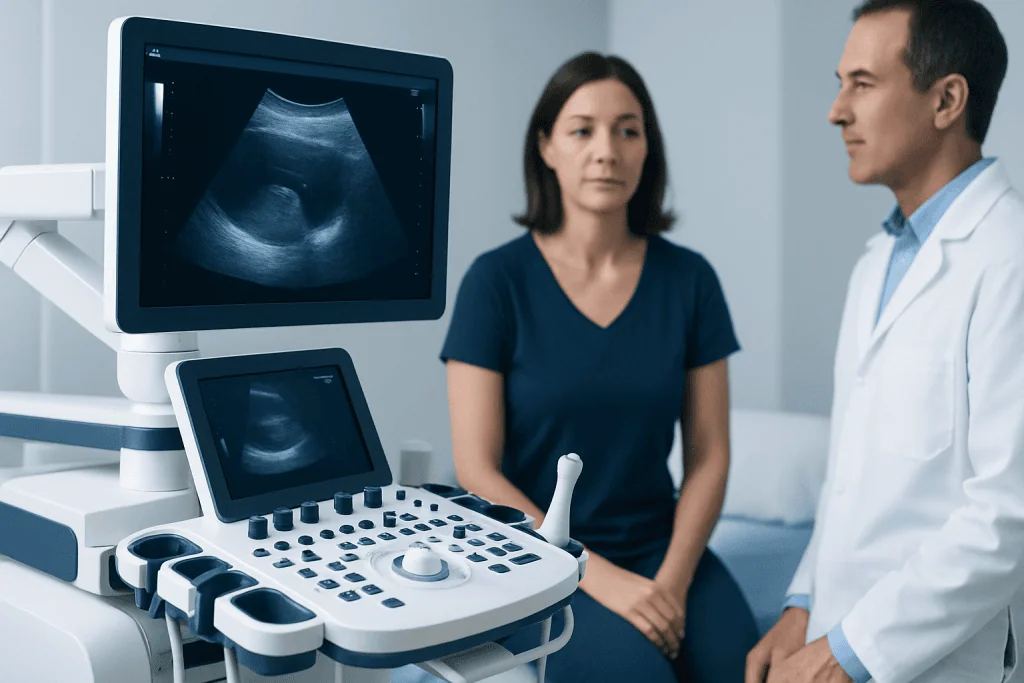
Patients may hear about MIT in healthcare innovation because modern medicine often depends on collaboration between researchers and healthcare teams. Universities, hospitals, and technology developers work together to improve how diseases are detected, monitored, and treated. When a new tool attracts attention, the institution behind the work may be mentioned alongside the medical topic.
News coverage is one common reason. Headlines may describe an MIT-developed sensor, AI model, or imaging method that could help doctors diagnose disease earlier or monitor recovery more closely. This can make the term familiar even before the technology becomes part of standard care.
Another reason is that hospitals increasingly use advanced systems in routine practice. Patients may hear about digital pathology, precision imaging, robotic surgery, remote monitoring, or software that supports clinical decisions. Even if a specific hospital does not use an MIT-created product, conversations about innovation often refer to leading research centers that shape the field.
Patients may also encounter the term when exploring second opinions, clinical trials, or complex care pathways. In these settings, healthcare teams may discuss where a technology originated, how much evidence supports it, and whether it is available only in research environments or also in regular clinical use.
Examples of MIT-linked innovations in healthcare
Healthcare innovation is broad, so MIT-linked work can appear in many areas of medicine. One major area is diagnostics. Researchers may design tools that analyze blood samples, medical images, or genetic information more quickly and accurately. Some systems aim to help doctors detect disease sooner, classify risk more clearly, or choose the most suitable next test.
Another area is digital health. This includes wearable sensors, smartphone-based monitoring, remote patient tracking, and software platforms that collect and organize health data over time. These tools may be useful for chronic disease management, rehabilitation, sleep assessment, or tracking heart rhythm and other vital signs outside the hospital.
Therapeutic innovation is also important. Research may focus on better drug delivery, smarter implant materials, robotic assistance, or technologies that make treatment more precise. Some ideas may support established fields such as radiation therapy or robotic surgery, while others are still earlier in development.
Finally, some innovation is less visible to patients but still highly meaningful. Improvements in workflow, data integration, imaging analysis, and laboratory automation can help care teams work more efficiently and consistently. In some cases, these advances complement specialties such as MRI and genetic testing, making complex information easier to interpret in context.
How new healthcare technology reaches patients
It is helpful for patients to know that innovation usually moves in stages. A new idea often starts in a laboratory, where researchers test whether a concept is technically possible. If the early results are promising, the next steps may include refining the design, checking safety, and studying how reliably it performs.
After that, the innovation may go through clinical research, regulatory review, and real-world evaluation. This process is important because healthcare tools need more than excitement or novelty. They must show that they are accurate, safe, practical, and beneficial for real patients in real settings.
Even after approval or adoption, doctors and hospitals may introduce a technology gradually. Training, quality control, and patient selection all matter. A tool that works well in one area of medicine may not be the best choice for every person or every hospital.
That is why hearing about a breakthrough does not always mean it is immediately available everywhere. Some innovations are used only in specialized centers, some are offered through research programs, and some become standard care only after more evidence is collected over time.
What patients should ask about any new innovation
When patients hear about a promising technology, it is reasonable to feel both interested and uncertain. The best next step is usually a practical conversation with a qualified clinician. Rather than focusing only on the name of the institution behind the innovation, patients can ask how the tool relates to their own condition, symptoms, test results, and treatment goals.
Useful questions include whether the technology is already part of standard care, what benefits are expected, what limitations it has, and whether there are any risks or downsides. Patients can also ask whether it improves diagnosis, treatment planning, comfort, recovery, or follow-up compared with conventional options.
It may help to ask about evidence as well. For example, has the technology been validated in large patient groups? Is it recommended by relevant medical specialists? Will a trained doctor review the results, or is the output generated entirely by software?
- Is this technology appropriate for this specific patient?
- Is it used in routine care or mainly in research settings?
- What are the alternatives if it is not available?
- Will it change treatment decisions in a meaningful way?
- What are the costs, access issues, or follow-up needs?
These questions can help patients stay informed without feeling pressured by unfamiliar terminology or media attention.
Benefits and limitations of healthcare innovation
Healthcare innovation can offer real advantages. It may support earlier diagnosis, more personalized treatment, better monitoring, and more efficient coordination of care. In some cases, digital systems can reduce delays, help detect subtle patterns in data, or allow patients to stay connected with care teams between visits.
Innovation can also improve the patient experience. Less invasive procedures, more precise imaging, remote follow-up, and smarter workflow tools may reduce inconvenience and help care feel more organized. For people with chronic conditions, home-based monitoring can sometimes make day-to-day management easier.
At the same time, every innovation has limits. A new technology may work well for one group of patients but not another. Software tools can reflect the quality of the data used to build them, and devices may require training, technical support, or careful interpretation. No technology should be assumed to be better simply because it is newer.
For this reason, the strongest healthcare systems combine innovation with clinical expertise, ethics, safety standards, and clear communication. Good care still depends on listening to the patient, reviewing the full medical picture, and choosing options that are evidence-based and individually appropriate.
How to interpret health news about MIT and other research centers
Health news often highlights early discoveries because they are interesting and hopeful. However, early research is not the same as established treatment. A device or AI model described in the media may still need more testing before doctors can rely on it in everyday care.
Patients can read such news most usefully by looking for context. Was the innovation studied in people or only in the laboratory? Was it compared with current standard methods? Does the report explain what problem it is trying to solve and what questions remain unanswered?
It is also helpful to remember that respected institutions contribute to healthcare progress in many ways, but real-world adoption depends on broad scientific review and clinical validation. Trustworthy healthcare decisions are based on the quality of evidence, not on a famous name alone.
If a patient is considering advanced diagnostics or treatment pathways, a specialist can explain whether a technology is relevant now, still experimental, or mainly useful in specific situations. Near the end of this process, some patients may explore internationally recognized centers; Acibadem International’s multidisciplinary specialists and JCI-accredited hospitals diagnose and treat patients using evidence-based technologies when appropriate for their care.
Frequently asked questions
Does MIT in healthcare innovation mean a treatment from one specific hospital?
Usually no. It generally refers to medical research, devices, software, or ideas associated with the Massachusetts Institute of Technology rather than care from one hospital alone. A technology may later be studied, licensed, or used by many different healthcare organizations.
Is every MIT-related healthcare technology available to patients now?
No, many innovations are still in development or under evaluation. Some are used only in research settings, while others become available gradually after validation, regulatory review, and clinical adoption.
Are AI and digital tools replacing doctors?
In most cases, no. These tools are designed to support clinicians by organizing information, identifying patterns, or improving workflow. Final decisions about diagnosis and treatment should still involve qualified healthcare professionals.
How can a patient tell whether a new technology is trustworthy?
It helps to ask whether the tool has been clinically validated, whether specialists use it in routine care, and whether its benefits and limits are clearly explained. Patients should also ask how it compares with standard options for their specific situation.
Why do media reports about innovation sometimes sound more certain than doctors do?
Media stories often focus on potential and novelty, especially in early research. Doctors need to think more carefully about safety, evidence quality, patient selection, and whether a technology truly improves outcomes in everyday practice.
Can healthcare innovation improve care even if a patient never uses a new device directly?
Yes. Many advances work behind the scenes, such as better imaging analysis, improved lab systems, or software that helps coordinate care. These changes can support faster decisions, more accurate interpretation, and smoother healthcare processes.
References
- World Health Organization
- U.S. Food and Drug Administration
- National Institutes of Health
- National Academy of Medicine
- Massachusetts Institute of Technology
This article is for general information only and is not a substitute for professional medical advice. Please consult a qualified doctor about your individual situation.
Explore treatments in Turkey — costs, top hospitals & a free quote
JCI-accredited · board-certified surgeons · reply within 24h
Add us as a Preferred Source to see more of our trusted health content across Google Search, AI Overviews and Discover.