What Is Precision Oncology? Biomarker-Driven Cancer Treatment Explained

Precision oncology uses tumor biomarkers and molecular testing to help choose treatment. It may support decisions about targeted therapy, immunotherapy, or clinical trial options.
Key Takeaways
- Precision oncology uses tumor biomarkers and molecular testing to help choose treatment.
- It may support decisions about targeted therapy, immunotherapy, or clinical trial options.
- Not every cancer has an actionable biomarker, and standard treatments still remain important.
- Testing may include tumor tissue analysis, blood-based liquid biopsy, and pathology review.
- Treatment decisions are usually made by a multidisciplinary cancer team.
Precision oncology is an approach to cancer care that uses biomarkers, genetic testing, and other tumor features to help guide treatment decisions. Rather than treating cancers only by where they start in the body, it aims to match therapies more closely to the biology of each person’s cancer.
Overview
Precision oncology is a way of planning cancer care based on the unique biological features of a tumor. Instead of relying only on the cancer’s location, such as the lung, breast, or colon, doctors also look for biomarkers. These may include gene mutations, protein changes, chromosomal alterations, or other molecular signals that can influence how a cancer grows and how it may respond to treatment.
This approach is sometimes called personalized cancer treatment or biomarker-driven cancer treatment. The goal is not to create a completely different therapy for each person, but to use available tests and evidence to choose treatments that are more likely to help and less likely to be unnecessary. In practice, precision oncology often works alongside standard cancer care, including surgery, chemotherapy, radiotherapy, and supportive care.
Precision oncology can be used at different points in care. For some people, it helps at the time of diagnosis. For others, it becomes especially important if cancer returns, spreads, or stops responding to first-line treatment. It can also help identify whether a patient may benefit from medical oncology care focused on targeted medicines, immunotherapy, or clinical trials.
How Biomarker-Driven Cancer Treatment Works
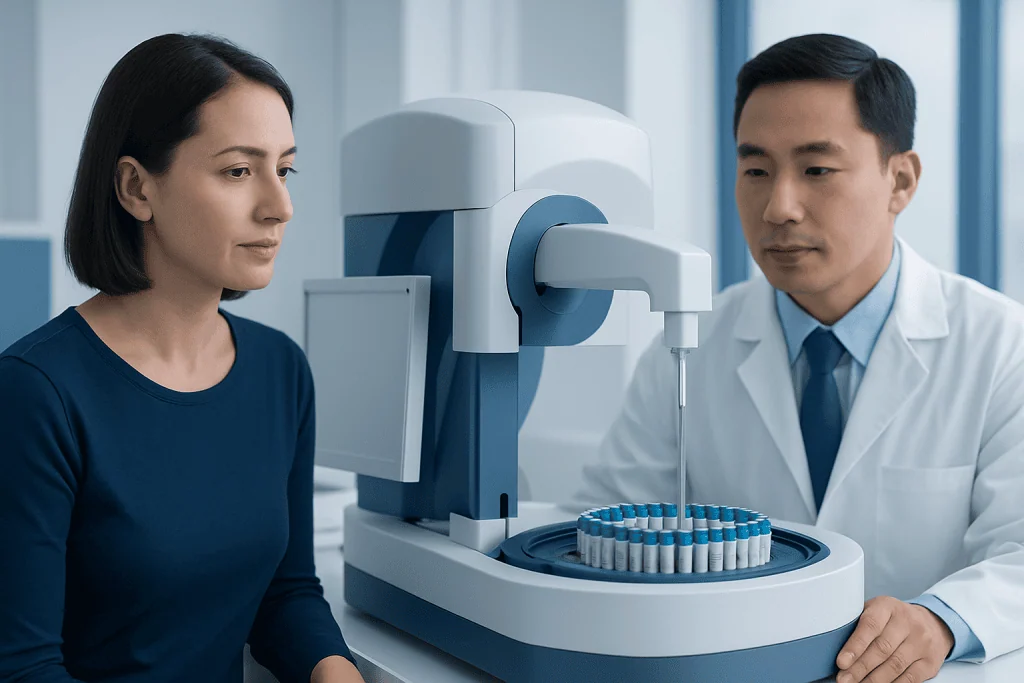
Biomarkers are measurable features that provide information about a cancer. Some biomarkers are found in the tumor itself, while others may be detected in blood or other body fluids. In oncology, a biomarker might show whether a certain pathway is active, whether a mutation is driving tumor growth, or whether the immune system may respond to a specific therapy.
Doctors may use several types of testing to identify biomarkers. These can include pathology review, immunohistochemistry, fluorescence in situ hybridization, single-gene tests, and broader molecular profiling such as next-generation sequencing. In some situations, a blood test called a liquid biopsy may help detect tumor DNA circulating in the bloodstream, especially when tissue is limited or repeated biopsy is difficult.
Once the results are available, the cancer team interprets them in context. A finding is most helpful when it is clinically actionable, meaning it can guide a treatment choice, help estimate response, or identify eligibility for a clinical trial. Some biomarkers support the use of immunotherapy or a targeted therapy, while others may suggest that a standard approach remains the best option.
It is important to remember that precision oncology does not guarantee a match for every patient. Some cancers do not have identifiable actionable changes, and some detected changes may not yet have an approved treatment. Even so, testing can still be valuable because it helps doctors make more informed and individualized decisions.
Who May Benefit From Precision Oncology

Precision oncology can be helpful in many cancer types, but its role varies depending on the diagnosis. It is commonly used in advanced or metastatic cancers, in cancers with known targetable mutations, and in situations where standard treatment options are limited or have stopped working. Some early-stage cancers may also be tested when results could change the treatment plan.
Examples of cancers where biomarker testing may be especially relevant include certain lung cancers, breast cancers, colorectal cancers, melanomas, ovarian cancers, leukemias, and some rare tumors. The exact tests recommended depend on the cancer type, stage, tissue availability, and current treatment guidelines. In some cases, a doctor may explain how precision oncology relates to a specific diagnosis such as lung cancer or another tumor with well-established molecular markers.
Patients with a strong family history of cancer may also need a separate type of testing called germline genetic testing. This looks for inherited gene changes rather than changes only inside the tumor. Germline testing can sometimes affect treatment choices, but it also has implications for family members, so it is usually discussed carefully with a genetics professional when appropriate.
Common Biomarkers and Types of Tests
Different cancers are linked to different biomarkers. Some tests look for one specific change, while others examine many genes at the same time. The right strategy depends on the cancer and the question the team is trying to answer. For example, testing may be done to confirm a diagnosis, estimate prognosis, predict whether a treatment is likely to work, or monitor for resistance over time.
Common categories of biomarkers include:
- Genetic mutations: changes in DNA that may drive cancer growth
- Gene fusions or rearrangements: abnormal joining of genes that can sometimes be targeted
- Protein expression markers: proteins on tumor cells that help guide therapy choices
- Immune-related markers: features that may suggest whether immunotherapy could help
- Markers of resistance: changes that develop after treatment and may explain why a therapy has stopped working
Testing may involve a tissue biopsy collected during diagnosis or surgery. When enough tissue is available, the laboratory can often perform several analyses from the same sample. If a tumor changes over time, a repeat biopsy may sometimes be recommended because cancers can evolve under treatment pressure.
Liquid biopsy is another useful tool in selected cases. It is less invasive than a tissue biopsy and may help track tumor changes over time. However, it does not replace tissue testing in every situation, and results must be interpreted carefully because a negative blood test does not always rule out a biomarker.
Diagnosis, Treatment Planning, and Multidisciplinary Care
Precision oncology depends on accurate diagnosis first. Pathologists confirm the cancer type, grade, and other features under the microscope, while imaging helps define the extent of disease. Molecular testing is then added when it is likely to influence care. In many centers, complex cases are reviewed by a tumor board that may include medical oncologists, surgeons, radiation oncologists, radiologists, pathologists, molecular biologists, and genetic counselors.
Treatment planning often combines molecular findings with standard clinical factors such as the patient’s age, overall health, symptoms, treatment goals, and prior therapies. A biomarker result is important, but it is only one part of the overall picture. Doctors also consider how strong the evidence is for a given marker and whether a therapy is approved, available, and appropriate for that individual.
Based on the results, a patient may receive standard chemotherapy, hormone therapy, surgery, or radiation oncology as part of a broader treatment strategy. In other cases, molecular findings may support targeted medicines or immunotherapy, either alone or in combination. Some patients may also be referred for clinical trials if testing identifies a promising option that is not yet widely available.
For international patients seeking coordinated cancer care, Acibadem International’s multidisciplinary specialists and JCI-accredited hospitals evaluate biomarker results and treatment options as part of individualized oncology planning.
Benefits and Limitations of Precision Oncology
One of the main benefits of precision oncology is that it can make treatment selection more specific. If a tumor has a known actionable biomarker, a matched therapy may be more effective than a less targeted approach. This can be especially helpful in advanced cancers, in rare tumors, or when previous treatments have not worked as expected.
Precision oncology may also help avoid treatments that are less likely to be beneficial. In some cases, test results can provide reassurance that a standard treatment is the right choice, rather than adding a medicine unlikely to help. Molecular testing can also open the door to clinical trials and improve understanding of how a cancer may behave over time.
At the same time, there are limitations. Not all cancers have targetable biomarkers, and even when a biomarker is present, the matched treatment may not work for every patient. Tumors can develop resistance, and different parts of the same tumor may not always be biologically identical. Results can also be complex and sometimes uncertain.
For these reasons, precision oncology is best viewed as a powerful tool within comprehensive cancer care, not a replacement for expert clinical judgment. Clear discussion with the cancer team helps patients understand what testing can and cannot tell them.
Questions to Ask and When to See a Doctor
Patients and families often find it helpful to ask whether biomarker testing is recommended for their specific cancer type and stage. They may also ask what kind of sample is needed, how long results may take, and whether the findings could change treatment choices. If a report identifies a mutation or other alteration, it is reasonable to ask whether it is actionable, whether it affects prognosis, and whether any clinical trials may be relevant.
People should speak with an oncologist if they have a new cancer diagnosis, if their cancer has returned, or if treatment has stopped working. A second opinion may also be helpful when test results are complex, when treatment options are uncertain, or when advanced molecular profiling is being considered. Ongoing follow-up remains important because recommendations may change as new evidence and therapies become available.
Urgent medical attention is needed for severe symptoms related to cancer or treatment, such as difficulty breathing, uncontrolled pain, confusion, major bleeding, or signs of infection. While precision oncology can guide longer-term planning, immediate symptoms still need prompt evaluation and supportive care.
Frequently asked questions
Is precision oncology the same as personalized medicine?
They are closely related terms. In cancer care, precision oncology usually refers to using biomarkers and molecular features of a tumor to help guide treatment decisions. Personalized medicine is a broader concept that can include genetics, lifestyle, and other individual factors.
Does every person with cancer need biomarker testing?
Not always. The need for testing depends on the cancer type, stage, and whether results are likely to affect treatment. An oncologist can explain which tests are recommended and whether they are likely to be useful in a specific case.
What is the difference between targeted therapy and immunotherapy?
Targeted therapy is designed to act on specific molecular changes that help cancer cells grow. Immunotherapy works by helping the immune system recognize or respond to cancer more effectively. Some biomarker tests are used to help decide whether one of these approaches may be appropriate.
Can a blood test replace a tissue biopsy?
A liquid biopsy can be very helpful in some situations, especially when tissue is difficult to obtain or when doctors want to monitor tumor changes over time. However, it does not fully replace tissue biopsy in every case. Tissue samples often remain important for confirming the diagnosis and performing a complete evaluation.
What if no actionable biomarker is found?
This is common and does not mean treatment options are exhausted. Many patients still benefit from standard therapies such as surgery, chemotherapy, radiotherapy, hormone therapy, or immunotherapy based on established guidelines. The cancer team may also review whether repeat testing or clinical trials could be appropriate later.
Can biomarker results change over time?
Yes. Cancer cells can evolve, especially after treatment, and new resistance changes may appear. That is why doctors sometimes recommend repeat tissue testing or liquid biopsy if the cancer progresses or stops responding to a previous therapy.
References
- World Health Organization
- National Cancer Institute
- American Society of Clinical Oncology
- European Society for Medical Oncology
- National Comprehensive Cancer Network
This article is for general information only and is not a substitute for professional medical advice. Please consult a qualified doctor about your individual situation.
Persistent digestive symptoms? Get evaluated in Turkey
JCI-accredited · board-certified surgeons · reply within 24h
Add us as a Preferred Source to see more of our trusted health content across Google Search, AI Overviews and Discover.

Medical Oncology Department
Medical treatment of cancer with chemotherapy, immunotherapy and targeted therapies under a multidisciplinary tumor board.
60 specialists in this unit