What Is the Most Common Neurodegenerative Disease?

Alzheimer’s disease is the most common neurodegenerative disease and the leading cause of dementia. Early symptoms often include memory problems, difficulty finding words, and trouble with planning or familiar tasks.
Key Takeaways
- Alzheimer’s disease is the most common neurodegenerative disease and the leading cause of dementia.
- Early symptoms often include memory problems, difficulty finding words, and trouble with planning or familiar tasks.
- Diagnosis usually involves medical history, neurological assessment, cognitive testing, blood tests, and brain imaging.
- While there is no cure, treatment can help manage symptoms, support daily function, and improve quality of life.
- Healthy lifestyle habits and early medical evaluation may help protect brain health and identify other treatable causes of memory changes.
The most common neurodegenerative disease is Alzheimer’s disease. It is a progressive brain disorder that gradually affects memory, thinking, behavior, and the ability to manage everyday activities.
Overview: The Most Common Neurodegenerative Disease
The most common neurodegenerative disease is Alzheimer’s disease. Neurodegenerative diseases are conditions in which nerve cells in the brain or nervous system gradually become damaged and stop working properly over time. Among these disorders, Alzheimer’s is the most frequent, especially in older adults, and it is the leading cause of dementia.
Dementia is not a single disease. It is a broad term for a decline in memory, reasoning, language, and everyday functioning severe enough to interfere with daily life. Alzheimer’s disease is the most common reason this happens, although other conditions can also cause dementia-like symptoms.
In Alzheimer’s disease, changes develop in the brain years before noticeable symptoms appear. As the condition progresses, it may affect short-term memory first, then communication, decision-making, orientation, and behavior. The course is usually gradual, and symptoms often become more noticeable over time.
Other neurodegenerative diseases include Parkinson’s disease, Huntington’s disease, amyotrophic lateral sclerosis, and some forms of frontotemporal degeneration. However, when people ask about the most common neurodegenerative disease, the answer is generally Alzheimer’s disease, often discussed within the broader topic of Alzheimer’s disease.
Symptoms and Early Warning Signs
Alzheimer’s disease often begins subtly. One of the earliest and most recognized symptoms is difficulty remembering recently learned information. A person may repeat questions, forget appointments, misplace belongings, or rely more heavily on notes and reminders than before.
Symptoms are not limited to memory. Many people also develop problems with language, attention, judgment, or completing familiar tasks. They may struggle to follow a conversation, lose track while preparing a meal, or find it harder to manage finances, medications, or travel to familiar places.
Changes in mood or behavior can also occur. Some people become more withdrawn, anxious, irritable, or suspicious. Others may show reduced motivation or poor insight into their difficulties. These changes can be distressing for both the person and family members, but early support can make daily life easier.
- Frequent memory loss that affects daily routines
- Difficulty planning, organizing, or solving problems
- Problems finding words or following conversations
- Confusion about time, place, or direction
- Misplacing items and struggling to retrace steps
- Changes in mood, personality, or social engagement
Causes and Risk Factors

Alzheimer’s disease develops through complex changes in the brain. Researchers believe that abnormal protein buildup, inflammation, and the loss of connections between brain cells all play a role. Over time, these changes interfere with how the brain processes and stores information.
Age is the strongest known risk factor. Alzheimer’s is much more common in later life, although it is not considered a normal part of aging. Having a family history may increase risk, and certain genetic factors are associated with a greater chance of developing the disease, especially in some families with early-onset forms.
Other health and lifestyle factors may also influence brain health. High blood pressure, diabetes, high cholesterol, smoking, physical inactivity, poor sleep, hearing loss, and social isolation have all been linked to a higher risk of cognitive decline. Managing these factors may support healthier aging, even though no single step can fully prevent Alzheimer’s.
It is also important to remember that not every memory complaint means Alzheimer’s disease. Stress, depression, medication side effects, sleep disorders, thyroid problems, vitamin deficiencies, and other neurological conditions can affect memory and thinking. A careful medical evaluation helps identify the cause.
How Alzheimer’s Disease Is Diagnosed
Diagnosis starts with a detailed medical history and discussion of symptoms. Doctors usually ask when memory or thinking changes began, how quickly they progressed, and how they affect work, home life, and independence. A relative or close friend may provide valuable observations, because changes can be easier for others to notice.
A neurological examination and cognitive testing are commonly used to assess memory, attention, language, problem-solving, and orientation. Blood tests may help rule out other treatable causes of cognitive symptoms, such as low vitamin B12 levels, thyroid disorders, infections, or metabolic problems.
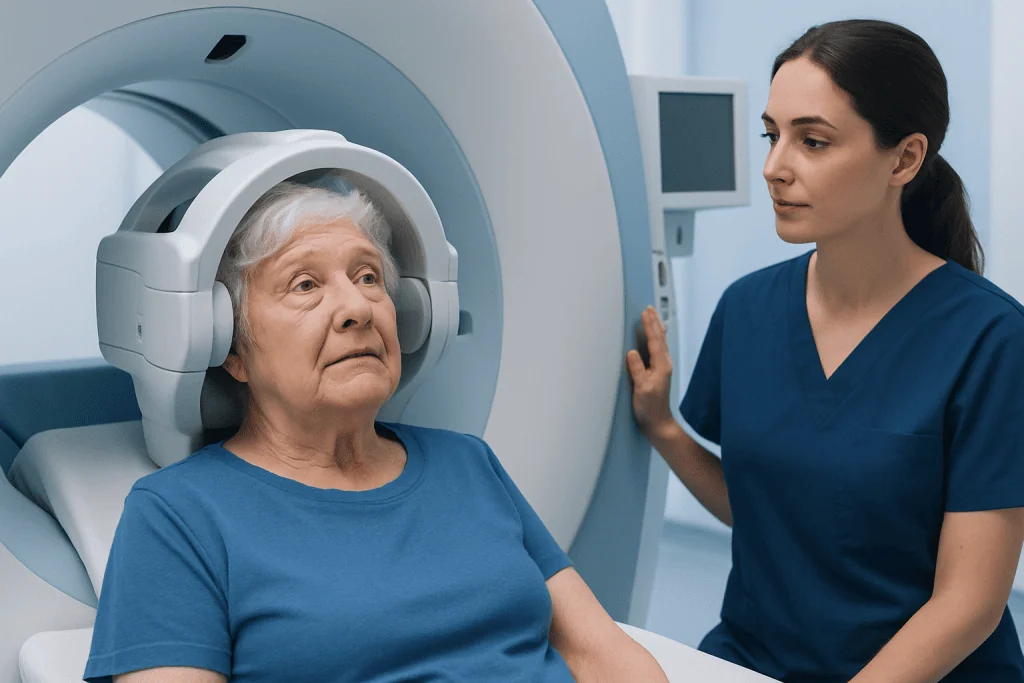
Brain imaging can provide further information. MRI or CT scans may be used to look for strokes, bleeding, tumors, <a href="https://acibademinternational.com/diseases/normal-pressure-hydrocephalus/”>normal pressure hydrocephalus, or patterns of brain shrinkage that support the diagnosis. In some cases, specialists may recommend more advanced tests, depending on the individual situation and local practice.
Because dementia can have more than one cause, specialist assessment is often helpful. Evaluation by neurology care may help clarify whether symptoms fit Alzheimer’s disease, another dementia syndrome, or a different neurological condition such as Parkinson’s disease when movement symptoms are also present.
Treatment Options and Ongoing Care
There is currently no cure for Alzheimer’s disease, but treatment can help manage symptoms and support quality of life. Care plans are usually individualized and may include medication, cognitive support, safety planning, and practical help for daily activities. Early diagnosis can be especially helpful because it allows time to plan care and address legal, financial, and family decisions.
Medications may be prescribed to support memory and thinking in some patients, depending on the stage of disease and the person’s overall health. Doctors may also treat related symptoms such as anxiety, depression, sleep disturbance, or agitation when these problems interfere with comfort or function.
Non-drug approaches are equally important. Structured routines, reminder tools, exercise, social interaction, hearing and vision support, and a calm home environment can reduce confusion and support independence. Occupational therapy, memory clinics, and rehabilitation services may help families adapt the home and daily schedule to the patient’s needs.
Some people benefit from coordinated care involving geriatricians, neurologists, psychiatrists, rehabilitation professionals, and social workers. When needed, specialists in brain and nerve surgery or MRI imaging may contribute to assessment when doctors are evaluating other possible causes of cognitive decline rather than Alzheimer’s alone.
Prevention and Self-care for Brain Health
No method can guarantee prevention of Alzheimer’s disease, but brain-healthy habits are still worthwhile. Many of the same steps that protect the heart may also support the brain. These include regular physical activity, a balanced diet, good sleep, smoking cessation, and control of blood pressure, blood sugar, and cholesterol.
Mental and social activity also matter. Reading, learning new skills, participating in conversation, maintaining hobbies, and staying socially connected may help support cognitive resilience. Treating hearing loss, vision problems, and depression can also improve daily cognitive performance and overall well-being.
For people who already notice mild memory changes, self-care includes keeping a routine, using calendars and reminders, reviewing medications with a doctor, and bringing a family member to appointments. Avoiding alcohol misuse and discussing sleep problems, especially suspected sleep apnea, can also be helpful.
- Exercise regularly and stay as active as possible
- Manage blood pressure, diabetes, and cholesterol
- Eat a varied, nutritious diet
- Stay mentally engaged and socially connected
- Protect sleep quality and address hearing or vision loss
- Seek evaluation early if memory or thinking changes appear
When to See a Doctor
A doctor should be consulted when memory loss, confusion, or changes in thinking begin to affect work, household tasks, safety, or relationships. Early evaluation does not just help identify Alzheimer’s disease. It can also uncover treatable causes of cognitive symptoms and allow timely support for the patient and family.
Urgent medical attention is especially important if confusion starts suddenly or is accompanied by fever, severe headache, weakness, speech difficulty, vision changes, or loss of balance. Sudden changes are not typical of Alzheimer’s disease and may point to stroke, infection, medication effects, or another acute medical problem.
Caregivers should also seek medical advice if a person with dementia becomes increasingly unsafe at home, wanders, stops eating or drinking, falls repeatedly, or develops major behavioral changes. Support for caregivers is an important part of treatment, because dementia affects the whole household, not only the individual patient.
In centers with multidisciplinary memory and neurology services, patients can receive comprehensive evaluation and care planning. Acibadem International’s multidisciplinary specialists and JCI-accredited hospitals diagnose and treat neurodegenerative conditions for international patients when expert assessment is needed.
Frequently asked questions
What is the most common neurodegenerative disease?
The most common neurodegenerative disease is Alzheimer’s disease. It is the leading cause of dementia and mainly affects memory, thinking, behavior, and the ability to manage daily activities.
Is Alzheimer’s disease the same as dementia?
No. Dementia is a general term for a decline in cognitive abilities that interferes with daily life, while Alzheimer’s disease is a specific brain disorder that commonly causes dementia. In other words, Alzheimer’s is the most common cause of dementia, but not the only one.
What are the first signs of Alzheimer’s disease?
Early signs often include forgetting recent conversations or appointments, repeating questions, and having trouble with planning or familiar tasks. Some people also notice word-finding difficulty, confusion in new environments, or changes in mood and motivation.
Can younger people get Alzheimer’s disease?
Yes, although it is much less common. Some people develop early-onset Alzheimer’s disease before age 65, and in some cases genetic factors may play a role. Any persistent memory or thinking changes at a younger age should be assessed by a qualified doctor.
Can Alzheimer’s disease be cured?
At present, there is no cure for Alzheimer’s disease. However, treatment may help manage symptoms, support independence for as long as possible, and improve quality of life for both patients and caregivers.
Does memory loss always mean Alzheimer’s disease?
No. Memory problems can also be caused by stress, depression, poor sleep, medication side effects, vitamin deficiencies, thyroid disease, or other neurological conditions. That is why a proper medical evaluation is important when symptoms appear.
References
- World Health Organization
- National Institute on Aging
- Alzheimer's Association
- National Institute of Neurological Disorders and Stroke
- Centers for Disease Control and Prevention
This article is for general information only and is not a substitute for professional medical advice. Please consult a qualified doctor about your individual situation.
Explore treatments in Turkey — costs, top hospitals & a free quote
JCI-accredited · board-certified surgeons · reply within 24h
Add us as a Preferred Source to see more of our trusted health content across Google Search, AI Overviews and Discover.
Check your numbers in seconds
BMI, calories, due date, blood pressure and 30+ more clinical calculators — free, instant, doctor-reviewed ranges.

More from the Health Library



Related Specialists

Dr. Iretiola Albert
Inpatient Clinic Physicians Clinical Service
Prof. Dr. Oya Yönal
Gastroenterology
Prof. Dr. Sinan Yavuz
Internal Medicine
Gizem Gürzoğlu
Physical Medicine & Rehabilitation