What Is the Success Rate of Glaucoma Surgery: Procedure, Recovery and Results

Glaucoma surgery is designed primarily to lower eye pressure and slow or prevent further optic nerve damage. Success is assessed by pressure control, reduced need for medication and stable visual function over time.
Key Takeaways
- Glaucoma surgery is designed primarily to lower eye pressure and slow or prevent further optic nerve damage.
- Success is assessed by pressure control, reduced need for medication and stable visual function over time.
- Laser treatments, minimally invasive glaucoma surgery, trabeculectomy and drainage devices have different roles and expected outcomes.
- Vision may be temporarily blurry after surgery; glaucoma-related vision loss usually cannot be reversed.
- Regular follow-up is essential because eye pressure can change and some procedures may need additional treatment.
- Sudden vision loss, severe pain, increasing redness or nausea after surgery requires urgent eye care.
What is the success rate of glaucoma surgery? Glaucoma procedures are often successful at lowering intraocular pressure, helping protect the optic nerve from further damage, although the result varies by the procedure, glaucoma type, disease severity and healing response. Surgery usually aims to preserve remaining vision rather than restore vision already lost to glaucoma.
Overview: What Is the Success Rate of Glaucoma Surgery?
What is the success rate of glaucoma surgery? In clinical practice, glaucoma surgery is considered successful when it lowers intraocular pressure (IOP) to a safe individual target and helps prevent further damage to the optic nerve, with or without ongoing eye drops. Many people achieve meaningful pressure reduction, but no single percentage applies to every patient because results depend on the type of glaucoma, the operation performed, the starting eye pressure, prior treatment and the body’s healing response.
Glaucoma is a group of eye conditions that can progressively damage the optic nerve, often in association with raised eye pressure. The damage may develop without noticeable symptoms in its early stages. Glaucoma care focuses on protecting the vision that remains through monitoring, medication, laser treatment and, when appropriate, surgery.
Surgery does not usually repair vision already lost from glaucoma. Instead, it creates or improves a pathway for fluid to leave the eye, reducing pressure that can harm the optic nerve. The most suitable approach is selected after a detailed examination by an ophthalmologist, usually a glaucoma specialist.
How Glaucoma Surgery Works and Who May Benefit
The eye continuously produces a clear fluid called aqueous humor. Normally, this fluid drains through microscopic channels at the front of the eye. In many forms of glaucoma, drainage becomes less effective, allowing pressure to rise. Glaucoma surgery improves fluid outflow or reduces resistance to drainage, thereby lowering IOP.
Surgery may be considered when eye drops and laser treatment do not bring pressure to the target range, when glaucoma is progressing despite apparently controlled pressure, or when drops cause difficult side effects or cannot be used reliably. It may also be combined with cataract surgery in selected patients. The decision is individualized and balances the risks of continued glaucoma damage against the risks of a procedure.
Options include laser trabeculoplasty, minimally invasive glaucoma surgery (MIGS), trabeculectomy and glaucoma drainage devices. Laser and MIGS procedures can offer a favorable recovery profile for appropriate patients, while trabeculectomy or a drainage implant may provide greater pressure lowering for advanced or difficult-to-control glaucoma. Glaucoma surgery planning should take account of the patient’s diagnosis, eye anatomy, previous operations and pressure goal.
- Laser trabeculoplasty: uses laser energy to improve drainage through the eye’s natural outflow system.
- MIGS: uses very small devices or tiny incisions, frequently alongside cataract surgery.
- Trabeculectomy: creates a controlled new drainage route beneath the eyelid.
- Drainage device surgery: places a small tube and plate to direct fluid to a reservoir under the eye’s surface.
What Happens During the Procedure?

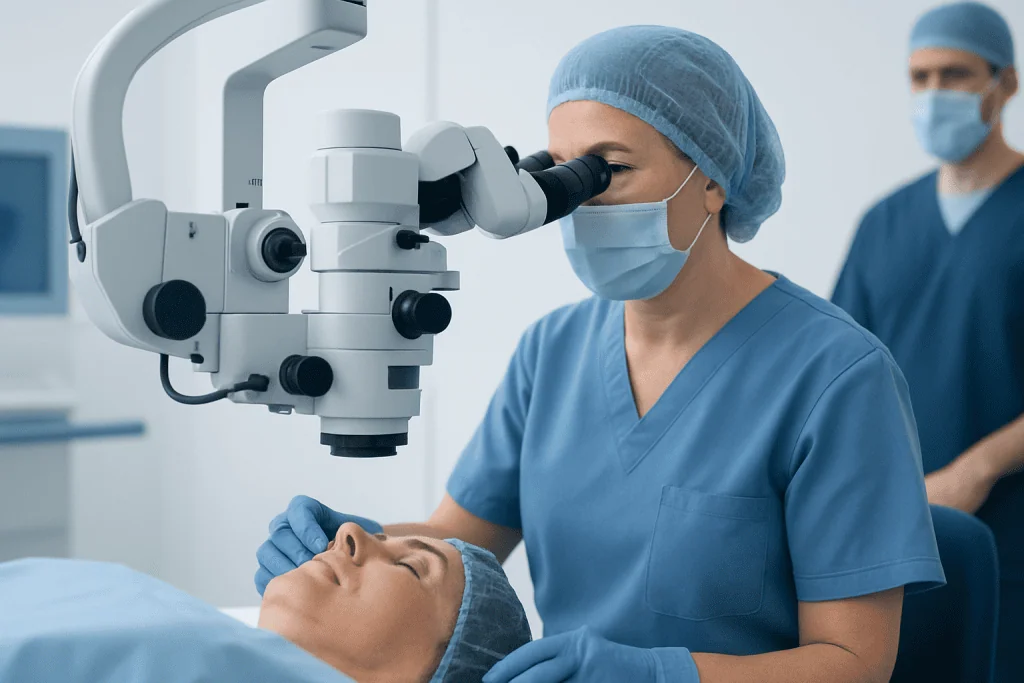
The exact steps differ by procedure, but glaucoma surgery is commonly performed as an outpatient treatment. Before surgery, the ophthalmologist reviews medications, checks eye pressure and examines the eye. Local anesthetic with sedation is often used, although the anesthetic plan is tailored to the individual and procedure.
During laser trabeculoplasty, the patient sits at a laser machine while the doctor places a special contact lens on the eye and applies laser spots to the drainage angle. The procedure itself is generally brief. MIGS procedures are usually performed through small corneal incisions, often at the same time as cataract surgery, to bypass or enhance natural drainage pathways.
For trabeculectomy, the surgeon creates a small, protected drainage opening and a filtering area under the upper eyelid, sometimes called a bleb. With a drainage device, a fine tube is placed in the front part of the eye and connected to a small plate beneath the conjunctiva. These operations require careful aftercare because early healing strongly influences the final pressure result.
After surgery, patients generally receive anti-inflammatory and antibiotic eye drops for a prescribed period. Follow-up visits are particularly important after trabeculectomy and tube surgery, as the surgeon may adjust sutures, treat healing tissue or modify medication to support safe pressure control.
Benefits, Risks and What Results Mean
The main benefit of glaucoma surgery is a sustained reduction in eye pressure that may slow or stop further optic nerve damage. Some people need fewer drops after surgery, while others still need one or more medicines to reach their target pressure. A successful result is not necessarily a complete absence of medication; it is stable, safe pressure control tailored to the eye.
All eye procedures carry risks. Potential complications include temporary blurred vision, inflammation, pressure that is too high or too low, bleeding, scarring, cataract progression, infection, retinal problems or a need for further surgery. Serious complications are uncommon but can threaten vision, which is why preoperative assessment and close postoperative review are essential.
Scarring is one of the reasons that an initially effective filtering operation may become less effective over time. The ophthalmologist may recommend office-based treatments, medication changes, laser procedures or additional surgery if pressure rises again. Long-term glaucoma care continues even after a technically successful operation.
Individual prognosis is best discussed with the treating ophthalmologist, who can explain the likely pressure target and the expected balance between benefit and risk for that particular eye. Regular visual field testing, optic nerve imaging and pressure checks remain important because glaucoma can progress without obvious symptoms.
How Serious Is Glaucoma Surgery?
Glaucoma surgery is a significant eye procedure because it is performed to protect a delicate structure essential for sight: the optic nerve. However, it is a well-established part of glaucoma care, and the type of surgery can be matched to the severity of disease, pressure target and individual risk profile. Less invasive options may be appropriate for some people, while more intensive surgery may be needed when the risk of vision loss from uncontrolled pressure is higher.
The seriousness of surgery must be considered alongside the seriousness of untreated or progressing glaucoma. Glaucoma-related damage is typically permanent, so lowering pressure can be an important sight-preserving measure. A specialist explains why a particular procedure is recommended, what alternatives are available and which symptoms should prompt urgent contact after treatment.
Careful use of postoperative drops and attendance at every scheduled review help reduce avoidable complications. Patients should avoid rubbing or pressing on the eye and should follow individualized advice about bathing, physical activity, driving and returning to work.
Will I See Better After Glaucoma Surgery?
Most glaucoma surgery is intended to preserve vision rather than improve it. Damage to the optic nerve and visual field that has already occurred from glaucoma generally cannot be reversed. The desired outcome is to lower pressure enough to reduce the risk of additional sight loss.
Vision is often blurry or variable in the first days or weeks after surgery. This can occur because of inflammation, surface irritation, temporary changes in eye pressure, healing of the cornea or the effects of accompanying cataract surgery. Vision often improves as healing progresses, but the pace and final result differ by procedure and eye health.
If cataract surgery is performed at the same time as a glaucoma procedure, clearer vision may result from removal of the cataract. That improvement is due to cataract treatment rather than reversal of glaucoma damage. Sudden worsening of sight, a curtain-like shadow, severe pain or marked redness should be assessed urgently.
How Many Days Should I Rest After Glaucoma Surgery?
The rest period depends on the operation and the nature of a person’s work. Many patients take several days to one or two weeks away from routine work after laser treatment or minimally invasive surgery, while recovery after trabeculectomy or drainage device surgery may require a longer period of reduced activity. The operating surgeon provides the most reliable timeline because follow-up findings determine when the eye is healing safely.
In the early recovery period, patients are commonly advised to avoid strenuous exercise, heavy lifting, bending with the head down for extended periods, swimming and activities that could expose the eye to impact or contamination. They may be asked to wear a protective shield while sleeping and to keep water, soap and cosmetics out of the eye until advised otherwise.
Follow-up may be frequent during the first weeks, especially after filtering surgery. Driving should resume only when vision meets legal and practical safety requirements and the ophthalmologist confirms that it is appropriate. Returning too quickly to demanding activity can interfere with recovery, so individualized instructions should be followed closely.
What Is the Most Successful Glaucoma Surgery?
There is no single most successful glaucoma surgery for every person. The best procedure is the one that safely reaches the individual’s target pressure with an acceptable level of risk and a recovery plan they can follow. The ideal choice differs between early and advanced glaucoma, open-angle and angle-closure glaucoma, eyes with prior surgery and people undergoing cataract surgery.
Trabeculectomy has long been used when a substantial pressure reduction is needed and remains an important option for many patients. Glaucoma drainage devices are often considered when prior filtering surgery has failed or when the eye has a greater risk of scarring. MIGS may be especially useful in selected mild-to-moderate cases, commonly when cataract surgery is already planned, although its pressure-lowering effect may be more modest than traditional filtering surgery.
Laser trabeculoplasty can be an effective first or additional treatment for many people with open-angle glaucoma and may delay the need for incisional surgery. An ophthalmologist compares the expected benefit, the need for drops, the durability of the effect and possible complications before making a recommendation. Cataract surgery may be discussed when cataract and glaucoma treatment can reasonably be combined.
When to Seek Medical Care
Anyone with diagnosed glaucoma should attend regular eye appointments even if vision seems unchanged. Eye pressure and optic nerve damage can worsen quietly, and monitoring allows treatment to be adjusted before more vision is affected. New difficulty with side vision, blurred vision, halos around lights or changes in contrast sensitivity should be discussed with an eye professional.
Urgent medical assessment is needed for sudden eye pain, marked redness, rapid vision changes, colored halos with headache, nausea or vomiting. These symptoms can occur with acute angle-closure glaucoma, which requires prompt treatment. After surgery, urgent review is also appropriate for severe or increasing pain, a major fall in vision, increasing discharge, pronounced swelling or symptoms of infection.
Acibadem International’s multidisciplinary ophthalmology specialists and JCI-accredited hospitals evaluate and treat glaucoma for international patients, including surgical planning and postoperative follow-up. A qualified ophthalmologist can provide advice that reflects the person’s glaucoma type, eye examination and wider health needs.
Frequently asked questions
What is the success rate of glaucoma surgery?
Success is usually defined as reaching a safe target eye pressure and maintaining stable optic nerve function, with or without glaucoma drops. Rates vary substantially by operation, glaucoma type, prior eye surgery, disease severity and the definition of success used. An ophthalmologist can give a more personalized expectation after assessing the eye and pressure target.
Can glaucoma come back after surgery?
Glaucoma is a long-term condition, and surgery does not remove the need for lifelong monitoring. Eye pressure can rise again if healing tissue causes scarring or if the disease requires a lower pressure target over time. Additional drops, laser treatment, postoperative adjustments or another operation may sometimes be needed.
Is glaucoma surgery painful?
The eye is numbed for the procedure, and sedation may be used when appropriate, so significant pain during surgery is not expected. Mild discomfort, scratchiness, tearing or light sensitivity can occur during recovery. Severe or worsening pain should be reported urgently to the surgical team.
How long does it take for vision to stabilize after glaucoma surgery?
Vision may be blurry for days to weeks, and recovery can be longer after trabeculectomy or drainage device surgery than after laser treatment or some MIGS procedures. The timeline is affected by eye pressure, inflammation, corneal healing, existing cataract and other eye conditions. The surgeon monitors recovery at follow-up visits and advises when vision is stable enough for activities such as driving.
Will I still need glaucoma drops after surgery?
Some people can reduce or stop drops after a successful operation, while others continue drops to achieve their target pressure. Continuing medication after surgery does not mean the procedure has failed; it may be part of the most effective pressure-control plan. Medication changes should only be made with the ophthalmologist’s advice.
Can glaucoma surgery be repeated?
In some situations, another glaucoma procedure can be performed if pressure remains above target or rises later. The choice depends on the first procedure, the condition of the eye’s tissues, scarring risk and the amount of pressure reduction needed. A glaucoma specialist can explain the available next-step options.
References
- American Academy of Ophthalmology
- National Eye Institute
- Glaucoma Research Foundation
- European Glaucoma Society
- National Health Service
This article is for general information only and is not a substitute for professional medical advice. Please consult a qualified doctor about your individual situation.
Glaucoma Surgery in Turkey — costs, top hospitals & a free quote
JCI-accredited · board-certified surgeons · reply within 24h
Add us as a Preferred Source to see more of our trusted health content across Google Search, AI Overviews and Discover.

Ophthalmology
Comprehensive eye care from laser vision correction to retina, cornea and cataract surgery.
75 specialists in this unit