What Piercing Helps with Migraines? A Doctor-Reviewed Answer

No piercing is medically proven to treat or prevent migraine attacks. Daith piercing is promoted for migraine relief, but reported benefits may reflect placebo effects or natural changes in migraine patterns.
Key Takeaways
- No piercing is medically proven to treat or prevent migraine attacks.
- Daith piercing is promoted for migraine relief, but reported benefits may reflect placebo effects or natural changes in migraine patterns.
- Cartilage piercings can cause infection, scarring, allergic reactions, and delayed healing.
- Most headaches are not caused by a dangerous condition, but sudden or unusual headache symptoms need prompt medical assessment.
- A headache diary and individualized medical plan can help reduce migraine frequency and impact.
No ear piercing has been shown to reliably prevent or treat migraine. Daith piercing is the type most often discussed online, but clinical evidence does not support it as a migraine treatment; a doctor can help identify safer, evidence-based options.
The short answer: no piercing is proven to help migraines
No piercing has been proven to prevent or treat migraine. The daith piercing, placed through a fold of cartilage in the inner ear, is most often promoted as a remedy. Some people report fewer headaches after having one, but these personal experiences do not establish that the piercing caused the improvement.
Migraine symptoms can naturally vary over time. They may also improve when a person changes sleep habits, stress levels, caffeine intake, hydration, or medication use around the same time as a piercing. Expectations and the placebo effect can also influence how symptoms are experienced. Current headache organizations do not recommend daith piercing as a migraine treatment because well-designed clinical studies have not demonstrated benefit.
Most headaches, including many migraine attacks, are not a sign of a serious underlying illness. However, migraine can significantly affect daily life and deserves appropriate care. A clinician can confirm the headache type, look for warning signs, and discuss treatments with stronger evidence than any piercing.
Why daith piercing is linked with migraine claims
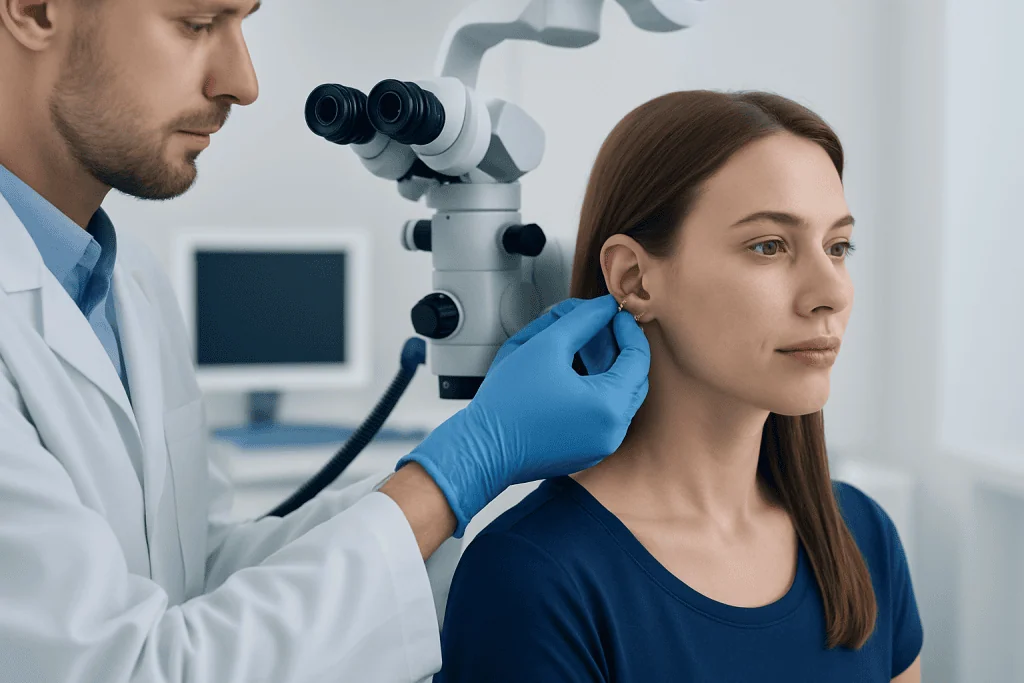
The daith is a small cartilage ridge just above the opening of the ear canal. Claims about daith piercing are often based on the idea that this area overlaps with an acupuncture point thought to influence pain pathways. Acupuncture and ear piercing are not the same intervention, however. Acupuncture uses precisely placed, temporary needles and is delivered in defined sessions, whereas a piercing leaves jewelry in cartilage continuously.
Some research suggests that acupuncture may help certain people with recurrent headaches when used alongside standard care. That finding does not mean that a permanent ear piercing has the same effect. There is no established biological mechanism showing that jewelry in the daith can reliably alter the nerve pathways involved in migraine.
Individual accounts can still feel convincing, particularly when migraine attacks are unpredictable. Yet migraine often follows cycles, and improvement after a piercing may happen by coincidence. For a treatment to be recommended routinely, it needs to show consistent benefit and acceptable safety in appropriately conducted studies. Daith piercing has not met that standard.
Understanding migraine and other headache patterns

Migraine is a neurological condition, not simply a severe headache. Attacks commonly cause throbbing or pulsating pain, often on one side of the head, along with nausea, vomiting, or sensitivity to light, sound, smells, or movement. Some people experience aura: temporary visual, sensory, or speech symptoms that usually develop gradually before or during an attack.
Not every recurring headache is migraine. Tension-type headaches often feel like pressure or tightness on both sides of the head. Cluster headache causes severe attacks, usually around one eye, and may occur in repeated bouts. Frequent use of pain-relieving medicines can also lead to medication-overuse headache, which can make headaches more persistent.
Keeping track of symptoms can help distinguish patterns. A useful headache diary records the date and duration of each attack, pain location and intensity, associated symptoms, menstrual timing when relevant, medications used, sleep, meals, caffeine, stress, and possible triggers. This information supports a more accurate diagnosis and practical treatment plan.
- Common migraine triggers may include irregular sleep, skipped meals, dehydration, stress, alcohol, hormonal changes, or certain environmental stimuli.
- Triggers differ between individuals, and avoiding every possible trigger is usually neither necessary nor realistic.
- A pattern of frequent or disabling headaches should be discussed with a qualified doctor.
Possible risks of cartilage piercings
Choosing a piercing is a personal decision, but it should not replace medical care for migraine. Cartilage piercings usually take longer to heal than earlobe piercings and can be more vulnerable to complications. Pain, swelling, tenderness, minor bleeding, or temporary redness can occur after a new piercing.
More significant concerns include infection, allergic contact dermatitis from metals, scarring, keloid formation in susceptible people, and changes in ear shape if cartilage becomes seriously infected. Signs of infection can include increasing redness or warmth, worsening pain, marked swelling, pus-like discharge, fever, or redness spreading beyond the pierced area. Prompt medical advice is important if these develop.
People with diabetes, immune system conditions, a history of keloids, bleeding disorders, or medicines that affect bleeding or immunity should ask a healthcare professional for individual guidance before getting a cartilage piercing. If someone decides to proceed, selecting a licensed piercer who uses sterile equipment and following aftercare instructions can lower, but not eliminate, the risk of complications.
When to seek medical care for headache
Medical assessment is recommended for headaches that are new, changing, increasingly frequent, difficult to manage, or interfering with work, school, sleep, or family life. A doctor should also review headaches that begin after age 50, occur during pregnancy or soon after delivery, follow a head injury, or happen in a person with cancer, immune suppression, or a known clotting disorder.
Urgent medical care is needed for a sudden, explosive headache that reaches maximum intensity very quickly, sometimes described as a thunderclap headache. Emergency assessment is also important when headache occurs with fainting, confusion, seizure, fever and stiff neck, new weakness or numbness, difficulty speaking, vision loss, severe persistent vomiting, or a major change in behavior or alertness.
These warning signs do not mean that a serious cause is certain, and many people evaluated urgently will not have a dangerous condition. They do mean that prompt assessment is the safest approach. New neurological symptoms should never be assumed to be migraine without professional evaluation.
How doctors assess migraine symptoms
Doctors usually diagnose migraine from a careful history and neurological examination. They will ask about when headaches started, how often they occur, where pain is felt, how long attacks last, associated symptoms, family history, menstrual or hormonal patterns, medical conditions, and all medicines and supplements used. A headache diary can make this discussion more precise.
A neurological examination checks areas such as strength, sensation, balance, coordination, reflexes, eye movements, and speech. In many people with a typical migraine pattern and a normal examination, brain imaging is not necessary. Imaging or blood tests may be considered when symptoms are unusual, the examination is abnormal, or red flags suggest another possible cause.
The aim is not only to rule out concerning conditions but also to build a plan that fits the individual. This may involve identifying a diagnosis such as migraine, assessing the impact of attacks, addressing medication overuse if present, and considering both acute and preventive approaches. A specialist may be helpful when headaches are complex, frequent, or not responding to initial treatment.
Evidence-based ways to manage migraine
Migraine care is individualized. During an attack, a clinician may recommend early treatment with suitable pain-relieving, anti-nausea, or migraine-specific medicines, depending on the person’s symptoms, health history, and other medications. It is important to follow medical guidance, since using some acute medicines too often can worsen headache frequency.
Preventive treatment may be considered when attacks are frequent, prolonged, disabling, or poorly controlled with acute medicines. Options can include medicines used regularly, newer migraine-targeted therapies for appropriate patients, and non-drug approaches. A doctor can explain the expected benefits, possible side effects, and whether a treatment is suitable for pregnancy, breastfeeding, or other health conditions.
Daily habits can support treatment, although they do not replace it. Regular sleep and meals, adequate fluids, gradual exercise, stress-management strategies, and sensible caffeine use may reduce attacks for some people. Acibadem International’s multidisciplinary specialists and JCI-accredited hospitals diagnose and treat migraine and other headache conditions for international patients.
Anyone considering a daith piercing can discuss their goals with a doctor first. If the main goal is migraine relief, investing time in an accurate diagnosis and an evidence-based plan is more likely to be helpful than relying on an unproven piercing.
Frequently asked questions
What piercing helps with migraines?
No piercing is proven to help migraines. Daith piercing is the type most commonly advertised for this purpose, but there is not enough high-quality clinical evidence to show that it prevents or relieves migraine attacks.
Can a daith piercing make migraines worse?
A daith piercing has not been shown to directly worsen migraine, but the pain, stress, poor sleep, or infection associated with a new piercing could trigger headaches in some people. Anyone who notices a clear worsening of symptoms should seek medical advice rather than relying on the piercing.
Is daith piercing the same as acupuncture?
No. Acupuncture involves temporary needles placed by a trained practitioner according to a treatment plan, while a daith piercing leaves jewelry through ear cartilage. Evidence about acupuncture cannot be used as evidence that a daith piercing works for migraine.
How long does it take for a daith piercing to help migraines?
There is no evidence-based timeline because daith piercing is not an established migraine treatment. Reports of improvement can occur at different times and may reflect natural fluctuations in migraine, other lifestyle changes, or placebo effects.
When should someone see a doctor about migraines?
A doctor should assess new, changing, frequent, or disabling headaches, especially if they affect daily activities or require frequent pain medicine. Emergency care is needed for a sudden severe headache or headache with symptoms such as weakness, confusion, seizure, fever and stiff neck, or vision loss.
What are safer alternatives to a piercing for migraine relief?
A medical evaluation, headache diary, appropriate acute treatment, and preventive care when indicated are safer evidence-based approaches. Regular sleep, meals, hydration, exercise, and managing individual triggers may also help as part of a broader plan developed with a healthcare professional.
References
- American Migraine Foundation
- American Headache Society
- National Institute of Neurological Disorders and Stroke
- Mayo Clinic
- Cleveland Clinic
This article is for general information only and is not a substitute for professional medical advice. Please consult a qualified doctor about your individual situation.
Migraine in Turkey — costs, top hospitals & a free quote
JCI-accredited · board-certified surgeons · reply within 24h
Add us as a Preferred Source to see more of our trusted health content across Google Search, AI Overviews and Discover.

More from the Health Library



Related Specialists

Fzt. Gönül Zervent
Physical Medicine & Rehabilitation
Fzt. Dilek Küçükvardar
Physical Medicine & Rehabilitation
Özlem Üçel Zengin
Treatment of Lymphedema
Dr. Rana Özgüven
Emergency Service