What to Check Before Trusting a Health Statistic Online

A trustworthy health statistic should identify its original source, not just repeat a number. Good health information explains who was studied, what was measured, and over what time period.
Key Takeaways
- A trustworthy health statistic should identify its original source, not just repeat a number.
- Good health information explains who was studied, what was measured, and over what time period.
- Percentages can sound dramatic, so it is important to look for the actual numbers and comparison group.
- Older statistics, single studies, and social media posts without references deserve extra caution.
- When a number may affect a medical decision, it is safest to discuss it with a qualified doctor.
Health numbers shared online can be helpful, but they need context to be meaningful. Before trusting a health statistic online, it helps to check where it came from, what it actually measured, and whether it applies to the reader's situation.
Overview: Why health statistics need context
Health statistics appear everywhere online, from news headlines and social media posts to blogs, videos, and advertisements. A number may sound precise and convincing, but precision does not always mean accuracy. A statistic can be technically true in one setting and still be misleading when it is presented without explanation.
For example, a post may say that a treatment “cuts risk by 50%.” That sounds impressive, but it does not explain what risk is being discussed, how common the condition was to begin with, or whether the result came from a large, well-designed study. Without that context, readers may overestimate the importance of the number.
Checking a health statistic online does not require medical training. In many cases, a reader can ask a few practical questions: Who is the source? What was studied? When was it studied? Does the number describe relative risk, absolute risk, or a personal opinion presented as fact? These simple checks can help separate useful information from confusion.
Signs a statistic may be trustworthy

Reliable health information usually tells readers where the number came from. It may cite a public health authority, a peer-reviewed journal, a medical society, or a hospital or university that clearly references its evidence. Trustworthy sources also tend to describe the statistic in plain language rather than using the number as a stand-alone claim.
It also helps when the source explains the study design. A statistic based on a systematic review, meta-analysis, or large clinical trial may carry more weight than one based on a small survey or anecdotal report. The strongest sources often acknowledge uncertainty and limitations instead of making absolute claims.
Other reassuring signs include a publication date, named authors or institutions, and a balanced tone. Information is generally more credible when it avoids dramatic language such as “miracle,” “guaranteed,” or “shocking truth.” In health communication, careful wording is often a sign of careful evidence.
- The source is clearly named.
- The number can be traced to a study or public report.
- The article explains what the statistic measures.
- The date is visible and reasonably current.
- The language is balanced rather than sensational.
Questions to ask before trusting a number
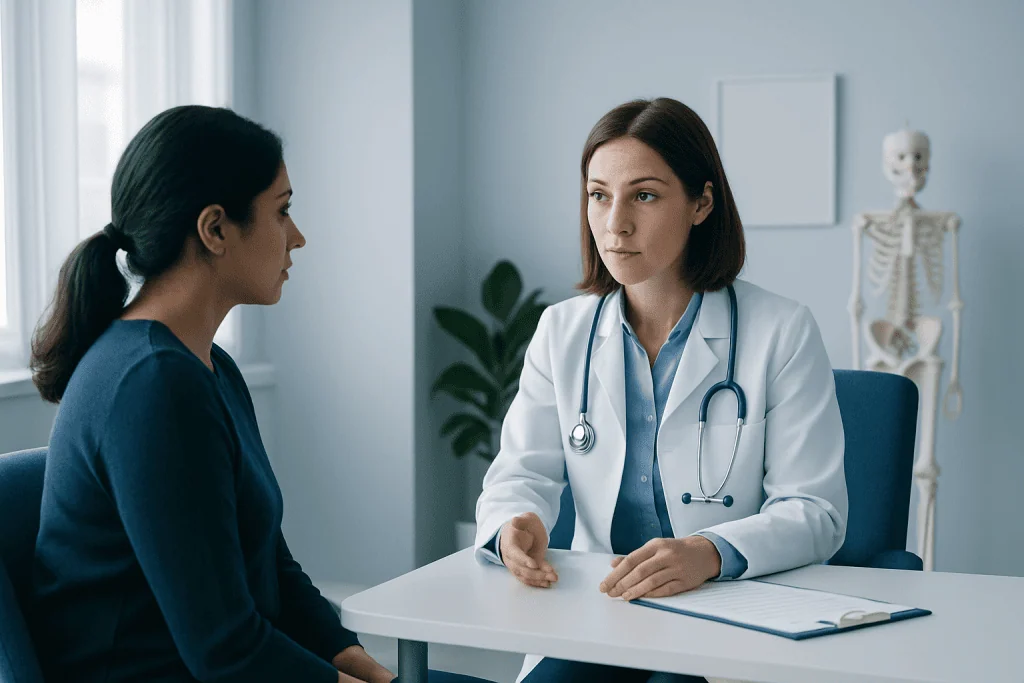
One of the most useful questions is: compared with what? A statistic only makes sense when the comparison is clear. If a post says a food, supplement, or treatment lowers risk, readers should look for the comparison group. Was it compared with no treatment, standard treatment, or something else entirely?
Another key question is: who was studied? Research results may differ by age, sex, health status, geography, and access to care. A number from a narrowly selected group may not apply to the general public. This is especially important when online content suggests that a finding applies to everyone.
It is also worth asking whether the statistic comes from human research at all. Some online claims are based on laboratory or animal studies. These can be scientifically useful, but they are not the same as evidence that a health effect has been shown in people.
Finally, readers should check whether the number reflects a meaningful health outcome. A statistic about a lab marker, scan result, or symptom score may be important, but it is not always the same as evidence about survival, complications, quality of life, or long-term health.
How percentages can mislead
Percentages often sound more dramatic than actual numbers. If a headline says a product doubles the risk of a side effect, that may mean the risk rises from 1 in 10,000 to 2 in 10,000. The change matters, but the overall chance remains low. Looking only at the percentage can create unnecessary fear.
The same issue applies to benefits. A statement that a test or treatment reduces risk by 30% may refer to a small absolute change. If the original risk was 10 in 1,000 and it falls to 7 in 1,000, that is a 30% relative reduction, but the absolute reduction is 3 in 1,000. Both ways of describing the result are mathematically correct, yet they can feel very different.
Good health communication often includes both relative and absolute numbers. It may also report the actual number of people studied, not just percentages. When readers can see the full picture, they are better able to judge whether a finding is likely to be important for real-world decisions.
Common red flags in online health claims
A common warning sign is a statistic with no source at all. Social media graphics, short videos, and reposted quotes may include impressive numbers but give no way to verify them. If the original report or study cannot be found, the claim should be treated cautiously.
Another red flag is cherry-picking. This happens when a writer highlights one favorable statistic while leaving out findings that are less impressive or contradictory. Balanced sources usually mention uncertainty, note when evidence is mixed, and explain that one study rarely settles a medical question.
Readers should also be careful with claims linked to products, programs, or personalities that may benefit financially from attention. A conflict of interest does not automatically make a statistic false, but it increases the need for independent evidence. Similar caution is wise when a post tries to create urgency, fear, or pressure to act immediately.
- No original source or study is named.
- The statistic is old but presented as current.
- The language is emotional, absolute, or sales-focused.
- The claim relies on testimonials instead of research.
- The number appears inconsistent across different websites.
Where to verify a health statistic
Authoritative health organizations are often the best starting point. National public health agencies, the World Health Organization, major medical centers, and recognized professional societies commonly publish patient-friendly summaries that place numbers in context. These sources are more likely to update information as evidence changes.
When a statistic refers to disease risk, screening, or treatment outcomes, readers can also look for whether it aligns with guidance from established organizations. If multiple reputable sources describe the same general finding, confidence may increase. If respected sources disagree, that is a sign to read more carefully and discuss the issue with a clinician.
For a reader facing a personal health concern, general online statistics should not replace individual medical advice. Risk often depends on medical history, family history, age, symptoms, medicines, and test results. A doctor can help explain whether a statistic is relevant and whether further evaluation, such as routine health screening or diagnostic imaging, is appropriate.
Practical self-check steps for readers
Before sharing or acting on a health statistic online, it helps to pause and review the claim carefully. Even a quick one-minute check can reveal whether a number is backed by evidence or simply designed to attract clicks. This habit can reduce confusion and support better decisions.
A practical approach is to read beyond the headline, look for the original source, and see whether the article explains the population studied and the size of the effect. If the piece only repeats a number without context, it may not be reliable enough to guide health choices.
Readers can also compare the claim with information from at least one or two trusted health organizations. If a statistic appears alongside related topics such as high blood pressure or diabetes, it is especially important to confirm that the number matches current medical guidance rather than online opinion.
- Read the full article, not just the headline or caption.
- Find the original source of the number.
- Check the date and whether the evidence is current.
- Look for absolute numbers, not only percentages.
- Ask whether the finding applies to people like the reader.
- Discuss important claims with a qualified healthcare professional.
When to seek professional guidance
If a health statistic online causes worry, prompts a major lifestyle change, or influences decisions about tests or treatment, professional guidance is important. Online information can inform questions, but it cannot assess an individual’s complete health picture. A clinician can explain what a number means in context and whether any action is needed.
This is especially relevant when online claims involve cancer risk, heart disease, medicines, supplements, screening tests, or symptoms that may need medical attention. In these situations, a statistic can easily be misunderstood without clinical interpretation. Medical advice should be based on personal history as well as evidence.
For people seeking further evaluation, Acibadem International’s multidisciplinary specialists in JCI-accredited hospitals diagnose and treat a wide range of conditions for international patients. A doctor may recommend further assessment, including cardiology check-up or other investigations, depending on the concern and the person’s overall risk profile.
Frequently asked questions
Why can the same health statistic look different on different websites?
Different websites may describe the same result using relative risk, absolute risk, or rounded percentages. Some may also quote older studies or select only one part of the findings. Checking the original source usually helps explain the difference.
Is a statistic from social media always unreliable?
Not always, but social media posts often remove important context. A number may be accurate yet incomplete, outdated, or presented in a misleading way. It is best to trace the claim back to a credible medical or public health source.
What is the difference between relative risk and absolute risk?
Relative risk describes how much a risk changes compared with another group, often as a percentage. Absolute risk shows the actual chance of an event happening. Both matter, but absolute risk usually gives a clearer sense of how big the effect really is.
How recent should a health statistic be?
It depends on the topic, but newer information is often better when guidance and treatments change quickly. Older statistics may still be useful for stable topics, yet they should be checked against more current sources. The publication date is an important part of judging trustworthiness.
Can one study prove a health claim?
Usually no. A single study can be informative, but health recommendations are stronger when multiple high-quality studies point in the same direction. Reviews that summarize many studies often give a more reliable picture than one report alone.
What should someone do if an online statistic makes them anxious?
It helps to pause, avoid acting on the claim immediately, and verify it through reputable sources. If the number relates to a personal health concern, speaking with a qualified doctor is the safest next step. A clinician can explain whether the statistic applies to that person's situation.
References
- World Health Organization
- Centers for Disease Control and Prevention
- National Institutes of Health
- U.S. Food and Drug Administration
- Cochrane
This article is for general information only and is not a substitute for professional medical advice. Please consult a qualified doctor about your individual situation.
Explore treatments in Turkey — costs, top hospitals & a free quote
JCI-accredited · board-certified surgeons · reply within 24h
Add us as a Preferred Source to see more of our trusted health content across Google Search, AI Overviews and Discover.