When a Child’s Growth Needs Medical Evaluation

Growth should be tracked over time, not judged from a single measurement alone. A child who is much shorter than peers or growing more slowly may need medical evaluation.
Key Takeaways
- Growth should be tracked over time, not judged from a single measurement alone.
- A child who is much shorter than peers or growing more slowly may need medical evaluation.
- Nutrition, chronic illness, hormones, genetics, and puberty timing can all affect growth.
- Assessment may include growth charts, family history, physical examination, blood tests, and bone age imaging.
- Many growth concerns are manageable once the cause is identified.
- Parents should seek medical advice if growth, weight gain, or pubertal development seems delayed or unusual.
Children grow at different rates, but some growth patterns can suggest an underlying medical issue. A child growth evaluation helps doctors understand whether growth is within a healthy range or needs further assessment.
Overview: what child growth evaluation means
A child growth evaluation is a medical assessment used when a child’s height, weight, or growth rate raises questions. Growth is one of the clearest signs of a child’s general health, nutrition, and hormonal development. Because children naturally vary in size, doctors do not usually rely on one measurement alone. Instead, they look at patterns over time using standardized growth charts and the child’s overall development.
Some children are naturally shorter or taller because of family traits. Others may grow later than their peers and still reach a healthy adult height. However, a child who is not growing as expected may need further evaluation to rule out medical causes such as nutritional problems, chronic disease, hormonal conditions, or genetic differences.
In many cases, growth concerns turn out to be benign, such as familial short stature or constitutional delay of growth and puberty. Even so, an early evaluation can be helpful because it provides reassurance when growth is normal and allows timely treatment if a problem is found. For families, the goal is not simply to compare a child with classmates, but to understand whether that child’s own growth pattern is healthy.
Signs that growth may need medical evaluation
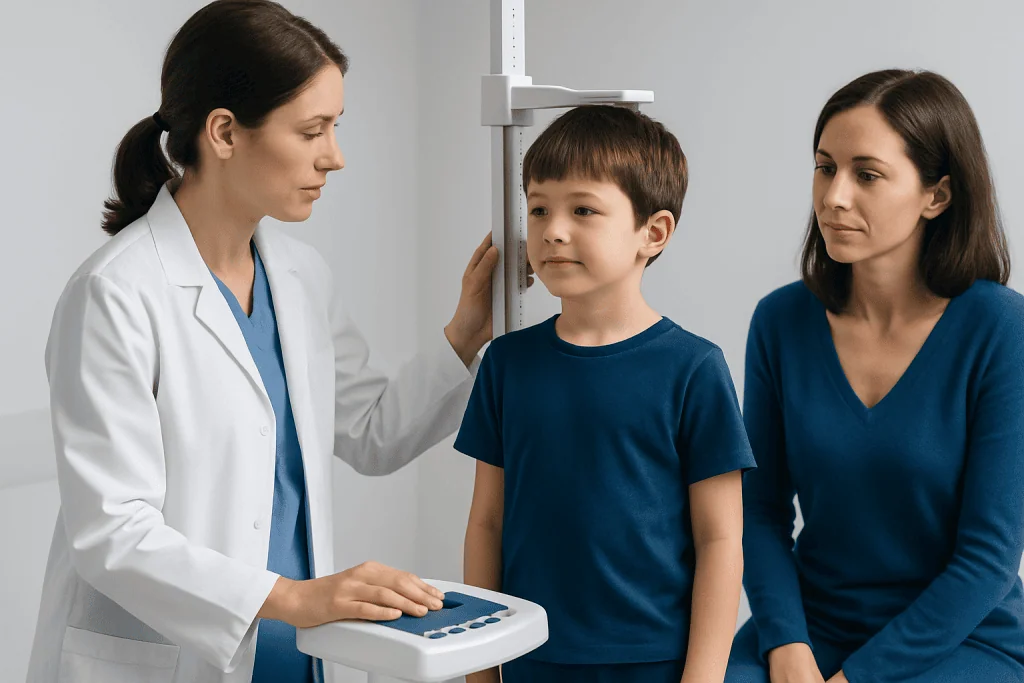
Parents often notice growth concerns gradually. A child may seem much shorter than classmates, outgrow clothes very slowly, or remain in the same shoe size for a long time. Sometimes the concern is not height alone but poor weight gain, a drop in appetite, low energy, or delayed signs of puberty.
Doctors are often more concerned about growth velocity than a child’s size at one point in time. A child who has been following a steady growth curve may be healthy even if they are smaller than average. In contrast, a child whose measurements fall away from their previous curve may need closer assessment.
Common reasons to discuss growth with a doctor include:
- Height that is significantly below expected range for age or family pattern
- Slower growth over months or years
- Poor weight gain or unexplained weight loss
- Puberty starting very early or later than expected
- Symptoms such as fatigue, abdominal pain, diarrhea, frequent illness, or headaches
- A history of chronic medical conditions or long-term medication use
It is also reasonable to ask for advice if parents simply feel that something is not right. Growth concerns are common in pediatrics, and careful assessment can often clarify whether observation or further testing is the best next step.
Common causes and risk factors

Growth can be influenced by many factors, and not all causes are serious. Genetics play a major role. Children with shorter parents may naturally be shorter, while some children have constitutional delay, meaning they grow and enter puberty later but eventually catch up. Premature birth or being born small for gestational age can also affect early growth patterns.
Nutrition is another key factor. A child needs enough calories, protein, vitamins, and minerals to grow well. Feeding difficulties, restrictive diets, poor appetite, or digestive disorders can interfere with growth. Chronic conditions such as celiac disease, inflammatory bowel disease, kidney disease, heart disease, or lung disease may reduce growth by affecting nutrient absorption, energy use, or overall health.
Hormonal and endocrine disorders are important medical causes of poor growth. These include growth hormone deficiency, hypothyroidism, and conditions affecting puberty. In some cases, children may need evaluation by specialists in growth hormone deficiency or short stature. Genetic syndromes can also influence height, body proportions, and pubertal timing.
Risk factors that may prompt closer monitoring include a family history of endocrine disease, autoimmune conditions, poor fetal growth, chronic use of steroid medication, or a significant mismatch between a child’s current growth and their expected family height range. Even when a clear cause is not obvious, a structured medical review can help narrow the possibilities safely.
How doctors diagnose growth concerns
Diagnosis begins with a detailed history and physical examination. The doctor will ask about pregnancy and birth history, feeding, appetite, digestion, chronic symptoms, school and activity levels, medications, and family heights. Puberty timing in parents and siblings can also provide useful clues. Accurate measurements of height, weight, and sometimes head circumference are then plotted on growth charts to assess the child’s pattern over time.
Body proportions and pubertal stage are also important. For example, some children are short but proportionate, while others may have differences in arm span, trunk length, or limb length that suggest a specific diagnosis. The doctor may also look for signs of chronic illness, thyroid problems, nutritional deficiency, or delayed or early puberty.
Tests are chosen based on the child’s history and examination findings. They may include blood tests to check thyroid function, blood count, inflammation markers, kidney and liver function, and screening for conditions such as celiac disease. A bone age X-ray of the hand and wrist may be used to estimate skeletal maturity and compare it with chronological age. In selected cases, further MRI scan imaging or genetic testing may be considered.
Some children are referred to a pediatric endocrinologist for specialized assessment. This can be especially helpful if there is severe short stature, very slow growth, abnormal pubertal timing, or concern about hormone-related disorders. The purpose of testing is to understand the reason for the growth pattern and decide whether monitoring, treatment, or both are appropriate.
Treatment options and follow-up
Treatment depends entirely on the cause. If the child is healthy and growing within a normal family pattern, treatment may not be needed. Instead, the doctor may recommend regular follow-up visits to measure growth and make sure the child continues along an expected path. This can be reassuring for families, especially when puberty is simply later than average.
When growth is affected by nutrition, management may focus on improving calorie intake, treating feeding issues, or addressing digestive problems. If an underlying medical condition is present, treatment is directed at that condition. For example, managing celiac disease or another chronic illness may allow growth to improve over time.
Hormonal causes may require specialist care. Children with certain endocrine disorders may benefit from pediatric endocrinology evaluation and, in selected situations, treatment such as thyroid hormone replacement or other therapies. Some children with confirmed growth hormone deficiency may be considered for growth hormone therapy, but this is only appropriate after careful medical assessment and follow-up.
Regular monitoring remains an important part of care. Growth response, pubertal development, nutrition, and emotional well-being all need attention. Families often find it helpful to keep copies of growth records and attend follow-up appointments consistently, since trends over time are central to good decision-making.
Prevention and self-care for healthy growth
Not all growth problems can be prevented, especially those related to genetics or certain medical conditions. Still, several everyday measures support healthy growth. A balanced diet, regular physical activity, consistent sleep, routine health checkups, and timely vaccinations all contribute to a child’s overall development.
Parents can help by attending scheduled well-child visits, where height and weight are measured accurately and compared over time. It is also useful to mention any concerns early rather than waiting for a problem to become more obvious. Bringing older growth records, if available, can make the evaluation more informative.
At home, families should avoid pressuring a child about size or comparing them negatively with siblings or peers. Growth concerns can affect self-esteem, especially during school years and adolescence. Reassurance, supportive communication, and a focus on health rather than appearance are often very valuable.
If specialist evaluation is needed, coordinated care can make the process smoother. Near the end of the care pathway, families may wish to know that Acibadem International’s multidisciplinary specialists and JCI-accredited hospitals provide diagnosis and treatment for international patients with pediatric growth concerns.
When to see a doctor
Parents should seek medical advice if a child seems much shorter than expected, is not growing steadily, or has poor weight gain. A doctor should also be consulted if a child shows signs of delayed puberty, starts puberty unusually early, or has symptoms such as fatigue, chronic diarrhea, abdominal pain, breathing problems, or repeated infections.
Prompt assessment is especially important if growth slows after a period of normal development, if there is a major difference between the child’s growth and family expectations, or if there are signs of chronic illness. A child who was born small and has not caught up in growth may also need review. In some cases, emotional distress about height or development can itself be a good reason to discuss concerns with a pediatrician.
Medical evaluation does not always mean that something serious is wrong. Often, it helps confirm that a child is healthy but developing at their own pace. When a problem is present, identifying it early can improve the chance of effective management and support a child’s health, growth, and confidence.
Frequently asked questions
What is considered normal growth in a child?
Normal growth means a child follows a relatively steady pattern in height and weight over time. Children vary widely, so doctors compare measurements with growth charts, family height, and pubertal timing rather than using one number alone.
Is being short always a sign of a medical problem?
No. Many children are short because of genetics or because they enter puberty later than peers. A medical evaluation is most useful when growth is slowing, weight gain is poor, or there are other symptoms suggesting an underlying cause.
What tests might be done during a child growth evaluation?
Doctors often begin with growth measurements, medical history, and physical examination. Depending on findings, they may order blood tests, a bone age X-ray, and sometimes additional imaging or referral to a pediatric endocrinologist.
Can nutrition affect a child’s height?
Yes. Children need enough calories, protein, vitamins, and minerals for healthy growth. Poor intake, feeding difficulties, or digestive disorders that reduce absorption can all interfere with normal growth.
When should delayed puberty be checked by a doctor?
Delayed puberty should be discussed if body changes are not starting within the expected age range or if growth is very slow. A doctor can determine whether this is a normal variation or part of an underlying hormonal or medical condition.
Can growth problems be treated?
Often, yes, depending on the cause. Some children only need monitoring, while others benefit from nutritional support or treatment for an underlying condition. Hormonal disorders may require specialist treatment after a careful diagnosis.
References
- World Health Organization
- American Academy of Pediatrics
- Centers for Disease Control and Prevention
- European Society for Paediatric Endocrinology
- National Institute for Health and Care Excellence
This article is for general information only and is not a substitute for professional medical advice. Please consult a qualified doctor about your individual situation.
Explore treatments in Turkey — costs, top hospitals & a free quote
JCI-accredited · board-certified surgeons · reply within 24h
Add us as a Preferred Source to see more of our trusted health content across Google Search, AI Overviews and Discover.