When Does Morning Sickness Start? Here Is What the Evidence Says

Morning sickness most often begins around week 6 of pregnancy and can start anytime from about week 4 to week 9. Despite the name, nausea and vomiting can happen at any time of day.
Key Takeaways
- Morning sickness most often begins around week 6 of pregnancy and can start anytime from about week 4 to week 9.
- Despite the name, nausea and vomiting can happen at any time of day.
- Most cases improve by the second trimester, but timing and severity vary from person to person.
- Warning signs such as dehydration, inability to keep fluids down, or significant weight loss need medical assessment.
- Doctors diagnose morning sickness mainly from symptoms, pregnancy timing, and checks for dehydration or other causes.
Morning sickness usually starts around the 6th week of pregnancy, though some people notice nausea as early as week 4 and others later. In most pregnancies it is harmless and temporary, but severe vomiting, dehydration, weight loss, or symptoms that begin outside the usual pattern should be reviewed by a doctor.
Overview: when morning sickness usually begins
When people ask, when does morning sickness start, the evidence-based answer is that it most commonly begins around the 6th week of pregnancy. Some notice symptoms earlier, around week 4, while others do not feel nausea until week 7, 8, or 9. In many pregnancies, this is a normal early-pregnancy symptom rather than a sign that something is wrong.
Morning sickness describes nausea, sometimes with vomiting, in early pregnancy. The name can be misleading because symptoms are not limited to the morning. A person may feel queasy after waking, in the afternoon, in the evening, or throughout the day depending on individual triggers and symptom severity.
For most people, symptoms peak during the first trimester and begin to ease by around 12 to 14 weeks, although some continue longer. The course is variable, and mild nausea alone can still fall within the usual range of pregnancy symptoms.
What morning sickness feels like
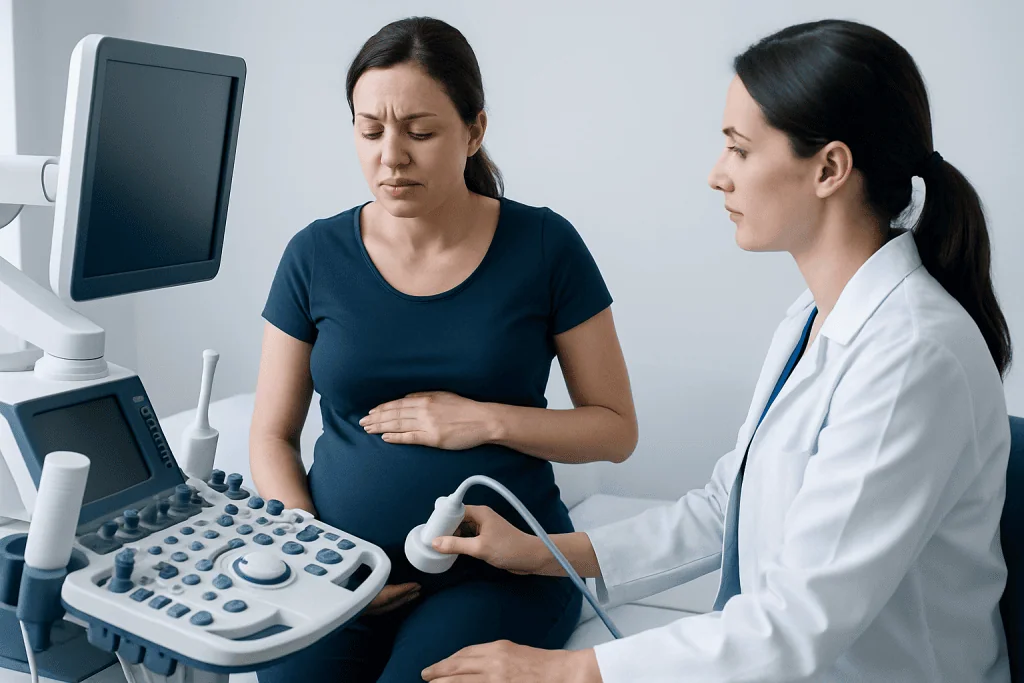
Morning sickness can include a range of symptoms, from a mild unsettled stomach to frequent vomiting. Some people mainly notice nausea, while others have strong food aversions, sensitivity to smells, or a feeling of being unwell when the stomach is empty.
Common symptoms include:
- Nausea with or without vomiting
- Increased sensitivity to odors such as cooking smells or perfume
- Reduced appetite
- Food cravings or food aversions
- Worsening symptoms when hungry, tired, or stressed
Symptoms may come and go over the day. They can be triggered by strong smells, greasy foods, heat, motion, or fatigue. Although unpleasant, mild to moderate symptoms often improve with practical lifestyle changes and time.
It is also possible to have very little or no morning sickness. Pregnancy symptoms vary widely, and the presence or absence of nausea does not by itself confirm that a pregnancy is progressing normally or abnormally.
Why it starts: causes and risk factors

The exact cause of morning sickness is not fully understood, but it is strongly linked to the hormonal changes of early pregnancy. Rising levels of hormones, especially human chorionic gonadotropin and estrogen, are thought to play an important role. Changes in digestion, a more sensitive sense of smell, and slower stomach emptying may also contribute.
Several factors can make nausea more likely or more intense. These include a personal history of motion sickness or migraines, nausea in a previous pregnancy, carrying twins or more, and a family history of severe pregnancy nausea. Tiredness, stress, and an empty stomach can also worsen symptoms.
In a small number of pregnancies, nausea and vomiting become severe enough to cause dehydration and weight loss. This condition is called hyperemesis gravidarum. It is different from typical morning sickness because it can affect nutrition, fluid balance, and daily functioning and may need medical treatment.
What timing is considered normal, and when it may need review
Typical morning sickness starts in the first trimester, often between weeks 4 and 9. It usually improves by the second trimester, though some people continue to have symptoms for longer. A later start does not always mean a problem, but symptoms that begin well outside the usual pattern may prompt a doctor to consider other causes of nausea and vomiting.
Most early-pregnancy nausea is harmless. Still, certain red flags deserve medical review. These include being unable to keep fluids down, vomiting many times a day, signs of dehydration such as dizziness or very dark urine, weight loss, severe weakness, fainting, or abdominal pain and fever. Vaginal bleeding or one-sided pelvic pain should also be assessed promptly because they may point to issues unrelated to routine morning sickness.
Another reason to seek review is nausea that suddenly becomes severe after previously being mild, or nausea that persists beyond mid-pregnancy without improvement. In these situations, clinicians may check for conditions such as dehydration, infection, thyroid problems, digestive disorders, or complications of pregnancy.
How doctors evaluate morning sickness
Diagnosis is usually based on the pregnancy stage, the pattern of symptoms, and how well the person is able to eat and drink. A doctor will ask when the nausea started, how often vomiting occurs, whether fluids can be kept down, and whether there are symptoms such as abdominal pain, fever, urinary symptoms, headaches, or weight loss.
A physical examination may look for signs of dehydration, low blood pressure, abdominal tenderness, or other clues to a different diagnosis. If symptoms are severe, doctors may order urine tests to check hydration and ketones, and blood tests to assess electrolytes, kidney function, and other possible causes. In some cases, an ultrasound is used to confirm the pregnancy location and dating, or to assess for multiple pregnancy.
If there is uncertainty about the pregnancy itself, evaluation may overlap with early-pregnancy care and fertility and pregnancy assessment. Some patients may also need ultrasound imaging when symptoms are atypical or severe. The goal is not only to confirm morning sickness but also to rule out dehydration, infection, or other medical problems that can mimic it.
Treatment and practical ways to feel better
Treatment depends on severity. For mild symptoms, doctors often recommend small, frequent meals rather than large ones, keeping crackers or dry toast nearby for the morning, sipping fluids regularly, and avoiding individual food or smell triggers. Rest can help, because fatigue often makes nausea worse.
Some people benefit from bland foods, cold meals with less odor, ginger-containing foods or drinks, and separating solids from liquids during the day. A prenatal vitamin taken at a different time of day may be easier to tolerate, but any changes to supplements or medicines should be discussed with a clinician.
If symptoms interfere with normal eating and drinking, doctors may recommend anti-nausea treatment that is considered suitable in pregnancy. More severe cases may need prescription medicines, intravenous fluids, or hospital care, especially if hyperemesis gravidarum is suspected. In some situations, pregnancy follow-up care helps monitor hydration, weight, and overall maternal well-being over time.
Near the end of the care pathway, some international patients choose centers such as Acibadem International, where multidisciplinary specialists in JCI-accredited hospitals evaluate persistent pregnancy-related nausea and provide supportive treatment when needed.
When to seek medical care
Medical advice should be sought if nausea or vomiting prevents normal fluid intake, causes reduced urination, or leads to dizziness, confusion, or fainting. These can be signs of dehydration and may require prompt treatment. Review is also sensible if weight is dropping, vomiting is frequent, or symptoms are making daily life very difficult.
Urgent assessment is especially important if nausea is accompanied by severe abdominal pain, fever, blood in vomit, vaginal bleeding, one-sided pelvic pain, or persistent headaches. These symptoms are not typical of simple morning sickness and may point to another condition needing attention.
People who have pre-existing medical conditions, are pregnant with multiples, or have had severe nausea in a prior pregnancy may need earlier support. If symptoms are troubling but not urgent, a qualified obstetrician, family doctor, or midwife can suggest safe strategies and decide whether testing or medication is appropriate.
Frequently asked questions
Can morning sickness start before a missed period?
It is uncommon to recognize true morning sickness before a missed period, but some people report early nausea around the time pregnancy hormones begin to rise. More often, symptoms become noticeable around week 6 of pregnancy, counted from the first day of the last menstrual period.
Is it normal to have morning sickness all day?
Yes. The term morning sickness is commonly used, but nausea can happen at any time of day or throughout the day. The timing does not by itself mean the condition is more serious.
How long does morning sickness usually last?
For many people, symptoms improve by about 12 to 14 weeks of pregnancy. Some continue to feel nauseated longer, and a smaller group may have symptoms well into the second trimester or beyond.
Does no morning sickness mean something is wrong?
Not necessarily. Some pregnant people have little or no nausea and still have a healthy pregnancy. Symptoms vary widely, so the absence of morning sickness alone is not a reliable sign of a problem.
What is the difference between morning sickness and hyperemesis gravidarum?
Morning sickness usually causes manageable nausea, sometimes with occasional vomiting, and often improves with simple measures. Hyperemesis gravidarum is a more severe condition involving persistent vomiting, dehydration, weight loss, or difficulty keeping food and fluids down, and it often needs medical treatment.
What foods can help with morning sickness?
Many people tolerate bland, dry, or low-fat foods better than rich or strongly scented meals. Small frequent meals, crackers, toast, rice, bananas, applesauce, and cool foods may help, but triggers differ from person to person.
When should a pregnant person call a doctor about nausea?
A doctor should be contacted if there is dehydration, very dark urine, inability to keep fluids down, weight loss, fainting, or severe weakness. Medical review is also important if nausea comes with abdominal pain, fever, vaginal bleeding, or other symptoms that are not typical of routine morning sickness.
References
- American College of Obstetricians and Gynecologists
- National Institute for Health and Care Excellence
- NHS
- Royal College of Obstetricians and Gynaecologists
- Merck Manual Consumer Version
This article is for general information only and is not a substitute for professional medical advice. Please consult a qualified doctor about your individual situation.
Medical weight-loss options in Turkey — costs & eligibility
JCI-accredited · board-certified surgeons · reply within 24h
Add us as a Preferred Source to see more of our trusted health content across Google Search, AI Overviews and Discover.