When Should a Child See a Pediatrician? Warning Signs Parents Should Know

Breathing difficulty, dehydration, seizures, and severe allergic reactions need urgent medical attention. A child should see a pediatrician if symptoms are persistent, worsening, or affecting eating, drinking, sleeping, or behavior.
Key Takeaways
- Breathing difficulty, dehydration, seizures, and severe allergic reactions need urgent medical attention.
- A child should see a pediatrician if symptoms are persistent, worsening, or affecting eating, drinking, sleeping, or behavior.
- Fever is common in childhood, but age, temperature, and the child’s overall condition matter more than fever alone.
- Changes in alertness, unusual sleepiness, severe pain, or a rash with fever should not be ignored.
- Parents know their child best; if something seems significantly different or concerning, medical advice is appropriate.
Many childhood illnesses are mild and improve with rest, fluids, and time, but some symptoms should be checked by a pediatrician promptly. Knowing which warning signs matter can help parents feel more confident and get care when a child needs it.
Overview
Children often get fevers, coughs, stomach bugs, rashes, and minor injuries as they grow. In many cases, these problems can be managed at home with rest, fluids, comfort measures, and observation. Still, some symptoms may signal a more serious illness or complication and should be assessed by a pediatrician.
A pediatrician looks at more than one symptom in isolation. Age, medical history, vaccination status, underlying conditions, how long symptoms have lasted, and how the child is behaving all help guide the decision. A baby who feeds poorly, for example, may need earlier evaluation than an older child with the same symptom.
Parents do not need to diagnose the cause before asking for help. A good rule is to seek medical advice if a child appears unusually unwell, symptoms are getting worse instead of better, or normal activities such as drinking, urinating, sleeping, or interacting are clearly affected.
Symptoms That Need Prompt Medical Attention
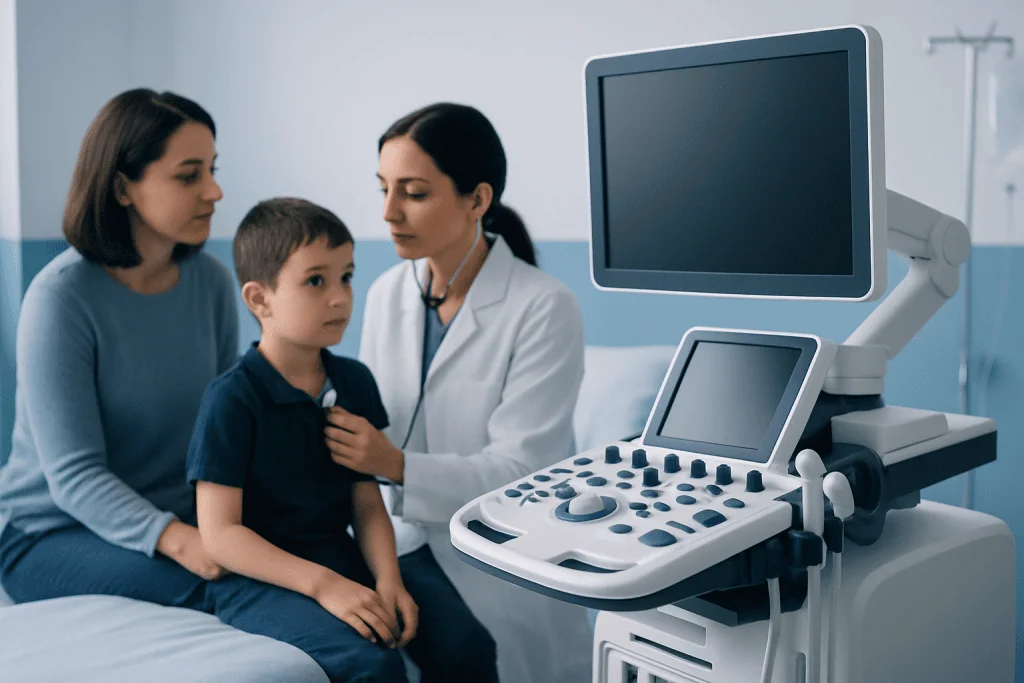
Some warning signs should never be watched for too long at home. Trouble breathing is one of the most important. This can include fast breathing, chest pulling in with breaths, noisy breathing, grunting, wheezing, bluish lips, or a child who cannot speak or cry normally because of breathlessness. These signs should be assessed urgently.
Dehydration is another concern, especially during vomiting, diarrhea, or fever. Warning signs include a very dry mouth, no tears when crying, sunken eyes, fewer wet diapers, urinating much less than usual, or unusual sleepiness. Young infants can become dehydrated quickly, so medical advice should be sought early.
Parents should also seek prompt care for severe pain, a seizure, fainting, a stiff neck, repeated vomiting, a serious injury, a rash with fever, or a child who is very difficult to wake, confused, unusually floppy, or not responding normally. A severe allergic reaction, with swelling of the lips or tongue, breathing trouble, widespread hives, or sudden weakness, requires emergency care.
- Breathing difficulty or bluish skin/lips
- Signs of dehydration
- Seizure or loss of consciousness
- Severe or worsening pain
- Rash with fever or purple-looking spots
- Marked sleepiness, confusion, or poor responsiveness
Fever: When It Is More Concerning
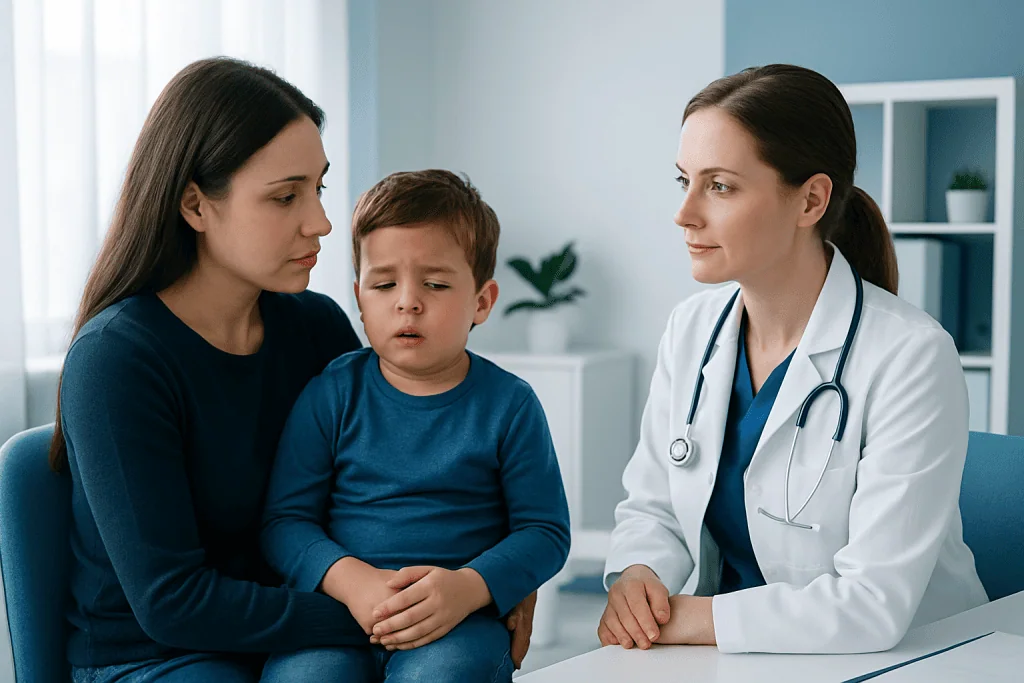
Fever is one of the most common reasons parents contact a pediatrician. By itself, fever is not always dangerous; it is often a sign that the body is fighting an infection. What matters most is the child’s age, overall appearance, and whether there are other concerning symptoms such as breathing difficulty, dehydration, neck stiffness, or a rash.
In very young babies, fever deserves extra attention. Any infant under 3 months with a fever should be assessed by a doctor promptly because young babies can become sick quickly and may not show many other symptoms. In older infants and children, a pediatrician may still be needed if the fever is high, lasts more than a few days, keeps returning, or the child seems unusually unwell.
Parents should also seek advice if a child with fever refuses fluids, has fewer wet diapers, is hard to wake, has a seizure, or has ongoing pain such as ear pain, sore throat, or abdominal pain. When fever comes with cough, breathing problems, or chest discomfort, the doctor may consider illnesses such as pneumonia and recommend further evaluation.
Gastrointestinal, Respiratory, and Skin Symptoms to Watch
Vomiting and diarrhea are common in children and often improve within a short time. A pediatrician should be contacted if vomiting is persistent, green in color, contains blood, or prevents a child from keeping down fluids. Ongoing diarrhea, blood in the stool, severe belly pain, or signs of dehydration also need medical attention.
Respiratory symptoms can change quickly, especially in babies and young children. A simple cold may only need home care, but a cough that is worsening, interfering with sleep, causing vomiting, or lasting longer than expected should be assessed. Medical review is especially important if there is wheezing, chest pain, fever that does not settle, or breathing that looks labored.
Skin symptoms may also be a clue that a child needs to be seen. A rash that spreads quickly, blisters, becomes painful, looks infected, or appears with fever should be checked. Itching alone is often less urgent, but a rash with swelling of the face, trouble breathing, or faintness may suggest an allergic reaction and needs urgent treatment. If the doctor suspects an underlying cause such as asthma or a skin infection, further tests or treatment may be advised.
Behavioral Changes, Development, and Ongoing Concerns
Parents often notice subtle changes before a specific symptom becomes obvious. A child who is much less active than usual, not making eye contact, refusing to eat for a prolonged period, crying inconsolably, or suddenly losing interest in play may need medical review. These changes do not always mean a serious illness, but they can be important clues.
Sleep can also offer useful information. Sleeping more during an illness can be normal, but unusual difficulty waking a child, persistent lethargy, or a child who seems confused after waking should be assessed. In babies, weak feeding, persistent irritability, or fewer wet diapers can be more meaningful than fever alone.
Not every reason to see a pediatrician is urgent. Ongoing constipation, poor weight gain, frequent headaches, repeated ear infections, chronic cough, snoring, feeding difficulties, or concerns about speech, movement, learning, or social development are good reasons to book a non-emergency appointment. Early evaluation can help identify whether reassurance, monitoring, or specialist care is needed.
What to Expect at the Pediatric Visit
During the appointment, the pediatrician will ask about the child’s symptoms, how long they have been present, any fever, eating and drinking patterns, toilet habits, sleep, recent contacts with illness, travel, medications, and any known allergies or health conditions. Parents may find it helpful to note when symptoms started and what makes them better or worse.
The examination usually includes checking temperature, breathing, heart rate, hydration, alertness, throat, ears, chest, abdomen, and skin. Depending on the child’s symptoms, the doctor may recommend simple tests such as a throat swab, blood test, urine test, or imaging. In respiratory or injury-related concerns, tools such as MRI or X-ray may sometimes be used when clinically appropriate.
Treatment depends on the cause. Many viral illnesses only need supportive care, while bacterial infections may require antibiotics. Some children may benefit from inhaled medicines, fluids, wound care, or referral for further assessment. If symptoms suggest an airway problem or enlarged adenoids or tonsils, the doctor may discuss evaluation by specialists and, in selected cases, options such as pediatric ENT surgery.
Home Care, Prevention, and When to Seek Emergency Help
At home, parents can support recovery by encouraging fluids, offering regular feeds to infants, allowing rest, monitoring temperature and breathing, and using medicines exactly as advised by a qualified clinician. Good hand hygiene, routine vaccinations, smoke-free environments, and keeping children away from sick contacts when possible can reduce the risk of many infections.
It is also useful to trust patterns over single moments. A child who has one brief episode of vomiting but quickly returns to normal may only need observation. A child who steadily worsens, becomes listless, drinks poorly, or develops new symptoms should be reassessed. If there is ever uncertainty, calling a pediatrician is reasonable.
Emergency care is needed for breathing difficulty, severe dehydration, a seizure, severe allergic reaction, major injury, blue lips, a child who is difficult to wake, or any symptom that seems life-threatening. For families seeking coordinated care, Acibadem International’s multidisciplinary specialists and JCI-accredited hospitals diagnose and treat children with acute and chronic conditions, including those who need advanced imaging or specialist evaluation.
Frequently asked questions
How do parents know if a child is sick enough to see a pediatrician?
A child should be seen if symptoms are worsening, lasting longer than expected, or affecting drinking, urination, breathing, sleep, or behavior. Parents should also seek advice if the child seems very different from usual, even when the cause is unclear.
Should every fever be checked by a doctor?
Not every fever needs an urgent visit, especially in older children who are drinking fluids and staying alert. However, any fever in a baby under 3 months should be assessed promptly, and fever with breathing trouble, dehydration, rash, seizure, or unusual sleepiness needs medical review.
When is a cough a reason to see a pediatrician?
A cough should be checked if it is causing breathing difficulty, wheezing, chest pain, vomiting, poor sleep, or fever that does not improve. Medical advice is also important if the cough is persistent or the child appears to be working hard to breathe.
What are the signs of dehydration in children?
Common signs include a dry mouth, no tears when crying, sunken eyes, fewer wet diapers, urinating less often, and unusual sleepiness or irritability. Babies and young children can become dehydrated faster than older children, so early advice is important.
Is it normal for a child to sleep more when sick?
Children often rest more when they have a mild illness, and extra sleep can be part of recovery. It becomes concerning if the child is very hard to wake, seems confused, does not respond normally, or is too sleepy to drink fluids.
When should a rash be considered urgent?
A rash needs urgent attention if it comes with fever, breathing difficulty, swelling of the face, severe pain, blistering, purple-looking spots, or a child who seems very unwell. A rapidly spreading rash or one that looks infected should also be checked promptly.
References
- American Academy of Pediatrics
- Centers for Disease Control and Prevention
- National Health Service
- World Health Organization
This article is for general information only and is not a substitute for professional medical advice. Please consult a qualified doctor about your individual situation.
Persistent digestive symptoms? Get evaluated in Turkey
JCI-accredited · board-certified surgeons · reply within 24h
Add us as a Preferred Source to see more of our trusted health content across Google Search, AI Overviews and Discover.

Pediatrics
Complete healthcare for infants, children and adolescents across all sub-specialties.
232 specialists in this unitMore from the Health Library



Related Specialists

Dr. Nazan Kanal
Cardiology
Dr. İlknur Çitil
Gynecology & Obstetrics
Prof. Dr. Zeynep Güven
Physical Medicine & Rehabilitation
Dr. Cengiz Bali
Clinical Laboratory