

When Sleep Problems Need a Neurologist

A neurologist may evaluate sleep problems when symptoms suggest a disorder involving the brain, nerves, or sleep-wake regulation. Warning signs include sudden daytime sleep attacks, restless or jerking limbs, unusual nighttime behaviors, loud snoring with pauses in breathing, or excessive daytime sleepiness.
Key Takeaways
- A neurologist may evaluate sleep problems when symptoms suggest a disorder involving the brain, nerves, or sleep-wake regulation.
- Warning signs include sudden daytime sleep attacks, restless or jerking limbs, unusual nighttime behaviors, loud snoring with pauses in breathing, or excessive daytime sleepiness.
- Diagnosis may involve a sleep history, neurologic exam, sleep diary, and tests such as polysomnography or multiple sleep latency testing.
- Treatment depends on the cause and may include lifestyle changes, behavioral therapy, medicines, devices, or treatment of another neurologic condition.
- Persistent sleep problems deserve medical attention because sleep affects mood, memory, safety, and overall health.
Many sleep problems improve with healthy habits, stress management, or routine medical care. When symptoms are persistent, unusual, or linked to daytime neurologic complaints, a neurologist with sleep expertise may help identify an underlying sleep-wake or nervous system disorder.
Overview
Sleep problems are common, and many are temporary. Stress, travel, shift work, pain, medication side effects, caffeine, and poor sleep habits can all disrupt sleep. In many cases, a primary care doctor can help address these issues and rule out common medical causes.
Sometimes, however, sleep symptoms point to a condition involving the brain, nerves, or the body’s sleep-wake control systems. This is where neurological sleep medicine becomes important. A neurologist with sleep training evaluates disorders such as narcolepsy, restless legs syndrome, REM sleep behavior disorder, some forms of insomnia, parasomnias, and sleep-related movement disorders.
A neurologist may also become involved when sleep symptoms occur together with headaches, memory changes, tremor, seizures, weakness, numbness, or other neurologic concerns. In other situations, the main issue may be breathing during sleep, and care may overlap with pulmonary, ENT, cardiology, or mental health specialists. The goal is not simply to improve sleep, but to understand why sleep is disrupted and how it affects daytime function and long-term health.
Symptoms That May Need a Neurologist
Not every restless night requires specialist care, but some patterns deserve closer evaluation. One important sign is excessive daytime sleepiness that continues despite spending enough time in bed. This may appear as nodding off during conversations, difficulty staying awake at work, or sleepiness while driving. Sudden sleep attacks, vivid dream-like experiences when falling asleep or waking, and episodes of muscle weakness triggered by emotion can suggest narcolepsy.
Repeated leg discomfort in the evening, a strong urge to move the legs, or rhythmic limb jerks during sleep may point to restless legs syndrome or periodic limb movement disorder. Other patients notice unusual behaviors during the night, such as acting out dreams, sleepwalking, confused awakenings, punching, kicking, or talking during sleep. These nighttime events can sometimes resemble seizures, making neurologic evaluation especially helpful.
Snoring and possible sleep apnea are also important, especially when they occur with gasping, witnessed pauses in breathing, morning headaches, poor concentration, or severe daytime fatigue. Other clues include waking with paralysis, frequent unexplained awakenings, sudden nighttime panic-like episodes, or sleeping at unusual times because the body clock seems out of sync.
- Daytime sleepiness that interferes with work, school, or driving
- Sudden sleep episodes or unusual weakness with strong emotions
- Restless legs, jerking movements, or repeated nighttime kicking
- Dream enactment, sleepwalking, or other unusual sleep behaviors
- Loud snoring, breathing pauses, or gasping during sleep
- Sleep problems along with headaches, seizures, memory issues, or other neurologic symptoms
Causes and Risk Factors

Sleep disorders can arise from many different mechanisms. Insomnia may be linked to stress, anxiety, depression, chronic pain, menopause, medications, or irregular schedules. In contrast, neurologic sleep disorders often reflect changes in the brain systems that regulate alertness, movement, breathing, or behavior during sleep. For example, narcolepsy affects the control of sleep and wakefulness, while restless legs syndrome involves uncomfortable sensations and an urge to move, often worsening at night.
Some conditions become more likely with age, family history, iron deficiency, pregnancy, obesity, or certain medications. REM sleep behavior disorder is more common in older adults and can sometimes occur alongside neurodegenerative conditions, although many people with dream enactment do not have one. Sleep-disordered breathing may be more likely in people with obesity, nasal obstruction, certain jaw or airway structures, or some neuromuscular conditions.
Medical and neurologic illnesses can also disturb sleep. Parkinsonian symptoms, epilepsy, stroke, neuropathy, migraine, and autonomic disorders may all affect sleep quality or alertness. Mood disorders, substance use, and irregular work hours can further complicate the picture. Because more than one cause may be present at the same time, a careful evaluation is often needed before the best treatment plan becomes clear.
How Diagnosis Is Made
Diagnosis begins with a detailed conversation about sleep patterns, daytime symptoms, medical history, medications, and family history. The doctor may ask when the problem started, how often it happens, what makes it better or worse, and whether there are safety concerns such as drowsy driving, falls, or injuries during sleep. Bed partners or family members can sometimes provide helpful observations about snoring, movements, breathing pauses, or unusual behaviors.
A neurologic and general physical examination may be performed to look for signs of movement disorders, neuropathy, weakness, cognitive changes, or other contributing conditions. Patients are often asked to keep a sleep diary for one to two weeks and may complete questionnaires about sleepiness, insomnia, or circadian rhythm patterns. In some cases, blood tests are used to check for issues such as iron deficiency, thyroid problems, or other medical conditions that can worsen sleep symptoms.
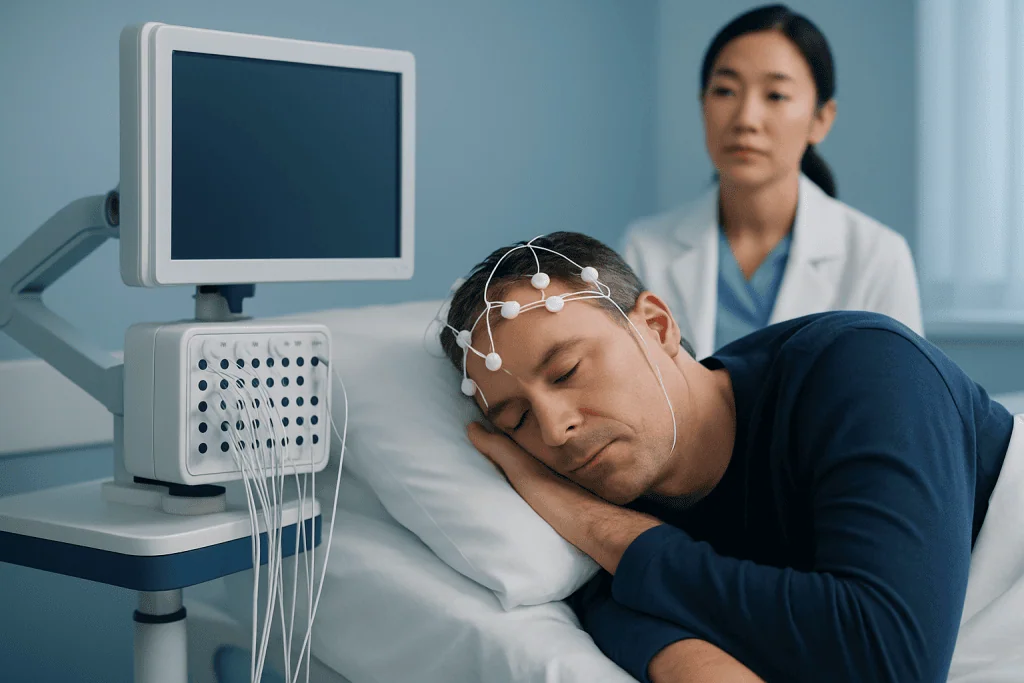
Sleep testing may be recommended depending on the symptoms. An overnight sleep study, called polysomnography, records breathing, oxygen levels, heart rhythm, brain waves, eye movements, and muscle activity during sleep. This can help diagnose disorders such as sleep apnea, parasomnias, or periodic limb movements. For severe daytime sleepiness or suspected narcolepsy, a next-day nap test called multiple sleep latency testing may be used after the overnight study. Some patients may also need actigraphy, EEG testing, or brain imaging if seizures or other neurologic conditions are suspected.
Treatment Options
Treatment depends on the underlying cause. For insomnia, treatment often starts with sleep habit changes and cognitive behavioral therapy for insomnia, which helps reshape patterns that keep sleep disrupted. If stress, anxiety, pain, or another medical condition is involved, treating those issues can also improve sleep. Medicines may be considered in selected cases, but they are usually only one part of care.
When breathing problems are the main issue, treatment may include weight management, positional therapy, oral appliances, or sleep apnea treatment such as positive airway pressure therapy. If a structural airway issue contributes, evaluation by an ENT specialist may be useful. Restless legs syndrome may improve with correcting iron deficiency when present, reviewing medications that worsen symptoms, and using symptom-targeted treatments when needed.
People with narcolepsy, parasomnias, or sleep-related movement disorders often benefit from specialist follow-up. Safety measures may be needed for dream enactment or sleepwalking, such as removing sharp objects, padding the environment, and protecting bed partners. If events could be seizures or another neurologic problem, additional neurologic care is important. In some situations, treatment overlaps with neurology care or broader sleep medicine services to manage complex symptoms and improve both nighttime sleep and daytime function.
Prevention and Self-care
Not all sleep disorders can be prevented, but healthy routines can reduce many common triggers and support better diagnosis and treatment. Helpful habits include keeping a regular sleep and wake time, creating a dark and quiet sleep environment, limiting caffeine late in the day, avoiding alcohol close to bedtime, and reducing heavy meals just before sleep. Regular physical activity can also help, although vigorous exercise is best finished several hours before bedtime.
People who suspect a sleep disorder should track symptoms rather than simply trying to push through them. A diary of bedtime, wake time, naps, snoring, awakenings, leg symptoms, and daytime sleepiness can be very useful. Recording medication use, alcohol intake, and shift-work patterns may also reveal triggers. If a bed partner notices unusual behaviors or breathing pauses, those observations should be shared with the doctor.
Safety matters. Anyone with severe daytime sleepiness should avoid driving or operating dangerous machinery until evaluated. Those with sleepwalking or dream enactment should secure the sleep space to lower the risk of injury. Self-care can support recovery, but persistent or unusual symptoms should not be dismissed as simple tiredness.
When to See a Doctor
Medical review is a good idea when sleep problems last more than a few weeks, recur often, or affect mood, concentration, school, work, or relationships. A sleep-focused neurologic evaluation may be especially important when symptoms include sudden sleep attacks, repeated limb movements, episodes that resemble seizures, dream enactment, sleep paralysis, memory changes, or sleepiness that seems far greater than expected.
Urgent evaluation is needed if sleepiness creates a risk while driving or working, if someone stops breathing during sleep, or if nighttime behaviors lead to injuries. A doctor should also be consulted if new sleep problems appear after a stroke, head injury, new medication, or with other neurologic symptoms such as tremor, weakness, numbness, or frequent fainting.
Specialist input can help connect symptoms that may seem unrelated at first. For international patients who need further assessment, Acibadem International’s multidisciplinary specialists and JCI-accredited hospitals evaluate and treat sleep and neurologic disorders with coordinated care.
Frequently asked questions
What kind of sleep problems are neurological?
Neurological sleep problems involve the brain, nerves, or the systems that control sleep and wakefulness. Examples include narcolepsy, restless legs syndrome, periodic limb movement disorder, REM sleep behavior disorder, some parasomnias, and sleep-related problems linked to epilepsy or movement disorders.
Should a person see a neurologist for insomnia?
Sometimes, but not always. Many cases of insomnia are related to stress, habits, mood, pain, or other medical issues and may be managed first by a primary care doctor or sleep specialist. A neurologist may be helpful when insomnia comes with unusual movements, nighttime behaviors, seizures, headaches, or other neurologic symptoms.
Can sleep disorders cause daytime memory and concentration problems?
Yes. Poor sleep quality, repeated awakenings, breathing disruptions, and excessive sleepiness can affect attention, memory, reaction time, and mood. Treating the sleep disorder often improves daytime functioning.
Is snoring a reason to see a neurologist?
Simple snoring does not always require a neurologist, but loud snoring with pauses in breathing, gasping, morning headaches, or excessive daytime sleepiness should be evaluated. Depending on the likely cause, care may involve a sleep neurologist, pulmonologist, or ENT specialist.
How is narcolepsy diagnosed?
Diagnosis usually begins with a detailed history, sleep diary, and overnight sleep study. This is often followed by a multiple sleep latency test the next day to measure how quickly the person falls asleep and whether REM sleep appears unusually early.
Can unusual behaviors during sleep be dangerous?
They can be. Sleepwalking, dream enactment, or sudden movements during sleep may lead to falls or injuries to the person or bed partner. These symptoms deserve medical attention, especially if they are frequent, forceful, or new.
References
- American Academy of Sleep Medicine
- National Institute of Neurological Disorders and Stroke
- National Heart, Lung, and Blood Institute
- American Academy of Neurology
- Mayo Clinic
This article is for general information only and is not a substitute for professional medical advice. Please consult a qualified doctor about your individual situation.
Explore treatments in Turkey — costs, top hospitals & a free quote
JCI-accredited · board-certified surgeons · reply within 24h
Add us as a Preferred Source to see more of our trusted health content across Google Search, AI Overviews and Discover.

More from the Health Library



Related Specialists

Prof. Dr. Ahmet Onur Odabaşı
Ear Nose & Throat
Dyt. Yağmur Kaya
Nutrition & Diet
Assoc. Prof. Dr. Selçuk Keskin
Urology
Prof. Dr. Züleyha Akkan Çetinkaya
Gastroenterology