When Swollen Joints Need Urgent Medical Attention

A swollen joint can be caused by injury, inflammation, infection, crystal arthritis, or chronic joint disease. Urgent medical attention is needed if swelling is sudden, severe, red, hot, follows a major injury, or comes with fever.
Key Takeaways
- A swollen joint can be caused by injury, inflammation, infection, crystal arthritis, or chronic joint disease.
- Urgent medical attention is needed if swelling is sudden, severe, red, hot, follows a major injury, or comes with fever.
- A painful swollen joint with fever may signal septic arthritis, which can damage the joint quickly without treatment.
- Diagnosis may include a physical exam, blood tests, imaging, and sometimes joint fluid analysis.
- Early treatment can reduce pain, protect the joint, and address the underlying cause safely.
Swollen joints are common and often linked to injury, overuse, or arthritis, but some cases need urgent medical attention. Fast assessment is especially important when swelling comes with severe pain, fever, redness, warmth, or a sudden inability to move the joint.
Overview: What swollen joints can mean
Swollen joints happen when fluid builds up in or around a joint, making it look enlarged or feel tight, stiff, or painful. The swelling may affect one joint, such as a knee, ankle, wrist, or finger, or several joints at the same time. Some people notice swelling after an injury or heavy activity, while others develop it gradually because of inflammation or a long-term joint condition.
In many cases, swollen joints are not an emergency. Mild sprains, overuse, osteoarthritis, or a flare of an existing inflammatory condition can all cause swelling that improves with rest and medical guidance. Even so, the body can produce similar symptoms for more serious reasons, including infection, internal bleeding after trauma, or a sudden crystal arthritis attack such as gout.
The key question is not only whether a joint is swollen, but how quickly it happened, how painful it is, and what other symptoms are present. A joint that is hot, very painful, difficult to move, or associated with fever should be assessed quickly. Prompt care can help protect the joint and, in some situations, prevent complications elsewhere in the body.
Symptoms that may signal an urgent problem
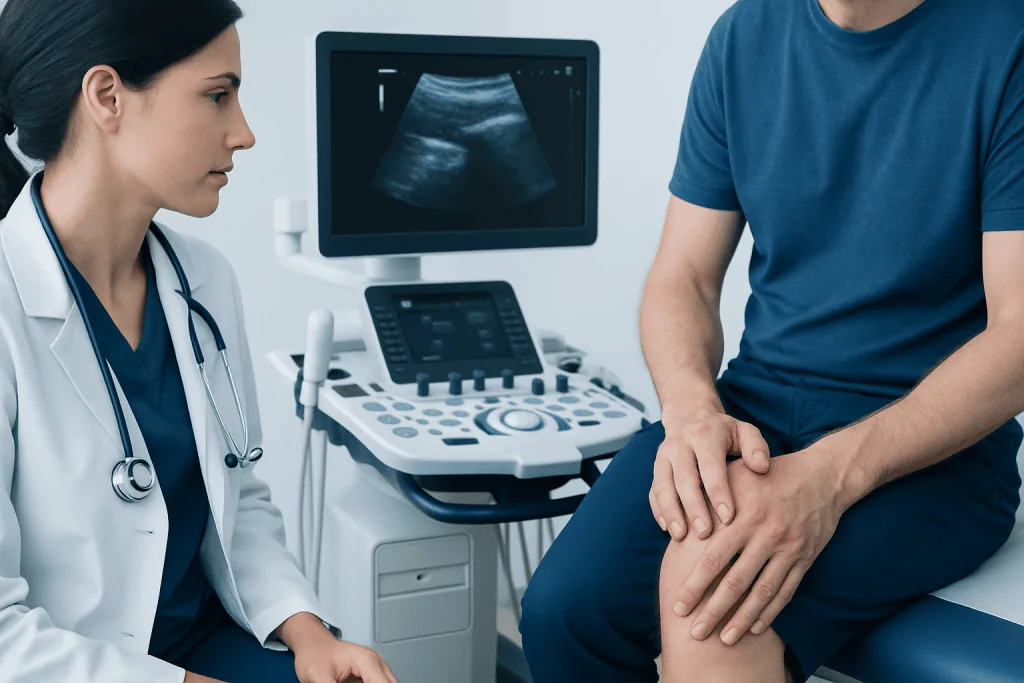
Not every swollen joint requires emergency care, but certain warning signs should never be ignored. These features suggest that the swelling may be caused by infection, a serious injury, or intense inflammation that needs prompt treatment.
Medical attention is especially important if a swollen joint is accompanied by any of the following:
- Sudden, severe pain in one joint
- Redness, warmth, or skin that looks inflamed over the joint
- Fever, chills, or feeling generally unwell
- Inability to bear weight or use the joint normally
- A visible deformity after an injury
- Rapid swelling after a fall, twist, or direct blow
- Numbness, weakness, or poor circulation in the limb
- Swelling in a person with a weakened immune system or recent joint surgery
People are often advised to seek urgent evaluation if one joint becomes dramatically swollen over hours, particularly the knee, hip, ankle, shoulder, or wrist. A hot swollen joint with fever is especially concerning because it may point to septic arthritis, an infection inside the joint. This condition can damage cartilage quickly if it is not treated.
Persistent symptoms also matter. If swelling does not improve, keeps returning, or is linked with morning stiffness, unexplained fatigue, skin rashes, or weight loss, a non-emergency but timely medical review is still important. These patterns can suggest inflammatory arthritis or another systemic condition that benefits from early diagnosis.
Common causes and risk factors

Swollen joints can have many different causes. Injury is one of the most common. A sprain, strain, torn ligament, fracture, or bleeding into the joint after trauma may lead to fast swelling, pain, and reduced movement. Overuse from sport or repetitive work can also irritate tissues around a joint and produce inflammation.
Inflammatory and degenerative joint diseases are another major group of causes. Osteoarthritis can cause swelling along with aching and stiffness, especially after activity. Autoimmune conditions such as rheumatoid arthritis may lead to symmetrical swelling in smaller joints of the hands, wrists, or feet. Some people may also have episodes related to gout, in which uric acid crystals trigger sudden pain, redness, and swelling, often in the big toe but also in other joints.
Infection is one of the most urgent causes to rule out. Bacteria can reach a joint through the bloodstream, a nearby skin infection, an injury, or rarely after a procedure. The risk is higher in older adults, people with diabetes, immune suppression, existing joint disease, artificial joints, or recent surgery. Skin breaks, intravenous drug use, and untreated infections elsewhere in the body can also increase risk.
Other possible causes include bursitis, tendon inflammation, reactive arthritis after an infection, and crystal-related conditions such as pseudogout. Because symptoms can overlap, a person should avoid assuming that any swollen joint is simply arthritis or overuse, especially when the pain is severe or the onset is sudden.
How doctors diagnose the cause
Diagnosis begins with a careful history and physical examination. The doctor usually asks when the swelling started, whether there was an injury, which joints are affected, and whether symptoms such as fever, rash, recent illness, or morning stiffness are present. They will also ask about medication use, prior joint problems, chronic diseases, and family history of arthritis or autoimmune conditions.
During the examination, the clinician checks for redness, warmth, tenderness, range of motion, joint stability, and signs of fluid inside the joint. They may compare the affected side with the other side and look for clues beyond the joint itself, such as skin changes, lymph node swelling, or signs of infection elsewhere.
Tests are chosen according to the suspected cause. Blood tests may look for inflammation, infection, autoimmune markers, or uric acid patterns. Imaging can include X-rays to assess fractures or arthritis changes, while ultrasound or MRI may help evaluate fluid, soft tissues, cartilage, ligaments, or deeper joint structures. In some cases, a doctor may recommend an MRI scan when the source of pain and swelling is not clear on examination alone.
If infection, gout, or bleeding in the joint is suspected, joint aspiration is often very important. In this procedure, a sample of joint fluid is removed with a sterile needle and sent for analysis. Examining the fluid can help confirm bacteria, crystals, blood, or inflammatory changes and guide treatment more accurately.
Treatment options for swollen joints
Treatment depends on the cause, severity, and how quickly symptoms began. For mild swelling related to overuse or minor soft tissue injury, doctors may recommend rest, temporary activity modification, elevation, and ice. Depending on the person and diagnosis, pain-relieving or anti-inflammatory medicines may also be used. A brace or compression wrap may sometimes help support the joint.
When a structural injury is suspected, treatment may involve immobilization, rehabilitation, or evaluation by an orthopedic specialist. Significant ligament damage, fractures, or cartilage injuries may need a more advanced approach, and in selected cases the next step can include orthopedic and traumatology care for joint-preserving treatment planning.
If the cause is inflammatory arthritis, care focuses on reducing inflammation and protecting long-term joint function. This may involve medication, exercise guidance, and referral to a rheumatology team. For persistent symptoms related to conditions such as rheumatoid arthritis, early specialist management can help reduce stiffness and joint damage over time.
A swollen joint caused by infection is treated urgently. Septic arthritis typically requires antibiotics and often drainage of infected fluid from the joint. When gout or pseudogout is responsible, treatment aims to calm the acute flare and prevent future attacks. In cases where a doctor needs to remove fluid or examine the joint internally, a minimally invasive procedure such as arthroscopy may sometimes be considered, depending on the problem.
What to do at home and how to help prevent problems
Home care is only appropriate when symptoms are mild and there are no warning signs such as fever, severe pain, major injury, or inability to move the joint. In these lower-risk cases, people are often advised to rest the joint briefly, use ice in short intervals, elevate the limb, and avoid activities that worsen pain. Gentle movement can be helpful once severe pain settles, but forcing a swollen joint is not recommended.
Longer-term prevention depends on the underlying cause. Joint-friendly habits include maintaining a healthy body weight, warming up before exercise, building muscle strength around vulnerable joints, wearing supportive footwear, and using proper technique during sport or repetitive work. Managing chronic conditions such as diabetes, high uric acid, or inflammatory arthritis can also reduce the chance of future flares or complications.
For people with recurrent swelling, it can be useful to track when episodes happen, which joints are affected, how long symptoms last, and whether any triggers are involved. Notes about diet, illness, activity, or medications may help a doctor identify patterns. Repeated self-treatment without understanding the cause is not ideal, especially if symptoms are becoming more frequent or more intense.
Near the end of the care pathway, some patients benefit from coordinated specialist evaluation. Acibadem International’s multidisciplinary specialists in JCI-accredited hospitals diagnose and treat joint conditions for international patients when further assessment is needed.
When to see a doctor right away
A person should seek urgent medical attention if a joint becomes swollen very suddenly, is extremely painful, or is red and hot. Immediate care is also important if swelling follows a serious fall, twisting injury, or direct blow and the joint cannot bear weight or looks deformed. These signs can point to a fracture, ligament rupture, dislocation, or bleeding into the joint.
Fever with a swollen joint should be treated seriously, particularly if only one joint is involved. This combination raises concern for infection, which can spread or damage the joint rapidly. People with a weakened immune system, artificial joints, recent surgery, or chronic illnesses should be especially cautious and seek advice promptly.
Medical review is also appropriate when swelling lasts more than a few days, keeps coming back, or is associated with ongoing stiffness, fatigue, rash, or swelling in several joints. These patterns may not be emergencies, but they deserve timely assessment so treatment can begin before symptoms worsen. If there is any doubt, it is safer to contact a healthcare professional than to wait and watch.
Frequently asked questions
Is a swollen joint always an emergency?
No. Many swollen joints are caused by minor injuries, overuse, or chronic arthritis. It becomes more urgent when swelling is sudden, severe, hot, red, associated with fever, or makes it hard to move or bear weight.
How can someone tell if a swollen joint might be infected?
A joint infection is more likely when one joint becomes very painful, warm, red, and swollen over a short time, especially with fever or chills. A person may also feel generally unwell. Because infection can damage the joint quickly, prompt medical assessment is important.
Should ice or heat be used for a swollen joint?
Ice is often preferred early on for new swelling, especially after minor injury, because it may help reduce discomfort and inflammation. Heat may feel soothing for stiffness in some chronic conditions, but it is usually not the first choice for a newly hot or acutely swollen joint. If infection is possible, medical advice should be sought rather than relying on home measures.
Can gout cause a joint to look red and swollen suddenly?
Yes. Gout can cause sudden, intense attacks of pain, redness, warmth, and swelling, often in one joint. However, infection can look similar, so a doctor may need to examine the joint and sometimes test joint fluid.
What tests might be needed for swollen joints?
Tests may include blood work, X-rays, ultrasound, or MRI, depending on the suspected cause. If infection, gout, or bleeding is a concern, a doctor may remove a small sample of joint fluid for analysis. This helps identify the cause more accurately and guide treatment.
When should recurrent joint swelling be checked?
Recurrent swelling should be assessed if it keeps returning, affects daily activities, or is linked with stiffness, fatigue, or swelling in multiple joints. Even when it is not an emergency, repeated episodes may signal arthritis, crystal disease, or another inflammatory condition. Early evaluation can help prevent ongoing joint damage.
References
- National Institute of Arthritis and Musculoskeletal and Skin Diseases
- American Academy of Orthopaedic Surgeons
- Arthritis Foundation
- NHS
- Mayo Clinic
This article is for general information only and is not a substitute for professional medical advice. Please consult a qualified doctor about your individual situation.
Joint and spine care in Turkey — expert assessment & treatment
JCI-accredited · board-certified surgeons · reply within 24h
Add us as a Preferred Source to see more of our trusted health content across Google Search, AI Overviews and Discover.

More from the Health Library



Related Specialists

Dr. Mustafa Göğebakan
Pediatrics
Prof. Dr. Nazan Bengüdeniz Erda
Ophthalmology
Assoc. Prof. Dr. Gürbüz Görümlü
Medical Oncology
Dr. Nilay Kayım
Functional Medicine