White Spot on Peni — Explained by Medical Evidence, Not Myths

Many white spots on the penis are benign and not sexually transmitted. Skin conditions, friction, yeast, and some sexually transmitted infections can all cause similar-looking spots.
Key Takeaways
- Many white spots on the penis are benign and not sexually transmitted.
- Skin conditions, friction, yeast, and some sexually transmitted infections can all cause similar-looking spots.
- Warning signs include pain, ulcers, discharge, bleeding, fever, or spots that persist or spread.
- Doctors usually diagnose the cause through history and physical examination, with tests only when needed.
- Self-treatment without knowing the cause may worsen irritation or delay proper care.
A white spot on peni is commonly caused by harmless skin changes such as Fordyce spots, irritation, or blocked glands, but some infections and inflammatory skin conditions can look similar. A proper diagnosis depends on the spot’s appearance, symptoms, and whether there are changes such as pain, itching, discharge, or spreading lesions.
What a white spot on peni usually means
A white spot on peni is often due to a benign skin finding rather than a serious disease. Common explanations include visible oil glands called Fordyce spots, mild irritation from friction, pearly penile papules near the glans, dry skin, or a yeast-related rash. In other cases, white patches may be linked to inflammatory skin conditions or infections, which is why the exact appearance and any associated symptoms matter.
The term itself describes only how the skin looks, not the cause. One person may notice a single tiny pale bump, while another may have a flat white patch, clustered spots, scaling, or redness around the area. These differences help doctors separate harmless normal variants from conditions that need treatment.
Most white spots are not an emergency. Still, a new lesion should be assessed if it persists, changes shape or color, becomes painful, or appears together with discharge, sores, itching, swelling, or discomfort during urination or sex. A careful medical review is the safest way to avoid myths and unnecessary worry.
How to tell harmless spots from conditions that need attention
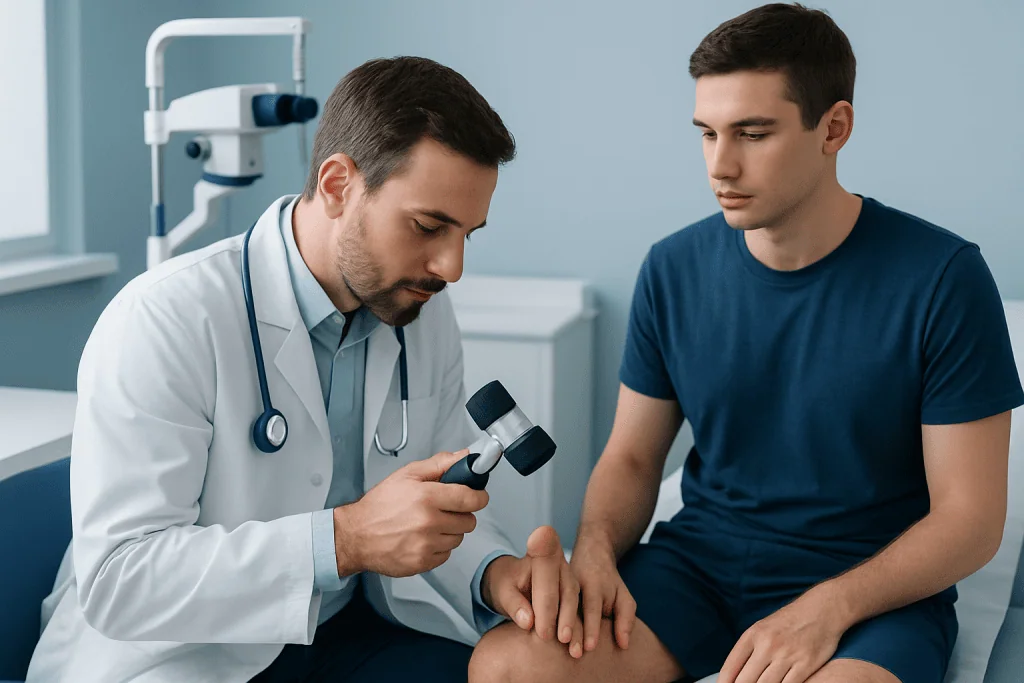
Some white spots are considered normal anatomical variants. Fordyce spots are tiny, pale yellow-white glands that can appear on the shaft or scrotal skin and usually cause no pain or itching. Pearly penile papules are small, smooth, flesh-colored or whitish bumps arranged in one or more rows around the head of the penis; they are not an infection and do not require treatment unless a person is troubled by their appearance.
Other harmless causes include dryness, minor friction, or contact irritation from soaps, lubricants, condoms, laundry products, or sweating. These changes may appear as faint pale patches, mild scaling, or roughness rather than true bumps. Symptoms often improve once the irritant is removed and the skin is allowed to recover.
By contrast, spots that are painful, itchy, raw, crusted, ulcerated, or associated with redness and discharge deserve more attention. Infectious and inflammatory causes can look deceptively similar at first. If there is uncertainty, a urologist, dermatologist, or sexual health clinician may recommend evaluation for sexually transmitted infections or noninfectious skin disorders.
Possible causes of white spots or patches

There are several medical explanations for white spots on penile skin. Benign causes include Fordyce spots, pearly penile papules, blocked follicles, and post-inflammatory changes after minor irritation. Fungal overgrowth such as candidal balanitis may cause pale patches with redness, itch, soreness, and sometimes a moist rash under the foreskin.
Inflammatory skin disorders are another important group. Conditions such as eczema, psoriasis, lichen planus, and lichen sclerosus can affect genital skin and may create white, shiny, scaly, or thinned areas. Lichen sclerosus especially can lead to tightness of the foreskin, discomfort, cracking, or painful erections if left untreated.
Some infections can also produce pale lesions. Genital warts can occasionally appear whitish rather than skin-colored. Molluscum contagiosum may cause small dome-shaped bumps with a central dip. Less commonly, syphilis, herpes, or other infections may begin with unusual lesions that are not obviously white but are mistaken for them by patients.
Rarely, a persistent white patch may represent precancerous change or an early penile cancer lesion, particularly if it bleeds, thickens, ulcerates, or does not heal. This is uncommon, but it is one reason persistent or changing lesions should not be ignored.
Risk factors and common triggers
Several factors can make white spots more likely to develop or become noticeable. Friction from sexual activity, tight clothing, heat, sweating, and inadequate drying can irritate the area. Harsh cleansers, deodorizing products, fragranced lotions, and some condoms or lubricants may also trigger contact dermatitis.
Infections are more likely when there is a warm, moist environment under the foreskin, poor hygiene, diabetes, recent antibiotic use, or a weakened immune system. Unprotected sexual contact increases the risk of sexually transmitted infections, although not every white spot is related to sex.
Inflammatory skin diseases may occur in people with a personal or family history of eczema, psoriasis, or autoimmune conditions. If a person is uncircumcised, recurrent inflammation of the glans or foreskin may lead to symptoms such as whitening, tightness, or scarring over time. Understanding these triggers helps guide both treatment and prevention.
How doctors diagnose the cause
Diagnosis usually begins with a detailed history and physical examination. A doctor will ask when the spot first appeared, whether it has changed, and whether there are symptoms such as itching, burning, pain, discharge, bleeding, or fever. They may also ask about hygiene products, recent sexual activity, prior skin problems, medications, and medical conditions such as diabetes.
In many cases, the appearance alone is enough to identify a normal variant like Fordyce spots or pearly penile papules. If infection is suspected, the clinician may recommend swabs, urine testing, or blood tests. If an inflammatory skin disease is more likely, a dermatologist or urologist may diagnose it clinically or occasionally suggest a skin biopsy when the diagnosis is uncertain.
It is usually not helpful to diagnose the problem from internet images alone, because many conditions overlap visually. If there is concern about deeper urinary or genital issues, assessment by specialists in urology care may be appropriate. The goal is to identify the exact cause so treatment is targeted rather than guesswork.
Treatment depends on the underlying cause
Treatment is based entirely on what is causing the lesion. Benign findings such as Fordyce spots or pearly penile papules usually need only reassurance. If friction or irritant exposure is the cause, treatment often involves stopping the triggering product, using gentle cleansing, and allowing the skin barrier to recover.
When infection is present, treatment may include antifungal, antibacterial, or antiviral medication depending on the diagnosis. Inflammatory skin conditions are commonly managed with prescription creams or ointments selected for the delicate genital area. Persistent foreskin tightening, recurrent balanitis, or structural problems may sometimes require procedural treatment after specialist evaluation.
Visible lesions should not be treated with random over-the-counter creams, wart removers, bleaching agents, or strong steroids without medical advice, as these can burn or thin genital skin. If there is a concern about suspicious growths, chronic lesions, or associated foreskin problems, doctors may consider options within dermatology evaluation or, when indicated, specialized penile lesion treatment.
For international patients, Acibadem International’s multidisciplinary specialists and JCI-accredited hospitals evaluate genital skin and urologic conditions with coordinated care when needed.
Self-care and prevention
Simple skin care can reduce irritation and help prevent some causes of white spots. The genital area should be washed gently with lukewarm water and, if needed, a mild fragrance-free cleanser. The skin should be dried carefully, and sweating or prolonged moisture should be minimized where possible.
It can also help to avoid scented soaps, deodorants, powders, and harsh antiseptics on genital skin. Wearing breathable underwear and reducing friction from tight clothing may improve comfort. During sexual activity, using products that do not irritate the skin and avoiding trauma can be useful preventive steps.
Safer sex practices lower the risk of sexually transmitted infections. People with diabetes should keep blood sugar well managed, as uncontrolled diabetes can increase the likelihood of yeast infections and skin problems. If a white spot keeps returning, a doctor can look for an ongoing trigger or underlying condition rather than treating repeated flare-ups one by one.
- Do not squeeze, pick, or scrub the spot.
- Do not use acne medication, wart acid, or bleaching products on genital skin.
- Avoid sexual contact until a new painful, ulcerated, or suspicious lesion has been assessed.
When to seek medical care
Medical assessment is advisable if a white spot on peni lasts more than a few weeks, keeps coming back, spreads, or changes in size, texture, or color. Professional evaluation is also important if there is itching, pain, cracking, foul odor, discharge, painful urination, pain during sex, or swelling of the foreskin or glans.
Urgent care is more appropriate if there are open sores, bleeding, fever, significant swelling, inability to retract the foreskin, or severe pain. Anyone who may have been exposed to a sexually transmitted infection should consider timely testing, even if symptoms seem mild.
Early diagnosis can simplify treatment and prevent complications such as scarring, recurrent infection, or anxiety caused by uncertainty. A clinician may involve urology, sexual health, or skin specialists to ensure the lesion is properly identified and managed.
Frequently asked questions
Is a white spot on peni always a sexually transmitted infection?
No. Many white spots are caused by harmless skin findings such as Fordyce spots, pearly penile papules, dryness, or irritation. However, some infections can look similar, so persistent or unusual lesions should be assessed by a clinician.
Can white spots on the penis go away on their own?
Some do, especially if they are caused by temporary irritation or friction. Others, such as Fordyce spots or pearly penile papules, may remain but are benign. If the spot persists, spreads, or causes symptoms, medical review is recommended.
What does a yeast infection on the penis look like?
A yeast-related rash may cause redness, soreness, itching, and sometimes pale or whitish patches, often under the foreskin. There may also be a moist appearance or a fine coating on the skin. A doctor can confirm the diagnosis and rule out similar conditions.
Should a person try over-the-counter creams first?
It is better not to self-treat without knowing the cause, especially on delicate genital skin. Some products can worsen irritation or mask an infection. If symptoms are mild and clearly linked to a new soap or friction, stopping the trigger may help, but persistent lesions should be examined.
Can poor hygiene cause white spots?
Poor hygiene does not cause every white spot, but trapped moisture, sweat, and smegma can contribute to irritation and infections such as balanitis. Gentle cleansing and careful drying are helpful. Overwashing with harsh products can also irritate the skin, so balance is important.
When is a white patch more concerning?
A lesion is more concerning if it becomes painful, ulcerated, thickened, bleeding, or nonhealing, or if it causes foreskin tightness or repeated inflammation. These features do not always mean something serious, but they do require prompt medical evaluation.
This article is for general information only and is not a substitute for professional medical advice. Please consult a qualified doctor about your individual situation.
Explore treatments in Turkey — costs, top hospitals & a free quote
JCI-accredited · board-certified surgeons · reply within 24h
Add us as a Preferred Source to see more of our trusted health content across Google Search, AI Overviews and Discover.

More from the Health Library

Convulsive Syncope: What Patients Need to Know

Shredded Coconut — Explained by Medical Evidence, Not Myths

Shellfish: A Complete Medical Overview

Blood in Mucus From Throat — Explained by Medical Evidence, Not Myths

Puffy Tongue Causes — Explained by Medical Evidence, Not Myths