Whole-Body MRI: When It Is Used and What It Can Show
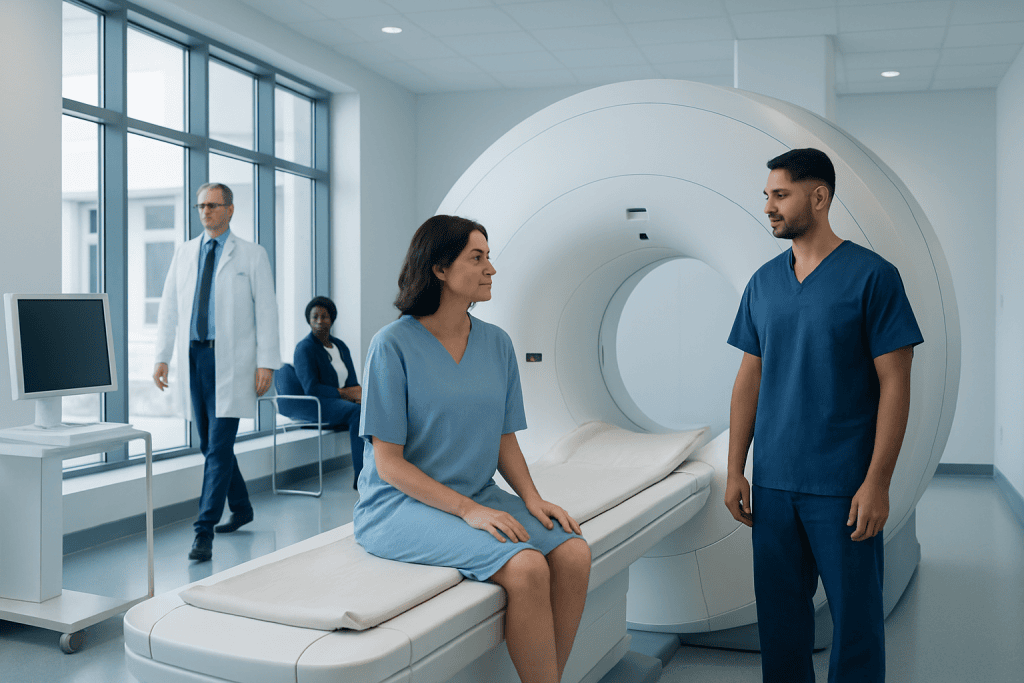
Whole-body MRI uses magnetic fields and radio waves to image multiple body regions in one exam. It is especially useful for selected cancer assessments, inherited syndromes, and some inflammatory or musculoskeletal conditions.
Key Takeaways
- Whole-body MRI uses magnetic fields and radio waves to image multiple body regions in one exam.
- It is especially useful for selected cancer assessments, inherited syndromes, and some inflammatory or musculoskeletal conditions.
- The scan does not use ionizing radiation, but it is not the right test for every person or every medical question.
- Results often need to be interpreted alongside symptoms, blood tests, and other imaging studies.
- Preparation and safety checks are important, especially for people with metal implants, claustrophobia, or kidney concerns if contrast is considered.
Whole-body MRI is an advanced imaging test that creates detailed pictures of many parts of the body in a single session. It can help doctors evaluate certain cancers, inherited conditions, inflammation, and unexplained symptoms, while avoiding ionizing radiation.
Overview: What Is Whole-Body MRI?
Whole-body MRI is a medical imaging technique that uses a strong magnet, radio waves, and computer processing to create detailed images of structures throughout the body. Unlike a standard MRI that focuses on one area, such as the knee, brain, or spine, a whole-body MRI examines multiple regions during the same appointment. It may include the head, neck, chest, abdomen, pelvis, spine, bones, and soft tissues, depending on the reason for the scan.
One important feature of whole-body MRI is that it does not use ionizing radiation. This makes it different from imaging methods such as CT or PET-CT, which can be very useful in many situations but expose the body to radiation. For some patients who need repeated imaging over time, this can be an important advantage.
Whole-body MRI is not a universal screening test for everyone, and it is not routinely recommended as a substitute for regular checkups or age-appropriate screenings. Instead, it is usually chosen for specific medical reasons, such as evaluating the spread of certain cancers, monitoring known disease, or investigating symptoms when a doctor needs a broader picture of the body.
When Whole-Body MRI Is Used
Doctors may recommend whole-body MRI when they need to assess disease in more than one part of the body at the same time. In oncology, it can help evaluate some cancers that may involve the bones, bone marrow, lymph nodes, or soft tissues. It is sometimes used to stage disease, monitor treatment response, or look for recurrence in selected patients. When cancer is part of the concern, the imaging plan may also include tests such as MRI scan or PET-CT scan for a more targeted evaluation.
Whole-body MRI can also be useful in people with inherited syndromes that raise the risk of developing tumors in different organs. In these settings, it may support surveillance over time without repeated radiation exposure. Some doctors also use it for specific inflammatory, rheumatologic, or musculoskeletal conditions when symptoms affect multiple areas of the body.
In some cases, whole-body MRI is considered for unexplained symptoms such as persistent bone pain, suspected bone marrow disease, or concerns about hidden infection or inflammation. It may also help assess multifocal disease, meaning disease that appears in several places rather than one single site. However, the decision to use whole-body MRI depends on the person’s symptoms, medical history, and the exact clinical question.
It is important to understand that a broader scan does not automatically mean a better test. Some problems are better seen with focused imaging, ultrasound, endoscopy, mammography, or laboratory testing. A doctor chooses whole-body MRI when its strengths match the medical need.
What a Whole-Body MRI Can Show

Whole-body MRI provides detailed information about soft tissues, bones, bone marrow, joints, muscles, internal organs, and certain blood vessels. It can show abnormal tissue signals that may suggest inflammation, infection, injury, tumor, or fluid changes. In many cases, diffusion-weighted imaging, a special MRI technique, is included because it can help highlight areas where cells are densely packed, which may occur in some tumors or active inflammation.
The scan may identify lesions in the liver, kidneys, spleen, pancreas, pelvis, and other organs, while also evaluating the spine and major bones for marrow abnormalities. It can be particularly helpful in conditions involving the skeleton, such as suspected metastases or diseases like multiple myeloma, where bone marrow assessment is important. In selected settings, it can complement or reduce the need for multiple separate examinations.
Even so, whole-body MRI has limitations. It does not show every organ equally well in every patient, and small findings can sometimes be unclear or incidental, meaning they are discovered unexpectedly and may not be harmful. Certain areas may still need a focused scan or another imaging test for a complete answer. For example, lung details are often better evaluated with CT, while some digestive concerns may need endoscopy or targeted abdominal imaging.
Because MRI shows anatomy and tissue characteristics rather than making a diagnosis by itself, results must always be interpreted in context. A suspicious area on imaging does not automatically mean cancer, and a normal scan does not rule out every disease. Doctors combine MRI findings with the medical history, physical exam, and other tests before reaching conclusions.
How the Scan Is Performed and How to Prepare
Before the scan, the radiology team reviews the person’s medical history and checks for anything that could affect MRI safety. Because MRI uses a powerful magnet, metal implants, certain pacemakers, aneurysm clips, medication pumps, or metal fragments in the body may require special review. Many modern implants are MRI-conditional, meaning MRI may still be possible under specific conditions, but this should always be confirmed in advance.
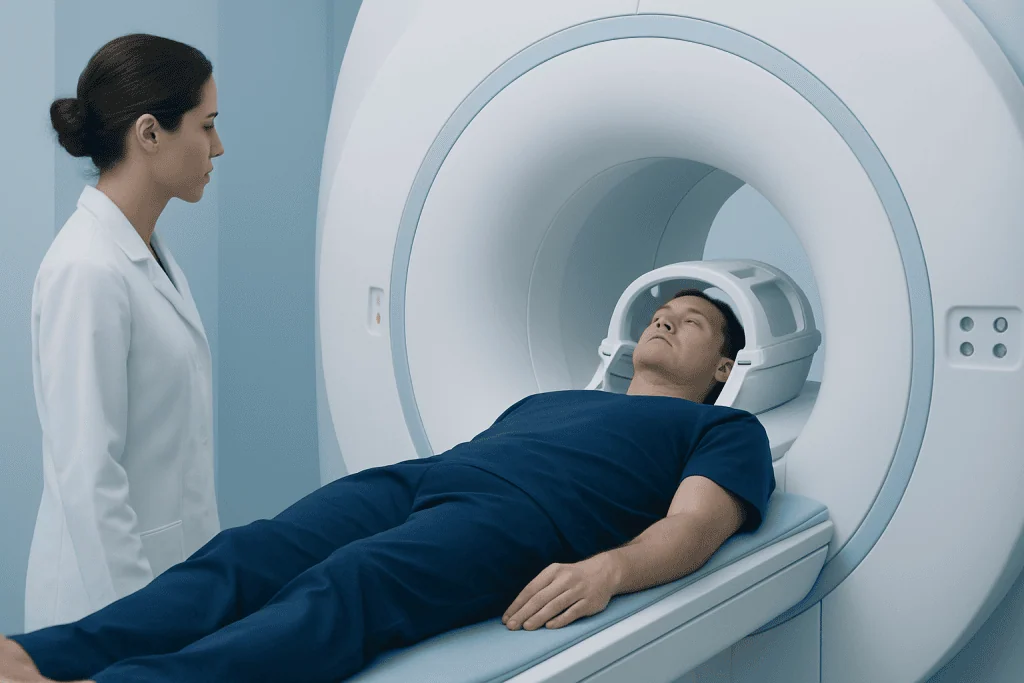
During the exam, the person lies on a moving table that slides through the MRI scanner. The machine makes loud tapping or thumping sounds while images are being taken, so ear protection is usually provided. The scan is painless, but it can be long, and staying still is important to keep the images clear. Some people feel uncomfortable in enclosed spaces, so they should tell the team beforehand if they are worried about claustrophobia.
Not every whole-body MRI requires contrast material. When contrast is used, it is usually gadolinium-based and given through a vein to help certain tissues or abnormalities show more clearly. The healthcare team may review kidney function before contrast is given, especially in people with known kidney disease. Preparation instructions vary, but some patients may be asked to avoid food for a few hours depending on the protocol.
Comfort measures can help the experience go more smoothly. Wearing clothing without metal, removing jewelry, and following instructions carefully are important. Patients who are pregnant, breastfeeding, or have implanted medical devices should discuss this with their doctor and the imaging team before the appointment.
Benefits, Limitations, and Possible Risks
The main benefit of whole-body MRI is that it can assess many body regions in one session without ionizing radiation. This may be particularly helpful for people who need repeated follow-up imaging, younger patients with lifelong surveillance needs, or those with conditions that can affect multiple organs or bones. The images are especially strong for soft tissues, bone marrow, and the musculoskeletal system.
Another advantage is the possibility of seeing patterns that might be missed if only one body part is scanned. For some complex medical questions, a whole-body approach can support earlier recognition of disease extent and guide the next steps in care. In selected patients, it may reduce the need for several separate MRI appointments.
However, whole-body MRI also has limitations. It can take longer than other imaging tests, may not be suitable for people who cannot remain still, and can be challenging for those with severe claustrophobia. It may detect incidental findings that are unrelated to the original problem but still lead to further tests, follow-up scans, or anxiety while doctors clarify what they mean.
Safety concerns are usually manageable when proper screening is done, but MRI is not appropriate for everyone. Contrast, when used, may not be suitable in some kidney conditions or in patients with a history of certain reactions. The best imaging test depends on the suspected condition, so doctors weigh the benefits and limitations carefully before recommending whole-body MRI.
How Doctors Interpret the Results
After the scan, a radiologist reviews the images and prepares a report describing any significant findings. This report may note whether there are areas that appear normal, suspicious, inflammatory, degenerative, or indeterminate. Indeterminate means a finding is present but cannot be fully characterized from that scan alone.
The referring doctor then explains what the results mean in the context of the person’s health. A whole-body MRI may answer the main question immediately, or it may point toward the need for more focused testing. Depending on the findings, the next step could include blood work, biopsy, ultrasound, CT, or a targeted examination such as biopsy to confirm a diagnosis.
Follow-up does not always mean something serious has been found. Many MRI findings are benign or age-related, such as common changes in the spine or joints. When an abnormality is seen, doctors consider its size, location, appearance, and whether it matches the person’s symptoms before deciding what to do next.
In people with known disease, whole-body MRI can also help monitor progress over time. Comparing current images with earlier studies may show whether a condition is stable, improving, or becoming more active. This can support treatment planning, especially in multidisciplinary care involving radiologists, oncologists, neurologists, and other specialists.
When to Ask About Whole-Body MRI
A person may wish to ask their doctor about whole-body MRI if they have a condition that can affect multiple body areas, need repeated imaging, or have symptoms that remain unexplained after an initial evaluation. It may also be worth discussing when there is a strong family history or an inherited syndrome linked to tumors in different organs. The goal is not to request a bigger scan simply for reassurance, but to see whether it is medically useful for the specific problem.
Questions to ask can include what the scan is expected to show, whether contrast is needed, how long the exam will take, and whether another test might be more appropriate. It is also reasonable to ask how the results could change treatment or whether the scan is likely to lead to additional tests. Understanding the purpose of the imaging helps patients make informed decisions.
People should seek timely medical advice if they have ongoing unexplained weight loss, persistent bone pain, neurological symptoms, prolonged fever, or other concerning changes in health. These symptoms can have many causes, and only a qualified doctor can decide which investigations are needed. In some cases, whole-body MRI may be part of that workup; in others, a different test will be more useful.
Near the end of the care pathway, some patients may prefer evaluation at centers with broad imaging and specialist support. Acibadem International’s multidisciplinary specialists and JCI-accredited hospitals diagnose and treat complex conditions for international patients, including cases where advanced imaging such as whole-body MRI may be considered.
Frequently asked questions
Is whole-body MRI the same as a regular MRI?
No. A regular MRI usually focuses on one body part, such as the brain, knee, or spine, while whole-body MRI examines multiple regions during one session. The basic technology is the same, but the scan protocol and clinical purpose are different.
Does whole-body MRI expose the body to radiation?
No. Whole-body MRI uses magnetic fields and radio waves, not ionizing radiation. This is one reason it may be useful for people who need repeated imaging over time.
Can whole-body MRI detect cancer?
It can help detect or evaluate some cancers, especially those involving bone marrow, bones, lymph nodes, and certain soft tissues or organs. However, it is not the best test for every cancer type, and suspicious findings may still need other imaging or a biopsy for confirmation.
How long does a whole-body MRI take?
The exact length varies by protocol and whether contrast is used, but it usually takes longer than a focused MRI. Patients should expect to lie still for an extended period, and the imaging team will explain the planned duration before the scan.
Who may not be suitable for whole-body MRI?
Some people with certain implanted devices, metal fragments, or severe claustrophobia may need special assessment before MRI. If contrast is being considered, kidney function and prior contrast reactions may also need to be reviewed.
Can whole-body MRI be used as a general health screening test?
It is not routinely recommended as a general screening test for everyone. Whole-body MRI is most useful when there is a clear medical reason, such as monitoring a known condition, evaluating certain symptoms, or following people with specific inherited cancer risks.
References
- World Health Organization
- Radiological Society of North America
- American College of Radiology
- National Cancer Institute
- European Society of Radiology
This article is for general information only and is not a substitute for professional medical advice. Please consult a qualified doctor about your individual situation.
Joint and spine care in Turkey — expert assessment & treatment
JCI-accredited · board-certified surgeons · reply within 24h
Add us as a Preferred Source to see more of our trusted health content across Google Search, AI Overviews and Discover.

More from the Health Library



Related Specialists

Dr. Zeynep Cansu Aladağ
Gynecology & Obstetrics
Dr. Kumsal Kurucu
Acibadem Life Clinical Service
Assoc. Prof. Dr. Fatma Ölmez
Gynecology & Obstetrics
Dr. Birsen Köse
Intensive Care