Whooping Cough in Children: Coughing Fits, Testing, and Prevention
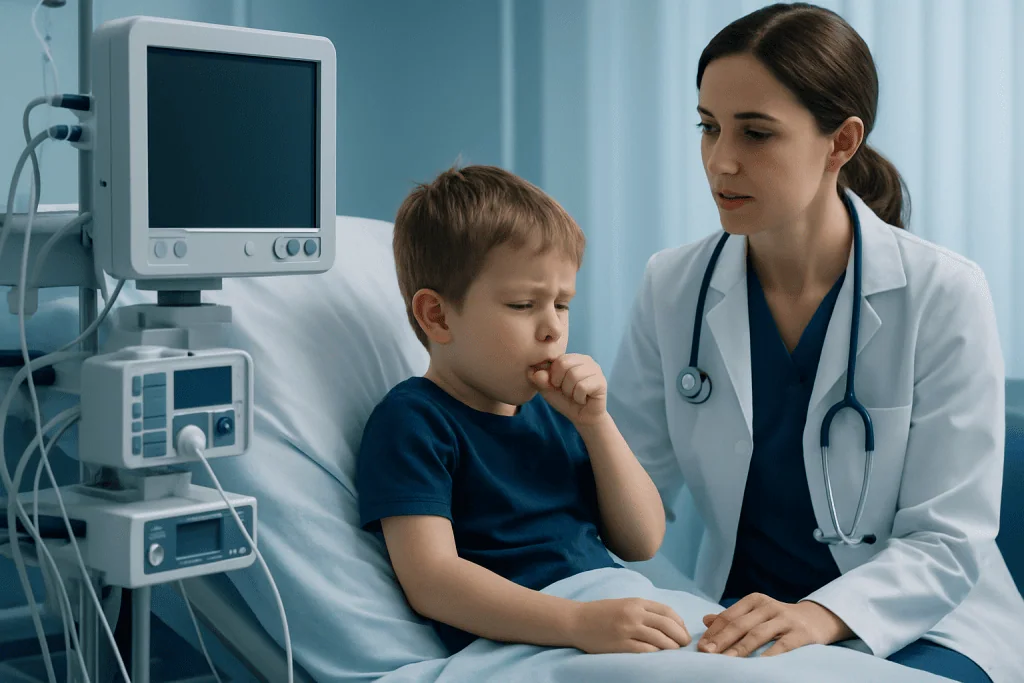
Whooping cough is a contagious bacterial infection that spreads through respiratory droplets. Children may first have cold-like symptoms before developing repeated coughing fits.
Key Takeaways
- Whooping cough is a contagious bacterial infection that spreads through respiratory droplets.
- Children may first have cold-like symptoms before developing repeated coughing fits.
- Testing and early treatment can help reduce spread and may lessen illness severity.
- Infants are at the highest risk of serious complications from pertussis.
- Routine vaccination is the best way to prevent whooping cough.
Whooping cough in children, also called pertussis, is a highly contagious bacterial infection that can cause intense coughing fits and breathing difficulties. Early recognition, medical evaluation, and vaccination are important for treatment, recovery, and prevention.
Overview of Whooping Cough in Children
Whooping cough in children is an infection caused by the bacterium Bordetella pertussis. Doctors also call it pertussis. It affects the airways and often causes sudden, repeated coughing fits that can be exhausting for a child and worrying for parents. Some children make a high-pitched “whoop” sound when breathing in after a coughing spell, although not every child has this classic sign.
The illness usually begins gradually and may look like a common cold at first. Because early symptoms can seem mild, it may not be recognized right away. As the infection progresses, the cough can become much more severe and may continue for weeks. For this reason, pertussis is sometimes called the “100-day cough.”
Whooping cough spreads easily from person to person through tiny droplets released when an infected person coughs or sneezes. Children can catch it at home, school, daycare, or in other close-contact settings. Even vaccinated children can occasionally become infected, but vaccination usually lowers the risk of severe illness.
Infants and very young babies need especially close attention because they may become seriously ill more quickly. In some cases, babies do not cough strongly at first and instead may have pauses in breathing, feeding difficulty, or unusual tiredness. These signs need prompt medical evaluation.
Symptoms and Stages
Whooping cough often develops in stages. In the first stage, symptoms may resemble a mild upper respiratory infection. A child may have a runny nose, sneezing, mild fever, watery eyes, or a light cough. This phase usually lasts about one to two weeks, and the child is often highly contagious during this time.
In the next stage, the cough becomes more severe. A child may have repeated coughing bursts, especially at night, after activity, or after feeding. The coughing can be so forceful that it leads to vomiting, gagging, redness of the face, or extreme tiredness afterward. Some children take a noisy breath in between coughs, creating the characteristic “whoop.”
Parents and caregivers may notice symptoms such as:
- Repeated coughing fits that are hard to stop
- Vomiting after coughing
- Trouble catching the breath after a coughing spell
- Exhaustion after coughing episodes
- Poor feeding in infants
- Brief pauses in breathing, especially in babies
Recovery can be slow. Even after the infection begins to improve, the cough may continue for several weeks. During this stage, coughing fits can return with later colds or respiratory infections. Any child with worsening breathing, dehydration, or signs of distress should be assessed by a doctor.
Causes, Spread, and Risk Factors
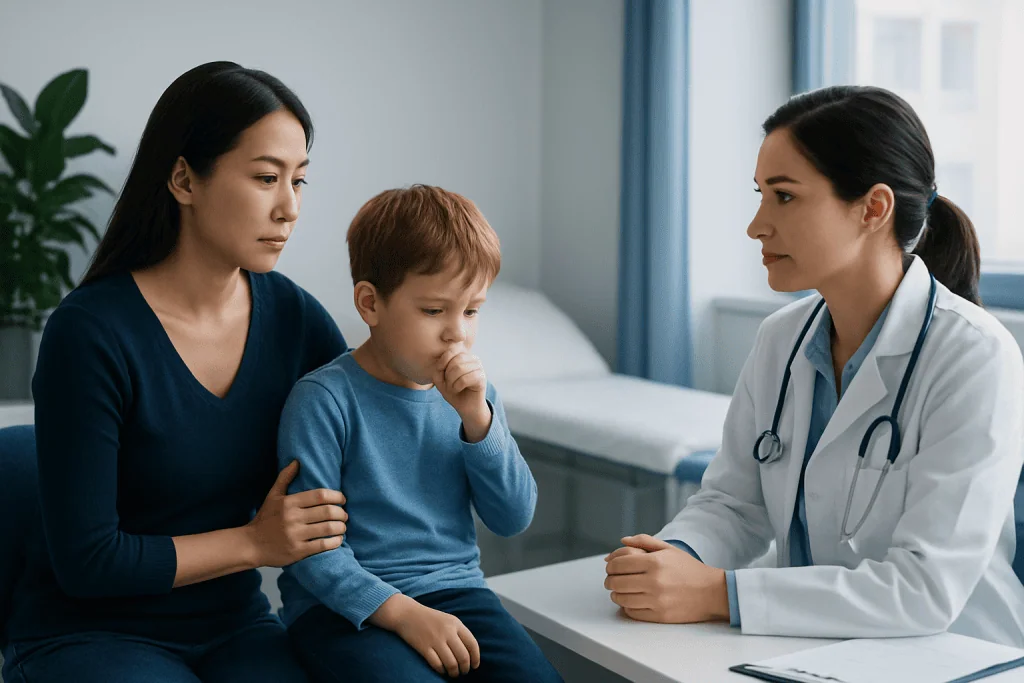
Pertussis is caused by a specific bacterium that infects the lining of the airways. The bacteria release toxins that irritate the breathing passages and lead to inflammation. This irritation contributes to the intense, repetitive cough that is typical of the illness.
The infection spreads through respiratory droplets when an infected person coughs, sneezes, or has close face-to-face contact with others. A child can become infected after spending time near someone who has pertussis, even before that person knows they are ill. Household spread is common because the bacteria pass easily in close living spaces.
Some children are at higher risk of severe disease or complications. These include:
- Infants younger than 12 months
- Children who are not fully vaccinated
- Children with chronic lung disease or other underlying health conditions
- Those exposed to infected family members or classmates
- Babies whose caregivers have not had recommended booster vaccination
Vaccination remains the main protection against severe pertussis, but immunity can decrease over time. This is one reason booster doses are recommended in older children, adolescents, adults, and during pregnancy. Keeping the whole household up to date with vaccines helps protect infants who are too young to be fully vaccinated.
How Doctors Diagnose Whooping Cough
Doctors diagnose whooping cough by combining a child’s symptoms, medical history, vaccination history, and possible exposure to someone with pertussis. The pattern of coughing fits is often an important clue, especially when the cough lasts longer than expected for a common cold.
To confirm the diagnosis, a doctor may take a sample from the back of the nose or throat using a swab or gentle suction. This sample can be tested for the pertussis bacteria. The timing of the test matters, because some methods work best early in the illness.
Depending on the child’s age and condition, evaluation may also include:
- A physical examination
- Pulse oximetry to check oxygen levels
- Blood tests in selected cases
- A chest X-ray if pneumonia or another lung problem is suspected
Prompt diagnosis is helpful not only for the child, but also for protecting others. If pertussis is confirmed or strongly suspected, doctors may advise testing, preventive treatment, or monitoring for close contacts, especially infants, pregnant women, and vulnerable household members.
Treatment Options and Supportive Care
Whooping cough is treated with antibiotics, particularly when diagnosed early. Antibiotics help reduce the spread of infection to others and may be more helpful in the earlier stages of illness. However, even after antibiotics are started, the cough can take time to improve because the airways remain irritated.
Supportive care is also very important. Children need rest, fluids, and close monitoring. Small, frequent meals may help if coughing spells trigger vomiting. A calm environment, avoiding smoke exposure, and watching for breathing changes can also support recovery at home when the child is otherwise stable.
Some children need hospital care, especially young infants or those with breathing difficulty, dehydration, low oxygen levels, or complications such as pneumonia. In these situations, treatment may include oxygen, intravenous fluids, or closer respiratory support. If another infection or condition is suspected, doctors may recommend additional diagnostic imaging or monitoring.
When coughing is severe or there are concerns about the lungs, a pediatric team may involve specialists in pediatric pulmonology to guide care. If a child develops breathing distress, poor feeding, bluish lips, repeated vomiting, or pauses in breathing, urgent medical attention is needed.
Prevention and Self-care at Home
The best way to prevent whooping cough in children is vaccination. Routine childhood vaccines protect against pertussis as part of combination immunizations, and booster doses are needed later because protection decreases over time. Vaccination during pregnancy also helps pass early protection to newborns before they can receive their own vaccines.
Families can also lower the risk of spread by keeping a sick child home from school or daycare as advised by a doctor, encouraging good hand hygiene, and covering coughs and sneezes. People who live with or care for the child may need preventive antibiotics if they are close contacts, especially if there is a baby in the home.
Helpful self-care measures during recovery include:
- Offering plenty of fluids to prevent dehydration
- Using a clean, smoke-free environment
- Providing small meals if coughing leads to vomiting
- Watching for signs of breathing difficulty or worsening fatigue
- Following the full antibiotic plan exactly as prescribed
Parents should avoid giving over-the-counter cough medicines unless a doctor specifically recommends them. These products often do not help pertussis and may not be suitable for young children. A doctor can advise the safest approach based on the child’s age and symptoms.
Possible Complications and When to See a Doctor
Many children recover fully from whooping cough, but complications can occur, particularly in infants. The most common concerns include dehydration, weight loss from poor feeding, pneumonia, ear infections, and exhaustion from repeated coughing. In severe cases, low oxygen levels or breathing pauses may require hospital treatment.
Parents should arrange medical assessment if a child has a persistent cough that comes in fits, vomits after coughing, makes a whooping sound, or has been exposed to someone diagnosed with pertussis. A cough that lasts more than one to two weeks and is getting worse should not be ignored, especially in younger children.
Urgent care is needed if a child has any of the following:
- Trouble breathing or fast breathing
- Blue or gray lips or face
- Pauses in breathing
- Signs of dehydration, such as very little urine or dry mouth
- Difficulty feeding
- Extreme sleepiness or poor responsiveness
For families seeking coordinated pediatric care, Acibadem International’s multidisciplinary specialists at JCI-accredited hospitals diagnose and treat respiratory infections in international patients. If symptoms overlap with other airway illnesses, doctors may also evaluate related conditions such as bronchiolitis or pneumonia to make sure the child receives the right treatment.
Frequently asked questions
What is whooping cough in children?
Whooping cough, or pertussis, is a bacterial infection that affects the airways and causes intense coughing fits. It is highly contagious and spreads easily through coughs and sneezes. The illness can be especially serious in babies and young infants.
What are the first signs of pertussis?
The first signs often look like a common cold, with a runny nose, sneezing, mild fever, and a light cough. After about one to two weeks, the cough may become much more severe and come in repeated fits. This early phase can make pertussis hard to recognize at first.
Does every child with whooping cough make a whooping sound?
No. The classic whooping sound does not happen in every child. Infants may not whoop at all and may instead have pauses in breathing, feeding trouble, or unusual tiredness.
How is whooping cough tested?
Doctors usually test for whooping cough by taking a sample from the nose or throat. They also consider the child’s symptoms, vaccination history, and possible exposure to an infected person. In some cases, other tests may be used to check for complications.
Can vaccinated children still get whooping cough?
Yes, vaccinated children can still get pertussis because immunity can decrease over time. However, vaccination usually makes the illness less severe and helps lower the risk of serious complications. Staying up to date on booster doses remains important.
When should a child with a cough see a doctor?
A child should see a doctor if the cough comes in fits, causes vomiting, lasts more than expected, or follows known exposure to pertussis. Urgent care is needed for breathing difficulty, bluish lips, dehydration, or pauses in breathing. Babies should be assessed promptly if pertussis is suspected.
References
- World Health Organization
- Centers for Disease Control and Prevention
- American Academy of Pediatrics
- National Health Service
- European Centre for Disease Prevention and Control
This article is for general information only and is not a substitute for professional medical advice. Please consult a qualified doctor about your individual situation.
Whooping Cough in Turkey — costs, top hospitals & a free quote
JCI-accredited · board-certified surgeons · reply within 24h
Add us as a Preferred Source to see more of our trusted health content across Google Search, AI Overviews and Discover.

Pediatrics
Complete healthcare for infants, children and adolescents across all sub-specialties.
232 specialists in this unit