Why Do My Eyes Water When I Yawn? Causes, Explanations, and Next Steps

Tearing during an occasional yawn is common and is usually a normal reflex rather than a sign of disease. Yawning involves facial muscles around the eyes, which can temporarily affect how tears are produced, spread, and drained.
Key Takeaways
- Tearing during an occasional yawn is common and is usually a normal reflex rather than a sign of disease.
- Yawning involves facial muscles around the eyes, which can temporarily affect how tears are produced, spread, and drained.
- Dry eye, allergies, eyelid problems, or a narrowed tear drainage pathway can make watering more noticeable.
- Pain, light sensitivity, persistent redness, thick discharge, injury, or vision changes need prompt medical assessment.
- A clinician can examine the eyelids, tear film, eye surface, and tear drainage system to identify an underlying cause.
Eyes often water during a yawn because facial muscle movement and changes around the eyelids can briefly encourage tears to pool or flow out. This is usually harmless, but persistent tearing, pain, redness, discharge, or vision changes should be assessed by an eye care professional.
Why eyes water during a yawn
Why do my eyes water when I yawn? In most cases, it happens because yawning activates facial muscles around the eyelids and briefly alters the normal movement of tears across the eye and into the tear drainage channels. A few tears may then collect at the eyelid edge and spill over, especially if the eyes are already slightly dry, irritated, tired, or sensitive.
Tears are not only produced in response to emotion. The eyes continually make a thin tear film that keeps the surface smooth, comfortable, and protected. Each blink spreads this film, while tiny openings near the inner corners of the eyelids drain excess tears into the nose. A wide yawn can temporarily change pressure and muscle movement in this area, making normal tears more visible.
For most people, this brief watering stops soon after the yawn and does not require treatment. It is different from ongoing excessive tearing, medically called epiphora, in which tears repeatedly run down the cheeks or occur with other eye symptoms.
What is happening in the eyes and face
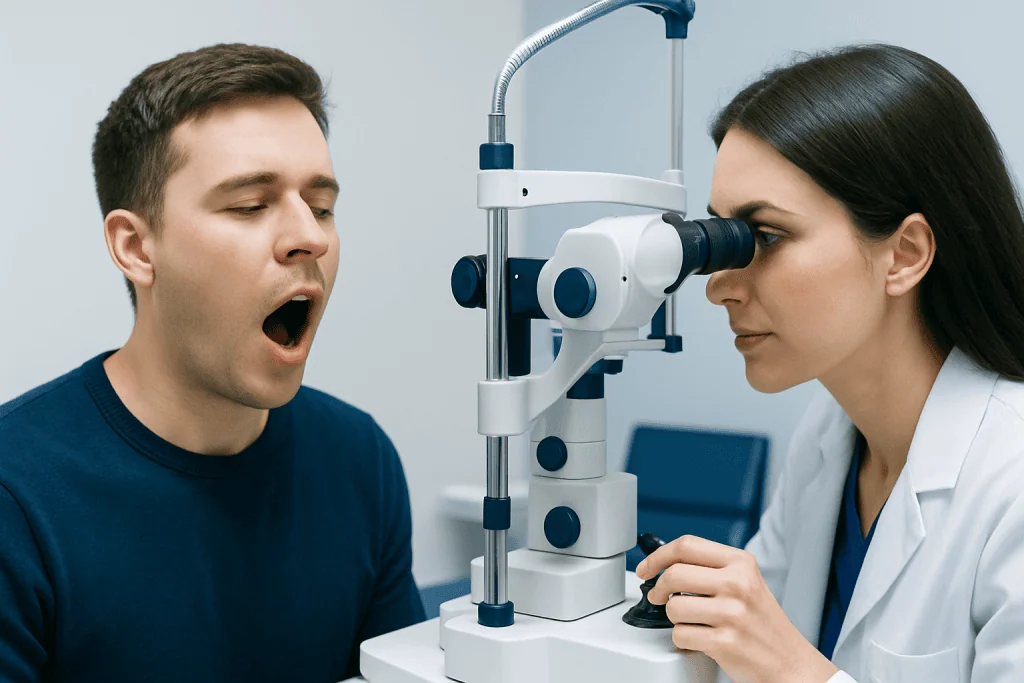
A yawn is a coordinated movement involving the jaw, cheeks, eyelids, and muscles around the nose. When the face stretches, the eyelids may tighten or blink differently for a moment. This can squeeze or shift the tissues that help guide tears toward the small drainage openings, called puncta, at the inner eyelid margins.
The lacrimal glands, located above the outer part of each eye, make the watery component of tears. Tears then travel across the eye surface and normally drain through the puncta, small channels called canaliculi, and the tear sac before entering the nose. During a yawn, temporary changes in eyelid position and facial pressure may slow drainage just enough for tears to overflow.
Yawning can also occur when a person is tired, waking up, or spending time in dry air. These situations may contribute to mild eye-surface dryness. Paradoxically, dry or irritated eyes can respond by producing more watery reflex tears, so a yawn may simply make a pre-existing tendency to tear more apparent.
Common reasons watering may be more noticeable

Occasional watery eyes during yawning are usually normal. However, several common and often treatable factors can make the response more frequent or more obvious. These include dry eye, seasonal allergies, exposure to smoke or wind, prolonged screen use, contact lens irritation, and lack of sleep.
Dry eye does not always mean that there are too few visible tears. When the protective tear film is unstable, the eye surface can become irritated and trigger reflex tearing. Allergy-related inflammation can cause itching, redness, and watery eyes, while environmental irritants may cause burning or a gritty sensation.
Eyelid and drainage changes can also contribute. Inward- or outward-turning eyelids, loose lower eyelids, blocked puncta, or narrowing farther along the tear drainage pathway can prevent tears from draining normally. These concerns are more likely when watering is persistent, occurs mainly in one eye, happens outdoors in the wind or cold, or repeatedly runs down the face.
- More consistent with a normal yawn response: brief tearing in both eyes that settles quickly and has no discomfort.
- More suggestive of an underlying eye issue: daily tearing, one-sided symptoms, irritation, crusting, swelling near the inner eye, or changes in vision.
When to seek medical care
Medical review is advisable if watery eyes continue beyond yawning or become frequent enough to interfere with reading, driving, work, or daily comfort. An appointment with an ophthalmologist or other qualified eye care professional is particularly helpful if tearing affects one eye more than the other, has lasted for several weeks, or is accompanied by recurrent eye irritation.
Prompt assessment is important for eye pain, significant redness, sensitivity to light, blurred or reduced vision, a feeling that something is stuck in the eye, thick yellow or green discharge, eyelid swelling, or symptoms after an eye injury or chemical exposure. These signs can occur with infections, inflammation, corneal problems, or other conditions that should not be managed with home measures alone.
People who wear contact lenses should remove them and seek timely advice if they develop a painful red eye, discharge, or vision change. A painful eye with headache, nausea, halos around lights, or sudden vision loss requires urgent emergency assessment.
How a doctor evaluates excessive tearing
A clinician will begin by asking when the watering occurs and whether it is linked to yawning, wind, screens, allergy seasons, contact lenses, or particular environments. They may ask about itching, burning, discharge, facial injury, past eye surgery, medicines, sinus symptoms, and whether the problem is in one or both eyes.
The examination usually includes checking vision, the eye surface, eyelid position, blinking, eyelashes, and the openings that drain tears. Special dyes may be used to assess the tear film or look for small scratches on the cornea. If a drainage problem is suspected, the clinician may perform gentle irrigation of the tear pathway or arrange additional tests.
These steps help distinguish excess tear production from reduced tear drainage. For example, dry eye and allergies tend to irritate the eye surface and increase reflex tearing, while a narrowed or blocked drainage pathway may cause tears to pool despite a healthy-looking tear film. The appropriate treatment depends on the cause rather than on the yawning itself.
Practical self-care for mild watery eyes
If watering occurs only briefly with yawning and there are no warning signs, simple eye-comfort measures may help. Regular blinking during screen use, taking visual breaks, avoiding direct fans or smoke, and using protective glasses outdoors in wind can reduce eye-surface irritation. Adequate sleep and hydration may also support overall comfort, although they do not replace an eye examination when symptoms persist.
For people with occasional dryness, preservative-free lubricating eye drops may be suitable, but a pharmacist or eye care professional can help select an option that is appropriate for the individual. Allergy symptoms may improve by limiting known triggers and discussing suitable treatment with a clinician. It is best to avoid using redness-relieving drops repeatedly, as some can worsen redness or irritation over time.
Do not rub watery or itchy eyes, as rubbing can increase irritation and introduce germs. Contact lens users should follow lens hygiene guidance carefully and avoid wearing lenses when the eyes are painful, unusually red, or producing discharge. Persistent symptoms deserve professional advice even when they seem mild.
Treatment depends on the underlying cause
Many people need no treatment for tears that appear only during a yawn. When an underlying issue is found, care may focus on improving tear-film quality, treating allergy or eyelid inflammation, adjusting contact lens use, or addressing an eyelid position problem. A clinician may recommend lubricating drops, warm compresses, lid hygiene, allergy treatment, or other measures based on the examination.
If tear drainage is narrowed or blocked, treatment may range from observation to procedures that open, flush, or bypass the affected pathway. The choice depends on the location and severity of the obstruction, the person’s symptoms, and any related nasal, eyelid, or eye-surface condition. Antibiotics are not routinely needed unless a clinician identifies a bacterial infection.
At Acibadem International, multidisciplinary eye specialists in JCI-accredited hospitals can assess persistent tearing and related eyelid or tear drainage concerns for international patients. A personalized evaluation can clarify whether the watering is a harmless yawn-related response or part of a condition needing treatment.
Frequently asked questions
Is it normal for eyes to water when yawning?
Yes. Brief tearing during or just after a yawn is common and is usually harmless. Facial muscle movements and temporary changes in tear drainage can allow normal tears to overflow.
Why do my eyes water when I yawn but not at other times?
A yawn stretches muscles around the eyelids, cheeks, and nose, which may temporarily affect the movement of tears toward their drainage openings. If the tearing stops quickly and there are no other symptoms, it generally does not suggest a problem.
Can dry eyes cause watery eyes when yawning?
Yes. Dry eye can irritate the eye surface and trigger reflex production of watery tears. Yawning may make this response more noticeable, particularly after screen use, in dry air, or when a person is tired.
Could watery eyes during yawning mean a blocked tear duct?
Tearing only during occasional yawns is unlikely to indicate a blocked tear duct. A drainage problem is more likely when tearing is persistent, happens mainly on one side, runs down the cheek, or occurs with recurrent swelling or infection near the inner corner of the eye.
What symptoms with watery eyes are concerning?
Eye pain, marked redness, light sensitivity, thick discharge, eyelid swelling, injury, or changes in vision should be assessed promptly. Sudden vision loss, severe pain, or a painful red eye with nausea or headache needs urgent medical attention.
Should I use eye drops for tears when yawning?
Eye drops are usually unnecessary when tearing is brief and occurs only with yawning. If dryness or irritation is present, preservative-free lubricating drops may help, but persistent symptoms should be discussed with an eye care professional.
This article is for general information only and is not a substitute for professional medical advice. Please consult a qualified doctor about your individual situation.
Explore treatments in Turkey — costs, top hospitals & a free quote
JCI-accredited · board-certified surgeons · reply within 24h
Add us as a Preferred Source to see more of our trusted health content across Google Search, AI Overviews and Discover.

More from the Health Library

Is Vegan Dairy Free? A Doctor-Reviewed Answer

Inner Ear Infection Symptoms: Common Causes, Related Conditions, and When to See a Doctor

Swollen Cheek: Possible Causes and When to Seek Care

What Is Abrosexual? A Doctor-Reviewed Answer

How to Lower Cortisol? Causes, Explanations, and Next Steps