Why Your Cervix May Hurt After Intercourse

Deep pain after intercourse is not always coming from the cervix itself; the vagina, pelvic floor, uterus, ovaries, bladder, or bowel may contribute. Arousal, lubrication, penetration depth, and sexual position can influence discomfort and are common, manageable factors.
Key Takeaways
- Deep pain after intercourse is not always coming from the cervix itself; the vagina, pelvic floor, uterus, ovaries, bladder, or bowel may contribute.
- Arousal, lubrication, penetration depth, and sexual position can influence discomfort and are common, manageable factors.
- Infections, cervical inflammation, endometriosis, fibroids, ovarian cysts, and pelvic inflammatory disease can also cause deep pain.
- Bleeding after sex, fever, unusual discharge, severe pain, or pain that keeps returning should be discussed with a healthcare professional.
- Avoiding painful penetration and seeking assessment early can help identify the cause and support comfortable sexual health.
A hurt cervix after intercourse usually describes deep pelvic pain felt during or shortly after penetrative sex. It can result from pressure against the cervix, insufficient lubrication, infection, or another pelvic condition; persistent, severe, or recurrent symptoms deserve medical assessment.
Overview: Why the Cervix May Hurt After Intercourse
A hurt cervix after intercourse commonly refers to a deep, aching, sharp, or pressure-like sensation felt high in the vagina or lower pelvis during or after penetrative sex. For many people, this happens when penetration reaches the cervix or stretches nearby tissues, especially with deeper thrusting. Brief discomfort that improves after changing position or slowing down may not indicate a serious problem.
However, the feeling is not always caused by the cervix alone. The cervix is the lower opening of the uterus, but pain felt in this area can also come from the vaginal walls, pelvic floor muscles, uterus, ovaries, bladder, bowel, or surrounding ligaments. Clinicians often use the term deep dyspareunia for pain with deep penetration.
Recurring pain is not something a person needs to simply tolerate. It is useful to notice when it occurs, where it is felt, whether there is bleeding or discharge, and whether it relates to the menstrual cycle. These details can help a clinician distinguish a temporary mechanical cause from a condition needing treatment.
How Normal Anatomy and Arousal Can Affect Deep Sex Pain
The position of the cervix changes naturally through the menstrual cycle. Around ovulation, it may sit higher in the vagina, while at other times it can be lower and more easily reached during penetration. The uterus can also tilt forward or backward, which may change which positions feel comfortable. These normal anatomical differences explain why a position that is comfortable on one occasion may feel uncomfortable on another.
Sexual arousal also changes the body. With adequate arousal, the vagina lengthens and the pelvic floor generally relaxes, creating more space and reducing friction. If intercourse begins before a person feels physically ready, the vaginal tissues and pelvic muscles may be tense, and deep contact may feel more painful.
Dryness can cause friction and surface burning, while rapid or deep penetration can create deeper pressure. Hormonal changes around menopause, after childbirth, during breastfeeding, or with certain medications may reduce natural lubrication or make vaginal tissues more sensitive. These factors are common and can often be addressed with gentle adjustments and clinical advice when needed.
- Allow more time for arousal and relaxation.
- Use a compatible personal lubricant when dryness is a concern.
- Choose positions that allow the receiving partner to control depth and pace.
- Stop or change activity if deep pain begins rather than pushing through it.
Possible Medical Causes of Cervix or Pelvic Pain After Sex

Cervical irritation or inflammation can cause pain with contact. Cervicitis may develop because of sexually transmitted infections, such as chlamydia or gonorrhea, or from non-infectious irritation. Symptoms can include unusual vaginal discharge, bleeding after sex, bleeding between periods, pelvic discomfort, or burning with urination. Some infections cause few symptoms, so testing may be important even when signs are mild.
Pelvic inflammatory disease is an infection of the upper reproductive tract that can cause lower abdominal pain, pain during sex, fever, abnormal discharge, or irregular bleeding. It requires prompt medical treatment because untreated infection may lead to longer-term complications. Cervical ectropion, a common benign change in which delicate gland cells are present on the outer cervix, can also make the cervix more likely to bleed after contact.
Other possible causes of deep pain include endometriosis, uterine fibroids, ovarian cysts, pelvic adhesions, and pelvic floor muscle overactivity. Endometriosis can cause pain during or after sex, painful periods, bowel or bladder symptoms around menstruation, and sometimes fertility concerns. Conditions involving the bladder or bowel, including bladder pain syndrome or constipation, can occasionally be felt as pelvic pain during intercourse.
Rarely, persistent post-sex bleeding or pelvic pain can be associated with cervical cell changes or cancer. This is not the most likely explanation, particularly when symptoms are short-lived, but it is an important reason not to ignore recurrent bleeding. Staying up to date with recommended cervical screening supports early detection of cervical abnormalities.
Symptoms That Can Help Identify the Cause
The pattern of symptoms can offer useful clues, although it cannot confirm a diagnosis without an examination. Pain that occurs only with very deep penetration and improves when depth is limited may suggest mechanical pressure. Burning or stinging near the vaginal opening is more consistent with dryness, irritation, or a skin or vaginal condition than with direct cervical contact.
Cycle-related symptoms may also matter. Deep pain that becomes worse before or during periods, together with severe menstrual cramps or pain with bowel movements, can occur with endometriosis. One-sided pelvic pain, bloating, or a sense of pressure may lead a clinician to consider an ovarian cyst or another pelvic cause.
Signs of infection include new or unusual discharge, unpleasant odor, itching, genital sores, fever, pain when urinating, and pain in the lower abdomen. Bleeding after intercourse can arise from dryness, minor tissue injury, infection, cervical ectropion, polyps, or other cervical changes. It should be evaluated if it happens more than once, is heavy, occurs after menopause, or is accompanied by pain.
Keeping a simple symptom note can be helpful before an appointment. It may include the timing of pain, relationship to periods, use of contraception, recent new sexual partners, lubricant use, location and severity of pain, bleeding, discharge, and any urinary or bowel symptoms.
How Clinicians Evaluate Pain After Intercourse
A healthcare professional will usually begin by asking about symptoms, menstrual history, pregnancy possibility, sexual health, medications, prior pelvic conditions, and cervical screening history. These questions are routine and confidential. Their purpose is to identify possible causes and determine whether urgent care or tests are needed.
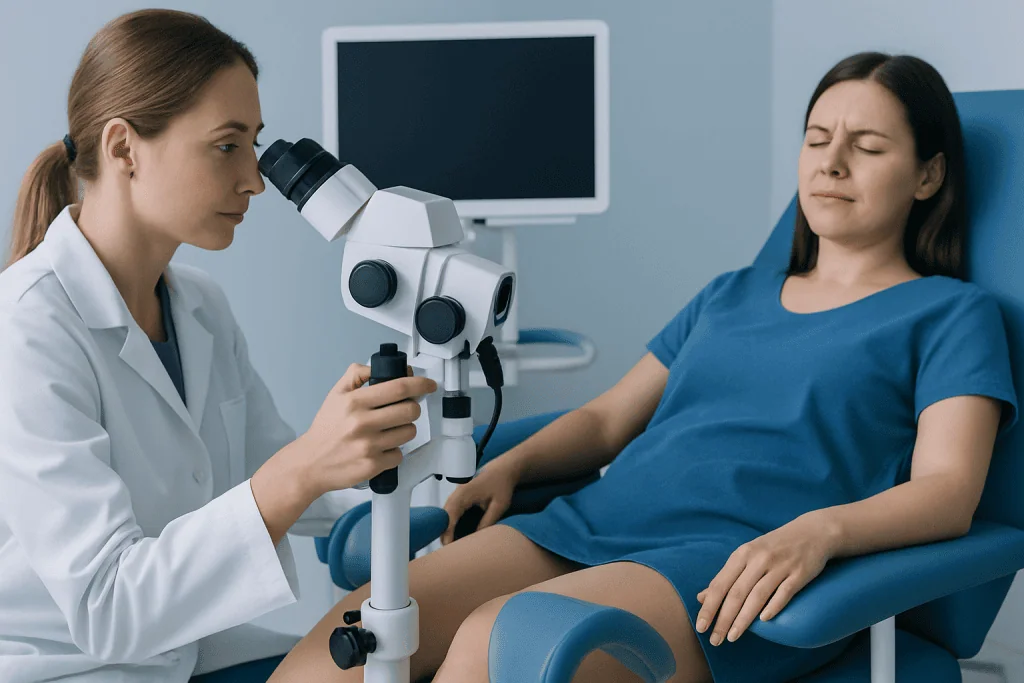
A pelvic examination may be recommended to check the external genital area, vagina, cervix, uterus, and ovaries for tenderness, inflammation, masses, or changes that could explain symptoms. The patient can ask questions, request an explanation at each step, pause the examination, or bring a support person where clinic policies allow. Consent is important throughout the visit.
Depending on the findings, testing may include a pregnancy test, vaginal or cervical swabs for infections, urine testing, cervical screening when due, or a pelvic ultrasound. Ultrasound can help assess the uterus and ovaries, although it does not identify every cause of pelvic pain. Referral to a gynecologist, sexual health specialist, pelvic floor physiotherapist, or another appropriate clinician may be helpful for ongoing symptoms.
Treatment and Self-Care Options
Treatment depends on the cause. When pain is related to depth, arousal, or dryness, practical changes may be enough: longer foreplay, a water- or silicone-based lubricant compatible with the chosen barrier method, slower penetration, and positions with more control over depth. Communication between partners is important; pain is a signal to pause, not something that should be expected during sex.
If testing identifies an infection, a clinician can prescribe the appropriate treatment and advise whether sexual partners should be tested or treated. It is generally important to avoid sex or use protection as advised until treatment is completed and symptoms have resolved. A clinician may also recommend follow-up testing for some sexually transmitted infections.
For conditions such as endometriosis, fibroids, ovarian cysts, or pelvic floor dysfunction, management may involve pain-relief strategies, hormonal treatment, physiotherapy, monitoring, or procedures depending on the diagnosis and a person’s health goals. Pelvic floor physiotherapy can be particularly useful when muscles remain tense or painful, as treatment focuses on relaxation, coordination, and reducing pain rather than simply strengthening muscles.
For international patients, Acibadem International’s multidisciplinary specialists and JCI-accredited hospitals can assess persistent pelvic pain and coordinate gynecological care when appropriate. A person should avoid self-treating recurrent symptoms with leftover antibiotics, internal cleansing products, or unverified remedies, as these can irritate tissues or delay the correct diagnosis.
When to Seek Medical Care
A person should arrange a non-urgent medical appointment when pain after intercourse keeps returning, affects intimacy or daily life, occurs with new discharge or urinary symptoms, or is associated with bleeding after sex. An assessment is also advisable after menopause if any vaginal bleeding occurs, including bleeding following intercourse.
Urgent medical care is appropriate for severe or worsening pelvic or abdominal pain, fever, fainting, dizziness, shoulder pain, heavy bleeding, vomiting, or possible pregnancy with pain or bleeding. These symptoms can have several causes, including conditions that need prompt assessment, such as an ectopic pregnancy or significant infection.
Sexual pain can be physically and emotionally difficult, but it is common and treatable in many cases. Seeking care is not an overreaction, particularly when symptoms are persistent. A clinician can help identify the cause while respecting personal comfort, privacy, and reproductive goals.
Frequently asked questions
Can the cervix really be hurt during sex?
The cervix can be sensitive to pressure or contact during deep penetration, which may feel like a sharp, deep, or cramping pain. In many cases, the discomfort is brief and related to position, depth, or inadequate arousal. Repeated pain may also come from nearby pelvic structures or an underlying condition, so it is worth discussing with a clinician.
Why does my cervix hurt only in certain positions?
Some positions allow deeper penetration or direct pressure toward the cervix, uterus, or pelvic floor. The angle of the uterus and the cervix’s position during the menstrual cycle can also affect comfort. Changing the angle, slowing down, and allowing the receiving partner to control depth may reduce discomfort.
Is pain after intercourse a sign of an STI?
It can be, but pain alone does not confirm an STI. Cervicitis caused by infections such as chlamydia or gonorrhea may cause pelvic discomfort, discharge, bleeding after sex, or burning with urination, though some people have no symptoms. Testing is the reliable way to identify an STI and guide treatment.
Why am I bleeding after sex and feeling cervical pain?
Bleeding after sex may result from dryness, minor vaginal irritation, cervical ectropion, infection, polyps, or cervical cell changes. When it occurs along with pain, a medical assessment is especially sensible. Recurrent bleeding, heavy bleeding, or bleeding after menopause should not be delayed.
Can endometriosis cause pain when the cervix is touched?
Endometriosis can cause deep pain during or after intercourse, although the pain may arise from tissues around the uterus, ovaries, pelvic ligaments, or pelvic floor rather than the cervix itself. Symptoms may be worse around menstruation and can occur with painful periods or bowel symptoms. A gynecological evaluation can help determine whether endometriosis or another cause is involved.
How long should pain after intercourse last?
Mild discomfort from pressure or friction should usually settle fairly soon after sex. Pain that lasts for hours, repeatedly returns, becomes more intense, or is accompanied by bleeding, fever, discharge, or urinary symptoms should be assessed. Avoid further painful penetration until the cause is clearer.
References
- American College of Obstetricians and Gynecologists
- Centers for Disease Control and Prevention
- National Health Service
- Mayo Clinic
- World Health Organization
This article is for general information only and is not a substitute for professional medical advice. Please consult a qualified doctor about your individual situation.
Explore treatments in Turkey — costs, top hospitals & a free quote
JCI-accredited · board-certified surgeons · reply within 24h
Add us as a Preferred Source to see more of our trusted health content across Google Search, AI Overviews and Discover.
Check your numbers in seconds
BMI, calories, due date, blood pressure and 30+ more clinical calculators — free, instant, doctor-reviewed ranges.