Zirconia crowns in Turkey: Hospitals, Safety & What to Expect

Zirconia crowns are custom restorations that cover and protect damaged, weakened or heavily restored teeth. A thorough examination, including appropriate dental imaging, is essential before a crown is recommended.
Key Takeaways
- Zirconia crowns are custom restorations that cover and protect damaged, weakened or heavily restored teeth.
- A thorough examination, including appropriate dental imaging, is essential before a crown is recommended.
- Treatment commonly involves tooth preparation, impressions or digital scanning, a temporary crown and fitting of the final crown.
- Good oral hygiene, regular dental reviews and attention to bite forces help crowns last longer.
- Patients travelling for care should plan enough time for assessment, laboratory work, fitting and possible adjustments.
- Persistent pain, swelling, fever or a loose crown requires prompt dental assessment.
Zirconia crowns in Turkey may be an appropriate option for people seeking durable, natural-looking tooth restorations, provided treatment is based on a full dental assessment rather than a cosmetic plan alone. Patients should understand the clinical process, infection-control standards, travel arrangements and follow-up needs before deciding where to have care.
Overview: zirconia crowns in Turkey
Zirconia crowns in Turkey can be a suitable treatment option when they are provided after an individual dental examination, with clear information about materials, expected outcomes and aftercare. Zirconia is a strong ceramic material used to restore teeth that are cracked, worn, discoloured, extensively filled or weakened after root canal treatment.
A crown is not simply a cosmetic covering. It is a custom-made restoration designed to protect the remaining tooth structure and restore comfortable chewing, speech and appearance. The dentist should first confirm that the tooth and surrounding gums are healthy enough for restoration, and discuss whether alternatives such as a filling, veneer, onlay, root canal treatment or extraction may be more appropriate.
For patients travelling internationally, safety depends on more than the destination. Important considerations include the qualifications of the dental team, diagnostic standards, sterilisation processes, communication, laboratory quality, documentation and a realistic plan for follow-up after returning home. For a broader explanation of materials and planning, see zirconia crowns.
How zirconia crowns work and who may be suitable
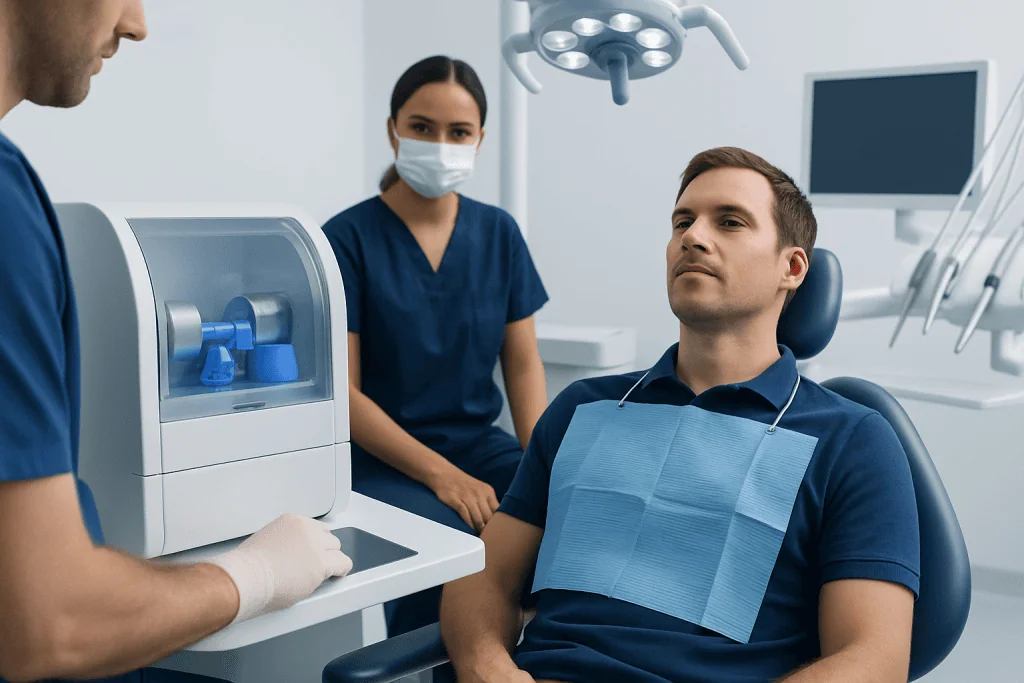
Zirconia is a biocompatible, tooth-coloured ceramic. Modern zirconia materials can provide high strength and an appearance that may be tailored to the shade and character of neighbouring teeth. Depending on the tooth location and aesthetic goals, the dentist may recommend monolithic zirconia, which is milled from a single block, or a layered design with porcelain added for more translucency.
A zirconia crown may be considered for a tooth with a large old filling, significant wear, a fracture, loss of tooth structure from decay, or a root canal-treated tooth that needs protection. It may also be used to replace an existing crown that no longer fits well or has failed. The choice should be based on the tooth’s condition, bite, gum health and the patient’s preferences, not on material trends alone.
It may not be the best option if active gum disease, untreated tooth decay, infection or severe tooth grinding has not been addressed. Teeth with limited remaining structure may need additional treatment before crowning. A dentist will also assess bite alignment, jaw symptoms and whether enough healthy tooth structure can be preserved.
- Suitability is confirmed through a clinical examination and, when needed, X-rays or other imaging.
- Healthy gums and controlled decay are important for a stable crown margin.
- People who clench or grind their teeth may need a protective night guard after treatment.
Assessment and planning in a hospital setting

Safe crown treatment begins with diagnosis. The dental team reviews the person’s medical history, medications, allergies, oral hygiene routine, previous dental work and main concerns. Examination includes the tooth, gums, bite and neighbouring teeth. Dental X-rays may be needed to identify hidden decay, inflammation around the root, bone changes or problems beneath an older restoration.
If pain, sensitivity or signs of infection are present, the cause should be identified before a crown is placed. For example, a tooth with an inflamed or infected pulp may need root canal treatment first. Placing a crown over an untreated problem can delay diagnosis and may lead to persistent symptoms.
Patients should be given a proposed treatment plan that explains why a crown is advised, what tooth preparation is expected, the type of zirconia being considered, the number of visits and the likely need for temporary restoration. When travelling, it is helpful to request copies of X-rays, clinical notes and the final restoration details for future dental care at home.
What happens during the zirconia crown procedure
The procedure usually takes place over at least two appointments, although the exact timetable depends on the clinic, laboratory workflow, tooth condition and whether additional treatment is needed. Local anaesthesia is commonly used so that tooth preparation is comfortable. The dentist removes decay or failed restorative material where necessary and carefully shapes the tooth to create space for the crown.
After preparation, the dentist records the tooth shape and bite using a digital scan or conventional impression. This information is sent to a dental laboratory, where the zirconia crown is designed and manufactured. A temporary crown may be fitted to protect the prepared tooth while the final restoration is being made.
At the fitting visit, the dentist checks the crown’s colour, shape, contact points, fit at the gum line and bite. Small adjustments may be made before the crown is permanently bonded or cemented. The patient should be able to bite comfortably and clean around the restoration before leaving.
Some travel plans allow several days between appointments for laboratory production and fitting. If the dental examination reveals gum disease, infection, complex bite issues or a need for multiple restorations, the overall process may take longer than initially expected. A careful schedule is generally safer than trying to compress necessary treatment into a very short visit.
Benefits, limitations and possible risks
A well-planned zirconia crown can protect a weakened tooth, improve chewing function and provide a natural-looking restoration. Zirconia is valued for its strength and resistance to fracture, particularly in areas exposed to higher biting forces. It does not contain metal, which may be relevant for people who prefer a metal-free restoration.
However, every crown has limitations. Preparing a tooth for a crown removes some natural enamel, and the treatment is generally irreversible. Crowns can eventually wear, chip, loosen or develop leakage at the edge. Decay can still occur where the crown meets the natural tooth, especially if plaque is not removed effectively.
Possible short-term effects include gum tenderness, mild sensitivity to temperature or pressure, and awareness of a changed bite. Less commonly, the tooth nerve may become irritated after preparation and may later require root canal treatment. A crown that is too high can cause discomfort or strain on the tooth and jaw, which is why bite checks and follow-up adjustments matter.
Patients should be cautious of treatment plans that promise identical results for every person or recommend extensive crowning without a full assessment. Conserving healthy tooth structure is an important principle of modern dentistry, and the least invasive suitable option should be considered.
Recovery, aftercare and travel planning
Most people can return to normal activities soon after a crown appointment. Until numbness from local anaesthesia has worn off, it is sensible to avoid hot drinks and chewing to reduce the chance of accidentally biting the cheek, tongue or lip. Mild sensitivity or gum soreness generally improves over several days, but worsening or persistent symptoms should be reviewed.
Daily care is essential. Brushing twice a day with fluoride toothpaste, cleaning between teeth with floss or interdental brushes, and attending routine dental check-ups help protect the crown and the supporting tooth. The dentist may advise avoiding very hard foods or habits such as chewing ice, opening packages with teeth or biting pens. A night guard may be recommended for people with bruxism.
International patients should allow time for a final fitting check and any needed adjustment before travel. They should also keep written details of the crown material, tooth number, cement type where available, radiographs and treatment summary. Accommodation and transfer arrangements should support a relaxed schedule, particularly if several dental appointments are planned.
Acibadem International’s multidisciplinary specialists and JCI-accredited hospitals provide assessment and dental treatment for international patients, with care coordination that can help support appointment and travel planning.
When to seek medical care
A dentist should assess toothache, swelling, bleeding gums, persistent bad taste, a broken restoration or sensitivity that does not settle. These symptoms can indicate decay, gum inflammation, a crack, bite overload or an infection that needs treatment before a new crown is considered.
After crown placement, patients should contact the dental team promptly if the crown feels loose, cracks, repeatedly traps food, causes pain when biting or seems too high. Early adjustment may prevent further damage to the tooth, restoration or jaw.
Urgent dental or medical assessment is important for facial swelling, fever, difficulty swallowing, difficulty breathing, rapidly worsening pain or swelling spreading toward the eye or neck. These symptoms may indicate a significant infection and should not be managed by waiting for a planned follow-up visit.
Frequently asked questions
Are zirconia crowns in Turkey safe?
Zirconia crowns can be safe when treatment is based on a complete examination and performed by qualified dental professionals using appropriate infection-control and laboratory standards. Patients should confirm the proposed diagnosis, treatment steps, follow-up arrangements and the documentation they will receive before travelling.
How long does a zirconia crown procedure take?
The process often requires at least two appointments: one for preparation and scanning or impressions, and another for fitting the final crown. The timing varies according to laboratory production, the need for temporary restoration and whether the tooth requires additional treatment first.
Does getting a zirconia crown hurt?
The tooth is usually prepared under local anaesthesia, so discomfort during the procedure is generally controlled. Some short-term sensitivity or gum tenderness can occur afterwards, but significant or persistent pain should be checked by a dentist.
How long do zirconia crowns last?
A crown’s lifespan depends on oral hygiene, gum health, bite forces, tooth grinding, diet and the quality of fit. Regular dental care and avoiding damaging habits can help prolong the life of both the crown and the tooth underneath it.
Can zirconia crowns be placed over infected teeth?
No. An active infection or untreated pulp problem should be diagnosed and treated before a definitive crown is placed. In some cases, root canal treatment and a period of review are needed before the tooth is restored with a crown.
What should international patients arrange before dental treatment in Turkey?
Patients should share relevant medical and dental information, allow sufficient time for assessment and final fitting, and ask for a written treatment plan. It is also useful to arrange accommodation that allows flexibility for appointments and to obtain records for their dentist at home.
References
- American Dental Association
- FDI World Dental Federation
- National Institute for Health and Care Excellence
- World Health Organization
- Centers for Disease Control and Prevention
This article is for general information only and is not a substitute for professional medical advice. Please consult a qualified doctor about your individual situation.
Explore treatments in Turkey — costs, top hospitals & a free quote
JCI-accredited · board-certified surgeons · reply within 24h