

At Acibadem, How We Use Technology in Diagnosis and Treatment
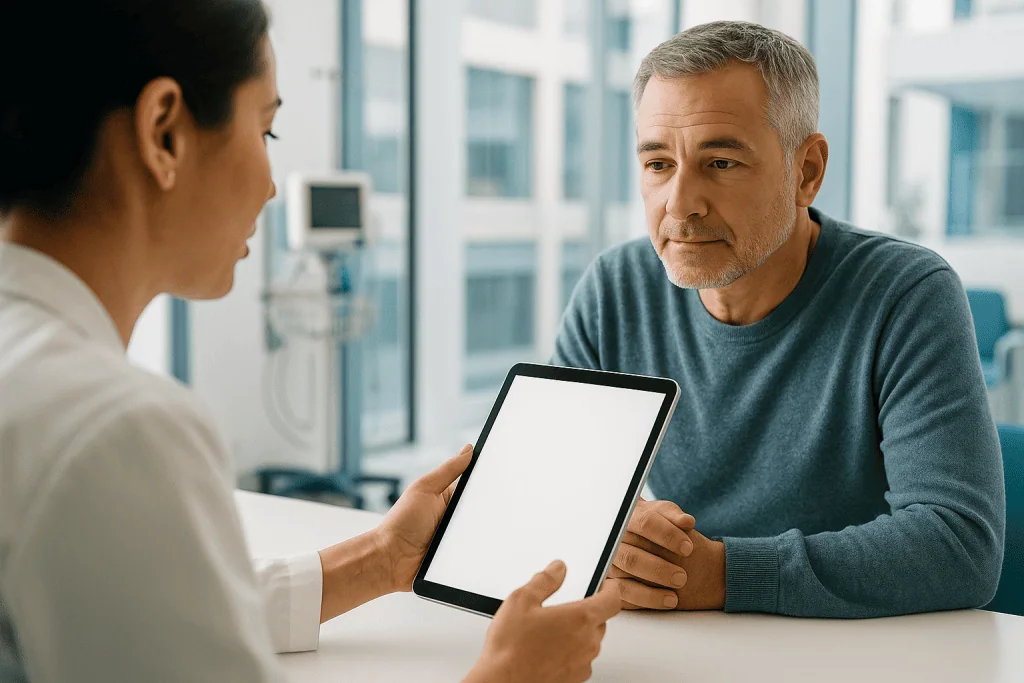
Technology supports every stage of care at Acibadem: review of your records before travel, imaging and laboratory testing after arrival, digital systems that let specialists work from the same information, and structured planning for treatment and follow-up. The practical benefit for international patients is coordination, fewer repeated explanations, clearer timelines, and documents you can actually use when you return home.
Every hospital website mentions its technology. What you actually want to know is simpler: will any of it change your experience? Will it save you a repeated scan, a wasted day in a foreign city, or an explanation you did not understand the first time?
This guide explains how we use technology in diagnosis and treatment at Acibadem, not as a list of machines, but as a description of what happens to your information from the first review of your records to your follow-up at home. If you are comparing hospitals abroad, this is the version of the technology conversation that is worth having.
At a glance
- Best for: International patients who want to understand what hospital technology actually changes about planning, safety, and convenience
- What this guide covers: Imaging and laboratory systems, digital records, treatment planning tools, coordination between specialties, and the practical logistics that follow
- What it does not include: Procedure-specific medical advice, outcome claims, or price figures, costs depend on your individual plan and are explained structurally here
- Support available: International patient coordinators, interpreters, and travel guidance alongside clinical teams
- Why it matters: Well-organised information can reduce delays, unnecessary repetition, and confusion, especially when your time in Turkey is limited
What “how we use technology in diagnosis and treatment” actually means for you
When a hospital describes how it uses technology in diagnosis and treatment, the honest answer has less to do with individual machines and more to do with how information moves. In practical terms, technology determines how quickly your data is gathered, how clearly specialists can review it, and how smoothly the next step is arranged. For international patients this matters more than usual, because your time in Turkey may be limited and every avoidable repeat appointment costs you a day.
At Acibadem, technology sits inside a care pathway rather than beside it. That includes digital review of medical records before you travel, imaging and laboratory systems that let specialists work from the same material, and coordination tools that support scheduling, safety checks, and discharge planning. You can read more about the specific systems international patients encounter in what technology international patients find at Acibadem hospitals.
One limit is worth stating plainly at the start: technology does not replace medical judgement, and it does not make decisions. It gives clinical teams clearer data, better communication channels, and more structured planning. For you, the visible benefit is usually a journey that feels organised, not a different kind of medicine.
How technology supports diagnosis before treatment starts
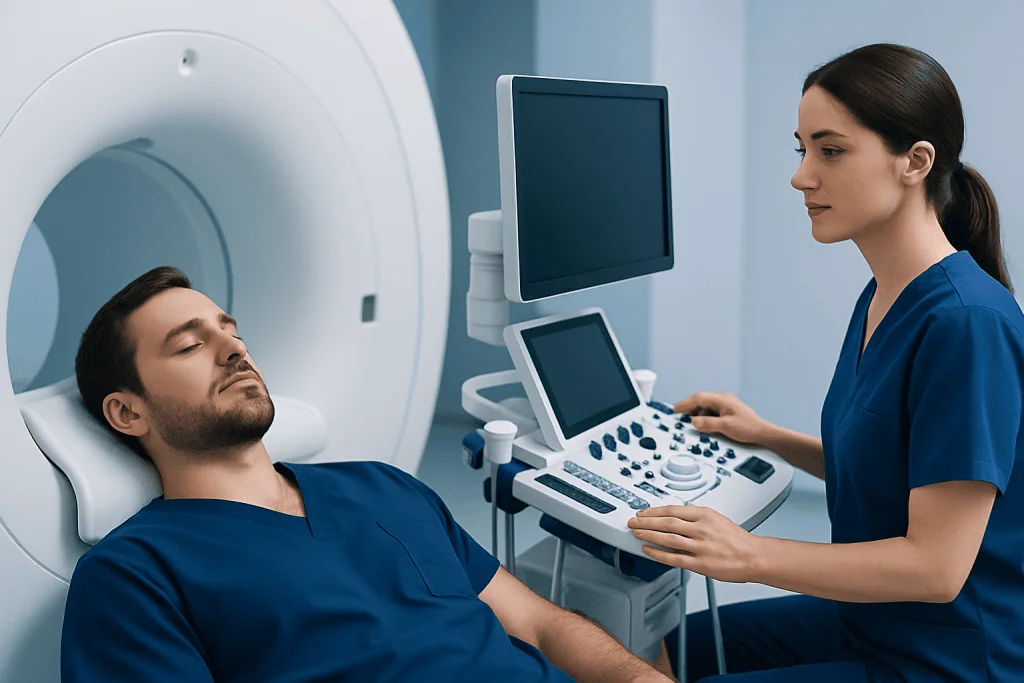
For most international patients, the diagnostic phase begins before the flight. If you already have scans, blood test reports, pathology reports, or consultation notes, these can usually be reviewed digitally in advance, so the team understands your case and can indicate what may still be needed after arrival. Early review helps you prepare documents, estimate a realistic timeline, and avoid travelling with incomplete records. If you are at that stage now, the guide on organising records, questions, and priorities after a recent diagnosis walks through the preparation in detail.
Once you are at the hospital, diagnosis may involve imaging, laboratory testing, pathology review, and specialist consultations. Hospital information systems organise these steps so that results move between departments without you carrying paper copies from one clinic to another. Radiology reports, blood work, and consultation notes land in the same record, where the relevant clinicians can see them.
If your case needs input from more than one specialty, this shared access becomes especially useful. Radiologists, surgeons, oncologists, and internists can review the same images and reports and contribute to a single treatment discussion, rather than each working from a partial picture. This is also what makes it possible to handle the situation where new tests alter the picture: a scenario covered honestly in what if your diagnosis changes after arriving in Turkey.
- Bring previous scans on CD, USB, or via secure online access if your home hospital provides it
- Carry translated reports if you have them, especially pathology summaries
- Keep a written list of current medications, allergies, and past procedures
- Ask in advance which of your existing results are likely to remain valid and which may need repeating
Imaging, labs, and digital records: what to expect
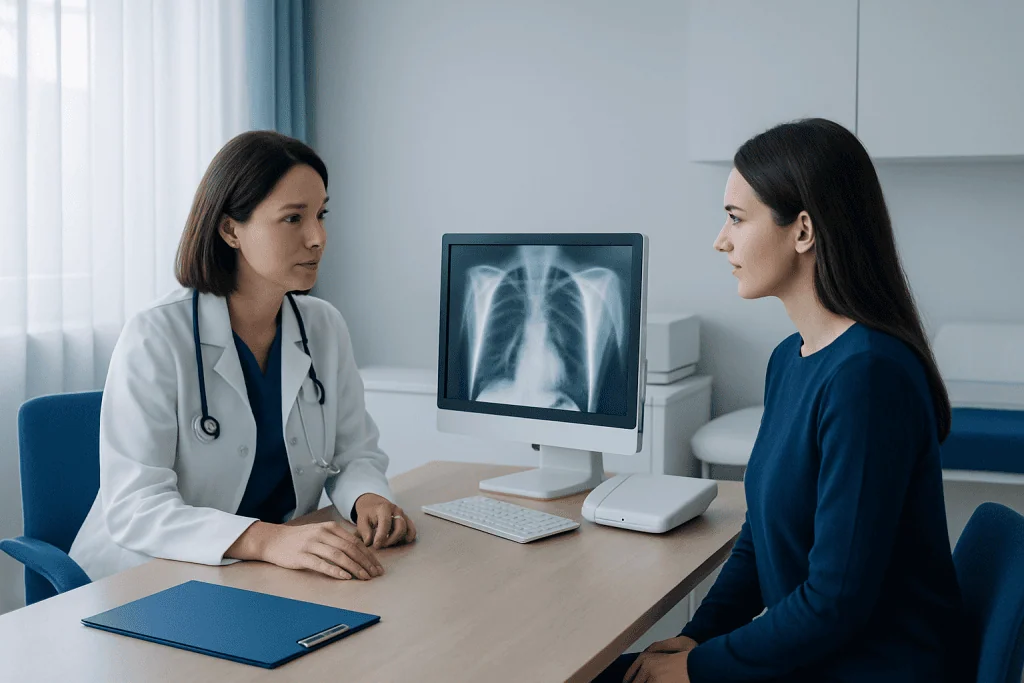
Most people picture hospital technology as the machines: MRI, CT, ultrasound, laboratory analysers. Those matter, but your experience as a patient depends at least as much on how the results are connected. When imaging, blood work, and consultation notes sit in a coordinated digital record, your doctors can compare findings over time and reach decisions with fewer gaps between testing and discussion.
For you, this usually shows up as shorter waits between a test and the conversation about it. If additional views, repeat blood work, or another specialist opinion are needed, the team can identify that earlier. It also tends to make discharge paperwork clearer, because your care summary is built from a complete record rather than reconstructed from fragments.
You should still expect that some tests may be repeated after arrival, even if you had them recently at home. This is not automatically a sign that something is wrong. Image quality varies between machines and protocols, timing can matter, the clinical question may have changed since the original test, or the treating team may need standardised results from its own systems before proceeding. A repeated test is often about confidence in the decision, not doubt about you.
If you are unsure why a test has been requested, ask your coordinator or doctor to explain its purpose in plain terms, confirmation, safety, treatment planning, or monitoring. A clear answer to that question is a reasonable expectation, and asking for it is part of managing your own care well.
Examples of the technology you may encounter
Because “technology” is a vague word, it helps to see the categories laid out. The table below describes the types of tools commonly involved in diagnosis and treatment at a large hospital group, and what each one does from your side of the desk. Which of these apply to you depends entirely on your condition and plan.
| Type of technology | Where you meet it | What it does for you |
|---|---|---|
| Diagnostic imaging (MRI, CT, ultrasound, X-ray, nuclear imaging) | Radiology appointments during your diagnostic workup | Produces the pictures your doctors use to understand structure, extent, and change over time |
| Laboratory and pathology systems | Blood tests, biopsies, and tissue analysis | Turns samples into structured results that feed directly into your record |
| Electronic medical records | Invisible to you, but behind every consultation | Keeps your history, results, allergies, and medication lists in one place for the whole team |
| Treatment planning tools | Surgery, radiotherapy, and other image-based planning | Lets specialists map procedures against your own anatomy and results before treatment begins |
| Digital coordination and scheduling | Appointment booking, interpreter arrangements, discharge documents | Aligns your appointments and paperwork so your travel window is used efficiently |
| Remote record review | Before you travel, and at follow-up after you return home | Allows preliminary assessment of existing records and clearer continuity with your home doctor |
How these tools are matched to a specific case, which imaging, which planning systems, which review steps, is described further in what technology supports diagnosis, surgery, and treatment planning at Acibadem.
How technology helps treatment planning and safety
Once the diagnostic workup is complete, technology becomes most visible in planning. Different specialties may review your results together, compare options, and map the sequence of steps. Depending on your condition, that can involve image-based planning, digital documentation, medication cross-checks, and structured pre-treatment safety reviews. None of this replaces the conversation with your doctor; it is the preparation that makes the conversation specific.
For international patients, the biggest advantage at this stage is clarity. You want to know what happens first, how long each step is expected to take, whether you need to fast, when a companion can be with you, and roughly when travel home becomes realistic. Organised digital workflows support these logistics by keeping appointments, consent steps, test results, and discharge planning aligned rather than negotiated separately with each department.
Technology also adds a layer of safety through verification. Allergies, medication lists, prior reports, and treatment orders can be cross-checked more consistently when they are documented in one accessible record. That does not remove your role, you should still speak up when something looks wrong or unfamiliar, but it means the system is checking alongside you rather than relying on memory.
This is also where the human side of the system does its work. Coordinators and interpreters bridge the gap between digital efficiency and actual understanding, which matters most when you are making a medical decision far from home. How clinical teams and support staff work with these tools day to day is covered in how Acibadem uses technology, doctors, and care teams.
Why technology matters in healthcare, and where its limits are
It is fair to ask why any of this deserves your attention when you are choosing where to be treated. The honest case for technology in medicine rests on three things. First, better information: modern imaging and laboratory methods let clinicians see and measure things that were previously invisible, which supports earlier and more precise diagnosis. Second, better coordination: digital records reduce the friction of moving information between people, which reduces delays and the risk of decisions made on incomplete data. Third, better continuity: structured records travel with you, so your home doctor can pick up where the treating team left off.
The limits are just as real. Technology cannot guarantee a particular result, and no responsible hospital will tell you otherwise. A scan is only as useful as the clinician interpreting it. Digital systems reduce administrative error but do not eliminate the need for careful human review. And more technology is not automatically better care: the value lies in whether the tools are used within a coherent pathway, with people who explain what is happening. That is the standard against which any hospital, including this one, should be judged.
Practical advantages for international patients in Turkey
If you are travelling to Istanbul or another Turkish city for treatment, the practical side of the journey matters as much as the clinical side. Technology smooths the trip in specific ways: pre-arrival record sharing, appointment coordination, interpreter scheduling, and discharge documentation you can actually read. This helps most when you are trying to fit evaluation and treatment into a fixed travel window.
Continuity is the second advantage. If your care involves more than one department or more than one visit, digital records preserve a consistent picture across the whole episode. That is useful during your stay, and equally useful afterwards, because discharge summaries, imaging reports, pathology results, and recommendations can be organised into a package your home doctor can work from.
Non-clinical support, travel planning, accommodation guidance, language services, is not technology in itself, but it works best when it sits on top of well-organised hospital systems that keep your schedule and your information aligned. The two together are what make a treatment trip feel manageable rather than improvised.
- Ask how long you should plan to stay in Turkey before and after key tests or treatment
- Check whether a companion is recommended for your recovery period
- Confirm how you will receive reports, images, and discharge documents
- Make sure your home doctor can open and use the format your records come in
Questions to ask when comparing hospitals and packages
If you are reviewing quotes or packages, look past the treatment name. Ask how diagnosis is organised, whether multidisciplinary review is available when a case needs it, and how test results move between departments. Quotes for the same procedure can be structured very differently: what one hospital bundles into a single figure, another itemises. The variables that usually shape a quote are the scope of diagnostic work included, the level of coordination and interpreter support, the length of stay assumed, and what happens if findings change the plan. A quote that explains these components is easier to trust than one that only names a procedure.
Ask specifically what the planning process includes. Does the initial review cover evaluation of records shared before travel, or does everything begin only after arrival? Are interpreter services present during consultations? Will you receive digital copies of important reports and images to take home? Broader expectations around equipment and facilities are set out in what to expect from Acibadem technology and equipment.
A simple test applies throughout: technology should make your care more understandable, not more impressive-sounding. If a hospital cannot explain in plain language how your records are reviewed, how results connect, and how the next step is decided, managing the journey will be harder regardless of what machines it owns. Practical, transparent answers are usually the better signal.
Step by step
- Organise your records before you travel. Gather recent reports, scan files, pathology summaries, your medication list, and a short medical history early. Records reviewed in advance help the team understand what you already have, and help you understand what may still be needed after arrival.
- Confirm what the first days will include. Find out whether your first appointments are mainly consultation-based or whether imaging and laboratory tests are likely straight away. This shapes your accommodation plans, fasting requirements, companion support, and daily schedule.
- Bring complete, organised documentation. Carry digital and paper copies where possible, including passport details, insurance or payment documents if relevant, and previous medical records. Clear documentation reduces delays and gives specialists earlier results to compare against.
- Use your coordinator and interpreter actively. When anything is unclear, ask for the purpose of each test, how results will be used, and the likely timeline. Interpreters make detailed consultations and consent discussions far easier to follow.
- Ask how results feed into planning. Find out who will review your tests and whether more than one specialty is involved. Understanding how imaging, labs, and consultations come together reduces uncertainty around decisions.
- Prepare for discharge and follow-up early. Before leaving the hospital, confirm how you will receive reports, images, medication instructions, and follow-up recommendations, and who your named point of contact is for clarification once you are home.
Your checklist
- Passport and travel documents
- Recent scan images and reports
- Blood test, pathology, and biopsy reports if relevant
- Current medication and allergy list
- Summary of previous treatments or surgeries
- Questions you want answered about testing and planning
- Home doctor’s contact details for follow-up sharing
- Notebook or phone folder for appointments and documents
Key takeaways
- Technology in diagnosis and treatment matters most where it improves coordination, clarity, and safety, not as a list of machines.
- Pre-arrival review of records shortens the uncertain part of the journey and makes travel planning more realistic.
- Some tests may be repeated after arrival for quality, timing, or standardisation reasons; that is usually about decision confidence, not error.
- Imaging, laboratory results, and digital records deliver the most value when specialists can review and discuss them together.
- When comparing hospitals or packages, ask how diagnosis, planning, and follow-up are organised, and what each quote actually includes, before comparing headline figures.
Frequently asked questions
What are examples of technology used in healthcare?
Common examples include diagnostic imaging (MRI, CT, ultrasound, X-ray), laboratory analysers, digital pathology, electronic medical records, image-based treatment planning tools, and telemedicine for remote record review. In a hospital setting, the connecting systems, records, scheduling, safety checks, often shape your experience as much as the machines themselves.
What are some examples of diagnostic technologies?
Diagnostic technologies range from imaging methods such as MRI, CT, and ultrasound to laboratory testing of blood and tissue, pathology analysis of biopsies, and functional tests specific to each specialty. Which of these apply to you depends on your condition and on the clinical question your doctors need to answer.
How is technology being used to help medicine?
Broadly, in three ways: producing better information through more precise imaging and testing, improving coordination by keeping records accessible to the whole care team, and supporting continuity so your history follows you between visits, departments, and countries. Each of these reduces delays and gaps rather than replacing clinical judgement.
Why is technology important in healthcare?
Because decisions are only as good as the information behind them. Technology helps clinicians see more, measure more accurately, and share findings without loss or delay. It also adds structure to safety checks such as allergy and medication verification. Its importance has clear limits: it informs decisions, it does not make them.
Does advanced technology mean I will need fewer tests?
Not always. Technology helps organise and interpret information more efficiently, but some tests may still be repeated for quality, timing, or standardisation reasons. The realistic benefit is better coordination and clearer decision-making rather than simply a shorter test list.
Can my reports be reviewed before I come to Turkey?
In many cases, records shared in advance can be reviewed for preliminary planning. This helps identify missing documents, indicate what further evaluation may be needed, and give a more realistic sense of how long you may need to stay after arrival.
Will all my doctors see the same results?
In a connected hospital system, imaging, laboratory results, and consultation notes are accessible to the relevant care team. This matters most when more than one specialty is involved, because everyone contributes to the plan from the same information rather than from partial copies.
Should I still bring old scans and reports if I expect new tests?
Yes. Previous records provide comparison points and can help the team understand your case more quickly. Even when some tests are repeated, earlier results often remain valuable for context, particularly for judging how findings have changed over time.
Add us as a Preferred Source to see more of our trusted health content across Google Search, AI Overviews and Discover.

Update history
- PublishedJune 22, 2026
- Medical review approvedAugust 31, 2026
- Last content updateAugust 31, 2026
References2
- Digital health: World Health Organization who.int
- Personal Health Records: MedlinePlus medlineplus.gov
More Patient Guides
Private MRI, CT and Check-Up Costs in Turkey: How Scans Are Priced
How private MRI, CT, PET-CT and full check-up packages are priced in Turkey, modality, region, contrast, reporting, and what a…

Cataract Surgery Cost in Turkey: Per-Eye Prices and Lens Options
Cataract surgery in Turkey is priced per eye and the lens decides the quote. Biometry, both eyes on one trip, and what…
Lip Filler Cost in Turkey: Per-ml Prices Explained
Lip filler in Turkey is priced per millilitre with licensed hyaluronic acid brands and physician injectors. Volume, product, dissolving, safety and what…

Botox Cost in Turkey: Per-Area and Per-Unit Prices
How Botox is priced in Turkey, per area or per unit, brand, physician injectors, medical indications, and what a serious…