

At Acibadem, What Happens on Your Admission Day

On your admission day at Acibadem, you register at the hospital, confirm your identity and documents, complete any administrative formalities, and go through a nursing assessment that verifies your medical history, allergies and medications. Depending on your treatment, you may have final tests or an anaesthesiology review before being settled into your room. Most admissions take a few hours, with international patient coordinators guiding each step.
If you are wondering what happens on your admission day, the honest answer is: several small, routine steps in a row. The day is usually calmer than people expect, but it is busy, and knowing the sequence in advance makes it far easier to move through.
You can expect document checks, guidance from international patient services, a nursing assessment, orientation to your room, and a clear explanation of what comes next. Nothing on this day is designed to catch you out. Almost everything is verification: the hospital checking that the person, the paperwork and the plan all match before treatment begins.
This guide walks through the day in order — registration, identity checks, forms, clinical assessment, and settling in — and explains why each step exists. It is written for international patients preparing for hospital check-in, whether you are being admitted for surgery, a procedure, or a planned inpatient stay.
At a glance
- Best for: International patients preparing for hospital check-in
- What happens first: Registration, identity verification, and a review of your treatment plan
- Who helps you: International patient coordinators, interpreters, nurses, and admissions staff
- What to bring: Passport, medical records, insurance or payment documents, a medication list, and a few essentials
- Typical length: A few hours, depending on tests, consultations, and your treatment schedule
What your admission day is really for
Understanding what happens on your admission day starts with understanding its purpose. Admission is the point where planning turns into practical care. It is not only paperwork. It is the moment the hospital confirms your identity, reviews your medical information one more time, checks that your care team has everything it needs, and prepares you safely for the next stage of treatment.
If you have travelled from abroad, the day can feel dense simply because many small steps happen back to back. At Acibadem, international patient services coordinate those steps, so you are not left navigating an unfamiliar system alone. A coordinator typically knows your file before you arrive and can tell you at any point what the next step is and roughly when it will happen.
Over the course of the day you may meet admissions staff, nurses, your coordinator, and sometimes members of your treating team. Depending on the treatment planned, you may also have final blood tests, imaging, consent discussions, or an anaesthesiology review. None of this means the plan has changed; it means the plan is being confirmed against your current condition, which is standard practice for any responsible hospital.
One useful mental shift: admission day is a verification day, not a decision day. Most of the decisions were made when your treatment plan was agreed. Today, the hospital checks that everything still holds.
Before you arrive at the hospital
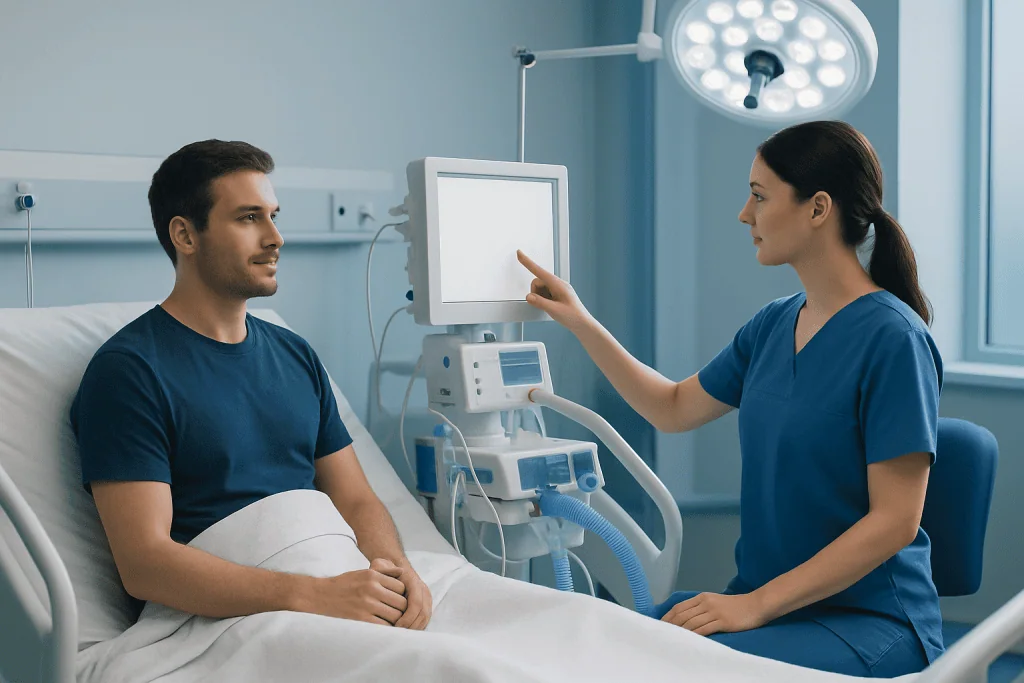
A smooth admission day usually begins the evening before. Confirm your arrival time and the hospital location, and check whether you have been given fasting instructions — for some procedures you will be asked not to eat or drink for a set period beforehand. If you have received written instructions about your medications, bring them with you and follow whatever your treating doctor has told you. Do not change anything on your own initiative; medication decisions belong to your doctor, and admission day is the right time to confirm them, not to improvise.
Keep your important documents together in one folder or bag so you can hand them over quickly. This usually includes your passport, previous test results, scan reports, a current prescription list, insurance documents where relevant, and any correspondence about your treatment plan. If you are unsure exactly what to pack, the guide on documents international patients should bring to hospital admission in Turkey covers this in detail.
If a companion is travelling with you, agree the practical details in advance: who will hold your valuables, how you will stay in touch during assessments, and where they will wait while you are being processed. If you are admitted through Acibadem, your coordinator can also help with transfers, interpretation, and accommodation logistics where needed.
- Check your appointment or admission time the night before
- Bring original identification documents, not just copies
- Pack only the essentials for your first day
- Keep your phone charged and bring a charger and adapter
- Wear comfortable clothes that are easy to change out of
Registration, document checks, and administrative formalities

Registration is one of the first things that happens on your admission day. The admissions team confirms your identity, your contact details, and the reason for your admission. This step matters for two reasons: patient safety, because every record created that day must attach to the right person, and coordination, because your identity links your test results, medications and treatment schedule together in the hospital system.
You will be asked to review and sign forms covering consent, privacy, and administrative details. As an international patient, staff will typically also confirm your passport information, your local contact details in Turkey, and the name of the person travelling with you if applicable. Read what you sign. If a form is unclear, ask your coordinator to explain it in plain language first — that is exactly what they are there for. The separate guide on hospital admission forms and consent documents in Turkey explains the common document types and what each one covers.
Depending on your arrangements, there may also be financial or insurance-related steps at admission. What these look like depends entirely on how your treatment was arranged: self-paying patients confirm the agreed arrangements, while insured patients may have guarantee letters or authorisation documents checked. These are usually short, practical confirmations rather than negotiations, but having the right paperwork to hand keeps them short. If anything about the arrangement seems different from what you agreed, raise it before signing, not after.
Expect staff to repeat questions and recheck details. It can feel redundant when you have already provided everything by email. In a hospital, that redundancy is deliberate. Accuracy is checked more than once precisely because the consequences of a wrong detail are larger here than almost anywhere else.
Clinical checks and meeting your care team
After registration, you move into the clinical part of admission. A nurse usually checks your vital signs, asks about allergies, confirms your current medications, and reviews your medical history again. Even if you shared all of this before travelling, the team verifies it once more in person. Records sent from abroad are a starting point; a face-to-face check confirms nothing has changed since.
Depending on your treatment, you may also have pre-admission tests or short consultations on the same day: blood tests, heart monitoring, imaging, or a review with the anaesthesiology team. The purpose is straightforward — to confirm that the planned care still matches your current condition. If you would like to know what these checks typically involve and how to prepare for them, see the guide on preparing for pre-admission tests in Turkey.
Occasionally, the in-person review identifies something that needs a closer look before treatment proceeds — a test result that should be repeated, or an additional check the team wants on file. This is not unusual and does not automatically mean a problem. The guides on what happens if you need extra tests after arriving in Turkey and what happens if your in-person evaluation changes the initial plan explain how those situations are handled.
You may meet several professionals during this stage — nurses, your treating physician, anaesthesiology staff, your coordinator. Multiple people contributing to your care is a sign of coordination, not of trouble. Different specialists check different things, and the overlap between them is part of how errors are caught.
If English is not your preferred language, ask for interpreter support early in the day rather than partway through. Acibadem routinely arranges interpretation for international patients, and it works best when it is in place before the important conversations, not after them.
Getting settled into your room and understanding the routine
Once admission is complete, you are shown to your room or a waiting area, depending on your schedule. A nurse or ward staff member explains the room setup, the call button, visiting rules, meal arrangements where eating is permitted, and what happens next. This is a good moment for practical questions, including small ones — where the bathroom light is, how to adjust the bed, whether you can keep your phone with you.
If you are staying overnight, you may be asked to change into hospital clothing and store your belongings. Keep only essential items within reach: phone, glasses, hearing aids, perhaps a small comfort item. Passports, large amounts of cash and valuables are best left with a trusted companion where possible; hospitals can usually store items securely, but travelling light within the ward is simpler.
Hospital routines can feel unfamiliar at first, especially after international travel. You will notice repeated identity checks — often before every medication, test or transfer — along with timed observations and staff asking similar health questions at different points. These are standard safety measures across well-run hospitals, and they continue throughout your stay. If you want a picture of how the days after admission typically unfold, the guide on the inpatient stay in Turkey from admission to discharge takes over where this one ends.
If your companion is with you, clarify where they can wait, what the visiting hours are, and how updates will be shared. International patient teams can help families understand the daily flow, which matters most when language or distance adds stress.
How to make the day feel easier
The single most useful expectation to bring is this: there will be waiting between steps. Hospitals sequence the day around clinical priorities, laboratory turnaround times and room readiness, so even a well-organised admission includes pauses. A charger, a light extra layer, something to read and a written list of your questions will do more for your comfort than almost anything else you can pack.
Share your key medical facts clearly and consistently every time you are asked: your diagnosis, previous operations, allergies, current medications, and any recent changes in your health. If you carry paper copies of scans or reports, keep them accessible rather than buried in luggage. Consistency in your answers helps the team; if your answers vary between staff members, they will — correctly — slow down to reconcile them.
It also helps to focus on the immediate next step rather than the whole treatment journey. On admission day, your job is narrow: arrive safely, provide accurate information, understand the plan, and ask when something is unclear. The staff carry the rest of the process.
For many international patients, the biggest practical difference comes from having one clear contact person. If you are admitted through Acibadem, your coordinator connects the moving parts of the day — paperwork, interpretation, communication with your family — so that you deal with one person rather than a dozen departments.
Questions worth asking before the day ends
By the end of your admission day, you should have a basic sense of timing and expectations. If you do not, ask for a plain summary: what happens next, who will see you, and whether there are restrictions on eating, drinking, walking, or your medications that you should confirm with your doctor.
It is also worth asking who your companion should speak to for updates, whether any further documents will be needed later, and which items you should keep with you overnight. If discharge is expected soon after treatment, asking early about follow-up logistics and the return to your accommodation avoids a rushed conversation later.
Do not worry about asking too many questions. Admission day is precisely when practical concerns should be settled. A two-minute conversation at the right moment prevents an hour of confusion later.
- What is the next step after admission, and roughly when?
- Will I have any tests today?
- Are there any instructions about my medications I should confirm with my doctor?
- When can my companion visit or receive updates?
- Who do I contact if I need an interpreter?
Step by step
- Arrive and check in. Plan to arrive on time with your passport, medical records, and any admission instructions you were sent. If you feel tired or overwhelmed after travel, say so early — staff can pace the process so it stays manageable.
- Complete registration and identity verification. Admissions staff confirm who you are, your contact details, and the reason for your stay. You will review and sign routine forms; read them carefully and ask for interpreter support if you need it.
- Review your medical information. A nurse or doctor asks about allergies, medications, prior conditions, and recent symptoms. Repeating details you already sent before travelling is a normal safety step, not a sign your records were lost.
- Have any required pre-treatment checks. Depending on your plan, you may have blood tests, imaging, monitoring, or a specialist review. These confirm that the planned care still matches your current condition and that the team is working from up-to-date information.
- Meet your care team and coordinator. You may meet nurses, your treating physician, anaesthesiology staff, and your international patient coordinator on the same day. Use this to learn who handles medical questions and who handles practical ones.
- Settle into your room or ward area. Staff explain the room setup, safety features, and the routine for the next few hours. Ask where your companion can wait, how updates are shared, and which personal items to keep nearby.
- Confirm the next steps before you rest. Ask for a clear summary of what happens next and whether there are restrictions on food, drink, medication, or movement. Knowing the immediate plan makes the rest of the day noticeably calmer.
Your checklist
- Passport or official ID
- Medical reports, scans, and recent test results
- A written list of your medications and allergies
- Insurance, guarantee, or payment-related documents if relevant
- Phone, charger, and a way to contact your companion
- Comfortable clothes and basic personal items
- Any written fasting or medication instructions from your doctor
- Questions you want to ask your care team
Key takeaways
- Admission day is a verification day: registration, document checks, nursing assessment, and confirmation of your treatment plan.
- Bring your passport, medical records, medication list, and any financial or insurance documents that apply to your arrangement.
- Repeated questions and identity checks are routine safety measures, not signs of a problem.
- Interpreter and international patient support help you understand each step — ask for them early in the day.
- Before the day ends, get a clear explanation of the next step, its rough timing, and any restrictions that apply to you.
Frequently asked questions
How long does admission day at Acibadem usually take?
It depends on your treatment plan, whether you need tests the same day, and how many consultations are scheduled before your procedure or stay. Some admissions move quickly, while others take several hours because multiple verification and planning steps run in sequence, often with waiting between them.
What documents should I bring on my admission day?
Bring your passport or ID, medical records, scan and lab reports, and a current medication list. If your treatment involves insurance, a guarantee letter, or other administrative arrangements, bring those documents too so the formalities can be completed without delay.
Will someone help me if I do not speak Turkish?
Yes. Interpreter services and international patient support are routinely arranged for international patients. Mention your language needs as early as possible so that forms, explanations, and care instructions are clear to you before you sign or agree to anything.
Can my companion stay with me during admission?
This depends on the hospital area, the stage of admission, and the type of treatment planned. In many cases a companion can accompany you for part of the process or wait nearby. Staff will explain where they can be and how updates will be shared with them.
Why am I asked the same questions more than once?
Repeated questioning is a standard hospital safety practice. Different team members independently verify your identity, allergies, medications, and history to reduce the risk of misunderstandings or errors. It is a feature of careful care, not a sign of disorganisation.
Will I have tests again even if I already sent my results before travelling?
Possibly, yes. Doctors sometimes need current tests or repeat checks on admission day to confirm that your condition has not changed since your records were prepared and that the treatment plan remains appropriate. Records sent from abroad are the starting point; in-person checks complete the picture.
What should I do if I feel anxious or confused on admission day?
Tell your coordinator, nurse, or the admissions staff straight away. They can slow the process down, explain the next step more clearly, arrange interpreter support, or help your companion understand what is happening. Asking for a pause is entirely normal.
Add us as a Preferred Source to see more of our trusted health content across Google Search, AI Overviews and Discover.

Update history
- PublishedJune 25, 2026
- Medical review approvedAugust 31, 2026
- Last content updateAugust 31, 2026
References1
- Travelers' Health — wwwnc.cdc.gov
More Patient Guides

Choosing Between Inpatient and Day-Case Treatment in Turkey
Inpatient and day-case treatment in Turkey differ mainly in overnight monitoring, recovery needs and travel planning. Learn how to choose safely.
8 min read
At Acibadem, How We Manage Unexpected Changes to Your Treatment Plan
Unexpected changes to your treatment plan at Acibadem are managed through clear explanations, safety checks, and practical support in Turkey.
9 min read
Need More Than One Specialist in Turkey? How Multidisciplinary Care Is Coordinated
Multidisciplinary care in Turkey means your specialists coordinate tests, opinions and treatment plans so you can move through care with fewer delays.
9 min read
How to Compare Hospitals in Turkey for Complex Treatment
Compare hospitals in Turkey for complex treatment by checking accreditation, specialist teams, ICU support, coordination, and follow-up.
9 min read