

At Acibadem, What to Bring to Your First Hospital Visit

Bring your passport or ID, your appointment confirmation, existing medical records and imaging, a written list of current medicines and allergies, and your insurance or payment paperwork. Add a phone charger, glasses or hearing aids if you use them, and comfortable clothing. International patients should also carry travel documents and keep digital backups of everything. Leave valuables and old, unrelated paperwork at home.
Packing for a first hospital appointment is one of those tasks people either overdo or underdo. Some arrive with a suitcase of paperwork going back decades. Others arrive with nothing but their phone and then spend the morning reconstructing their medical history from memory. Neither makes the day easier.
The truth is that what to bring to your first hospital visit comes down to a short, predictable list: proof of who you are, proof of why you are here, a picture of your health so far, and a few things that make the waiting hours comfortable. Everything else is optional.
This guide sets out that list in full, for people living in Turkey and for those flying in from abroad, and explains why each item matters, so you can decide what applies to your own appointment.
At a glance
- Best for: First consultations, diagnostic tests, second opinions and planned admissions
- Must-have items: Passport or national ID, appointment confirmation, existing medical records, a written medication and allergy list, insurance or payment documents
- Helpful extras: Phone and charger, glasses or hearing aids, a notebook for questions, water and a light snack if you are not fasting
- Travelling from abroad: Add travel documents, accommodation details and digital backups of every important paper
- Leave behind: Valuables, large amounts of cash, and old paperwork unrelated to the reason for your visit
What to bring to your first hospital visit: the essentials
Start with the items reception will ask for before anything else: your passport or national ID, your appointment confirmation, and any reference number you were given when the visit was booked. If you booked through the international patient team, the confirmation emails usually name the hospital campus, the arrival time and any interpreter arrangements, keep them where you can find them in seconds, printed or on your phone. Registration at a large hospital moves quickly when identity and booking details are ready, and slowly when they are not.
Add your own contact details and those of anyone travelling with you. If a specific person should be reached in an emergency, write their name and number down rather than relying on a phone that might run out of battery. These details go into your registration record once, at the start, and save repeated questions later in the day.
If your first visit may lead to a planned admission, the paperwork list grows slightly: the guide to documents international patients should bring for hospital admission in Turkey covers that separately. For a first consultation, the short list above is genuinely enough to get you through the front desk.
One honest caveat: requirements differ by appointment type. A consultation, an imaging visit, a day procedure and an inpatient admission each come with slightly different instructions, and the written instructions attached to your own booking always take priority over any general checklist, including this one.
Bring your medical records, even if they seem incomplete

Many patients delay a first appointment because their file feels disorganised. Reverse that instinct: an incomplete file reviewed today is more useful than a perfect file assembled next month. Anything you already have counts, doctor letters, discharge summaries, operation notes, pathology results, blood test results, and vaccination records where relevant.
Imaging deserves particular care. If you have had an MRI, CT, X-ray, ultrasound or PET-CT, try to bring both the written report and the actual images. The report tells the doctor what a colleague concluded; the images let them look for themselves. A CD, a USB drive, printed film or a secure digital access link all work. Bringing images can spare you from repeating a scan you have already had, one of the most common and most avoidable frustrations of a first visit.
Language is a smaller obstacle than people fear. If your records are in a language other than English or Turkish, a translated summary helps, but the originals are still valuable on their own; test values, imaging and laboratory formats are broadly readable across borders. Do not postpone a visit because translation is not arranged. For a fuller treatment of formats, translation and digital access, see travelling to Turkey with medical records.
If parts of your history are simply missing, come anyway and be ready to describe, in plain words, which tests and treatments you have had and roughly when. A verbal history plus partial records is a workable starting point. Specialists at Acibadem often review a patient’s information across departments, and the more complete the picture, the fewer questions have to be answered twice.
Prepare a clear medication list and pack medicines safely
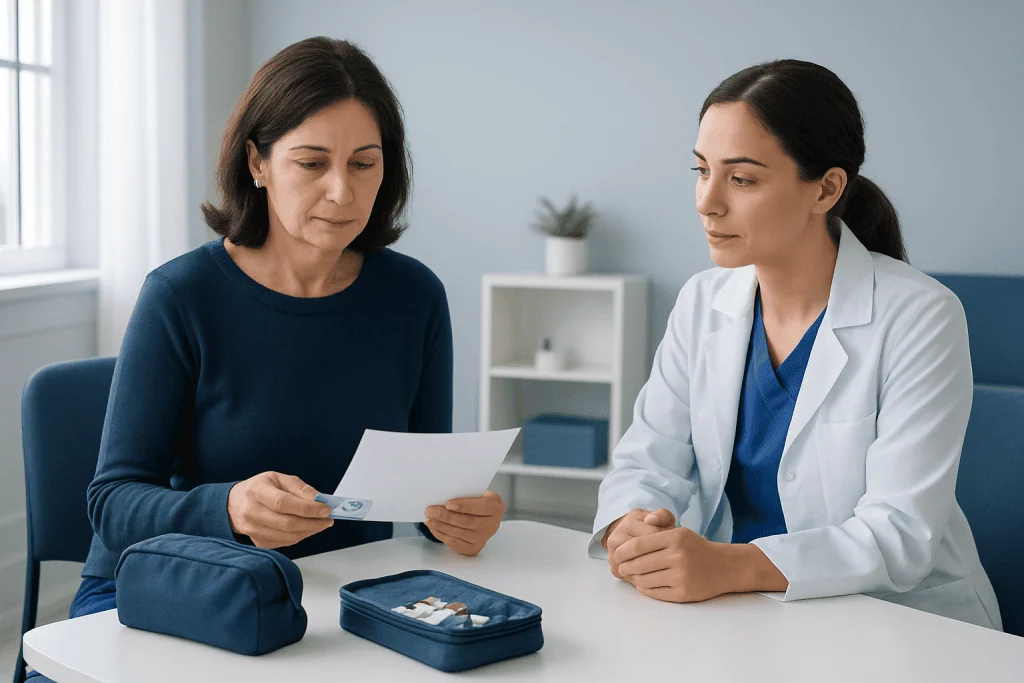
A written medication list may be the single most useful page you carry. Include everything: prescription medicines, over-the-counter remedies, vitamins, supplements, inhalers, injections, eye drops and herbal products. For each one, note the name, the dose, how often you take it and, if you know, why. Patients routinely forget items under the pressure of an appointment; a list written calmly at home is more reliable than memory in a consultation room.
Where practical, bring the medicines themselves in their original packaging. Brand names change between countries while active ingredients stay the same, and an original box or pharmacy printout lets the team identify exactly what you take without guesswork. Add known allergies and past adverse reactions to the same page, including reactions to anaesthesia or contrast dye if you have had any.
Two boundaries worth stating plainly. First, decisions about starting, pausing or changing any medicine belong to your treating doctor: a first visit is where those conversations happen, not something to pre-empt at home. Second, if your booking instructions mention fasting or specific test preparation, those written instructions govern your morning; a general guide cannot override them.
Pack for comfort, waiting time and practical needs
A first visit is rarely a single half-hour meeting. It may include registration, a consultation, blood work, imaging and gaps between them, so plan for several hours on site. Bring your phone and charger, glasses or hearing aids if you use them, a small bottle of water where permitted, and a light snack unless you have fasting instructions. A notebook, or a notes app, earns its place: appointments generate names, instructions and next steps faster than most people can remember them, and questions you wrote down at home are the ones that actually get asked.
Dress simply. Clothing that is easy to remove or adjust makes examinations and imaging faster; flat shoes make long corridors easier. Leave jewellery and other valuables at home, hospitals are busy public buildings, and there is no reason to manage expensive items while moving between departments.
If medical settings make you anxious, one small familiar item, headphones, a book, a scarf, helps more than it sounds like it should. And if you need mobility support, extra time, or other adjustments because of a disability or health condition, mentioning this when the appointment is arranged means the hospital can prepare rather than improvise. For a picture of how the day itself unfolds, from registration to results, see what to expect on your first visit to Acibadem.
Travelling from abroad: travel and payment documents
International patients carry a second layer of paperwork alongside the medical file. Keep your passport, any visa or entry documents, your accommodation details and your return travel information accessible, not buried in checked luggage. Photograph or scan every important document and store the copies in your email or a secure phone folder; a lost printout is an inconvenience when a digital copy exists and a genuine problem when it does not.
Payment paperwork deserves the same discipline. If you have private health insurance, travel insurance, embassy sponsorship or employer coverage, bring the policy numbers, approval letters and any correspondence about your case. If you are paying directly, bring the quote or written correspondence you received and your intended payment method. What a visit ultimately involves depends on which examinations and tests are actually performed on the day, so registration and financial counselling teams work from the paperwork you carry, having it ready is the difference between a two-minute check-in and a long back-and-forth.
If someone is travelling with you, they have their own short packing list, identity documents, patience and a plan for the waiting hours, covered in what companions should bring to hospital visits in Turkey. Companion access rules vary by department and test type, so it is sensible to know in advance whether they will join you in consultations or wait in public areas.
If your first visit is a maternity appointment
Searches about first hospital visits often overlap with maternity packing, so it is worth separating the two clearly. A first antenatal consultation follows the same list as any other first visit: identity, booking confirmation, previous records, especially any earlier pregnancy notes, scan reports and blood results, and your medication and allergy list. You do not need a labour bag for a consultation.
The full maternity bag belongs to a later stage, when a delivery date approaches. As a general picture, it typically covers documents, comfortable nightwear that opens at the front, a soft or nursing bra if you prefer to wear one, toiletries, slippers, phone and charger, going-home outfits for mother and baby, and an infant car seat where you will travel by car. Maternity units usually issue their own unit-specific list, and that list, not a general article, should be your final word, because what the hospital provides varies from place to place.
Because it comes up in the same searches: there is no rule about wearing a bra during labour. It is a comfort choice, and hospital gowns and monitoring needs shape it more than any policy does. The popular “5-5-5 rule” for new mothers, five days in bed, five days on the bed, five days near the bed, is an informal pacing idea for postpartum rest, not a clinical protocol; individual guidance after birth comes from the team who cared for you.
What not to bring
Restraint is part of good packing. You do not need your entire medicine cabinet, every test result from the past twenty years, or documents unrelated to the reason for the visit. A slim, well-ordered folder of recent, relevant records is far more useful than a heavy bag of paper nobody has time to sort.
For long records, older scans or documents that would be hard to replace, a photo or digital copy usually serves as well as the original, and carries no risk of loss. Where you do carry originals, protect them in a folder or document sleeve and keep them with you rather than in checked or stored luggage.
Finally, do not carry large amounts of cash. Card payments are the norm, and a modest amount for small personal needs, a coffee, a taxi, is all the cash a hospital day requires.
Step by step
- Check the purpose of your first visit. Read your booking confirmation and note whether you are coming for a consultation, a test, a scan or an admission. The purpose determines whether fasting instructions, imaging discs or extra forms apply, and thus what to bring to your first hospital visit in your specific case.
- Build one folder. Put ID, appointment confirmation, medical reports and insurance or payment papers into a single physical folder, and mirror it in one clearly named folder on your phone. One place for everything means nothing hunted for at reception.
- Write the medication and allergy list at home. Names, doses, frequency, known allergies and past reactions, written calmly the evening before, not reconstructed under pressure in a consultation room.
- Make digital backups. Photograph or scan every important document and store the copies securely in email or your phone. For international patients this is the cheapest insurance available: paper gets lost, copies do not.
- Pack the comfort layer. Charger, glasses, hearing aids, tissues, water if permitted, a snack if you are not fasting, and something to occupy waiting time. Assume hours on site, not minutes.
- Confirm logistics the day before. Hospital campus, arrival time, transport plan, and whether an interpreter or companion will join you. Large hospital groups have multiple locations; verify you are heading to the right one.
- Leave margin on the day. Arrive early enough for registration and wayfinding on an unfamiliar campus. Rushing makes forms harder, questions forgotten and the whole day worse than it needs to be.
Your checklist
- Passport, national ID or other official identification
- Appointment confirmation, reference number and hospital contact details
- Previous medical reports, test results and imaging reports
- Imaging files on CD, USB, film or a digital access link if available
- Written list of current medicines, doses and allergies
- Medicines in original packaging where practical
- Insurance, approval or payment documents
- Phone, charger and emergency contact details
- Glasses, hearing aids or other essential personal aids
- Notebook or notes app with your prepared questions
Key takeaways
- The core of what to bring to your first hospital visit is four things: ID, booking details, medical records and a current medication list.
- Bring imaging files as well as written reports: they can spare you repeated scans.
- An incomplete file today beats a perfect file next month; bring what you have.
- International patients add travel, insurance and payment documents, with digital backups of everything.
- Instructions attached to your specific booking always override general checklists, this one included.
Frequently asked questions
What should I bring to a hospital visit?
Four essentials: official ID, your appointment confirmation, your existing medical records including imaging, and a written list of current medicines and allergies. Add insurance or payment documents, a phone charger, glasses or hearing aids if you use them, and comfortable clothing. That covers the large majority of first visits; your own booking instructions cover the rest.
Do I need to bring original medical records?
Not necessarily. Copies or secure digital versions are usually sufficient for a first review, and for hard-to-replace documents a photo is safer than carrying the original. Where imaging is concerned, try to bring both the written report and the image files. When in doubt, bring what you have rather than postponing the visit.
What if my reports are not in English or Turkish?
Bring them anyway. Original reports keep their value across languages, laboratory values and imaging are broadly readable internationally, and a translated summary, where you can arrange one, simply speeds things up. Interpreter support is commonly arranged for international patients, so language alone should not delay a first appointment.
Should I bring all my medicines or just a list?
A written list is essential; the actual medicines in original packaging are a useful addition when practical, because brand names differ between countries while active ingredients do not. Any decision about pausing or changing a medicine belongs to your treating doctor: the first visit is where that conversation happens.
Can I bring a family member or companion?
Usually yes, and for many people a companion helps with language, mobility or simply remembering instructions. Access rules vary by department and test type, so a companion may sit in on some parts of the day and wait in public areas for others. Companions have their own short packing list, mainly identity documents and something for the waiting hours.
What should a first-time mom pack for the hospital?
For a first antenatal consultation, the standard list applies: ID, booking details, records and a medication list. For the birth itself, a typical bag holds documents, front-opening nightwear, a soft or nursing bra if preferred, toiletries, slippers, phone and charger, going-home outfits for mother and baby, and a car seat where relevant. The maternity unit’s own list is the final authority, since what hospitals provide varies.
What is the 5-5-5 rule for new moms?
It is an informal pacing idea for postpartum rest: roughly five days in bed, five days on the bed, five days near the bed. It is a folk guideline for slowing down after birth, not a clinical protocol, and individual advice about recovery after delivery comes from the team who provided your care.
What if I forget something important?
Most first visits can proceed even with one item missing. Tell the registration or patient services team what you do not have; digital copies, emails or photos often bridge the gap until an original is available. A missing document is an inconvenience, rarely a reason to lose the appointment.
Add us as a Preferred Source to see more of our trusted health content across Google Search, AI Overviews and Discover.

Update history
- PublishedJune 25, 2026
- Medical review approvedSeptember 13, 2026
- Last content updateSeptember 12, 2026
References2
- MedlinePlus: Talking With Your Doctor medlineplus.gov
- CDC Travelers' Health: Medical Tourism wwwnc.cdc.gov
More Patient Guides

Choosing Between Inpatient and Day-Case Treatment in Turkey
Inpatient and day-case treatment in Turkey differ mainly in overnight monitoring, recovery needs and travel planning. Learn how to choose safely.

How to Compare Hospitals in Turkey for Complex Treatment
Compare hospitals in Turkey for complex treatment by checking accreditation, specialist teams, ICU support, coordination, and follow-up.

At Acibadem, How We Explain Surgical Risks and Safety Checks Before You Travel
Surgical risks and safety checks before travel means understanding your personal risk, required tests, and travel timing before coming to Turkey.

At Acibadem, What to Check Before Comparing Treatment in Turkey With Care at Home
Comparing treatment in Turkey with care at home starts with safety, records, follow-up, travel timing and total support in Istanbul.