

What to Expect on Your First Doctor Visit in Turkey

Expect an outpatient consultation: registration and identity checks, an interpreter if requested, a detailed history, review of the records you brought, and a physical examination. The doctor then explains a likely diagnosis or orders tests, sometimes on the same day. Most patients return to their accommodation afterwards; hospital admission happens only when the evaluation genuinely requires it.
You have a folder of scans, a rough travel date, and no clear picture of the day itself. Who meets you at the door? What will the doctor actually do? How long should you plan to stay?
This guide explains what to expect on your first doctor visit in Turkey as an international patient, from the online review before you fly, through registration and the consultation, to test results, how costs are structured, and the decisions that follow. It describes the process as it usually runs, and it is honest about the parts that cannot be predicted before a doctor has examined you.
At a glance
- Visit type: Initial specialist consultation and assessment
- Purpose: To review your records, examine you, discuss options, and plan any tests or treatment safely
- Anaesthesia: Not needed for the consultation itself; some tests have their own preparation rules
- Hospital stay: Outpatient in almost all cases; admission only if your evaluation or plan requires it
- Time needed: A short consultation can grow into most of a day if same-day tests are added
- Return to daily life: Usually the same day
- Results timeline: Straightforward cases may be discussed the same day; complex cases wait for test results or multidisciplinary review
- Suitable department: The relevant specialty clinic, supported by imaging, laboratory and multidisciplinary teams when needed
- International patient support: Interpreter assistance, appointment coordination, transfers, accommodation guidance, and remote follow-up support
What happens on your first doctor visit in Turkey
A first doctor visit is not a treatment. It is a structured consultation: the specialist reads your records, takes a detailed history, examines you, and decides what should happen next. That next step might be reassurance, further tests, a treatment plan, or a referral to a different department. Nothing about the visit commits you to treatment.
For international patients, the day carries more logistics than a local appointment would. Registration, interpreter support, record review and test scheduling all sit around the consultation itself. Knowing what to expect on your first doctor visit in Turkey mostly means understanding this sequence, so the day feels organised rather than improvised.
Some patients arrive knowing exactly which specialty they need, orthopaedics, oncology, cardiology, neurosurgery, gynaecology, plastic surgery. Others come for a broader review or a second opinion. In both cases, the first visit exists to confirm the clinical picture before anyone recommends anything. That confirmation matters most when surgery, a complex procedure, or care across several departments is on the table.
When a first visit in Turkey makes sense
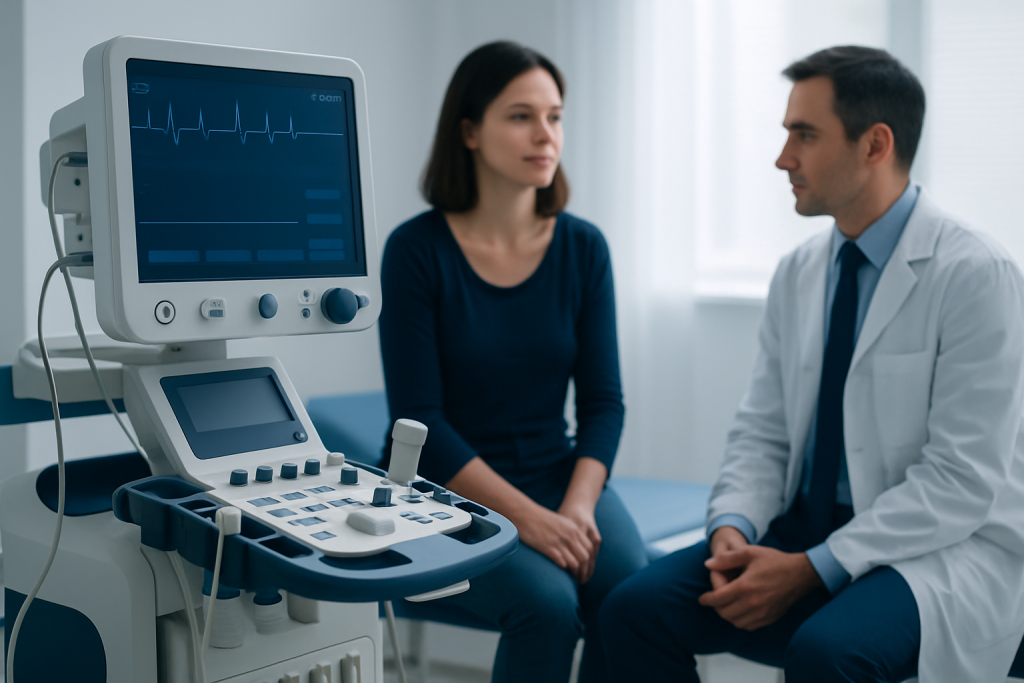
A first visit is the right step when you need a specialist opinion, further testing, treatment planning, or a fresh review of an existing diagnosis. Many international patients choose this route when they want coordinated access to multidisciplinary care and hospital-based imaging within one planned trip.
It is particularly useful in three situations: ongoing symptoms without a clear diagnosis; a recommendation for surgery or another major treatment that you would like examined again before proceeding; and cases that cross several specialties, where scattered opinions have never been pulled into one plan.
Previous consultations at home do not make the in-person review redundant. The doctor in Turkey may need to repeat certain examinations or request updated tests, because advice built on old or incomplete information is not safe advice. Expect this, and plan your stay with some flexibility.
Who is a good candidate

You are a reasonable candidate if you are medically stable enough to travel, can share your health information clearly, and want an expert evaluation or treatment plan. Age and background matter less than choosing the right specialty and the right timing.
You will get the most from the visit if you already hold reports, scans, pathology results, operative notes, or at least a clear written summary of your symptoms and history. Organised records let the doctor work faster and can reduce repeated testing.
The honest caveat: a very urgent condition, active severe symptoms, or limited fitness to fly may mean you need care where you are before any travel plan makes sense. Suitability for travel is assessed individually, and an online pre-evaluation before booking flights is often the sensible first move.
Where the visit can lead
The outcome depends on why you attended. For some patients, the visit ends with reassurance, lifestyle advice or follow-up only. For others, it opens a pathway: imaging, blood work, endoscopy, biopsy planning, surgical planning, fertility workup, rehabilitation planning, or referral to another team. Complex cases, cancer care, spine problems, heart disease, revision surgery, may go to a multidisciplinary review involving radiology, pathology, surgery and internal medicine before any recommendation is final.
- Consultation only, with a written opinion and follow-up advice
- Consultation plus same-day or next-day blood tests and imaging
- Consultation plus a procedure scheduled after pre-operative assessment
- Referral to another specialty for a broader evaluation
- A staged plan requiring several visits during the same trip or over time
Whichever pathway is proposed, the doctor should explain why, what the alternatives are, and whether you can return home to decide. A recommendation you do not have time to think about is a recommendation to question.
The online review before you travel
Most international patients begin with an online pre-travel doctor review. You share your history, current symptoms, medication list, relevant photographs where applicable, and any reports or scans you hold. This does not replace an in-person examination. Its job is narrower: to identify the right department, judge whether travel is appropriate now, and tell you what to bring or update before arrival.
Based on that review, the team can suggest a specialist, estimate how long your stay might need to be, and flag records that should be translated or refreshed. In complex cases, you may be told plainly that no final recommendation is possible until you have been examined and fresh investigations are done. Treat that honesty as a good sign, not a delay tactic.
How to prepare
Preparation is mostly organisation. Bring your passport, previous medical records, imaging discs or digital files, pathology reports if relevant, a prescription list, allergy information, and a short timeline of your symptoms. If your records are in another language, ask in advance whether translation is needed. There is a separate guide on what to bring to your first hospital visit if you want the full list.
Confirm the practical details before you arrive: the hospital location, your appointment time, and whether fasting is required for any same-day tests. Questions about pausing or continuing any regular medicine before a test belong to your treating doctor, not to a guide like this one, raise them early rather than on the morning of the appointment.
Flag mobility needs, hearing or visual support needs, or an interpreter preference in advance. And write down your questions: likely diagnosis, tests needed, options, timing, travel restrictions, follow-up. Consultations move quickly, and a written list is how you avoid remembering the important question in the taxi afterwards.
During the visit: what the doctor actually does
Much of what you should expect on your first doctor visit in Turkey happens before the consultation room: the day begins with registration and identity checks. The international patient team can help with forms, confirm your contact details, and direct you to the right department. An interpreter joins if one was requested.
In the consultation room, the doctor takes a structured history: what your symptoms are, when they started, what makes them better or worse, past illnesses, previous surgeries, medications, allergies, and any treatment already tried. A physical examination usually follows, shaped by the specialty and your condition. If you are seeing a surgeon, this first meeting typically focuses on confirming the diagnosis and deciding whether surgery is appropriate at all.
Then comes the plan. The doctor may explain a likely diagnosis, order tests, or outline treatment choices. Some patients complete blood work, imaging or cardiology clearance the same day; others need appointments spread over the following days. If another specialty should weigh in, that review can often be coordinated within the same stay.
If a minor office-based test or procedure is proposed, you will be told what it involves, how long it takes, whether there is discomfort, and whether you need someone with you afterwards. Ask for clarification whenever you need it: a good clinician expects questions.
Hospital admission and discharge
Most first visits need no admission. You attend as an outpatient, complete any same-day tests, and return to your accommodation. If results come back quickly, the doctor may discuss them with you before you leave.
Admission is recommended only in specific circumstances: urgent treatment, close monitoring, an intensive run of investigations, or a procedure that cannot be done safely as an outpatient. If it is advised, the team should explain the reason, the expected length of stay, and what to bring.
Before leaving the building, make sure you know the next step, another appointment, laboratory preparation, fasting guidance, or a surgical scheduling plan. Ask for written instructions. When you are juggling travel plans alongside medical care, paper beats memory.
A realistic timeline
There is no medical recovery period after a consultation alone, though imaging with contrast, sedation for a test, or a minor procedure may come with short rest or specific instructions. For international patients, the timeline that matters is logistical: when results arrive, whether another consultation is needed, and how many days to stay. If your schedule is tight, read what a one-day evaluation in Turkey can realistically cover.
| Timeframe | What to expect |
|---|---|
| First 24 hours | Registration, specialist consultation, record review, and possibly same-day blood tests or imaging. |
| First week | Discussion of results, further specialist opinions if needed, and confirmation of a treatment or follow-up plan. |
| Weeks 2–4 | If treatment is not immediate, you may review options remotely, gather further documents, or schedule a future procedure. |
| Months 1–3 | Ongoing treatment, repeat assessment, or remote follow-up, depending on your diagnosis. |
| Final result | A clear diagnosis and pathway may be established quickly; complex cases can take longer and may need staged evaluation. |
If a procedure follows the consultation, your timeline then depends on that intervention, not on the visit itself.
After the visit
After a standard consultation, there are usually no restrictions and no special care needed. If you had fasting blood tests, contrast imaging, sedation, a biopsy or a minor procedure, your discharge papers will carry instructions specific to that test, follow them, and keep the papers with you while you travel between appointments.
Two practical mistakes are worth avoiding. First, do not book an immediate return flight if there is a realistic chance the doctor will want further tests or review during the same trip. Second, do not draw conclusions from partial results; wait until the doctor has seen everything. If you are unsure whether you can eat, drive or fly after a particular test, ask before leaving the clinic rather than guessing later.
Risks and limitations
The consultation itself is low risk: it is history-taking, examination and planning. What risk exists belongs to the associated tests: blood draws can occasionally cause bruising or lightheadedness, and contrast imaging carries precautions for some patients. If your visit includes sedation, an endoscopic test or a biopsy, the doctor explains the relevant risks beforehand and asks for informed consent. Those risks vary with the procedure, your age, and your medical history.
The limitation patients least expect is this: your plan may change after in-person review. Fresh imaging, laboratory results or examination findings sometimes point to a different approach than your records suggested. That is not a complication, it is the reason the in-person visit exists, but it can be unwelcome if you arrived with a fixed expectation. Our guide on unexpected test or treatment changes explains how to plan around this possibility.
Results and expectations
Think of the first visit as the point where your care becomes clearer, not the moment everything is settled. Some patients leave with a diagnosis and plan the same day. Others need pathology review, cardiac assessment or multidisciplinary discussion first. If part of your goal is to test an existing recommendation, it helps to know what records to send and what answers a second opinion can honestly give.
It is normal for the doctor to order tests that repeat studies done elsewhere. Imaging quality, timing and technique differ between centres, and safe decisions need current information. A careful physician will not commit to outcomes before the assessment is complete, and will say openly where uncertainty remains. What you can reasonably expect is an organised process, clear communication, and a plan whose benefits, limitations and alternatives are explained before you decide anything. After you return home, remote follow-up with your local doctor can keep that plan connected to your care at home.
Travel planning, safety and healthcare access in Turkey
Even when the appointment itself is short, your stay may need to be longer if results take time or another specialty must review your case. Keep your itinerary flexible until the plan is confirmed. Bring printed and digital copies of your documents, your regular medications in original packaging, and your home doctor’s contact details. If you use mobility aids, CPAP equipment or special nutritional supplies, mention this before travel. A companion is worth bringing if you can: a second set of ears helps when several departments give instructions across a short stay.
Is it safe to travel to Turkey for medical care? Turkey has a large private hospital sector licensed and regulated by its Ministry of Health, and medical travel to the country is well established. Safety in practice depends less on the country than on the specific institution and the fit between your condition and the plan. Sensible checks apply anywhere: how the hospital handles complications, whether your records will be shared with your home doctor, and whether the team is willing to change or postpone a plan when in-person findings warrant it.
Do tourists get free healthcare in Turkey? No. Turkey’s public health insurance system covers residents and people enrolled in the national scheme. Visitors pay for planned care privately or through insurance, and standard travel insurance rarely covers planned treatment, check your policy terms before travelling.
How the cost of a first visit is worked out
This guide gives no figures, because an honest figure depends on details no article can know. What a first visit costs is shaped by the specialty involved, the complexity of your history, whether interpreter support is needed, and, most of all, whether the consultation stays a consultation or grows into a diagnostic workup with imaging, laboratory tests, pathology review or cardiology assessment.
The usual mechanism is a written quotation prepared after your records are reviewed. It should state what is included, typically the consultation, record review and coordination, and which items are conditional, listed as likely or optional additions depending on what the doctor finds. Flights, visas, accommodation, meals, travel insurance, external document translation, companion costs, and any treatment decided only after in-person evaluation generally sit outside the quotation.
Ask for that breakdown in writing, and ask which parts depend on test results. A final package can only be confirmed once your records are reviewed and, in some situations, after the first in-person consultation. Any earlier certainty would be guesswork dressed up as a price.
Why patients choose Acibadem
Travelling for medical care requires two things at once: clinical capability and practical coordination. Acibadem International organises care within a connected hospital group, with access to imaging, laboratories, operating rooms and multidisciplinary review when a first visit develops into something larger.
For international patients, the experience extends beyond the consultation room: interpreter support, patient coordinators, scheduling across departments, and guidance on transfers and accommodation. And there is continuity, if your consultation leads to testing, treatment or longer-term follow-up, care can remain within one system, which keeps communication between departments simpler and your journey easier to track from the first day.
Medical review and disclaimer
This guide has been medically reviewed by the Acibadem International medical team. It explains what commonly happens during a first doctor visit in Turkey and how international patients can prepare.
The information here is general and educational. It does not replace a personal consultation, examination or records review, and it cannot tell you what your own symptoms mean. Recommendations, tests, timelines and travel suitability vary from one patient to another and can only be confirmed after physician evaluation.
Step by step
- Initial contact. The process begins when a patient shares their medical concern, preferred dates and initial questions with the international patient team.
- Record submission. Reports, scan files, pathology results, medication details and, where relevant, photographs are shared for review.
- Preliminary medical review. The records are assessed to identify the right specialty, whether travel is appropriate now, and whether more documents are needed.
- Plan and quotation. A preliminary consultation plan, an estimated length of stay and a written quotation are prepared from the available information.
- Travel planning. The patient arranges flights and accommodation; the team assists with scheduling, interpreter requests and transfer coordination.
- Arrival. Guidance covers reaching the hospital and any preparation, such as fasting before same-day tests.
- In-person consultation. The specialist takes a full history, reviews records, discusses goals, and examines the patient where needed.
- Investigations. If a procedure may follow, blood tests, imaging, cardiology review or other assessments are arranged.
- Decision. Some patients receive advice only; others proceed to testing, procedure scheduling, or admission if medically necessary.
- Follow-up consultation. Results are reviewed, the diagnosis confirmed, and the treatment plan finalised.
- Discharge and travel clearance. Written instructions cover medications, follow-up, and whether it is safe to fly.
- Remote follow-up. After returning home, communication can continue for result review, planning and ongoing coordination with the local doctor.
Your checklist
- Passport or government-issued travel identification
- Full medical history summary, including current symptoms and when they started
- List of current medications, supplements, and approximate doses
- Known drug, food, or contrast allergies
- Details of previous surgeries, hospitalisations, or major illnesses
- Relevant laboratory results, clinic notes, and discharge summaries
- Imaging reports and image files or discs, if available
- Pathology or biopsy reports, if relevant
- Insurance information, if applicable
- Contact details for your home doctor or treating specialist
- Any questions you want to ask during the consultation
- Photos related to your condition, where relevant and requested
Key takeaways
- Your first doctor visit in Turkey is usually an outpatient consultation focused on understanding your case and planning next steps: it commits you to nothing.
- An online pre-travel review helps confirm the right specialty and whether travelling now makes sense.
- Bring your passport, previous reports, medication list and scans; organised records save time and reduce repeated testing.
- The day typically includes registration, record review, a history and examination, and discussion of tests or options, sometimes with same-day investigations.
- Keep travel plans flexible: results, second opinions or added tests can extend a short visit by several days.
- Costs are quoted in writing after record review; ask which items are included and which depend on what the doctor finds.
Frequently asked questions
What does a doctor do on your first visit?
The doctor takes a structured history, symptoms, timeline, past illnesses, surgeries, medications, allergies, reviews the records you brought, and usually examines you. Based on this, they explain a likely diagnosis, order tests, or outline treatment options. For surgical specialties, the first meeting often focuses on confirming whether surgery is appropriate at all.
How much does a doctor visit cost in Turkey?
There is no single answer, because the cost depends on the specialty, the complexity of your case, interpreter needs, and whether the visit stays a consultation or grows into a diagnostic workup with imaging, laboratory or pathology work. The reliable approach is a written quotation prepared after your records are reviewed, stating clearly what is included and which items are conditional.
Do tourists get free healthcare in Turkey?
No. Turkey’s public health insurance covers residents and people enrolled in the national scheme. Visitors pay for planned care privately or through insurance. Standard travel insurance rarely covers planned treatment abroad, so check your policy terms carefully before you travel and ask your insurer what documentation they require.
Is it safe to go to Turkey for medical procedures?
Turkey has a large private hospital sector licensed and regulated by its Ministry of Health, and medical travel to the country is well established. In practice, safety depends on the specific institution, the clinician, and how carefully the plan fits your condition. Sensible checks apply anywhere: how complications are handled, how records are shared, and whether the team adapts the plan to in-person findings.
How long does the first doctor visit usually take?
The consultation itself may be brief or detailed depending on the specialty and your condition. Allow extra time for registration, interpreter support and record review. If same-day imaging or several departments are involved, the overall visit can take much of the day, which is worth building into your travel schedule.
Can I have tests on the same day as my consultation?
Often, yes, but it depends on the specialty, appointment availability, and your preparation. Some tests require fasting, contrast precautions or prior doctor approval, so what is possible on the day is usually confirmed during pre-travel coordination rather than promised in advance.
What should I bring to my first hospital visit in Turkey?
Your passport, medical records, medication list, allergy information, prior scans, and any pathology or operative reports. A written symptom timeline and a list of questions are just as valuable. Organised records save time and improve the accuracy of the evaluation, and may spare you repeated tests.
Will I be admitted to the hospital after the first visit?
Most patients are not admitted and return to their accommodation after the consultation. Admission is generally recommended only for urgent treatment, close monitoring, or a procedure that requires inpatient care. If it becomes necessary, the reason, expected duration and next steps should be explained clearly before anything proceeds.
Add us as a Preferred Source to see more of our trusted health content across Google Search, AI Overviews and Discover.

Update history
- PublishedJune 22, 2026
- Medical review approvedSeptember 13, 2026
- Last content updateSeptember 12, 2026
References2
More Patient Guides

HoLEP in Turkey: How It Compares With TURP and What Recovery Involves
HoLEP in Turkey treats enlarged prostate tissue with laser enucleation; learn how it compares with TURP, recovery, travel and follow-up.

Porcelain Veneers in Turkey: Who Is Suitable and How Many Visits Are Needed?
Porcelain veneers in Turkey can enhance tooth shape and colour in two visits for suitable patients after a personalised dental assessment.

How to Prepare for a Sedation Procedure in Turkey
Prepare safely for a sedation procedure in Turkey with guidance on fasting, medicines, travel, recovery and follow-up.

Treatment Delays in Turkey: What Happens If Tests or Recovery Change Your Schedule
Treatment delays in Turkey can happen if tests or recovery change your plan. Learn how to manage appointments, travel, accommodation and follow-up.