

Booking Accessible Accommodation in Turkey After Treatment: What to Confirm

Before booking accessible accommodation in Turkey after treatment, confirm the details in writing: a step-free route from vehicle to room, a lift large enough for your mobility aid, a bathroom with grab bars and a low or no shower threshold, a bed you can get in and out of, and a predictable transport plan for follow-up visits and the airport.
Wondering whether the hotel you found will actually work when you are tired, sore and moving slowly? After treatment, the right place to stay makes each day less effortful. The wrong one turns every shower, every meal and every trip to the lobby into a small expedition.
This guide walks you through booking accessible accommodation in Turkey after treatment: what the word ‘accessible’ should mean in practice, which details to confirm before you pay, how Turkish booking platforms behave differently from what you may be used to, and how to get commitments in writing from abroad. It pairs well with our broader guide on choosing recovery-friendly accommodation in Turkey, which covers comfort and rest in more depth.
At a glance
- Best for: Patients planning a recovery stay with mobility, balance or fatigue concerns, and the companions travelling with them
- Main goal: Confirm real, measurable accessibility, not a generic ‘accessible’ label
- Most important checks: Entrance, lift size, bathroom layout, bed height, room space, transport
- When to book: As soon as your treatment dates and likely discharge window are known; accessible rooms are usually few per property
- Booking quirk to know: Booking.com does not take new reservations from users physically inside Turkey, so keep the property’s direct contact details
- Helpful support: Hospital international patient teams can often help coordinate transfers and practical logistics
Why booking accessible accommodation in Turkey after treatment needs more than a filter tick
After treatment, ordinary movements demand more of you than usual. A single step at an entrance, a narrow bathroom door, a heavy fire door on the corridor or a low soft bed can become a repeated daily obstacle when you are managing pain, fatigue or temporary weakness. Booking accessible accommodation in Turkey after treatment is not a comfort upgrade; it is a way of removing unnecessary strain from a period when your energy is limited.
The difficulty is that ‘accessible’ is not a regulated word on booking sites. One property may have a ramp at the entrance but no roll-in shower. Another may offer a spacious room but place it at the end of a long corridor, three doors and a slope away from the lift. A third may have an adapted bathroom but a bed so low that standing up from it is hard work. None of these properties is lying when it ticks the accessibility box, but only one of them may suit you.
The fix is not to trust labels less; it is to ask better questions. Everything in this guide follows from one habit: describe your actual needs in concrete terms, and ask the property to respond to those terms specifically.
What ‘accessible’ should mean in real terms
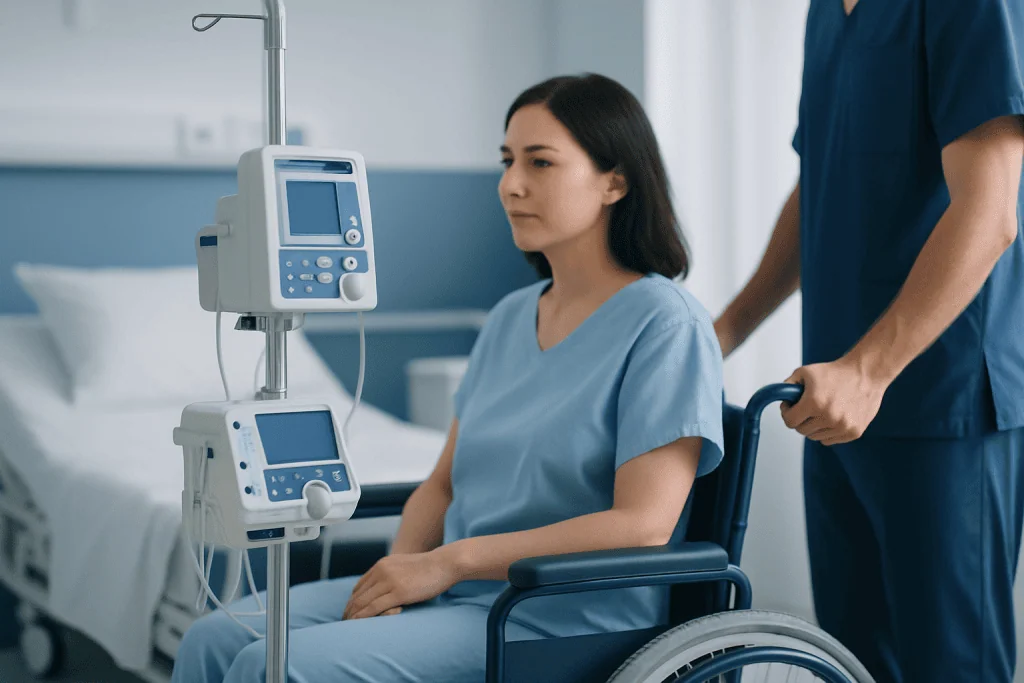
Start from your day, not from the property’s description. Walk through it in stages: arriving by vehicle, entering the building, reaching your room, using the bathroom, resting, eating, and leaving again for a follow-up visit. A property is accessible for you if every one of those stages works. It is not accessible if five stages work and the sixth involves a raised bathroom threshold you cannot cross safely.
Be honest with yourself about the first few days. Will you need step-free access from the street to the room, or can you manage two or three steps with a handrail? Can you stand in a shower, or do you need a shower chair and grab bars? Will you walk to breakfast, or do you need meals brought to the room? Your treating team can tell you, in general terms, what level of mobility and fatigue to expect after your particular procedure, ask before you book, not after.
Then translate those answers into questions the property can verify. Ask for recent photos or a short video of the exact accessible room and its bathroom, not the promotional images of the standard category. A phone camera walked from the entrance to the room door answers more questions than any listing text. If language differences make this harder, a hospital patient support team or interpreter can help you phrase your mobility needs precisely.
The key features to confirm before you book
Ask for measurements and descriptions, not yes-or-no answers. ‘Is there a lift?’ invites ‘yes’. ‘How wide is the lift door, and does the cabin fit a wheelchair plus one standing person?’ invites a useful reply. The same applies to entrances: is the ramp permanent or a portable one that staff bring out, and how steep is it? Is the accessible room near the lift or at the far end of a corridor?
The bathroom usually matters most. Confirm whether the shower is roll-in or has a lip, whether grab bars are fixed near the toilet and shower, whether the sink can be used while seated, and whether the floor is non-slip when wet. A handheld showerhead and a shower stool are small details that make a real difference when your balance is reduced. If you will be managing dressings during your stay, a bathroom you can use calmly and safely matters twice over: our guide on wound care and dressings after discharge in Turkey explains what those routines typically involve.
Do not overlook the bed. A very low or very soft bed is genuinely difficult after abdominal, hip, knee or spinal procedures. Ask about bed height from the floor, mattress firmness, and whether extra pillows are available. Other details worth confirming in the same message:
- Step-free route from vehicle drop-off to reception and from reception to the room
- Lift access on every floor you will use, and the lift’s internal dimensions
- Bathroom layout, grab bars, shower design and threshold height
- Bed height and clear space on at least one side of the bed
- Room service, flexible meal times, or easy meal access without stairs
- A fridge in the room if you need to keep medicines cool
- A chair with armrests, reachable power sockets, reliable air conditioning
- Storage space for a wheelchair, walker or medical supplies
- A quiet room away from the street or events area if you plan to rest during the day
For a fuller pre-payment checklist covering contracts, deposits and cancellation terms, see what to check before confirming recovery accommodation in Turkey.
Booking platforms: what works differently in Turkey
One quirk catches many international patients out. Booking.com does not accept new reservations from users who are physically inside Turkey. This followed a 2017 Turkish court ruling in a competition case brought by the national travel agencies’ association, after which the platform suspended sales of Turkish accommodation to users located in the country. Reservations you make from abroad before you travel remain valid, and you can still browse and book Turkish hotels normally from home.
The practical consequence is simple but important: once you are in Turkey, you cannot easily use that platform to extend your stay or book a different property. So before you travel, save the property’s direct phone number, email address and WhatsApp contact if they use one. If your discharge date slips or your doctor suggests staying an extra night or two, you will handle the change directly with the property or through another channel. Other international platforms and Turkish booking sites generally work normally, and booking directly with hotels by email is common and accepted.
This is also a reason to prefer properties that respond promptly and clearly to email before you book. A hotel that answers your accessibility questions within a day is a hotel you can reach quickly if plans change after treatment. If a longer stay is a realistic possibility, it is worth reading how to plan for extra nights in Turkey after treatment before you commit to dates.
Is Turkey manageable for wheelchair users? An honest picture
Mixed, and it depends heavily on where you stay and how you move between places. Modern infrastructure is often good: large hotels, newer shopping centres, major airports and private hospitals generally have lifts, ramps, accessible toilets and staff used to assisting. Istanbul Airport and other major airports provide wheelchair assistance when requested in advance through your airline. Coastal resort areas tend to be flatter, with more adapted rooms built for holiday markets.
Street-level Turkey is less predictable. Older neighbourhoods can have steep gradients, high kerbs, cobbles, uneven pavements and parked cars blocking dropped kerbs. Public transport accessibility varies by city and by station. In practice, most international patients recovering from treatment do not rely on pavements or public transport at all: they plan door-to-door: an accessible vehicle from hospital to accommodation, from accommodation to follow-up visits, and finally to the airport.
That door-to-door approach changes what matters in your booking. The quality of the pavement outside the hotel matters less than whether a vehicle can stop directly at a step-free entrance. Judge the property by the journey you will actually make, not by the neighbourhood in the abstract.
Transport, location and follow-up logistics
Accessibility does not stop at the room door. Think about how you will move between hospital, accommodation and airport at the times you will actually travel. A nearby property can still be tiring if the entrance sits up a slope or the drop-off point is around the corner. Often the easiest option is not the shortest distance on a map but the one with the most predictable transport plan.
Ask the property how long the journey to your hospital takes in normal traffic, and whether vehicles can pull up directly at a step-free entrance for drop-off and pick-up. If you use a wheelchair or need extra space and time to get in and out of a car, say so when arranging transfers rather than on the day. Hospital international patient teams can often help coordinate transfers, which is particularly useful in the first days after surgery.
Consider the immediate surroundings too. A pharmacy within easy reach, a small supermarket for basics, and a quiet street for resting all reduce friction. And keep the end of the trip in view: your flight home has its own timing considerations after treatment, which are covered in when it is safe to fly after treatment in Turkey. Build your accommodation dates with some slack around that decision rather than booking a rigid checkout tied to an optimistic flight.
If a companion or carer is staying with you
If someone is travelling with you, the room has to work for two people, one of whom may be helping the other transfer, wash, organise belongings or simply stay steady while moving around. That means clear space on at least one side of the bed and enough room in the bathroom for two people without squeezing past furniture.
Check whether the room takes an extra bed or a genuine second sleeping arrangement without blocking the routes you will use at night. Ask about 24-hour reception, laundry, flexible meal times, and whether staff can handle simple practical requests, extra towels, bottled water, receiving a food delivery. These small conveniences matter far more when recovery, not tourism, is the point of the stay.
If you are travelling alone but expect to need help, raise it with your care team early, while plans can still change. Hotels provide hospitality, not personal care: staff can carry a bag or bring a meal, but they will not assist with bathing or transfers. If your expected needs go beyond what hospitality staff reasonably do, plan for a companion or arranged support in advance rather than hoping to improvise on arrival.
How to confirm details confidently from abroad
Get it in writing. A short email that lists the exact features of the room is worth far more than a verbal assurance over the phone. Ask for the room type name as it appears in the property’s own system, the accessible features included, and confirmation that the specific room you were shown in photos is the one reserved for you, not merely ‘a room of that category, subject to availability’.
Send a list, not a question. ‘Is your hotel accessible?’ produces polite, useless answers. Instead: ‘I need no steps from the vehicle drop-off to the room, a walk-in shower with grab bars, a bed at least knee height, and space for a wheelchair beside the bed. Please confirm each point.’ A property that answers each point plainly is a property you can trust; a property that replies with generalities has told you something too.
Reconfirm a few days before arrival, especially if your discharge timing may shift. Hotels reassign rooms, and the accessible room you discussed in March may not be held in May unless it is clearly documented on your reservation. Keep the whole exchange in one email thread so you can show it at check-in if anything needs clarifying. The same written-confirmation habit applies to your medical arrangements: our guide to questions to ask before booking surgery in Turkey takes the same approach on the clinical side.
Backup planning for a smoother recovery stay
Even careful plans shift. Discharge dates move, energy levels surprise you, and a doctor may suggest an extra night or two before you fly. Choose a property with a clear extension and cancellation policy, and ask before booking how they handle a stay that lengthens at short notice, some will hold the same room, some will move you, some will be full. Knowing which you are dealing with removes stress later.
Pack a few things that make any room easier to use: non-slip slippers, any supports your team has prescribed, a long charging cable so your phone reaches the bed, and a written list of your medicines and follow-up appointments. If you use medical devices or carry medicines that need refrigeration, confirm socket locations and fridge access in advance rather than discovering the fridge is a display cabinet with no spare space.
Finally, match the room to your team’s advice, not to your ambitions. Your clinicians will tell you what level of activity is appropriate after your treatment; the accommodation’s job is to make that level easy to sustain. A room that lets you rest, wash safely, eat without effort and reach your follow-up visits without drama is doing everything a recovery stay needs to do.
Step by step
- List your real recovery needs. Write down what the first days after treatment are likely to involve: step-free access, a wheelchair-friendly bathroom, a quiet room, meals without stairs, transport to follow-up visits. If unsure, ask your treating team what mobility limits and fatigue to expect for your procedure.
- Shortlist only suitable property types. Favour hotels or serviced apartments with lifts, staffed reception and clear, specific accessibility information. Do not shortlist on photos and location alone.
- Ask detailed accessibility questions. Contact the property directly with your list. Ask about the entrance, lift dimensions, corridor route, bathroom setup and bed height, and request photos or video of the exact accessible room, not the marketing images.
- Check transport to hospital and airport. Confirm step-free vehicle drop-off, journey times at the hours you will travel, and space to get in and out of a car with a mobility aid. Build in slack so appointment days are not rushed.
- Get written confirmation. Ask the property to confirm the room features and the specific room assignment in writing, and keep that message with your travel documents.
- Save direct contact details. Because Booking.com does not take new reservations from inside Turkey, keep the property’s phone number and email so extensions and changes can be handled directly.
- Plan for changes to your discharge date. Ask about flexibility for early check-in, late check-out and extending your stay if your doctor advises staying longer before travel.
- Reconfirm shortly before arrival. A few days before check-in, reconfirm the accessible room and your arrival time, and update anyone coordinating your transfers if your schedule has moved.
Your checklist
- Step-free route from vehicle drop-off to reception and from reception to the room
- Lift on every floor you will use, large enough for your wheelchair or walker plus a companion
- Accessible bathroom with fixed grab bars and a walk-in or roll-in shower with little or no threshold
- Non-slip flooring and a handheld showerhead; shower chair available on request
- Bed height that allows getting in and out without strain, with clear space on one side
- Fridge access for medicines that need to stay cool
- Reliable, step-free transport plan for hospital follow-up and the airport
- Quiet room with easy access to food, water and reception support
- Direct contact details for the property saved before you travel
- Written confirmation of accessibility features, the specific room, and extension flexibility
Key takeaways
- Accessible accommodation after treatment should match your actual recovery needs, staged from arrival to departure, not a generic listing label.
- The details that decide everything are the entrance, the lift, the bathroom, the bed and the transport plan, confirm each with measurements and photos.
- Booking.com does not take new reservations from inside Turkey, so save the property’s direct contact details for extensions and changes.
- Written confirmation of the exact room, reconfirmed a few days before arrival, prevents most check-in surprises.
- A companion’s space and needs matter too, especially if they will help with transfers or nighttime movement.
- Hospital international patient teams can often help coordinate transfers and practical logistics around a recovery stay.
Frequently asked questions
Can I book an accessible room if I am not disabled?
Generally yes. Accessible rooms are usually open to any guest, and recovering from surgery or intensive treatment is a legitimate reason to need one even if you have no permanent disability. It helps to tell the property why you need the room: a stated medical need makes them far less likely to reassign it to another guest before you arrive.
Is Turkey good for wheelchair users?
It is mixed. Large hotels, modern airports, shopping centres and private hospitals are generally well equipped with lifts, ramps and accessible facilities, and airport wheelchair assistance is available when arranged with your airline. Older streets can be steep, cobbled and uneven, so most recovering patients plan door-to-door vehicle transfers rather than relying on pavements or public transport.
Why is Booking.com blocked in Turkey?
Following a 2017 Turkish court ruling in a competition case, Booking.com suspended sales of Turkish accommodation to users physically inside Turkey. You can still book Turkish hotels on the platform from abroad, and those reservations remain valid. Once in Turkey, handle extensions or new bookings directly with the property or through another channel, so save direct contact details before you travel.
Can foreigners go to hospital in Turkey?
Yes. Both public and private hospitals treat foreign patients, and larger private hospital groups run international patient departments with interpreters and coordination staff. Bring your passport and any insurance documents; payment and insurance arrangements are typically discussed before planned treatment.
How early should you book accessible accommodation after treatment in Turkey?
As soon as your treatment dates and likely discharge window are reasonably clear. Most properties hold only a small number of genuinely accessible rooms, so booking early gives you more choice and more time to confirm details carefully in writing.
What is the single most important feature to confirm?
For most patients, the bathroom. It is where slips, awkward transfers and fatigue combine. Confirm the shower type, threshold height, fixed grab bars, toilet access and flooring before anything else: a beautiful room with an unusable bathroom is not a recovery room.
Is a hotel always better than an apartment for recovery?
Not always. Hotels offer reception support, room service and easier practical help; serviced apartments offer more space and a kitchen. The better choice is the one that safely matches your mobility, your support arrangements and your follow-up schedule, judged against the same checklist either way.
What should you do if the room is not as described when you arrive?
Show the written confirmation and photos from your booking thread and ask the property to provide the room agreed or a genuinely equivalent alternative. This is exactly why written confirmation matters: with it, the conversation at reception is short and usually resolves in your favour; without it, you are negotiating from memory while tired.
Add us as a Preferred Source to see more of our trusted health content across Google Search, AI Overviews and Discover.

Update history
- PublishedJuly 6, 2026
- Medical review approvedSeptember 13, 2026
- Last content updateSeptember 12, 2026
References2
More Patient Guides

Airport Wheelchair Assistance: How to Book It for a Medical Trip
Airport wheelchair assistance is free, it exists at every commercial airport, and airlines are legally required to provide it, yet half…

Travelling With a Stoma: Flights, Supplies and Airport Screening
Traveling to Turkey with a stoma is manageable with the right supplies, airport screening plan, and recovery support in Istanbul or Turkey.
Mobility Aids in Turkey: Renting a Wheelchair, Walker, or Crutches
Mobility aids in Turkey can be rented through medical suppliers, pharmacies, and hospital-linked services in Istanbul and other cities.
Traveling to Turkey with Food Allergies or Special Diet Needs
Traveling to Turkey with food allergies or special diet needs is manageable with planning, translated allergy cards, and hotel and hospital support…