

How Long to Stay in Turkey for Treatment and Recovery

There is no single number. Your total time in Turkey usually covers arrival and pre-treatment checks, the procedure itself, any hospital stay, local recovery near the hospital, and a first follow-up review before travel clearance. Minor treatments may need only a few days; major surgery often needs a week or more. Your treating doctor sets the final timeline based on how your recovery actually progresses.
You have a treatment date. Now comes the question most international patients get wrong: when to book the flight home. The usual mistake is not booking too late — it is booking too tight.
This guide explains how long to stay in Turkey for treatment and recovery, what actually drives the timeline, and how to build a plan that survives contact with reality: arrival buffers, hospital time, hotel recovery, the first follow-up visit, and fitness to fly. It is planning information, not a personal schedule. Your treating doctor sets the real dates.
At a glance
- Procedure type: Travel and recovery planning for medical and surgical treatment abroad
- Purpose: To help you estimate how long to stay in Turkey for evaluation, treatment, recovery and follow-up before flying home
- Anaesthesia: Depends on the treatment — local, sedation, regional or general
- Hospital stay: From same-day discharge to several nights, depending on the procedure and how early recovery goes
- Total stay in Turkey: Typically longer than the hospital stay itself — it includes arrival time, local recovery and at least one follow-up review
- Return to daily life: Gradual; light activity usually resumes before work, exercise or long-distance travel
- Final result timeline: Treatment-dependent; healing often continues after you return home
- Suitable department: International Patient Services together with the relevant specialty
- International patient support: Online record review, interpreters, airport–hospital transfers, accommodation guidance, remote follow-up
How long do you need to stay in Turkey for treatment and recovery?
The honest answer: it depends, and anyone who gives you a fixed number before reviewing your case is guessing. How long to stay in Turkey for treatment and recovery is decided by four things — the procedure itself, the type of anaesthesia, how your first days of recovery actually go, and when your doctor wants to see you again before clearing you to travel.
Think of your trip in five blocks rather than one date. First, arrival and pre-treatment time: consultation, tests, anaesthetic review, and simple rest after a long flight. Second, treatment day. Third, hospital time, if your procedure needs admission. Fourth, local recovery — usually in a hotel near the hospital — while early healing is monitored. Fifth, the first follow-up visit and the fitness-to-fly decision. Only after that last block does the flight home make sense.
A straightforward outpatient treatment may compress all five blocks into a few days. Major surgery stretches them: one or more nights in hospital, several days of nearby recovery, dressing checks or suture removal, then travel clearance. The same operation can also mean different timelines for different patients, because age, general health, mobility and chronic conditions all change how quickly early recovery settles.
The practical rule that follows from this: do not book a fixed return flight before you have a doctor-reviewed estimate, and build in slack even then. A day or two of margin costs less stress than rebooking from a hotel room the night before departure. Acibadem’s international patient team coordinates the clinical estimate with the practical planning — but the estimate always starts with the medical review, not the calendar.
When length-of-stay planning matters most
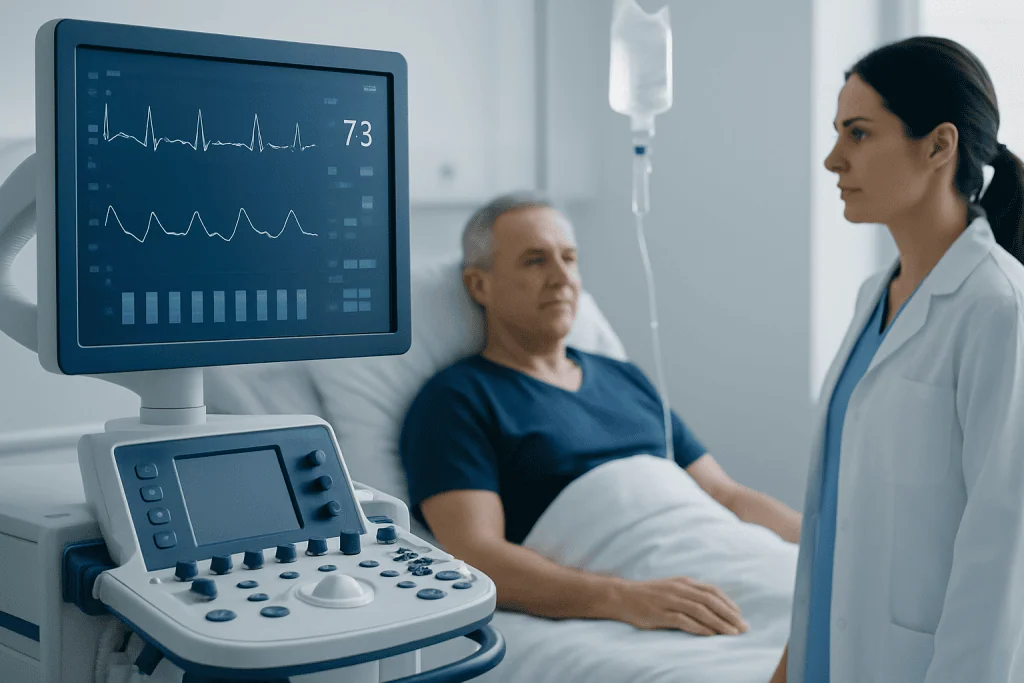
Every medical trip needs some planning, but the stakes rise sharply with certain treatments. Anything involving general anaesthesia, an incision, an implant, a drain or staged sessions deserves a properly padded timeline. Surgery, dental reconstruction over multiple appointments, fertility treatment tied to cycle timing, orthopaedic and spine procedures, and cardiovascular interventions all fall into this category, because the early recovery period is when the care team most wants you within reach.
Chronic conditions raise the stakes further. Diabetes, heart or lung disease, and clotting problems can all make early recovery less predictable, and your doctor may prefer a longer local observation window before agreeing a departure date. This is not pessimism; it is how flexible plans are built.
Even for minor treatments, the same principle applies in miniature. A dressing that needs one more change, a test result that arrives a day later than expected, or simple tiredness after anaesthesia can each shift a departure by a day or two. If your test results are part of the travel decision, the guide on waiting for test results in Turkey explains how to plan around that specific delay.
Who should plan this carefully

Careful length-of-stay planning matters most if this is your first medical trip abroad, if you are travelling alone, or if you are comparing treatments with different recovery profiles. Two procedures can look similar on paper and still demand different stays, because of anaesthesia type, swelling patterns, pain control needs and how soon the first examination must happen.
It also matters if you have accessibility needs or a companion whose time is limited. Whether you can manage stairs, luggage and a long airport transfer a few days after treatment is a genuine planning question, not an afterthought. Accommodation close to the hospital often solves more problems than any other single decision — the guide on choosing the right hotel for recovery covers what to look for.
Finally, planning suits people willing to let medical advice outrank flight availability. If your doctor recommends staying three more days and your ticket says otherwise, the ticket is the thing that should change.
Typical planning windows by type of treatment
The windows below are planning aids, not promises. They describe how international patients commonly structure trips; your own recommendation may be shorter or longer, and it can change after in-person examination or during early recovery.
| Type of treatment | Common planning approach |
|---|---|
| Consultation, imaging, second opinion | Often a short visit of a few days, allowing time for appointments, any additional tests and a results discussion before departure. |
| Minor outpatient or day-case procedures | Usually a few days: the procedure, a brief observation period, and one early review before travel. Sedation or general anaesthesia argues for an extra rest day. |
| Dental treatment in stages | Depends on the plan. Some work fits into a single stay of several days to a week; implant-based treatment may need separate trips months apart. |
| Moderate surgery (e.g. bariatric procedures) | Commonly around a week or slightly more: hospital nights, hotel recovery nearby, and a follow-up review before clearance. See the dedicated guide on how long to stay after gastric sleeve surgery. |
| Major or multidisciplinary surgery | Often one to two weeks or more in total, with a longer hospital stay, closer monitoring, and sometimes staged reviews before fitness to fly is confirmed. |
| Ongoing treatment (e.g. oncology, staged care) | Planned in cycles or stages rather than one stay. The timeline is built around the treatment protocol, and each stay is discussed separately with the team. |
Notice what the table does not say: it never treats hospital discharge as the end of the stay. For most surgical patients, the days between discharge and travel clearance are where the real planning margin belongs.
Online evaluation before travel
Before you book anything, an online evaluation gives your doctor the material to estimate your stay. This typically means sharing your medical history, current medications, previous treatments, and any relevant imaging or test results. For some treatments, photographs or a video consultation add useful detail — particularly where visible healing, mobility or anatomy shapes the plan.
The result is a preliminary estimate: likely hospital stay, likely follow-up timing, and a reasonable window for the return flight. Treat it as a strong draft, not a contract. Final decisions follow in-person examination and, sometimes, updated tests in Turkey. This is exactly why flexible or changeable return tickets earn their cost for surgical patients.
Acibadem’s international patient services coordinate this document review with the relevant department, so the estimate you plan around comes from the clinicians who will actually treat you.
Before the treatment: arrival and preparation time
Plan to arrive with breathing room. Depending on the treatment, the days before your procedure may hold an in-person consultation, blood tests, imaging and an anaesthetic review. Some patients complete everything in a day; others need more scheduling, especially where several specialties are involved.
Allow for the flight itself, too. Jet lag, dehydration and travel fatigue are real, and arriving the night before a general anaesthetic is a false economy. A rested patient is easier to assess and more comfortable on treatment day.
Practical preparation deserves the same attention as medical preparation: accommodation you can actually manage after treatment, lift access rather than stairs, a companion for the first day or two if advised, and the right clothing and supplies. The guide on packing for surgery recovery in Turkey covers the specifics. Your team may also give pre-treatment instructions — fasting, smoking cessation, document preparation — and following them precisely is the cheapest way to avoid delays. Any question about your regular medications belongs to your treating doctor, who will tell you exactly what to do and when.
Treatment day and the first hours after
What happens on the day depends entirely on the procedure. Outpatient treatments end with a short observation period; operating-room procedures move you to a monitored recovery area until the team is satisfied with your pain control, blood pressure and alertness, and then either home to your hotel or to a ward.
The first hours and days after treatment are when the length-of-stay estimate meets reality. Wound condition, mobility, appetite, fluid intake, pain levels and any early side effects all feed into whether the original plan holds. Sometimes it does exactly; sometimes a day is added for comfort or an extra check.
This is the moment to get your questions answered while everyone is in the same building: follow-up timing, dressing care, showering, activity limits, and whether the return flight looks realistic. Ask for the discharge plan in writing — for an international patient, a written plan is worth more than a well-meant verbal summary.
Hospital discharge is not the same as fitness to fly
These are two separate decisions, made at different times, on different evidence — and confusing them is the single most common planning error.
Discharge means you can safely continue recovery outside the hospital: stable condition, controlled pain and nausea, adequate mobility, and the ability to manage medications and wound care as instructed. Fitness to fly means something more: your doctor judges that a pressurised cabin, long immobility, limited access to care and the general strain of a journey are reasonable for you. After significant surgery, that judgement usually comes days after discharge, at or after your first control visit.
Discharge planning for overseas patients at Acibadem typically includes the practical layer too — transfer arrangements, accommodation guidance, follow-up scheduling and interpreter support — so the gap between discharge and departure is organised rather than improvised. Keep your discharge documents with your travel papers; they normally include the team’s contact details and your instructions, and border or airline staff occasionally ask about recent surgery.
Recovery timeline
The framework below shows why the stay extends past the procedure date. It is deliberately general; your own instructions replace it entirely.
| Timeframe | What to expect |
|---|---|
| First 24 hours | Observation, rest, pain and nausea management where needed, and assessment of immediate recovery from the treatment or anaesthesia. |
| First week | Swelling, discomfort and tiredness are common. Limited activity, medication use, possible dressing care, and one or more early follow-up reviews. |
| Weeks 2–4 | Gradual improvement for many patients; daily tasks become easier and desk-based work may resume depending on the procedure. |
| Months 1–3 | Ongoing internal healing, improving energy and function, and continued settling of swelling or symptoms depending on the treatment. |
| Final result | Treatment-dependent. Some results are apparent early; others become clear only as healing matures over months. |
One counterintuitive point: feeling well is not the same as being ready to travel. Healing continues under the surface, and doctors often advise against flying at the earliest moment you feel better. A short extra stay frequently makes the journey home markedly easier.
What to avoid after treatment
Avoid treating discharge as recovery. Sightseeing, shopping, carrying luggage and long walks can wait; overactivity in the first days tends to buy extra swelling, pain and fatigue at exactly the wrong time.
Avoid changing travel plans without medical input, and avoid the opposite error too — quietly keeping a flight your doctor has doubts about. Long periods of sitting, restricted movement and cabin pressure changes are harder on some post-surgical patients than they expect.
Follow the instructions you were given on hydration, wound care, compression garments if prescribed, and smoking and alcohol if your doctor has advised restrictions. After anaesthesia or sedation, driving and important decisions wait until you are fully recovered and cleared. Do not remove dressings early, restart exercise ahead of schedule, or substitute internet advice for your own written plan — and leave all medication decisions, including over-the-counter additions, to your treating doctor.
Why doctors build in a follow-up window
Even when treatment goes exactly to plan, the early recovery period is when issues — bleeding, infection, wound problems, fluid collection, medication reactions, slower-than-expected mobilisation — are most likely to appear if they appear at all. The follow-up window before travel exists so that, if something needs attention, the team that operated is the team that sees it. Once you have flown home, that continuity is much harder to arrange.
Most patients will not need the margin. Planning as though you might is still the rational choice, because the cost of unused margin is small and the cost of missing margin is not. Sometimes the extension is trivial: one more dressing change, a result arriving a day late, a preference for one more night of rest before a long-haul flight. The guide on when you may need a longer stay after treatment covers how to prepare for exactly this scenario.
An extended stay is not a signal that something has gone wrong. Usually it is a signal that your doctor is doing the job properly — clearing you to travel on evidence rather than on the original booking.
Visas and how long you can legally stay
Your medical timeline has to fit inside your legal one. Many nationalities, including US citizens, can typically stay in Turkey for up to 90 days within any 180-day period under the standard visa or e-visa arrangements. UK nationals can generally visit visa-free within similar limits. These rules change, and your nationality, passport validity and entry history all matter — so verify current requirements through official government sources before booking.
For almost all planned treatments, the standard visitor window comfortably exceeds the medical stay. Where treatment genuinely requires a much longer presence — staged reconstruction, extended rehabilitation, long treatment protocols — different permits may apply, and that is a question for official immigration channels, raised early rather than late. When you plan how long to stay in Turkey for treatment and recovery, check the legal ceiling first and place your medical buffer well inside it.
How cost relates to length of stay
This guide gives no figures, because honest figures do not exist before your case is reviewed. What can be said is structural: the cost of a medical trip is shaped by the complexity of the procedure, the anaesthesia type, the length of any hospital stay, pre-treatment tests, post-treatment reviews, medications and dressings, and — the part patients most often under-plan — the number of nights of local accommodation between discharge and travel clearance.
Package arrangements for international patients commonly bundle hospital services for the planned treatment with coordination support, and sometimes transfers or interpreter services. Flights, hotels, companion expenses, visa costs, unexpected extra nights and treatment for unrelated issues are usually separate. Whatever you are offered, get the contents confirmed in writing, and ask two questions specifically: what could change the price, and what happens financially if your stay is extended for medical reasons. The guide on budgeting for extra nights if recovery takes longer works through that second question in detail.
Why choose Acibadem
For international patients, coordination is not a luxury; it is the difference between a plan and a hope. Acibadem’s international patient services connect the clinical estimate — how long your evaluation, treatment and recovery are likely to take — with the practical scaffolding around it: interpreter support, airport–hospital transfers, accommodation guidance, appointment scheduling and remote follow-up after you return home.
Care is delivered by multidisciplinary teams across medical and surgical specialties, which matters most when your treatment needs input from more than one department or closer monitoring before travel clearance. The aim throughout is not the fastest possible trip, but a stay whose length is set by clinical need and confirmed by how your recovery actually goes.
Medical review and disclaimer
This guide has been medically reviewed by the Acibadem International medical team. It provides general information for international patients planning treatment and recovery time in Turkey.
It does not replace a medical consultation, examination or individual travel advice. The right length of stay depends on your diagnosis, the treatment performed, your medical history and how your recovery progresses in real time. Suitability for travel, hospital discharge and the return home are always decisions for your treating physician, made through formal medical evaluation.
Step by step
- Initial contact. You explain the treatment you are considering, your preferred travel window, and your questions about expected stay and recovery.
- Medical record / photo submission. You share relevant history, test results, imaging, medication details and photos if applicable for preliminary review.
- Preliminary medical review. The relevant department assesses your case and gives initial guidance on treatment suitability, recovery needs and an estimated length of stay in Turkey.
- Treatment plan and quotation. You receive a preliminary plan covering the proposed treatment, likely hospital stay, follow-up timing and what the quotation includes.
- Travel planning. You arrange flights, accommodation, visa requirements and a companion if recommended — ideally with flexibility built into the return date.
- Arrival. You settle into your accommodation, recover from the journey and prepare for pre-treatment appointments.
- In-person consultation. The treating physician examines you, confirms the plan and gives a more precise recommendation on how long to remain in Turkey.
- Pre-operative tests. Blood tests, imaging, anaesthesia assessment or other specialty checks are completed if needed.
- Treatment. The planned procedure or therapy takes place, followed by immediate monitoring and an initial recovery assessment.
- Hospital stay. If admission is required, you remain in hospital until the team is satisfied with your early recovery and safety.
- First control. At an early follow-up visit, the team reviews healing, answers questions and confirms whether your return plans still fit.
- Discharge / travel clearance. Once your doctor confirms fitness to travel, you receive discharge documents and practical guidance for the journey home.
- Remote follow-up. After you return, follow-up can continue through messages, calls or document review while recovery completes at home.
Your checklist
- Passport and travel documents, with entry rules verified for your nationality
- Medical history summary
- List of current medications and supplements
- Known allergies or previous reactions to medicines or anaesthesia
- Details of previous surgeries or major treatments
- Description of current symptoms and how long they have been present
- Recent test results, blood work or specialist reports relevant to your condition
- Imaging files or reports where relevant — X-rays, MRI, CT, ultrasound or dental scans
- Photos if requested for preliminary review
- Health insurance information if applicable
- Contact details for your local doctor
- Flexible or changeable return ticket where practical
- A list of questions about recovery time, flying, work leave and companion support
Key takeaways
- How long to stay in Turkey for treatment and recovery depends on the procedure, the anaesthesia, your early recovery and the timing of your first follow-up — not on the treatment date alone.
- Plan in five blocks: arrival and preparation, treatment day, hospital stay, local recovery, and follow-up plus travel clearance.
- Hospital discharge and fitness to fly are separate decisions, often days apart after significant surgery.
- Minor treatments may need only a few days; major surgery commonly needs a week or more, sometimes two.
- Check visa limits early, book flexible return travel where possible, and let your treating doctor’s recommendation outrank the ticket.
Frequently asked questions
How long do I usually need to stay in Turkey for treatment and recovery?
There is no single answer. A consultation or minor treatment may fit into a few days; moderate surgery often needs around a week; major or multidisciplinary surgery may need one to two weeks or more. The total covers arrival time, any hospital stay, local recovery and a follow-up review before travel clearance. Your treating doctor gives the real number after reviewing your case.
How long can a US citizen stay in Turkey?
US citizens can typically stay up to 90 days within any 180-day period under standard visa or e-visa arrangements, which comfortably covers most treatment stays. Entry rules change, so check current requirements through official US government travel resources before booking. Much longer stays for extended treatment may involve different permits.
Is Turkey good for medical treatment?
Turkey has a large hospital sector that treats many international patients, and established providers offer dedicated services such as interpreters, transfers and coordinated follow-up. As anywhere, quality varies by provider, so it is sensible to review a hospital’s credentials, ask detailed questions about your specific treatment, and insist on a written plan and quotation before travelling.
Is it safe for US citizens to travel to Turkey right now?
Safety conditions change over time and vary by region. The right sources are official government travel advisories — for example those published by the US Department of State or the UK Foreign, Commonwealth and Development Office — checked close to your travel dates for the specific cities on your route. Most international medical travel takes place in major urban centres.
How much spending money should I plan for a treatment stay?
No fixed sum suits every trip. Daily spending depends on your accommodation standard, the length of your stay, the city, whether a companion joins you, meals, local transport and what your treatment package already covers. Build your budget from your confirmed itinerary and package contents, and include a reserve for extra nights in case recovery takes longer than planned.
Can I fly home the day after my treatment?
For some minor treatments, possibly. After surgery, anaesthesia or more invasive procedures, doctors usually recommend staying longer so early recovery can be checked before you travel. Discharge from hospital is not the same as being fit for a long flight — that is a separate decision, made on your actual condition.
Should I book flexible return flights?
For surgery or complex treatment, yes — flexible or changeable tickets are usually worth it. Even when recovery goes well, your doctor may want one more review before confirming fitness to fly, and a small scheduling shift is far easier with a changeable booking.
What if I need to stay longer than planned?
It happens, and it rarely means something serious. Extra observation, one more dressing change, a delayed test result or simply slower early recovery can each justify a few more days. Planning a financial and practical buffer for extra nights before you travel makes this scenario an inconvenience rather than a crisis.
Add us as a Preferred Source to see more of our trusted health content across Google Search, AI Overviews and Discover.

Update history
- PublishedJune 22, 2026
- Medical review approvedAugust 31, 2026
- Last content updateAugust 31, 2026
References2
- Medical Tourism — CDC Travelers' Health — wwwnc.cdc.gov
- Foreign travel advice: Turkey — GOV.UK — gov.uk
More Patient Guides

HoLEP in Turkey: How It Compares With TURP and What Recovery Involves
HoLEP in Turkey treats enlarged prostate tissue with laser enucleation; learn how it compares with TURP, recovery, travel and follow-up.
13 min read
Porcelain Veneers in Turkey: Who Is Suitable and How Many Visits Are Needed?
Porcelain veneers in Turkey can enhance tooth shape and colour in two visits for suitable patients after a personalised dental assessment.
14 min read
How to Prepare for a Sedation Procedure in Turkey
Prepare safely for a sedation procedure in Turkey with guidance on fasting, medicines, travel, recovery and follow-up.
12 min read
Treatment Delays in Turkey: What Happens If Tests or Recovery Change Your Schedule
Treatment delays in Turkey can happen if tests or recovery change your plan. Learn how to manage appointments, travel, accommodation and follow-up.
8 min read