

How to Choose a Recovery Companion for Treatment in Turkey

Choose the person who is calm, reliable and practical, not simply the closest relative. A good recovery companion can manage transfers, paperwork and daily routines, respect your privacy, and stay for your full expected recovery period. Discuss time off, budget, boundaries and caregiving limits before anyone books flights, and use the hospital's international patient services so your companion is not carrying everything alone.
Who should you actually ask to fly to Turkey with you? It is one of the first questions patients raise, and it is rarely as simple as picking your closest relative. The right answer depends less on who loves you most and more on who can genuinely help you when you are tired, sore and far from home.
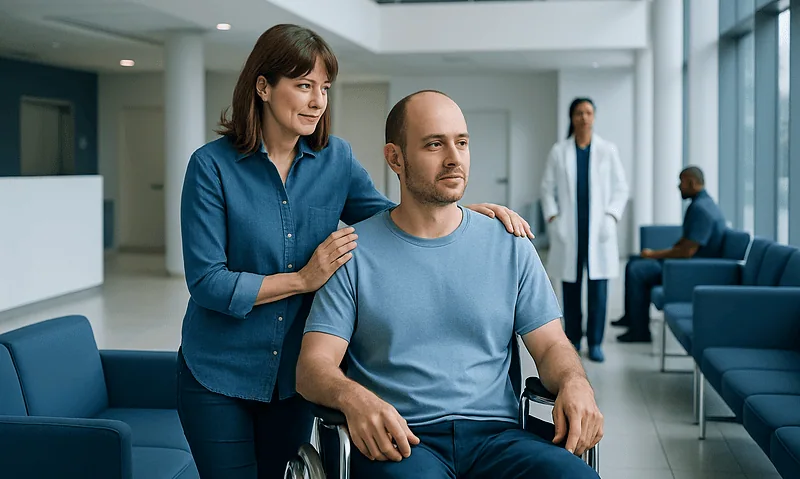
When you choose a recovery companion for treatment in Turkey, you are choosing the person who will share hotel corridors, hospital waiting areas, airport queues and quiet recovery days with you. The best candidate is not simply available to travel. They are practical, steady under pressure, able to communicate clearly and honest about their own limits.
At a glance
- Best companion qualities: Calm, dependable, organised, punctual and willing to help with ordinary daily tasks
- Main role: Support your comfort, mobility, paperwork, communication and daily routine, not replace medical care
- When a companion matters most: After sedation or surgery, during limited mobility, or through emotionally demanding treatment
- What to settle before booking: Time off work, who pays for what, privacy boundaries, caregiving limits and travel documents
- Support that lightens the load: Interpreters, transfers and international patient coordination mean your companion never has to manage everything alone
Why the right recovery companion matters
If you are travelling to Turkey for treatment, your companion shapes how the whole journey feels. They may handle airport logistics, keep track of appointment times, carry bags you should not lift, collect written instructions from the care team and simply sit with you when you feel drained or uneasy. None of this requires medical training. All of it requires reliability.
A companion matters most when treatment temporarily affects your mobility, energy, concentration or confidence. After general anaesthesia, for example, many hospitals expect an adult to accompany you when you are discharged, and you should not plan to navigate a large city alone in the first days afterwards. Even when the hospital team is attentive, there are ordinary moments outside the ward, a hotel lift, a pharmacy counter, a taxi rank, where a familiar, capable person makes the day easier.
At Acibadem, many international patients arrive with a spouse, sibling, parent, adult child or close friend. Because interpreters, transfer arrangements and international patient coordination are available, your companion does not carry every task alone. But the coordination team cannot sit beside you at breakfast or notice that you have been on your feet too long. That is the companion’s job, and it is why the choice deserves real thought. If you are still deciding whether to bring anyone at all, the guide on when to bring a companion for treatment in Turkey looks at that question in more detail.
One more reason to choose carefully: the wrong companion adds work. A person who gets anxious in hospitals, argues with schedules or expects you to entertain them turns your recovery into a hosting duty. When you choose a recovery companion for treatment in Turkey, you are protecting your own energy as much as arranging help.
What a companion should realistically be able to do

Before you ask anyone to travel with you, write down the tasks your recovery is likely to involve. Depending on the treatment, you may need help getting in and out of vehicles, walking longer distances slowly, preparing or fetching simple meals, keeping your room organised, remembering instructions the team gave you, or holding a steady routine of rest, food and water. Your companion should be able to do most of this list without strain.
They also need a certain amount of practical confidence. In a city as large as Istanbul, that means being comfortable asking for clarification, repeating your preferences to staff, locating documents quickly and knowing how to reach the international patient coordinator if plans change. A companion who freezes when a taxi is late or a schedule shifts will pass that stress straight to you.
It is equally important to be clear about what a companion should not do. They are not there to interpret medical results, improvise care beyond their ability, adjust anything about your medication, or make decisions on your behalf unless you have agreed that in advance. Clear boundaries protect both of you and keep questions going to the people qualified to answer them.
- Help with transfers, luggage and daily routines
- Keep documents organised, phones charged and the day’s schedule visible
- Listen during instructions and take notes so nothing rests on your memory alone
- Encourage rest, meals and hydration without becoming controlling
- Know exactly how to contact the hospital or patient coordinator if something changes
A separate companion checklist for hotel recovery support in Turkey breaks these tasks down day by day, and it is worth reading together before you travel.
How to choose the right person, not just the closest person

The person you love most is not always the best travel companion for medical recovery. Start with temperament. The right companion is usually calm under pressure, punctual, respectful of your privacy and able to sit through waiting, delays and uncertainty without making you responsible for their feelings about it.
Reliability beats enthusiasm. Someone may sincerely want to help but struggle with early mornings, paperwork, directions or the emotional weight of medical settings. Another person may be quieter and less demonstrative, yet far better at staying organised, following instructions and keeping the day on track. Recovery rewards the second type.
Then look honestly at your relationship dynamic. Can you rest around this person? Can you ask for help without guilt, and say “I feel awful today” without softening it? Can you tell them to leave the room during an examination without a negotiation? Recovery is much easier when you do not have to manage someone else’s emotions while your body is doing the work of healing.
A few practical tests help here. Think about how this person behaved the last time travel went wrong: a delayed flight, a missed connection, a booking error. Think about whether they have ever cared for someone unwell, even briefly. Think about whether they check messages, keep appointments and remember details without prompting. Past behaviour is a far better predictor than promises made in a warm moment.
If more than one person wants to come, keep the arrangement simple. One well-prepared companion is almost always easier than several relatives rotating in and out, particularly around appointments, hotel rooms and post-treatment rest. Where a second person genuinely adds value, for a long stay, or where the first companion has their own limits, plan the handover deliberately rather than letting people drift in and out.
Questions to settle before anyone books flights
Have the awkward conversation early, before money is spent. Talk through how long you may be in Turkey, what a typical day could look like, whether your companion can take enough time away from work or family, and what practical help you expect. Mismatched expectations discovered mid-recovery are far harder to fix than mismatched expectations discussed at the kitchen table.
Money needs the same clarity. Decide who pays for flights, meals, local transport and any extra hotel nights, and whether the companion contributes or travels as your guest. Companion expenses are a real budget line, and the guide on budgeting for a companion’s meals, transport and extra nights in Turkey explains what those costs usually depend on. Agree the arrangement now so nobody is keeping silent score later.
Privacy deserves its own conversation. If you want to be alone during examinations, rest periods or calls home, say so plainly. If there are health details you do not want shared with the wider family, name them. A genuinely supportive companion will be relieved to have clear rules rather than guessing at them.
Finally, ask directly whether they feel able to manage tiredness, delays and hospital environments. Some people are deeply loving and simply uneasy around medical settings; others do very well once they know exactly what is expected. An honest “I’m not sure I could handle that” now is a gift, not a rejection.
- Can you stay for the full expected recovery period, including any buffer days?
- Are you comfortable helping me with routine tasks if I am tired or less mobile?
- Can you keep my health information private and respect the boundaries I set?
- How will we split costs, and how will we each get personal time?
- What will we do if my schedule changes or I need extra rest before flying home?
Planning the trip so your companion can actually help
A capable companion still needs a well-organised trip. Keep travel documents together: passports, visa confirmations if required, booking references, insurance details where relevant, hospital contact numbers and a written outline of the itinerary. Give your companion both digital and printed copies, so a dead phone battery or a nap never becomes a problem. The broader guide on what to plan before bringing a companion to Turkey for treatment covers documents and pre-travel admin step by step.
Choose accommodation with recovery in mind rather than sightseeing in mind. Short transfer times, lift access, quiet rooms, nearby pharmacies and food options and space for two people matter far more than a view. In Istanbul especially, traffic can turn a short distance into a long, tiring journey, so proximity to the hospital is worth prioritising: the guide on choosing the right hotel for recovery near the hospital explains what to look for. If your companion will stay overnight in the hospital itself, check the practicalities described in booking a companion room in Turkey before you assume anything about beds, meals or visiting arrangements.
Where treatment is arranged through Acibadem, international patient coordination can help with appointments, interpreting and, where arranged, transfers and accommodation guidance. This does not make a companion redundant. It means your companion can focus on you rather than trying to solve every logistical puzzle in an unfamiliar city.
Finally, build a small system together before you fly. Decide who carries which documents, who watches transport timing, where medications, chargers and snacks live, and how meals and rest breaks will work each day. These sound like trivial details. When you are tired and healing, they are the difference between a smooth day and a fraught one.
Supporting you during recovery without crowding you
Good support is practical and quiet. During recovery you may want slower movement, predictable routines and long stretches of silence far more than constant conversation. Tell your companion which mode you prefer: reminders and company on short walks, help with food and paperwork, or simply someone nearby while you sleep. Preferences can change day to day, and saying so out loud is not rudeness: it is coordination.
Your companion can also act as a gentle brake if you tend to push yourself. A calm daily rhythm, appointments, meals, water, any movement your care team has advised, and generous downtime, tends to feel better for both of you than an improvised day. If your care team suggests staying in Turkey a little longer before flying, take that seriously and adjust plans together; buffer days exist for exactly this reason, and building one or two into your booking from the start makes any change of plan far less stressful.
A simple daily check-in keeps support useful rather than intrusive. Four questions cover most of it: what appointments are today, what help do you need, when do you want quiet, and what can wait until tomorrow? Two minutes over breakfast prevents most of the friction that builds up when two tired people share a small room.
Encourage your companion to route questions to the right people. International patient teams and interpreters exist precisely so that nobody has to guess about schedules, documents or practical arrangements. A companion who asks the coordinator is helping; a companion who improvises answers is not.
When a different arrangement beats a friend or relative
Sometimes the most loving choice is not to bring a family member at all. If your relationship with the obvious candidate is complicated, if they cannot take enough time away, or if their presence would feel like scrutiny rather than support, consider alternatives. Some patients travel with a trusted friend for the first days and continue the later, lighter phase of recovery with hotel and hospital support only.
Privacy is a legitimate reason on its own. If you do not want a relative involved in intimate routines, personal health details or emotional moments, do not talk yourself into inviting them out of obligation. A companion should reduce stress. One who makes you feel observed adds a burden you do not need while healing.
Travelling alone is also a workable option for many treatments, provided you plan for it. Ask in advance what the hospital’s international patient services cover, how transfers are arranged, whether interpreter support is available at each stage, and what your accommodation can realistically provide. Well-organised solo treatment travel is entirely possible; under-planned solo travel is where problems start. Whatever you decide, the goal is not to satisfy anyone else’s idea of what support should look like. The goal is the safest, calmest recovery environment for you.
Step by step
- List the support you are likely to need. Write down the practical tasks your travel and recovery may involve, walking support, lifting bags, tracking instructions, fetching meals. Choosing from a real list beats choosing from assumptions.
- Choose for temperament and reliability. Look past closeness and family role. The best companion stays calm, follows through, communicates clearly and is not rattled by delays or medical environments.
- Have the honest expectations conversation. Cover time off, costs, privacy, sleeping arrangements and the kinds of help you do and do not want. Clarity now prevents tension when you are tired and trying to recover.
- Share your itinerary and hospital contacts. Give your companion copies of flights, accommodation details, appointment times and key numbers. Save the patient coordinator and interpreter contacts in both phones.
- Plan the daily routine together. Agree who manages documents, transport timing, snacks, water and reminders. A simple system lets your companion support you without hovering.
- Use the hospital’s support services. International patient teams, interpreters and transfer support exist so that no companion has to solve everything alone.
- Review and adjust during the stay. After a day or two, talk about what is working. Small changes to rest time, personal space or task-sharing can transform the rest of the trip.
Your checklist
- Choose someone who can stay for the full expected recovery period, plus buffer days
- Confirm they are genuinely comfortable with hospitals and travel logistics
- Agree budget, room arrangements and daily expenses before booking
- Share copies of passports, bookings and appointment details
- Save hospital, coordinator and emergency contact numbers in both phones
- Pack a folder with medical documents and a simple written daily schedule
- Set privacy boundaries and agree what information can be shared with whom
- Plan rest days into the itinerary, not just treatment days
- Check accommodation access, lifts, transfer times and companion sleeping arrangements
Key takeaways
- When you choose a recovery companion for treatment in Turkey, pick for dependability, calm and practicality, not mere availability or the closest family tie.
- Settle boundaries, costs, privacy and caregiving expectations before flights are booked.
- Good logistics, documents, accommodation, routines, make any companion far more effective.
- International patient services, interpreters and transfer support mean your companion never carries everything alone.
- Alternatives exist: a trusted friend, a staged arrangement or well-planned solo travel can each be the right answer.
Frequently asked questions
Do I always need a recovery companion for treatment in Turkey?
Not always. Some patients travel independently, particularly for consultations, tests or treatments with minimal recovery demands. A companion becomes more important when you may feel weak, less mobile, emotionally stretched, or unable to manage transport and instructions comfortably on your own, most commonly in the days after sedation or surgery.
Can foreigners go to hospital in Turkey?
Yes. Turkey has a well-established system for treating international patients, and hospital groups such as Acibadem run dedicated international patient services covering appointment coordination, interpreting and practical travel-related guidance. You will typically need a valid passport, any visa your nationality requires, and your medical records translated or summarised as the hospital requests.
What medical treatment is Turkey famous for?
International patients travel to Turkey for a wide range of care, including orthopaedic and cardiac procedures, ophthalmology, dental treatment, hair restoration, aesthetic surgery, fertility treatment and oncology. Larger hospital groups treat international patients across many specialties, so the more useful question is usually whether a specific hospital offers the specific treatment you need and how it manages patients who travel for it.
How much does medical treatment cost in Turkey?
There is no single figure, because cost depends on the procedure, the hospital, the length of stay, the tests and imaging involved, anaesthesia, implants or materials where relevant, and any accommodation or transfer arrangements. Hospitals normally prepare an individual quote after reviewing your medical information, and it is sensible to ask what a quote includes, and what it does not, before comparing anything. Companion-related expenses such as flights, meals and extra hotel nights sit outside medical quotes and need their own budget line.
Is it safe to go to Turkey for medical procedures?
Any medical travel carries considerations that treatment at home does not: long flights around a procedure, continuity of care afterwards, and communication across languages. Sensible planning addresses much of this, choosing an established hospital, allowing realistic recovery time before flying, arranging follow-up at home, and travelling with a capable companion when the treatment warrants it. Public health bodies such as the CDC publish general guidance on preparing for medical care abroad, which is worth reading before any trip.
Who is usually the best person to bring with me?
Often a spouse, adult child, sibling or close friend, but the best choice depends on temperament and reliability rather than relationship title. Pick someone who stays calm, respects your boundaries, handles logistics without drama and can commit to the full period when you are likely to need help.
Can my companion speak with the medical team for me?
Your companion can listen, take notes and ask practical questions, but communication about your care should follow your consent and the clinical team’s guidance. If language is a concern, interpreter support arranged through the international patient service is usually clearer and safer than relying on a companion’s translation.
What if I prefer privacy and do not want a relative involved in my recovery?
That is entirely reasonable. You can travel with a trusted friend instead, involve a family member in only selected parts of the trip, or travel alone with well-organised hospital and hotel support. The key is setting boundaries early so the arrangement matches your comfort, not anyone else’s expectations.
Add us as a Preferred Source to see more of our trusted health content across Google Search, AI Overviews and Discover.

Update history
- PublishedJuly 6, 2026
- Medical review approvedSeptember 13, 2026
- Last content updateSeptember 12, 2026
References1
- CDC Travelers' Health: Medical Tourism wwwnc.cdc.gov
More Patient Guides
Medical Travel with a Companion: Who Should Come and Why
Medical travel with a companion can make treatment in Turkey easier by providing practical help, communication support and reassurance before and after…

How Family Members Can Help Without Disrupting Recovery
Family support during recovery helps when you listen, organize practical tasks and follow the care plan without taking over, in Turkey or…

Need a Family Member to Travel With You? A Companion Decision Guide
A companion travel guide for treatment in Turkey: decide who should travel with you, plan practical support, and prepare for Istanbul care.

Unexpected Overnight Stay in Turkey: What Patients and Companions Should Be Ready For
Unexpected overnight stay in Turkey? Here is what patients and companions should prepare for, from essentials and updates to hospital logistics in…