

How to Prepare for Your Pre-Treatment Video Consultation with a Turkish Hospital

Start three to seven days before the call. Gather your medical records, imaging, and a complete medication list in date order, write down your most important questions, and test your device and internet connection in advance. Treat the consultation as a planning conversation: it clarifies next steps, likely tests, and timelines, but final treatment decisions often depend on in-person assessment after you arrive.
You have a video call booked with a hospital in Turkey, and you are not sure what to have in front of you when the screen connects. This guide walks you through it. A pre-treatment video consultation is usually the first structured conversation between you and the clinical team before you travel, and the quality of that conversation depends heavily on what you prepare in the days before it.
If you organise your records, write your questions down, and sort out the practical details early, the call becomes clearer, calmer, and far more useful. If you improvise, you will spend part of your appointment searching for documents instead of getting answers. Here is how to prepare for your pre-treatment video consultation with a Turkish hospital, step by step.
At a glance
- Best time to prepare: Start 3–7 days before your scheduled call
- What to have ready: Medical records in date order, medication list, imaging reports and files, passport details, written questions
- Main goal: Clarify whether travel is appropriate, what tests may follow, and what the realistic timeline looks like
- Technology needed: Stable internet, charged device with camera and microphone, quiet private room
- Who can join: You, a family member or trusted companion, an interpreter, and a patient coordinator if arranged
- After the call: Expect follow-up on records, tests, timing, and travel documents before anything is booked
What a pre-treatment video consultation is for
Before you can prepare for your pre-treatment video consultation with a Turkish hospital, it helps to understand what the call is actually meant to achieve. It is not a formality, and it is usually not the moment a final treatment plan is signed off. It is the first structured review of your case: the doctor or care team looks at your history, asks about your current situation, and works out what information is still missing before treatment can be discussed in detail.
For international patients, the call carries a practical layer too. It helps you understand whether more tests will be needed on arrival, how time-sensitive your case appears to be, and what kind of stay in Turkey might be realistic. That matters, because flights, accommodation, and time away from work all hang on those answers. The consultation is rarely the final word, but it is often the point at which vague plans become concrete ones.
At a large international provider such as Acibadem, the consultation typically involves both medical and non-medical support. Alongside the specialist review, international patient services can help with organising records, arranging interpreters, and coordinating the travel-related side of your case, so you finish the call knowing what happens next rather than guessing.
One honest limit worth stating upfront: a doctor on a screen cannot examine you physically. Whatever is discussed on the call, some recommendations will stay provisional until you are seen in person. Good preparation does not remove that limit: it makes sure everything that can be decided remotely actually gets decided.
How to organise your medical information before the call
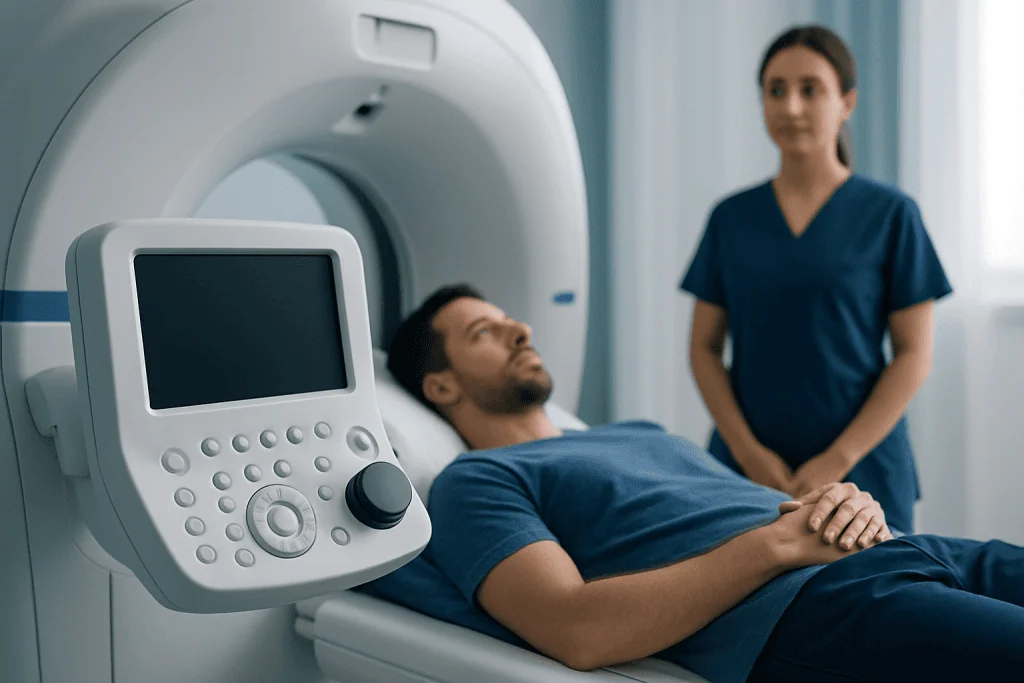
The single most useful thing you can do to prepare for your pre-treatment video consultation with a Turkish hospital is to gather your records in one place, well before the appointment. Scattered documents lead to scattered conversations. A single folder, digital, physical, or both, lets the specialist see quickly what has already been done and what still needs review.
Which documents to collect
Focus on the records that describe your condition and its history, starting with the most recent. Put everything in date order, newest first. Use clear file names that include the date and the type of document, “2025-11-MRI-report” tells the reviewing team far more than “scan2”.
| Document type | Why it matters on the call |
|---|---|
| Recent clinic notes and referral letters | Show what your local doctors have already assessed and concluded |
| Blood tests and laboratory reports | Establish your baseline and flag anything that needs repeating |
| Radiology reports and image files | Often the core of treatment planning; reports and actual images serve different purposes |
| Pathology or biopsy results, if relevant | Frequently decisive for how a case is classified and planned |
| Discharge summaries from previous hospital stays | Summarise past procedures, complications, and treatments tried |
| Medication, allergy, and supplement list | Shapes what can be safely proposed and what needs checking first |
Imaging: reports versus image files
There is a difference between a radiology reportthe written description, and the image files themselves, usually stored on a CD, USB drive, or hospital portal. For an initial video consultation, reports are often enough, but for detailed planning many specialists want the original files. Ask the hospital in advance which they need, and test that any CD or portal link actually opens before the call. A disc that will not load is a common and entirely avoidable delay.
Your medication list
Keep it simple and complete: the name of each medicine, the dose, how often you take it, and why, if that is not obvious. Include supplements and over-the-counter medicines, because they matter more than most people assume. Mention allergies, implanted devices, long-term conditions, and any previous reactions to anaesthesia, contrast dye, or medications. If you want a structured way to do this properly, see our guide on how to prepare a medication list for treatment in Turkey.
Translation and format
If your documents are not in English, ask before the call whether translation is needed or whether the hospital’s international team can work with the original language. Some records can be reviewed as they are; others may need certified translation later in the process. Asking early prevents a scramble the night before your appointment.
- Recent blood tests and lab reports
- Radiology reports and image files where available
- Biopsy or pathology results, if applicable
- Current medication, allergy, and supplement list
- A short written summary of your symptoms and when they began
How to prepare your questions so the call is productive
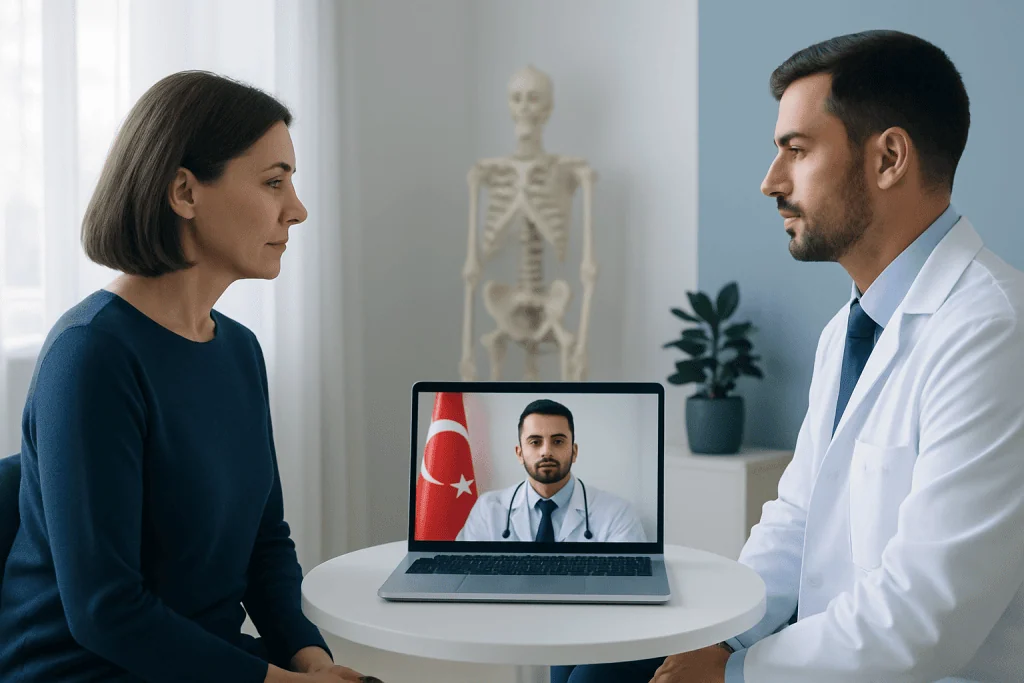
Many patients finish a video consultation and remember their most important question ten minutes later. A short written list prevents that, and it steadies you if you feel nervous. Think in three groups: your diagnosis, your treatment pathway, and your travel planning.
Good questions are specific. Useful examples include: What additional tests may be needed after arrival? Is my current imaging sufficient for initial planning, or will it need repeating? How long might I need to stay in Turkey, both for treatment and for early follow-up? What does follow-up commonly involve after this kind of treatment? How should I update the team if anything in my records changes before I travel?
Put your most important question first. Consultations have a fixed length, and if the conversation runs long you want your priority answered, not left for last. Aim for five to eight questions rather than twenty: a shorter, sharper list keeps the discussion focused on decisions rather than details.
Do not feel pressure to understand everything immediately. If a term is unfamiliar, ask the doctor or coordinator to explain it in plainer language; that is a normal request, not an imposition. If you are speaking through an interpreter, pause after each answer and confirm you have understood before moving on. Rushing through translated answers is how misunderstandings are made. Much of this advice carries over to in-person appointments too: our guide on how to prepare for a doctor consultation in Turkey covers the face-to-face version in detail.
Practical setup: technology, privacy, and who should join
Choose a quiet, private room where you can speak freely and hear clearly. Privacy matters twice over: you will be discussing personal medical information, and you will answer more openly if no one is listening at the door. Good lighting matters more than most people expect, if the doctor can see your face, the conversation flows more naturally, and in some cases the doctor may ask to look at a visible area of concern on camera.
Charge your device fully and keep a backup option ready, such as a second phone. Join from a stable connection rather than while travelling or in a public place. If the hospital sends a meeting link, open it a day or two early: check that the platform loads, that camera and microphone permissions are enabled, and that you know how to unmute yourself. Headphones improve both sound quality and privacy. Join five to ten minutes early so small technical problems do not eat into your appointment.
Keep everything you might need within reach: passport, records folder, medication list, reading glasses, hearing aids, a notebook, and a pen. Leaving the call to hunt for a document wastes time you cannot get back.
Time zones and scheduling
Turkey runs on Turkey Time (TRT), which may be several hours ahead of or behind your own time zone. When the appointment is confirmed, check carefully whether the stated time is in Turkish time or yours, and convert it yourself rather than assuming. A surprising number of missed video consultations come down to a time-zone mix-up, not technology.
Who should be on the call
If a relative helps you manage healthcare decisions, invite them to join: a second set of ears catches things you miss, and someone can take notes while you talk. Tell the hospital in advance if another person will attend. Many international patients also benefit from interpreter support, particularly when the conversation turns to timelines, medications, or consent-related topics. Acibadem commonly supports patients with international coordinators and language assistance, which reduces the risk of misunderstanding on both sides. Arrange this before the appointment, not during it.
What to expect during the consultation
The call usually opens with identity confirmation and a review of your medical history. The specialist may ask when your symptoms started, what treatments you have already tried, what tests you have had, and whether anything has changed recently. Answer as directly as you can. Short, accurate answers are more useful than telling the whole story at once: the doctor will ask follow-up questions where detail is needed.
Depending on your case, the doctor may outline possible treatment directions. It is common, and normal, for final recommendations to depend on an in-person examination or further testing in Turkey. That does not mean the call was wasted. Its purpose is often to determine whether travel makes sense, what preparation is needed, and which specialist team should see you on arrival. If pre-operative tests are likely, it helps to know in advance what they involve; our guide on how to prepare for blood tests, scans, and pre-op checks explains the usual sequence.
If the hospital works as a multidisciplinary system, your records may later be reviewed by more than one department. At Acibadem, this can apply when treatment planning draws on imaging, surgery, oncology, cardiology, or other specialties together. For you, the practical benefit is coordination before you commit to travel, rather than surprises after it.
Take notes throughout, or ask your companion to. Write down names, department names, what was decided, what is still open, and any documents you were asked to send. Before the call ends, summarise the next steps back to the doctor or coordinator in your own words and ask them to correct anything you got wrong. This one habit prevents more confusion than any other.
What happens after the call
After the consultation, you will usually receive a summary of next steps from the international patient team or coordinator. This may include requests for additional records, recommendations for further tests on arrival, an indication of timing for consultations in Istanbul or elsewhere in Turkey, and guidance on how long you may need to stay.
This is the moment to sort your practical paperwork. Check that your passport is valid well beyond your intended travel dates, confirm whether you need a visa for Turkey, and ask which documents the hospital wants in printed form as well as digitally. If accommodation, airport transfers, or interpreter arrangements are needed, raise them while the consultation details are fresh. When you eventually pack, keep your key medical documents in your hand luggage rather than checked baggage: our guide on preparing a carry-on bag for treatment travel to Turkey covers what belongs where.
Before you book flights, make sure you understand what is confirmed and what remains provisional. Ask directly: does the plan depend on further imaging, laboratory work, or a physical examination? A reliable hospital team will help you separate likely next steps from final decisions. It is also worth knowing that plans can shift after arrival if new test results change the picture: our guide on unexpected test or treatment changes in Turkey explains how to build sensible flexibility into your travel plans from the start.
Step by step
- Collect your records in one folder. Bring together recent reports, scans, medication lists, and a short medical history 3–7 days before the appointment. Use clear, dated file names so the hospital team can review everything quickly.
- Send documents early if requested. If the hospital asks for records in advance, send them as early as possible rather than uploading them minutes before the call. This gives the specialist time to review your case and makes the consultation itself more focused.
- Write down your top questions. Prepare a short list covering treatment timing, likely next tests, expected length of stay in Turkey, and follow-up. Put your most important question first in case time runs short.
- Set up your device and connection. Test the meeting link, camera, and microphone a day or two ahead, charge your device fully, and use headphones for clearer sound and better privacy. Double-check the appointment time against Turkish time.
- Choose who should join. Ask a trusted family member to attend if you want support, and request interpreter assistance before the appointment rather than during it. Tell the hospital in advance who will be on the call.
- Answer clearly and briefly during the call. Focus on your symptoms, previous treatments, and recent changes. If you do not understand something, ask for a plainer explanation immediately rather than guessing.
- Confirm next steps before ending. Summarise the plan back in your own words: what happens next, which documents are still needed, and which recommendations remain provisional until you are seen in person. Write down names, timelines, and contact points.
Your checklist
- Passport and basic identification details
- Recent medical reports and discharge summaries, in date order
- Imaging reports and image files if available, tested and openable
- Pathology or biopsy results if relevant
- Current medication, allergy, and supplement list
- Notebook with your top five questions, priority first
- Stable internet connection, charged device, headphones
- Appointment time confirmed against the Turkish time zone
- Interpreter or family member arranged and announced in advance
Key takeaways
- Prepare your records early and keep them organised by date, newest first.
- A video consultation guides planning; final decisions often depend on in-person assessment and further tests.
- Written questions, with the most important first, make the appointment time count.
- Test your technology and confirm the time zone; small logistics failures cause most consultation problems.
- Before booking travel, separate what is confirmed from what is provisional, and build in flexibility.
Frequently asked questions
Is a pre-treatment video consultation enough to confirm my final treatment plan?
Not always. The consultation is very useful for early planning, but many final decisions depend on physical examination, repeat imaging, laboratory tests, or other assessments done after you arrive. Treat the video call as an informed first step unless the hospital clearly confirms otherwise.
What records should I send to a Turkish hospital before the consultation?
Send the most relevant and recent documents first: clinic notes, test results, radiology reports, pathology results if applicable, and a complete medication list. If you have actual image files, ask whether the hospital wants the files themselves or just the written reports. Organised, dated documents are far easier for the specialist to review.
Can a family member join my video consultation?
Yes, in most cases a family member or trusted companion can join if you want support. This is especially helpful when discussing timelines, travel arrangements, or complex medical information. Let the hospital know in advance if another person will attend, and consider asking them to take notes while you talk.
What if I do not speak English confidently?
Arrange interpreter support before the appointment rather than trying to manage during the call. International patient departments, including the team at Acibadem, often coordinate language support for overseas patients. Clear communication matters most when discussing symptoms, medications, and next steps, so pause after each translated answer and confirm you understood.
Should I book my flights before the consultation?
Usually it is better to wait until afterwards, unless the hospital team has advised otherwise. The call may clarify whether more records are needed first, how long you may need to stay, and whether your schedule depends on further testing after arrival. Booking after the consultation reduces changes and unnecessary expense.
What questions should I ask during the appointment?
Focus on questions that help you make decisions: what additional tests may be needed, whether your current records are sufficient, how time-sensitive your case appears, how long you may need to stay in Turkey, and what follow-up is usually required after treatment. Put your most important question first.
What happens if the connection fails during the consultation?
It happens, so have a backup plan. Keep an alternative phone number, email address, or messaging contact ready, and ask beforehand who to reach if the platform disconnects. Joining five to ten minutes early gives you time to fix simple technical issues, and a second device can serve as a fallback.
Add us as a Preferred Source to see more of our trusted health content across Google Search, AI Overviews and Discover.

Update history
- PublishedAugust 21, 2026
- Medical review approvedSeptember 13, 2026
- Last content updateSeptember 12, 2026
References1
- Telehealth: MedlinePlus medlineplus.gov
More Patient Guides

How Long Does Anesthesia Last? Wear-Off Times by Type
Coming round from an operation, almost everyone asks the same two questions: when will my head feel normal, and how long is…

Flying to Turkey After a Recent Illness: When Is It Safe to Travel?
Flying to Turkey after a recent illness may be safe once you are medically stable and cleared to travel; plan airline support…
Braces, Retainers, and Dental Work Before Surgery in Turkey: What to Tell Your Team
Braces, retainers and dental work before surgery in Turkey should be shared with your care team early to plan safe anaesthesia and…

When to Stop Eating, Drinking, or Smoking Before a Procedure in Turkey
When to stop eating before a procedure in Turkey depends on your anesthesia plan; follow your care team’s exact fasting instructions for…