

Kidney Stone Treatment in Turkey: Treatment Guide
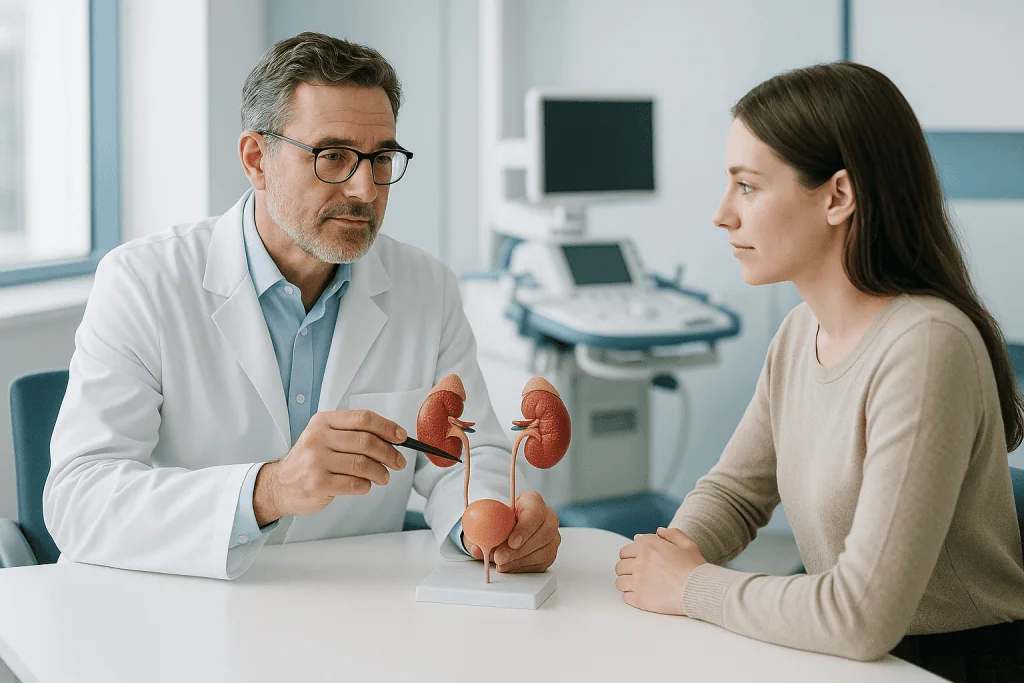
Treatment depends on your stone's size, location and symptoms. Small stones may pass with fluids, medication and monitoring; others need ESWL, ureteroscopy, RIRS or PCNL. Many procedures are same-day or one night, with PCNL usually needing longer. Recovery ranges from a few days to several weeks, especially if a temporary stent is placed.
Have you been told you have a kidney stone and are now trying to work out whether it needs treatment, and whether it makes sense to travel for it? That is the question most patients arrive with. The answer usually depends on the size of the stone, where it sits and what symptoms it is causing.
This guide explains how kidney stones are evaluated and treated in Turkey, including non-surgical care, ESWL, ureteroscopy, RIRS and PCNL. You will also find practical information about recovery, travel planning, cost factors and international patient support at Acibadem.
At a glance
- Procedure type: Non-surgical or minimally invasive urology treatment, depending on stone size, location and symptoms
- Purpose: To relieve pain or obstruction, remove or break kidney stones, protect kidney function and reduce recurrence risk
- Anesthesia: Varies by treatment; local, sedation, spinal or general anesthesia may be used
- Hospital stay: Often same-day or 1 night; more complex cases may require a longer stay
- Estimated recovery: A few days to several weeks, depending on the treatment method and whether a stent is placed
- Return to daily life: Usually within a few days for simpler procedures; longer after PCNL or complex stone surgery
- Final result timeline: Stone clearance and symptom improvement are assessed over days to weeks, with follow-up imaging when needed
- Suitable department: Urology, supported when needed by nephrology, radiology, anesthesiology and emergency medicine
- International patient support: Medical coordination, interpreters, airport transfers, accommodation guidance and remote follow-up
What is this treatment?
Kidney stone treatment includes the medical and procedural methods used to manage stones that form in the kidneys or urinary tract. A stone may stay inside the kidney, move into the ureter, block urine flow, cause pain, trigger infection or be discovered incidentally during imaging. The right treatment depends on your symptoms, stone size, location, shape, density, kidney function and whether there is infection or obstruction.
Some stones can pass naturally with careful monitoring, fluids and medication prescribed by a physician. Others need active treatment to break, remove or drain around the stone. Modern urology offers several minimally invasive techniques, including shock wave lithotripsy, ureteroscopy, retrograde intrarenal surgery and percutaneous nephrolithotomy. Open surgery is now rarely required, but it may still be considered in selected complex situations.
At Acibadem, international patients are evaluated by urology teams with access to imaging, laboratory testing, anesthesiology and other specialties when needed. Your plan is built around safety first: relieving obstruction or infection, protecting kidney function, choosing the most appropriate technique and helping you understand what to expect before you travel.
When is it recommended?
Kidney stone treatment may be recommended when a stone causes pain, recurrent urinary symptoms, bleeding in the urine, infection, blockage of urine flow or reduced kidney function. It may also be advised when a stone is too large to pass on its own, continues to grow, is located in a position that makes spontaneous passage unlikely, or has caused repeated emergency visits.
Urgent treatment may be needed if a stone is associated with fever, suspected infection, severe obstruction, uncontrolled pain, repeated vomiting or risk to a single functioning kidney. In these cases, the first priority may be drainage of the kidney with a ureteral stent or nephrostomy tube before definitive stone removal. This staged approach can make treatment safer when infection or significant swelling is present.
Treatment can also be recommended even when symptoms are mild, especially if you travel frequently, live far from emergency care or have stones in both kidneys. Your urologist will consider your medical history, imaging results and personal circumstances before advising whether observation, medication or active stone removal is best for you.
Who is a good candidate?

You may be a good candidate for kidney stone treatment in Turkey if you have a confirmed stone on ultrasound, X-ray or CT scan and have been advised to consider active management. Candidates include patients with ureteral stones that are not passing, kidney stones causing pain or infection, larger stones, recurrent stones, stones in difficult locations or stones that may threaten kidney function.
Your suitability depends on several factors, including kidney anatomy, stone burden, previous urological procedures, urinary tract infections, blood-thinning medication, pregnancy status, anesthesia fitness and other health conditions. For example, some patients are better suited to ureteroscopy or RIRS, while others may need PCNL for larger stones. ESWL can be useful in selected cases, but it is not ideal for every stone type or location.
Before confirming a plan, your doctor will review your imaging and health information in detail. If you have fever, active infection, kidney failure, uncontrolled bleeding risk or an unstable medical condition, treatment may need to be delayed, modified or performed in stages. A physician evaluation is essential to decide the safest route for you.
Treatment options
Kidney stone treatment is not one single procedure. The options range from observation and medication to minimally invasive stone fragmentation or removal. Your urologist will match the method to your stone characteristics and your overall health, with the goal of clearing the stone effectively while minimizing discomfort, hospitalization and recovery time.
Common treatment options include:
- Conservative management: Small stones may pass with medical supervision, pain control, hydration guidance and follow-up imaging.
- Medical expulsive therapy: Selected ureteral stones may be managed with prescription medication to help stone passage, when appropriate.
- ESWL: Extracorporeal shock wave lithotripsy uses shock waves from outside the body to break suitable stones into smaller fragments that can pass in urine.
- Ureteroscopy: A thin scope is passed through the natural urinary channel to reach a ureteral stone, which can be removed or fragmented with a laser.
- RIRS: Retrograde intrarenal surgery uses a flexible scope to reach stones inside the kidney and treat them with laser energy.
- PCNL: Percutaneous nephrolithotomy is used for larger or complex kidney stones through a small access tract in the back.
- Stent or nephrostomy drainage: These may be used before or after stone treatment to relieve blockage, protect the kidney or allow urine to drain safely.
In some cases, more than one session or more than one technique may be needed, especially for large stone burdens, multiple stones, hard stones or complex anatomy. Your team will explain whether the aim is complete clearance in one procedure or a staged plan. They will also discuss the possibility of temporary stent placement and the need for follow-up imaging.
Online evaluation before travel
For international patients, online evaluation helps determine whether it is reasonable to travel for kidney stone treatment and what type of plan may be expected. You can share your recent imaging, laboratory results, medical history and symptom details with the Acibadem International team. A urologist can then provide a preliminary opinion, although final decisions are made after in-person examination and updated tests.
The most helpful document is usually a recent CT scan report and, if available, the actual imaging files. Ultrasound, X-ray, urine tests, kidney function blood tests and previous operation notes are also useful. Clear information about pain episodes, fever, infections, medications and allergies helps the team assess urgency and safety.
Online review is especially important if you have a stent already in place, a history of sepsis, kidney disease, a single kidney, recurrent stones or previous failed procedures. The purpose is to reduce uncertainty before travel, identify any urgent warning signs and prepare a realistic treatment pathway, travel schedule and quotation based on your likely needs.
Before the treatment
Before treatment, you will have an in-person consultation with a urologist and may undergo updated imaging and laboratory tests. These can include urine analysis, urine culture, kidney function tests, blood count, coagulation tests and anesthesia assessment. If infection is suspected, it must be treated carefully before definitive stone removal whenever possible.
Your doctor will review your medications, especially blood thinners, diabetes medicines and supplements that may affect bleeding or anesthesia. Do not stop prescribed medication on your own; your medical team will give instructions based on your condition and the planned procedure. You should also tell your team about previous anesthesia problems, implanted devices, pregnancy possibility or chronic illnesses.
You will receive preparation instructions such as fasting rules, hygiene guidance and arrival time at the hospital. If a ureteral stent may be placed, your doctor will explain what it is, why it may be needed and what symptoms it can cause. Understanding these details in advance can make the treatment experience more comfortable and less stressful.
What happens during the treatment
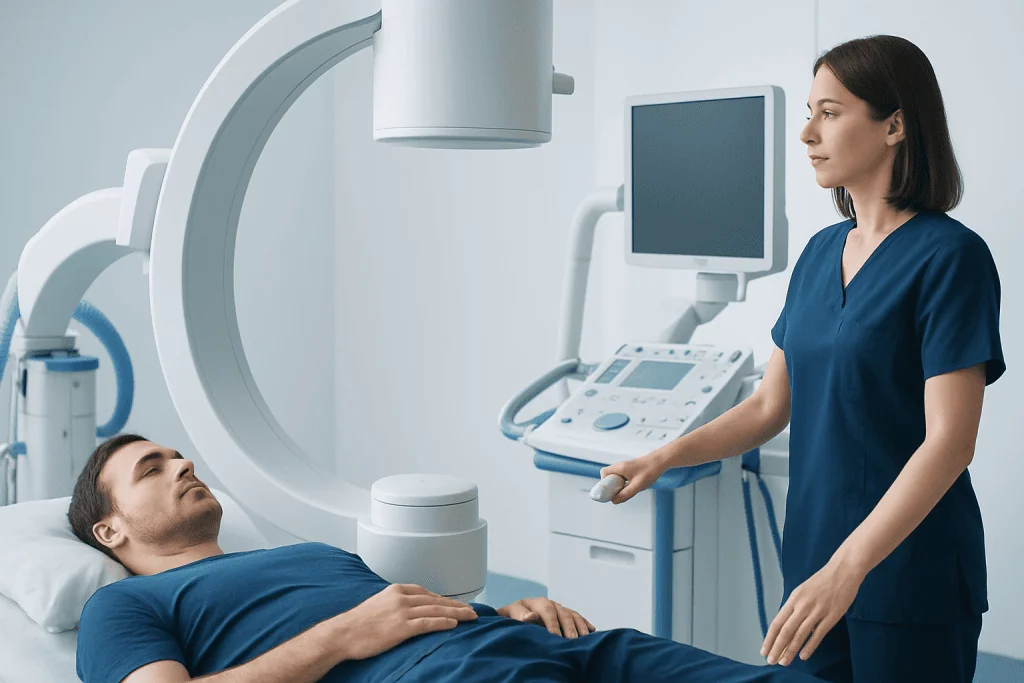
What happens during treatment depends on the method chosen. ESWL is usually performed with you lying on a treatment table while the stone is targeted using imaging guidance and shock waves are delivered from outside the body. Ureteroscopy and RIRS are performed through the natural urinary tract with a small scope, and the stone is fragmented with laser energy or removed using tiny instruments.
PCNL is used for larger or more complex kidney stones. During PCNL, the surgeon creates a small tract through the skin into the kidney under imaging guidance and removes or breaks the stone through that access. This is more invasive than ureteroscopy or ESWL, but it can be more suitable for larger stone burdens.
A temporary ureteral stent may be placed during or after the procedure to help urine drain and reduce swelling-related blockage. The stent is not usually visible outside the body, but it can cause urinary frequency, urgency, bladder discomfort or flank pain until it is removed. Your doctor will tell you if a stent is placed and when it should be removed or changed.
Hospital stay and discharge
Your hospital stay depends on the treatment type, anesthesia, stone complexity and your recovery after the procedure. ESWL and many ureteroscopy or RIRS cases may be performed as same-day or short-stay procedures. PCNL and more complex treatments often require at least one night of observation, and some patients may need longer monitoring.
Before discharge, your team will check your pain control, urination, vital signs and any early concerns such as fever or bleeding. You may receive medication instructions, hydration guidance, activity restrictions and a date for your first control visit. If a stent is in place, you will be told what symptoms are expected and when removal is planned.
International patients should not rush to fly immediately after treatment unless the treating doctor confirms it is safe. Your discharge plan will include travel clearance considerations, follow-up imaging if needed and instructions on how to contact the hospital if symptoms change after you leave.
Recovery timeline
Recovery after kidney stone treatment varies widely. A patient who has ESWL for a small stone may return to normal routines quickly, while someone who has PCNL for a large stone may need a more gradual recovery. Your timeline also depends on whether you have infection, a stent, multiple stones or other medical conditions.
| Timeframe | What to expect |
|---|---|
| First 24 hours | Mild to moderate discomfort, burning with urination, pink urine or urinary urgency may occur. You will be monitored for pain control, fever, bleeding and ability to urinate. |
| First week | Many patients feel stronger each day. Stone fragments may pass after ESWL or laser treatment. If a stent is present, bladder irritation, frequency or flank discomfort can continue. |
| Weeks 2-4 | Most daily activities are usually easier. Follow-up may include imaging, urine tests or stent removal. Heavier exercise may still be restricted depending on the procedure. |
| Months 1-3 | Stone clearance and kidney drainage may be reassessed. Your doctor may discuss prevention, metabolic evaluation and dietary changes if you have recurrent stones. |
| Final result | The final outcome is confirmed by symptoms, imaging and physician review. Some patients need additional treatment if fragments remain or if stones are complex. |
Your doctor will personalize this timeline and tell you when you can fly, work, exercise and resume sexual activity. If you return home before all follow-up is complete, Acibadem International can help coordinate remote communication and share medical documents with you.
What to avoid after treatment
After kidney stone treatment, you should follow your doctor’s instructions closely because restrictions depend on the technique used. In general, avoid heavy lifting, strenuous exercise and long periods without hydration until your doctor clears you. If you had PCNL or another more invasive procedure, physical restrictions may be more important and last longer.
Avoid ignoring fever, worsening pain or difficulty urinating. Do not remove or delay removal of a stent unless your doctor specifically instructs you; stents must be managed on schedule. If you are prescribed medication, take it as directed and ask before using over-the-counter pain relievers, especially if you have kidney disease, stomach problems or blood-thinning medication.
You may also be advised to avoid alcohol, dehydration, very salty meals or excessive animal protein while your urinary tract is healing and while prevention planning is being discussed. Dietary guidance should be individualized because different stone types have different prevention strategies. Long-term changes are best made after physician evaluation and, when appropriate, stone analysis or metabolic testing.
Risks and possible complications
Kidney stone treatments are commonly performed by urologists, but every medical procedure has risks. Possible issues include pain, bleeding, infection, urinary tract injury, swelling, temporary blockage by fragments, incomplete stone clearance, need for stent placement or need for another procedure. Anesthesia-related risks also vary according to your health and procedure type.
ESWL may not fully break every stone, and fragments may take time to pass. Ureteroscopy and RIRS can cause ureteral irritation or, rarely, injury. PCNL can be more effective for large stones but may carry higher risks of bleeding or longer recovery compared with less invasive methods. Your urologist will explain the risk profile of the specific treatment recommended for you.
Some stones recur even after successful removal, particularly if underlying metabolic or lifestyle factors remain. Results vary from person to person, and revision or additional procedures may sometimes be needed. The safest approach is careful pre-treatment assessment, infection control, appropriate technique selection and follow-up after treatment.
Warning signs: when to contact a doctor
Some discomfort, mild burning, urinary frequency or light blood in the urine can be expected after many stone procedures. However, certain symptoms may indicate infection, obstruction or another complication and should be taken seriously. If you are unsure whether a symptom is normal, contact your care team rather than waiting.
- Fever, chills or feeling severely unwell
- Severe or worsening flank, back or abdominal pain not relieved by prescribed medication
- Inability to urinate or a marked decrease in urine output
- Heavy bleeding, large clots or urine that remains very dark red
- Persistent nausea or vomiting that prevents drinking fluids
- Dizziness, fainting, shortness of breath or chest pain
- Increasing swelling, redness or discharge from a skin access site after PCNL
- Stent-related pain that becomes severe or symptoms after a stent should have been removed
International patients receive contact instructions before discharge. If you have returned home and develop urgent symptoms, seek local emergency medical care immediately and also inform your Acibadem contact so your medical records and treatment details can be shared if needed.
Results and expectations
The main goals of kidney stone treatment are to relieve symptoms, remove or fragment the stone, restore urine drainage and protect kidney function. Many patients experience significant relief after the stone is treated, especially when obstruction or recurrent pain has been the problem. However, the final result depends on stone size, number, hardness, location, anatomy and whether infection or kidney damage was present.
Some patients may pass fragments for days or weeks after ESWL or laser treatment. Others may need follow-up imaging to confirm that the urinary tract is clear. In complex cases, a staged treatment plan may be safer and more effective than trying to remove all stones in one session. Your doctor will explain whether any residual fragments are clinically important and whether further treatment is recommended.
Stone prevention is an important part of long-term expectations. Drinking enough fluids is often helpful, but prevention should be tailored to the stone type and your urine chemistry when testing is available. Your urologist may recommend stone analysis, metabolic evaluation, dietary changes or medication to reduce the risk of recurrence.
International patient travel planning
When planning travel to Turkey for kidney stone treatment, allow enough time for consultation, updated tests, the procedure and an early follow-up visit. The exact length of stay depends on the urgency and treatment type. Simple cases may require a shorter stay, while PCNL, infection-related cases, staged treatment or stent removal planning may require additional days.
Before booking flights, share your medical documents for preliminary review and wait for guidance on whether your case appears suitable for travel. If you have fever, severe uncontrolled pain, kidney failure, a blocked infected kidney or a single functioning kidney with obstruction, you may need urgent local care before international travel. Safety should always come before travel convenience.
Acibadem International can assist with practical coordination such as appointment scheduling, airport transfers, interpreter support, accommodation guidance and communication between you and the medical team. You should travel with a companion if you are having anesthesia, have significant pain, or may need help after discharge.
Cost and package information
The cost of kidney stone treatment depends on several factors, including the treatment method, stone size and number, imaging requirements, anesthesia type, hospital stay, use of disposable instruments, laser or lithotripsy equipment, stent placement, laboratory tests and whether more than one session is needed. Complex stones, infection management, PCNL or staged procedures may involve different resources than a simple same-day treatment.
A typical treatment quotation may include medical consultations, the planned procedure, standard anesthesia services, hospital room for the expected stay, routine nursing care and standard in-hospital medications or tests related to the package. The exact inclusions should always be reviewed in writing before travel, because packages differ according to the patient’s needs and the chosen treatment pathway.
Items that may not be included can include additional tests requested after examination, treatment of unexpected complications, extra hospital nights, additional procedures, special medications, flights, accommodation outside the hospital, companion expenses, translation of documents, or long-term follow-up in your home country. Acibadem International provides individualized quotations after medical review and can explain what is included and what may change if the treatment plan is modified after in-person evaluation.
Why choose Acibadem
Choosing a hospital abroad is a medical and personal decision. For kidney stone treatment, it is important to have experienced urology teams, reliable imaging, laboratory support, anesthesia care and clear communication. Acibadem’s JCI-accredited hospitals serve international patients with coordinated pathways designed to make evaluation, treatment and follow-up easier to understand.
Your care may involve urologists, radiologists, anesthesiologists, nurses, nephrology specialists and emergency teams when needed. This multidisciplinary access is especially valuable for complex stones, infection risk, kidney function concerns or patients with other health conditions. The aim is to choose the safest effective treatment rather than a one-size-fits-all approach.
International patient services can support you with interpreters, appointment coordination, airport transfers, accommodation guidance, discharge documents and remote follow-up communication. This helps you focus on your health while knowing who to contact at each stage of your journey.
Medical review and disclaimer
This guide has been reviewed by the Acibadem International medical team and is intended to provide general information for patients considering kidney stone treatment in Turkey. It summarizes common treatment options, recovery expectations and travel considerations, but it cannot cover every individual medical situation.
The information in this guide does not replace a consultation with a qualified physician. Diagnosis, treatment choice, anesthesia suitability, travel clearance and recovery instructions must be based on your personal examination, imaging, laboratory results and medical history. Your suitability for any kidney stone treatment requires evaluation by a urologist or relevant physician.
Step by step
- Initial contact. You contact Acibadem International and share your main concern, such as kidney stone pain, a recent diagnosis, a stent in place or a recommendation for surgery.
- Medical record / photo submission. You send available medical records, imaging reports, CT or ultrasound files, urine and blood tests, medication lists and previous procedure notes.
- Preliminary medical review. A urology team reviews your information to assess likely treatment options, urgency, possible risks and whether travel appears appropriate.
- Treatment plan and quotation. You receive a preliminary plan and individualized quotation based on the expected procedure, tests, hospital stay and international patient services.
- Travel planning. The international patient team helps coordinate appointment dates, airport transfers, interpreter needs and accommodation guidance.
- Arrival. You arrive in Turkey and are guided to your hotel or hospital according to your schedule and medical priority.
- In-person consultation. You meet the urologist, discuss symptoms and expectations, review imaging, and confirm whether the preliminary plan remains appropriate.
- Pre-operative tests. You complete necessary blood tests, urine tests, imaging, anesthesia assessment and any infection-related checks before treatment.
- Treatment. Your planned treatment is performed, such as ESWL, ureteroscopy, RIRS, PCNL, stent placement or another physician-recommended approach.
- Hospital stay. You are monitored for pain control, urination, bleeding, fever and general recovery, with the length of stay depending on the procedure.
- First control. Your doctor checks your early recovery, reviews any symptoms, discusses stent care if relevant and plans follow-up imaging or removal.
- Discharge / travel clearance. You receive discharge documents, medication instructions, warning signs, activity advice and confirmation of when travel is medically acceptable.
- Remote follow-up. After returning home, you can stay in contact for remote follow-up guidance, document sharing and coordination of any recommended next steps.
Your checklist
- Passport with validity suitable for travel
- Recent CT scan, ultrasound or X-ray reports and imaging files if available
- Urine analysis, urine culture and blood test results, especially kidney function tests
- Summary of current symptoms, including pain location, fever, nausea or urinary problems
- Medication list, including blood thinners, diabetes medication, supplements and pain medicines
- Known allergies, especially to medication, contrast dye, latex or anesthesia
- History of previous kidney stones, stone analysis or metabolic evaluation if available
- Previous urology procedure notes, stent information or discharge summaries
- Medical history including kidney disease, heart disease, diabetes, pregnancy status or single kidney
- Travel dates, companion details and any special mobility, language or accommodation needs
Key takeaways
- Kidney stone treatment is personalized according to stone size, location, hardness, infection risk, kidney anatomy and your general health.
- Many stones can be treated with minimally invasive methods such as ESWL, ureteroscopy, RIRS or PCNL rather than open surgery.
- International patients usually need to stay in Turkey long enough for consultation, tests, treatment and at least one first control visit before travel clearance.
- Temporary discomfort, blood in the urine, urinary frequency or stent-related symptoms may occur, but severe pain, fever or inability to urinate require urgent medical contact.
- Long-term success includes not only removing the current stone but also investigating causes and planning prevention with hydration, diet and medical advice.
Frequently asked questions
How do I know which kidney stone treatment is right for me?
The right treatment depends on the stone’s size, location, density, number, your symptoms, infection status and kidney function. A urologist will review your imaging and tests before recommending observation, ESWL, ureteroscopy, RIRS, PCNL or another approach. Final decisions are made after in-person evaluation.
Can I be evaluated before I travel to Turkey?
Yes. You can send your imaging reports, CT files, urine tests, blood tests and medical history for preliminary review. This helps the team estimate your likely treatment options and travel timeline, although the plan may change after examination and updated tests in Turkey.
How long should I stay in Turkey for kidney stone treatment?
Your stay depends on the procedure and complexity of the stone. Some patients may need only a short stay for consultation, treatment and first control, while complex cases, PCNL, infection management or staged treatment may require longer. Your coordinator will advise a practical timeline after medical review.
Is kidney stone treatment painful?
During procedures, anesthesia or sedation is used according to the treatment type, so pain is controlled. After treatment, some discomfort, burning with urination, urinary frequency or flank pain can occur, especially if a stent is placed. Your doctor will prescribe or recommend appropriate pain management.
Will I need a ureteral stent?
A stent may be needed to help urine drain, reduce the risk of blockage from swelling or fragments, or support healing after ureteroscopy, RIRS or other procedures. Not every patient needs one. If a stent is placed, your doctor will explain expected symptoms and when it should be removed.
Can all kidney stones be removed in one procedure?
Many stones can be treated in one session, but not all. Large, multiple, hard or complex stones may require staged treatment or follow-up procedures. Your urologist will explain whether the goal is complete clearance in one procedure or a safer step-by-step plan.
What affects the cost of kidney stone treatment in Turkey?
Cost is influenced by the treatment method, anesthesia, imaging, laboratory tests, hospital stay, disposable instruments, stent use and whether additional sessions are needed. Your quotation is individualized after medical review. It is important to check what is included and what may be billed separately.
Is it safe to fly after kidney stone treatment?
Flying should be discussed with your treating doctor. Travel may be cleared after you are stable, pain is controlled, urination is adequate and there are no warning signs such as fever or heavy bleeding. Complex procedures or stent-related plans may require extra time before travel.
Can kidney stones come back after treatment?
Yes, kidney stones can recur, even after successful removal. Recurrence risk depends on hydration, diet, stone type, metabolic factors, infections and other medical conditions. Your doctor may recommend stone analysis, urine testing, dietary advice or medication to reduce future risk.
Why choose Acibadem for kidney stone treatment?
Acibadem offers urology care in JCI-accredited hospitals with access to imaging, laboratory services, anesthesia and multidisciplinary support. International patients can also receive help with interpreters, transfers, scheduling and remote follow-up. Your treatment plan is personalized after physician evaluation.
Add us as a Preferred Source to see more of our trusted health content across Google Search, AI Overviews and Discover.

Update history
- PublishedJune 9, 2026
- Medical review approvedAugust 25, 2026
- Last content updateAugust 24, 2026
References2
- Kidney Stones - MedlinePlus medlineplus.gov
- Kidney stones - NHS nhs.uk
More Patient Guides

HoLEP in Turkey: How It Compares With TURP and What Recovery Involves
HoLEP in Turkey treats enlarged prostate tissue with laser enucleation; learn how it compares with TURP, recovery, travel and follow-up.

Porcelain Veneers in Turkey: Who Is Suitable and How Many Visits Are Needed?
Porcelain veneers in Turkey can enhance tooth shape and colour in two visits for suitable patients after a personalised dental assessment.

How to Prepare for a Sedation Procedure in Turkey
Prepare safely for a sedation procedure in Turkey with guidance on fasting, medicines, travel, recovery and follow-up.

Treatment Delays in Turkey: What Happens If Tests or Recovery Change Your Schedule
Treatment delays in Turkey can happen if tests or recovery change your plan. Learn how to manage appointments, travel, accommodation and follow-up.