

Paying a Treatment Deposit in Turkey: Safe Methods and Red Flags

Pay only into the hospital's corporate account in the legal entity's name, using a bank transfer or a secure card link the hospital sends you, and only after you have a written quote showing amount, currency and what the deposit covers. Verify the bank details through the switchboard or international patient office. Keep every receipt and confirmation email.
You have a date in mind, a quote in your inbox, and someone is asking you to send money to a country you have not visited yet. That is an uncomfortable moment, and it is normal to want a second opinion before you click transfer.
This guide walks you through the practical payment steps, the checks worth making first, and the warning signs that should make you stop and verify before you send money to Turkey.
At a glance
- Best payment approach: Use verified hospital payment channels with a written quote and reference number
- Safest records to keep: Quote, invoice, IBAN details, payment receipt, email confirmations, passport copy sent securely
- Main red flags: Personal bank accounts, urgent pressure, changing bank details, messaging-app only contact
- Before you pay: Confirm the legal entity, hospital account name, amount, currency, refund terms, and contact person
- If something feels wrong: Pause, verify through the hospital switchboard or official international patient desk, and do not send funds yet
Why treatment deposits are requested
When you plan treatment abroad, a deposit is often requested to help secure appointments, operating room time, specialist scheduling, or a hospital admission slot. For international patients, it can also support practical planning such as pre-arrival coordination, medical record review, and interpreter arrangements. A deposit request is not unusual by itself, but it should always come with clear documentation and a traceable payment route.
You should expect the purpose of the deposit to be explained in writing. That usually means a quotation, cost estimate, or prepayment request that shows what the amount relates to, the currency, and how any balance will be handled later. If the request is vague, changes suddenly, or comes without a formal document, treat that as a reason to slow down and verify.
At larger healthcare groups such as Acibadem International, international patient teams usually coordinate the payment process alongside your treatment planning. That can make logistics easier because you have a named contact, written correspondence, and a formal route for confirming payment before you travel to Turkey.
The safest ways to pay a treatment deposit in Turkey
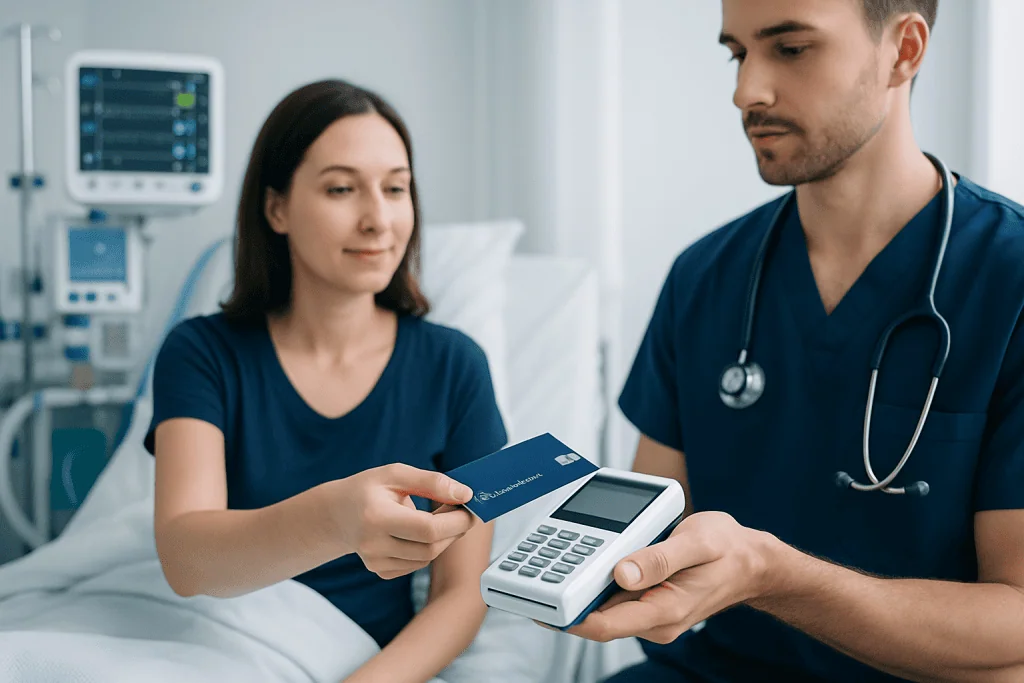
The safest payment methods are the ones that are official, traceable, and easy to verify independently. In practice, that usually means a bank transfer to a hospital or healthcare group’s corporate account, or a secure card payment process provided directly by the hospital. The account name should match the legal healthcare entity you have been dealing with, not an individual person’s name.
Before you pay, ask for the full beneficiary name, bank name, IBAN or account number, SWIFT code if relevant, and a payment reference to include. Once you receive those details, confirm them through an official channel such as the hospital website contact details or international patient office, rather than replying only to the same email thread if anything seems unusual.
If you are speaking with a coordinator, it is reasonable to ask them to resend the details from an official hospital email domain and to explain exactly how your payment will appear in the hospital system. At Acibadem International, international patient services can typically help you verify payment instructions, explain documentation, and confirm that your deposit has been allocated to your file once received.
- Prefer corporate bank transfers or secure hospital card links
- Check that the legal account name matches the hospital group
- Use your patient ID or quote number as the payment reference if instructed
- Keep a PDF or screenshot of every payment screen and confirmation message
What to verify before you send money

Think of verification as a short pre-payment checklist. First, make sure you have a written treatment estimate or deposit request showing the amount, currency, and what the payment is for. Second, confirm the exact recipient details and ask whether bank fees are included or separate, because international transfers can arrive short if intermediary fees are deducted.
You should also ask practical questions about timing. Find out whether the deposit is needed to secure a date, whether there is a deadline, how long it takes to reflect on your account, and what happens if your travel dates change. If there is a refund policy or a transfer policy to a new date, ask for it in writing before you pay.
Finally, verify identity and channel consistency. The person discussing your treatment, the quote, and the payment instructions should all align with official hospital branding and contact details. A legitimate team will not mind if you call the main switchboard or international patient department to confirm account details before sending funds.
Common red flags and scam warning signs
The biggest red flag is being asked to pay into a personal bank account. Hospitals and established medical groups generally use business accounts in the legal entity’s name. Another warning sign is a sudden message saying bank details have changed at the last minute, especially if it arrives through a messaging app or from a slightly different email address.
Be cautious if you are pressured to pay immediately to avoid losing your appointment, or if the person avoids sending a formal quote or invoice. Poor grammar alone does not prove fraud, but urgency, secrecy, and inconsistency together should make you stop. If prices, names, or payment instructions keep shifting, ask for a fresh written document and verify it independently.
Other warning signs include requests for cryptocurrency, money transfer services intended for person-to-person remittances, or splitting payment across multiple unrelated accounts. A trustworthy provider should be comfortable with traceable, standard payment methods and should be able to explain exactly who is receiving the funds and why.
- Personal account beneficiary instead of hospital entity
- Last-minute change of bank details without formal notice
- Pressure to pay within hours
- No written quote, invoice, or patient reference number
- Contact only through social media or messaging apps
- Requests for crypto or hard-to-trace transfer methods
How to protect yourself if you are paying from abroad
Use a payment method that leaves a clear trail. Send funds from your own bank account where possible, keep the transfer receipt, and save all related emails as PDFs. If your bank offers beneficiary verification or fraud screening, use it. It is also wise to tell your bank that you are making an international medical payment, so they can flag anything unusual before release.
Check the currency carefully. Deposits may be quoted in euros, US dollars, or Turkish lira, and the exact amount received can be affected by exchange rates and fees. Ask whether you should send the amount in the invoice currency and whether any shortfall caused by bank charges could delay confirmation. This helps avoid misunderstandings shortly before travel.
Protect your personal documents too. Share passport copies and medical records only through secure, official channels and only as needed for your care planning. If you are working with Acibadem International or another major provider, ask whether there is a secure upload route for documents rather than sending sensitive files through informal chat apps.
What happens after you pay and what to do if plans change
After payment, you should receive confirmation that the funds have been received and linked to your patient file. If the transfer is international, this may take a little time depending on banks and intermediary processing. Ask for written acknowledgment and keep it with your travel documents, quote, and appointment schedule so you can refer to it easily on arrival in Turkey.
If your treatment plan changes after further review, ask how your deposit will be handled. In some situations, a deposit may be applied to a revised schedule or adjusted against the final bill. In others, cancellation or postponement terms may apply. What matters most is that you understand the process in advance and have the relevant policy in writing.
If you ever suspect fraud after sending funds, contact your bank immediately to ask about recall or fraud procedures, then inform the hospital through its official channels. Acting quickly gives you the best chance of tracing the payment. Even if it turns out to be a misunderstanding, prompt verification is the safest next step.
Step by step
- Request a formal written quote. Ask for a written estimate or deposit request that clearly shows the treatment plan, amount, currency, and what the deposit is intended to secure. You should also ask for your patient reference or file number so any payment can be matched to you accurately.
- Verify the payment details independently. Before sending money, confirm the beneficiary name, bank details, and contact person through the hospital's official website, switchboard, or international patient department. Do not rely only on a forwarded message or a chat screenshot if anything looks inconsistent.
- Check refund and rescheduling terms. Ask what happens if your travel is delayed, your medical review changes the plan, or you need to postpone. Getting these terms in writing before payment helps you avoid confusion later.
- Use a traceable payment method. Choose a corporate bank transfer or secure hospital card payment route rather than cash-like or person-to-person methods. Traceable payment routes make it easier to confirm receipt and easier to investigate if there is a problem.
- Include the correct reference information. When you send the payment, include the patient ID, quote number, or invoice reference exactly as instructed. This helps the finance team match your deposit to your treatment file without delay.
- Save every record. Keep copies of the quote, invoice, bank details you were given, transfer receipt, and confirmation emails in one folder. Having everything together is useful both for travel planning and for resolving any payment query quickly.
- Wait for written confirmation. Do not assume the process is complete the moment your bank sends the money. Wait for written confirmation from the hospital or international patient team that the deposit has been received and recorded against your file.
Your checklist
- Written quote or invoice received
- Hospital legal entity name matches the bank account name
- IBAN/account number and SWIFT code confirmed through an official channel
- Patient ID or payment reference ready to include
- Refund or rescheduling policy requested in writing
- Currency and possible bank fees clarified
- Transfer receipt saved after payment
- Official confirmation of receipt requested
- Passport and medical documents shared only through secure channels
Key takeaways
- A treatment deposit can be legitimate, but it should always be supported by a written quote and clear payment instructions.
- The safest route is a traceable payment to a verified hospital or healthcare group account, not an individual's account.
- Red flags include urgent pressure, changing bank details, messaging-app only communication, and requests for crypto or cash-like transfers.
- Ask about refund, postponement, and currency handling before you pay so there are no surprises later.
- Keep every payment and communication record, and seek written confirmation that your deposit has been linked to your patient file.
Frequently asked questions
Is it normal to pay a treatment deposit before travelling to Turkey?
Yes, it can be normal, especially when appointments, hospital resources, or specialist schedules need to be reserved in advance. What matters is that the request comes with a formal written quote, clear payment instructions, and a verifiable hospital contact.
What is the safest way to pay a treatment deposit in Turkey?
The safest methods are usually a bank transfer to the hospital's corporate account or a secure card payment process provided directly by the hospital. In both cases, you should verify the account name and payment details independently through official hospital channels.
Should I ever pay a doctor or coordinator into a personal bank account?
As a general rule, you should be very cautious about personal bank accounts for hospital treatment deposits. Established providers usually use business accounts in the legal entity's name, and a legitimate team should be able to explain exactly why and where your payment is being sent.
How can I check that the payment request is genuine?
Check the hospital's official website, call the main number, or contact the international patient department to confirm the beneficiary details and your file information. If you are corresponding with Acibadem International, for example, you can ask the international patient services team to verify the payment route and confirm how your deposit will be recorded.
What documents should I keep after making the payment?
Keep the quote or invoice, the bank details you were sent, the transfer receipt, and all email confirmations. It is also helpful to save any patient ID, appointment schedule, and written confirmation that the deposit has been linked to your file.
What if the hospital changes its bank details after I receive the quote?
Do not send money until you verify the new details independently through an official contact route. Last-minute account changes can be legitimate in some cases, but they are also a common fraud warning sign, so a careful check is essential.
Can I get my deposit back if my plans change?
That depends on the provider's cancellation, refund, or rescheduling policy, which is why you should request those terms in writing before paying. If your treatment plan changes after specialist review, ask whether the deposit can be transferred to a new date or applied to a revised plan.
Add us as a Preferred Source to see more of our trusted health content across Google Search, AI Overviews and Discover.

References (1)
- CDC Travelers' Health: Medical Tourism — wwwnc.cdc.gov
More Patient Guides

Travel Insurance for Treatment in Turkey: What Is Covered and What Is Not
Travel insurance for treatment in Turkey may cover medical emergencies and trip disruption, but planned treatment is often excluded. Check policy wording…
9 min read
Questions to Ask Before Accepting a Treatment Quote in Turkey
Treatment quote in Turkey: ask what is included, excluded, payable, and changeable before you travel to Istanbul or elsewhere in Turkey.
9 min read
How to Compare Surgery Packages in Turkey Without Missing Hidden Extras
Surgery packages in Turkey can vary widely. Compare what is included, hidden extras, aftercare, and travel support before you book in Turkey…
9 min read
How to Compare Medical Quotes from Hospitals in Turkey Without Missing Hidden Differences
Compare medical quotes from hospitals in Turkey by checking what is included, excluded, and medically appropriate before you choose.
9 min read