

Requesting Priority Seating and Queue Support in Turkish Hospitals
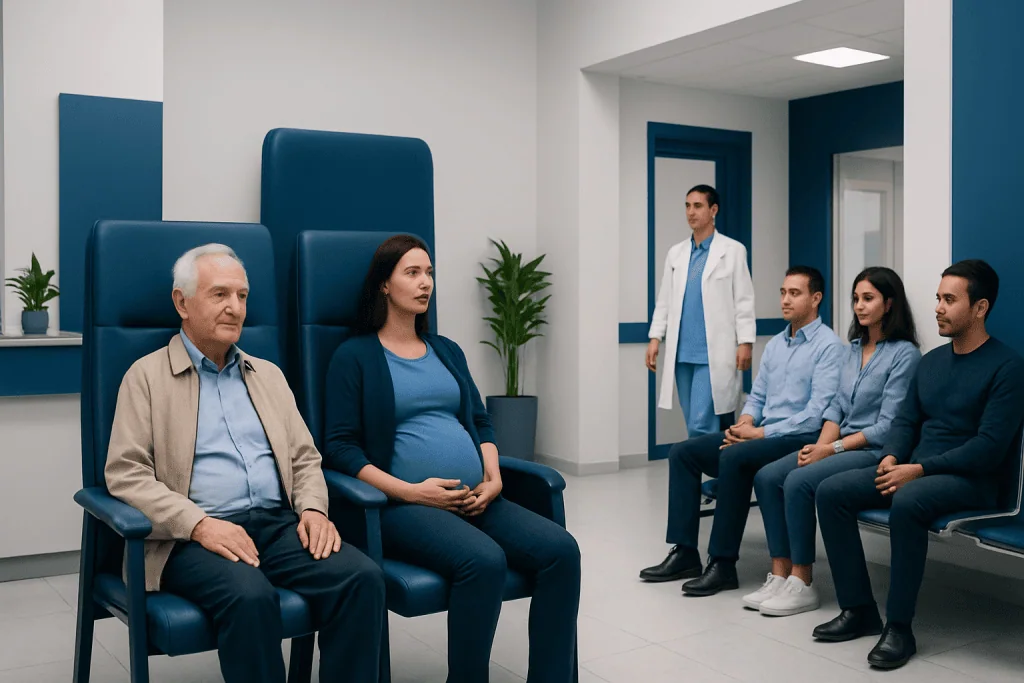
You can ask, and you should ask early. Mention standing, walking or waiting limits when your appointment is confirmed, then repeat the request at reception on arrival. A short medical summary or disability document helps but is not always required. Support usually means seated waiting, wheelchair assistance and help between departments: it does not change clinical order or emergency triage.
A hospital visit in Turkey can involve more standing and walking than you expect: registration, consultation, imaging, laboratory, pharmacy, billing, sometimes all in one day, sometimes in different wings of a large building. If standing in a queue or crossing a busy corridor is hard for you, you can ask for help. This guide explains requesting priority seating and queue support in Turkish hospitals: what the support usually looks like, who can reasonably ask, what to say, what to carry, and what will not change no matter how you ask.
One honest note before anything else. Priority support makes waiting safer and less exhausting. It does not move you ahead of clinical order, and it never overrides emergency triage. Knowing that boundary in advance saves you frustration on the day.
At a glance
- Best time to ask: When the appointment is confirmed, and again at reception on arrival
- Who may need it: Anyone with mobility limits, pain, fatigue, disability, pregnancy, older age, sensory needs, or a temporary injury, visible or not
- Helpful documents: A short medical summary, disability card if you hold one, medication list, mobility aid notes, appointment confirmation
- Where to ask: International patient desk, main reception, patient relations, the nursing desk, or security staff at the entrance
- What it does not change: Clinical order, safety rules, and emergency triage all stay exactly as they are
What priority seating and queue support actually covers
The phrase covers a family of practical adjustments rather than one fixed service. Depending on the hospital, the department, and what you ask for, it can include:
- A seat near the registration or consultation desk, so you wait sitting down instead of standing in line
- Being called by name or number while seated, instead of holding a physical place in a queue
- A wheelchair brought to the entrance, or staff assistance from the drop-off point
- A staff member or coordinator guiding you between departments so you do not navigate a large building alone
- Grouping tests and desks more efficiently to cut down walking and repeat waiting
- A quieter place to wait if noise, crowds or bright waiting areas are difficult for you, something worth raising alongside any quiet space or cultural needs you have
In Turkish hospitals, these arrangements usually run through reception, patient relations, or, for international patients, the international patient office. None of them require a formal application in most cases. What they require is that someone knows you need them, ideally before you are standing in the queue you were trying to avoid.
Requesting priority seating and queue support in Turkish hospitals is therefore less about paperwork and more about timing and clarity: say what you cannot do, say it early, and say it again in each new department.
Who can reasonably ask
You do not need a visible disability, and you do not need to justify yourself with a diagnosis. People ask for queue support because of pain, breathlessness, dizziness, recent surgery, treatment-related fatigue, neurological conditions, pregnancy, older age, anxiety, autism spectrum needs, visual or hearing impairment, or something as ordinary as a sprained ankle and a long flight the day before.
The useful test is practical: does standing, walking, fasting before a test, or waiting in a crowded room make your condition worse or your visit unsafe? If yes, it is reasonable to mention it when the appointment is booked. You can also ask whether tests can be scheduled back to back, whether a wheelchair can meet you at the entrance, and whether a companion can handle registration steps while you stay seated.
Children, older adults, and patients arriving straight from international travel often need more seating and more time than they expect. The common mistake is waiting until exhaustion sets in before saying anything. By that point the queue support you needed at 9 a.m. is being improvised at noon. Raise it early instead.
How waiting works in Turkish hospitals
It helps to understand the system you are stepping into, because Turkey runs two parallel hospital worlds and they queue differently.
Public hospitals book most appointments through a nationwide central appointment system, and inside the building you will often meet numbered ticket queues at registration, blood-draw and pharmacy desks. Priority for certain groups is a familiar concept in Turkish public life: desks commonly display signs listing groups who may be served first, typically people with disabilities, pregnant women, and older adults. Staff are used to these requests, though the exact handling varies by hospital and by how busy the desk is.
Private hospital groups, including Acibadem, generally work on a reception-led, appointment-based flow rather than take-a-ticket queues. That usually means less standing in line, but it does not remove the challenge of moving between departments across a large building, or of waiting when clinics run behind schedule. In private hospitals your practical lever is the reception or international patient desk: tell them what you cannot do, and they can adjust seating, sequencing, and escorting around it.
In both systems the same truth applies: the person at the desk cannot accommodate a limitation they do not know about. Requesting priority seating and queue support in Turkish hospitals works best as a conversation you start, not a service you assume.
How to raise the request before your appointment
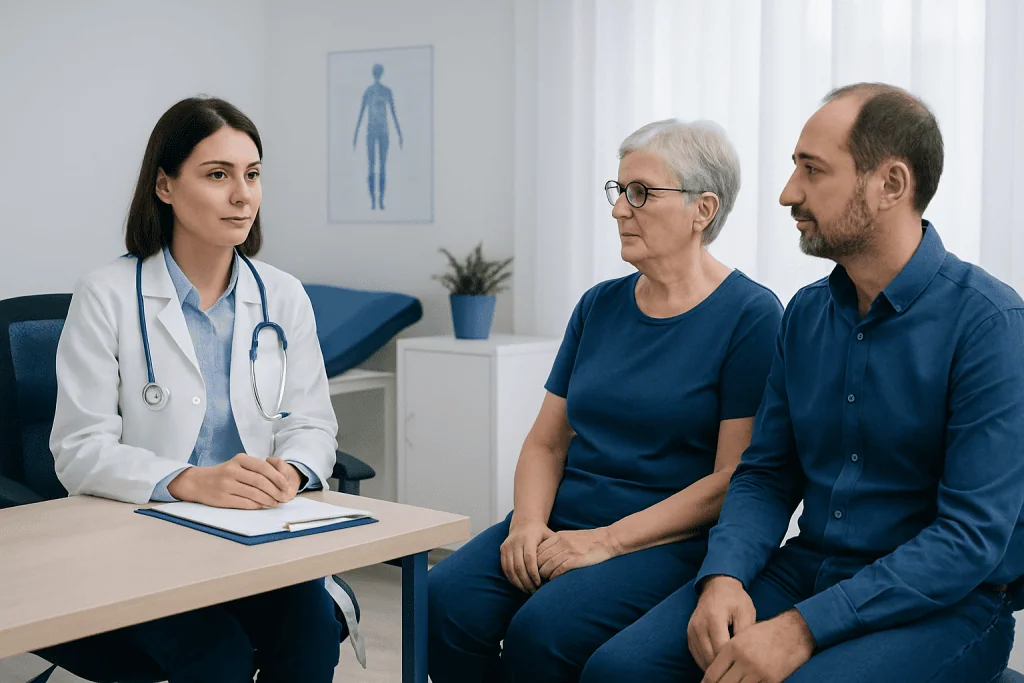
The simplest route is to state your needs at the point the appointment is confirmed, whoever is handling the booking is the right first audience. Describe your limits in practical terms rather than medical ones: how far you can walk, whether stairs are a problem, whether you can stand in a line, whether you need a wheelchair, and whether you need a companion or interpreter beside you.
A short written note works well and survives handovers between staff. Something like: “I have difficulty standing for more than five minutes. I need seated waiting and help with queues. Please advise which entrance and desk I should go to on arrival.” Include the appointment date, the department, your language needs, and any risk that affects waiting, for example fainting when standing, severe pain, oxygen equipment, or immune suppression that makes crowded rooms a concern.
Two details make a pre-visit request much more effective:
- Focus on the barrier, not the diagnosis. “I cannot stand longer than a few minutes” is instantly actionable. A diagnosis alone forces staff to guess what you need.
- Ask where to arrive and whom to approach. Large hospitals have multiple entrances. Knowing the exact desk name and, ideally, a contact number for the day removes the hardest part of the visit: the first hundred metres.
If language is part of the difficulty, raise it in the same message. Explaining an accessibility need through a language barrier is doubly tiring, and it is exactly the situation interpreter support in Turkish hospitals exists for.
Documents and items that make the request easier
You do not always need formal proof to be offered a seat. But when your need is invisible, a document does the explaining so you do not have to repeat your medical history in a public corridor. Useful items include:
- A short medical summary or a recent discharge note explaining why standing or prolonged waiting is unsafe for you
- A disability card or equivalent document from your home country, if you hold one: it is not a requirement, but it shortens conversations
- A medication list with timing, so staff understand if your visit must fit around doses
- Your appointment confirmation with date, time, department, and clinic name
- Passport or ID and insurance or payment documents: Turkish hospitals verify identity at several points, and knowing how patient identification checks work saves surprises
Keep everything in one small folder or on your phone, and make sure your companion can reach it if you tire. Bring your own mobility and sensory equipment, cane, walker, wheelchair accessories, hearing aids, glasses, chargers, and carry any regular medication with you rather than leaving it at the hotel or in checked luggage. If your medical documents are in neither English nor Turkish, ask in advance whether a translation is needed for clinical review; administrative desks are usually more flexible than clinical ones on this point.
What to expect on the day
Go to the desk named in your appointment instructions, international patient desk, main reception, or the department counter, and say plainly that you requested priority seating or queue support. If you arrive by car or taxi, ask at the entrance whether a wheelchair or a member of staff can come to the door before you walk in. Security staff at Turkish hospital entrances are a legitimate first point of contact; asking them for a wheelchair or directions is entirely normal.
Expect to repeat the request more than once. Registration, imaging, laboratory, pharmacy and billing may sit in different areas with different staff, and a note made at one desk does not always travel to the next. Repetition is not a sign that you were ignored; it is how a large building works. One rehearsed sentence, “I cannot stand for long, may I wait seated and be called?”, carries you through every desk.
| Support you might need | Where it is usually arranged |
|---|---|
| Wheelchair at the entrance | Entrance security or reception, ideally requested before arrival |
| Seated waiting instead of standing in line | The desk of whichever department you are in, each time |
| Guidance between departments | Patient relations or the international patient office |
| Interpreter beside you | International patient office, requested in advance where possible |
| Companion handling paperwork | Ask desk staff; rules differ by department |
| Quieter waiting area | Patient relations or nursing desk, subject to space |
If a clinic runs late, ask whether you can wait seated nearby and be called when it is your turn, and whether your companion may listen for your name while you rest.
Language, companions, and cultural expectations
Turkish hospital culture is broadly generous towards older adults, pregnant patients and people with visible mobility needs; offering a seat is instinctive for many staff and bystanders. Invisible needs require words, which is where preparation matters. A polite, direct request is entirely appropriate. You do not need to apologise for needing support, and you do not need to narrate your medical history at a public counter: the barrier, not the biography, is what staff need.
A companion changes the arithmetic of a long visit: they can complete forms, hold a place, listen for announcements, carry documents, and let you conserve energy for the parts only you can do. Hospital rules may limit how many people enter clinical areas such as imaging suites, so ask in advance where your companion can and cannot go. When staff understand the companion is part of your accessibility support, for mobility, communication, or personal care, they can usually say where accompaniment works and offer an alternative where it does not. If someone is travelling with you for the whole treatment journey, it is worth reading how families and companions are supported during treatment travel, because their logistics affect yours.
If you do not speak Turkish, say so as part of the accessibility request itself. Consent conversations, symptom descriptions, medication timing and next-step instructions all depend on clear communication, and an interpreter or international patient representative is the right tool for that, not a translation app held up at a busy counter.
Priority support is not emergency triage
Priority seating and queue support belong to planned, non-emergency visits. Emergency departments run on triage: patients are assessed and ordered by clinical urgency, not by arrival time and not by any accessibility arrangement. Someone who walks in after you may be seen before you because their condition demands it. When you are tired and anxious this can feel like the queue failing; it is actually the queue doing its job.
Accessibility needs still matter inside an emergency department: they simply sit alongside triage rather than above it. It is worth telling the triage desk if you cannot stand, cannot hear names being called, cannot communicate without an interpreter, or cannot sit upright for long. Those details help the team support you safely while clinical priority is assessed. What they will not do, and should not do, is change the order in which patients are treated.
Step by step
- Describe your need before you travel. State plainly if you cannot stand in queues, walk long distances, climb stairs, hear announcements, or tolerate crowded waiting rooms. Practical detail beats diagnosis every time.
- Ask where to arrive and whom to approach. Get the entrance, the desk name, and if possible a contact number for the day. For international patients, confirm whether the international patient desk or the department reception comes first.
- Prepare a small document folder. Passport, appointment confirmation, medical summary, medication list, and any disability documentation, reachable without unpacking a bag at the counter.
- Request seating the moment you arrive. Do not wait until you are drained. Tell reception, security or patient relations that you need seated waiting and queue assistance, and show your appointment details.
- Use your companion deliberately. Forms, queue places, listening for your name, collecting instructions, ask staff what is permitted in each department, because rules differ.
- Repeat the request in every new area. Imaging, laboratory, pharmacy, billing: one short sentence at each desk prevents the arrangement dissolving between departments.
Your checklist
- Appointment confirmation with date, time, department, and doctor or clinic name
- Passport or official ID and any insurance or payment documents
- Short medical summary or relevant reports explaining mobility, fatigue, pain, or disability needs
- Medication list, regular medicines, and any timing instructions
- Mobility aids and accessories: cane, walker, wheelchair parts, braces, hearing aids, glasses, chargers
- Hospital or coordinator contact number saved on your phone
- Comfort items: water if permitted, snacks if you are not fasting, a mask, tissues, a warm layer
- One written sentence in English or Turkish describing your support need
- A plan for who handles paperwork and listens for your name if you need to rest
Key takeaways
- Ask for priority seating and queue support when the appointment is confirmed, then repeat the request at every new desk on the day.
- You do not need a visible disability or formal proof; a plainly stated practical barrier is enough to start with, and documents make it faster.
- Public hospitals lean on ticketed queues and posted priority groups; private hospitals lean on reception-led flow, either way, the desk needs to hear from you.
- Interpreters and companions turn a draining multi-desk visit into a manageable one; arrange both before the day, not during it.
- Priority support smooths waiting; it never changes clinical order or emergency triage, and it is not meant to.
Frequently asked questions
Can foreigners go to hospital in Turkey?
Yes. Foreign nationals can be treated in Turkish hospitals, both public and private, and many private hospitals run dedicated international patient departments that handle registration, interpreting and coordination for visitors. You will need identification, usually a passport, and either insurance arrangements or self-payment, so bring the relevant documents to your first visit.
Can I request priority seating if my disability is not visible?
Yes. Pain, fatigue, dizziness, heart or lung conditions, neurological symptoms and anxiety-related needs are all legitimate reasons, and none of them show. Explain what happens when you stand or wait too long, that practical description is what staff act on, and ask for a seated waiting option.
Do I need an official disability card in Turkey to receive queue support?
No. A card or equivalent document from your home country can shorten conversations, but a medical summary, a recent hospital letter, or simply a clear explanation of the barrier also works. Handling varies between hospitals and departments, so it is sensible to ask what documentation, if any, is useful for your specific visit.
Will priority support mean I see the doctor before everyone else?
Not usually. The support targets the waiting process, sitting instead of standing, less walking, help between desks, rather than the clinical order. Appointment times, clinic scheduling and, in emergencies, medical triage still decide who is seen when.
How much does it cost to be hospitalized in Turkey?
There is no single answer, because costs depend on the hospital type, the department, the procedures and tests involved, the length of any stay, the room category, and whether insurance applies. Hospitals typically prepare an individual quote once your medical information has been reviewed, and it is reasonable to ask what a quote includes and excludes before treatment begins. Accessibility support such as seating and queue assistance is a service arrangement, not a billed treatment item, in most settings.
Which hospital in Turkey is the best for my situation?
No honest answer names one hospital for everyone. The right choice depends on your condition, the specialists and equipment a hospital has for it, language support, location, and how well the hospital communicates before you commit. A structured comparison beats reputation alone: our guide on how to compare hospitals in Turkey for complex treatment walks through the criteria worth checking.
Can my companion stand in line for me?
Often yes, for paperwork, registration and listening for your name while you remain seated, but each department sets its own rules, and some clinical areas restrict entry. Explain that your companion is helping because of a mobility, communication or health need, and staff can say what is permitted or offer an alternative where it is not.
Add us as a Preferred Source to see more of our trusted health content across Google Search, AI Overviews and Discover.

Update history
- PublishedJune 8, 2026
- Medical review approvedAugust 30, 2026
- Last content updateAugust 30, 2026
References2
- CDC Yellow Book: Travelers with Disabilities wwwnc.cdc.gov
- MedlinePlus: Mobility Aids medlineplus.gov
More Patient Guides

Airport Wheelchair Assistance: How to Book It for a Medical Trip
Airport wheelchair assistance is free, it exists at every commercial airport, and airlines are legally required to provide it, yet half…

Travelling With a Stoma: Flights, Supplies and Airport Screening
Traveling to Turkey with a stoma is manageable with the right supplies, airport screening plan, and recovery support in Istanbul or Turkey.
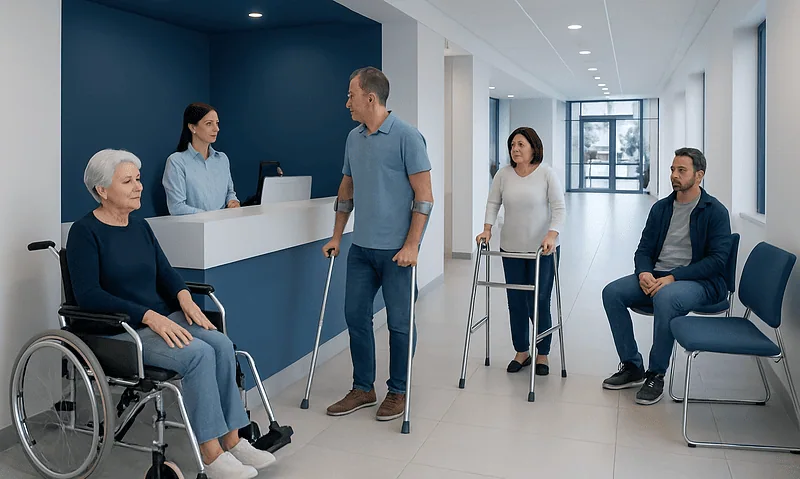
Mobility Aids in Turkey: Renting a Wheelchair, Walker, or Crutches
Mobility aids in Turkey can be rented through medical suppliers, pharmacies, and hospital-linked services in Istanbul and other cities.
Traveling to Turkey with Food Allergies or Special Diet Needs
Traveling to Turkey with food allergies or special diet needs is manageable with planning, translated allergy cards, and hotel and hospital support…