

Sleeping Comfortably After Surgery in Turkey

How you should sleep after surgery depends on the operation. Facial and breast procedures usually mean lying on your back with the head raised; abdominal surgery is often easier with the knees supported; orthopaedic surgery needs pillow placement that protects the joint. Lighter, more broken sleep in the first week is normal for most patients, and your surgeon's specific instructions override any general advice.
You will spend far more nights of your trip recovering than you will spend in hospital. Most of those nights happen in a hotel room, in an unfamiliar bed, in a position your surgeon has asked you to hold. How that goes is one of the most common worries international patients raise, and one of the least discussed before travel.
This guide explains sleeping comfortably after surgery in Turkey in practical terms: which positions suit which operations, how to set up your bed and room before the procedure, what disturbed sleep in the first weeks usually means, and how sleep planning fits into your travel dates.
None of it replaces your surgeon’s instructions. Where general advice and your discharge paperwork disagree, the paperwork wins: it was written for your operation, not for an average one.
At a glance
- Topic: Post-operative sleep positioning, comfort and rest planning
- Purpose: To reduce strain on the surgical area, manage swelling and support healing while you sleep
- Applies to: All surgery types; the safe position differs by procedure
- Where it happens: Begins in hospital under nursing supervision, continues in your hotel and at home
- Typical adjustment period: Lighter, more broken sleep is common in the first one to two weeks, then usually settles gradually
- Position restrictions: Vary by operation; some last days, some last weeks: your surgeon confirms when they end
- Sleep medicines: Decisions about sleeping tablets or sedatives belong to your treating doctor, not this guide
- Relevant departments: Your surgical team, anaesthesiology, nursing, and rehabilitation or pain specialists when needed
- International patient support: Interpreter assistance, transfers, accommodation guidance, scheduling and remote follow-up coordination
What is this treatment?
Sleeping comfortably after surgery is not a procedure in itself, but it is a genuine part of your treatment. Sleep is when your body does much of its repair work: inflammation settles, energy is restored, and pain is usually easier to tolerate after a rested night than after a broken one. For international patients, sleeping comfortably after surgery in Turkey has an extra dimension: you are recovering in a hotel bed rather than your own, often in a position you would not normally choose.
The right position depends entirely on the operation. After facial surgery you will usually be asked to keep your head raised. After abdominal or chest surgery, lying completely flat may pull on the incision, so a supported, slightly flexed position tends to feel easier. After orthopaedic surgery, pillows or supports protect the operated limb or joint while you are not awake to protect it yourself.
At Acibadem, sleep guidance comes from the people who treated you: your surgeon, the anaesthesiology team, your nurses and, when needed, rehabilitation specialists, so the advice matches the operation rather than a generic recovery template.
When is it recommended?
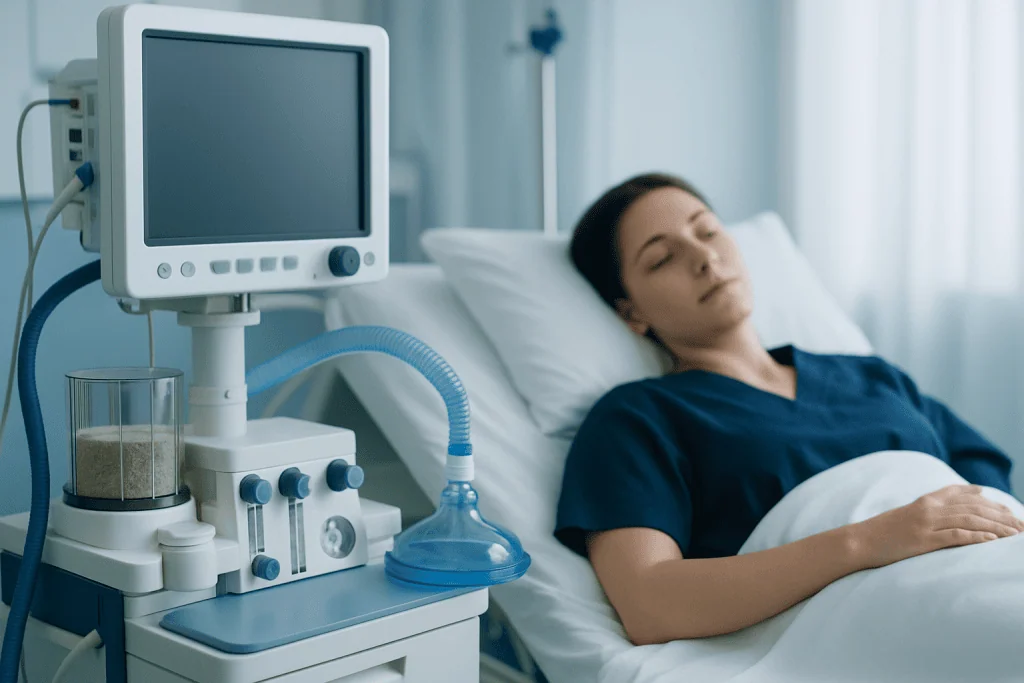
Every surgical patient benefits from a sleep plan, but it matters most when the procedure brings swelling, tenderness, drains, dressings, splints, compression garments or movement limits, anything that makes rolling over in your sleep a problem rather than a habit. It matters doubly for international patients, because the early nights after discharge happen in accommodation rather than at home, without your usual bed, pillows or routine.
Detailed positioning guidance is standard after plastic and aesthetic surgery, bariatric surgery, orthopaedic and spine procedures, gynaecological and urological surgery, and cardiac or thoracic operations. Each of these has its own safe positions and its own reasons for them.
A more tailored plan is also sensible if you have sleep apnoea, reflux, chronic pain, a breathing condition, anxiety, or a history of sleeping badly away from home. Mentioning these before travel lets the team build them into your aftercare rather than discovering them on night one.
Who is a good candidate?

In practice, everyone having surgery is a candidate for sleep planning. What varies is how much structure the plan needs. A patient who can follow positioning advice, take medicines exactly as prescribed and accept help getting in and out of bed for the first nights usually needs little more than clear instructions and a few pillows.
A more cautious plan makes sense if you are older, travelling alone, use a CPAP device, take blood thinners, have limited mobility, or are having a major or combined procedure. In these situations your doctor may recommend a longer hospital stay, a travelling companion, mobility aids or a specific accommodation setup, for instance, a bed you can rise from without deep bending.
Suitability for surgery, and for travel afterwards, is always a physician’s assessment. The point of sleep planning is not to replace that assessment but to make sure the practical side of your recovery matches it.
Treatment options: positions by procedure
Comfortable sleep after surgery is built from several small decisions rather than one solution: the position itself, elevation, pillow placement, the timing of prescribed pain relief, and a bed you can get out of without strain. The details below describe common approaches: your surgeon’s version for your operation takes precedence.
Facial surgery: rhinoplasty, facelift, eyelid surgery
Surgeons usually ask you to sleep on your back with the head and shoulders raised, typically on two or three pillows or a wedge, for the early recovery period. Elevation helps swelling drain downwards rather than pooling in the face overnight. After a facelift, side sleeping is generally discouraged early on because cheek pressure and shearing can disturb healing tissue; after rhinoplasty, back sleeping also protects the nose from accidental knocks. Some patients place a pillow either side of the head to discourage turning during sleep.
Breast surgery
Back sleeping with the upper body slightly raised is the usual advice, keeping pressure off the chest. A pillow under each arm can stop you rolling. Stomach sleeping is normally off the table until your surgeon confirms healing has progressed enough.
Tummy tuck and abdominal surgery
A flat position pulls on an abdominal incision, so most patients are more comfortable in a gently flexed “beach chair” position, upper body raised, pillows under the knees, which takes tension off the repair. Getting out of bed matters as much as lying in it: rolling to your side and pushing up with your arms, a technique nurses teach in hospital, avoids using the abdominal muscles directly.
Bariatric surgery
Similar principles apply: upper-body elevation often eases both incision discomfort and reflux, which is common early after bariatric procedures. If you use a CPAP machine, bring it: the team will advise on its use around your operation.
Orthopaedic, spine, cardiac and thoracic surgery
Here positioning is about alignment and protection. After hip, knee or shoulder surgery you may be given precise pillow placements or a brace to hold the joint safely overnight. After spine surgery, log-rolling, turning shoulders and hips as one unit, replaces twisting. After cardiovascular or thoracic surgery, your team will explain how to protect the chest when moving, coughing and settling for the night.
Everything around the position
Short approved walks during the day, sensible hydration, lighter evening meals, and a cool, dark, quiet room all make the position easier to hold. Pain that is well managed also makes sleep possible in the first place; the timing of prescribed relief around bedtime is worth discussing with your team, and our guide to pain control after surgery in Turkey explains how that plan is usually built.
Online evaluation before travel
Before you travel, an online evaluation gives the medical team a picture of your goals, health background and recovery needs. For sleep planning specifically, the useful details are the unglamorous ones: snoring or diagnosed sleep apnoea, reflux, back pain, anxiety, previous reactions to anaesthesia or pain medicines, and whether you sleep badly away from home.
You may be asked for medical reports, a full medication list, allergy information, photographs, imaging and details of previous operations. If you use a CPAP machine, a mobility aid or a particular supportive pillow at home, say so: the team can advise what to bring rather than what to improvise.
An online review does not replace an in-person consultation. What it does is shape practical choices early: how long to stay in Turkey, whether a companion is advisable, and what kind of accommodation will suit the first nights after discharge.
Before the treatment
Ask your surgical team three versions of the same question before the operation: how should I sleep the first night, the first week, and once I am home? The answers differ, and knowing all three in advance saves guesswork later, especially if you will have dressings, drains, a cast, a sling, a brace or a compression garment.
Set up your recovery environment before surgery, not after. In your hotel room, place water, prescribed medicines, tissues, your phone charger, medical documents and contact numbers within arm’s reach of the bed. If the bed is low or soft, mention it to your coordinator before the operation rather than discovering the problem on your first assisted night.
Follow fasting and pre-operative instructions exactly as given. Any decision about supplements, sleeping tablets or over-the-counter pain relief before surgery belongs to your treating doctor, because these can affect anaesthesia, bleeding risk and drug interactions.
What happens during the treatment
During surgery, your comfort and safety are managed by the operating team and anaesthesiology specialists. Afterwards, in the recovery area and on the ward, nurses monitor your breathing, circulation, pain, nausea and dressings, and, relevantly for this guide, help you find your first safe resting position.
Depending on the operation, you will be shown how to sit up, turn, cough, breathe deeply and stand with assistance, all without pulling on the surgical area. These small techniques are the foundation of every comfortable night that follows, which is why nurses teach them while you still have supervision.
If a position feels wrong, pressure, pulling, restlessness, say so while you are in hospital. Pillow adjustments, bed elevation, medication timing and room changes are all easier to solve with a nurse present than alone in a hotel three nights later.
Hospital stay and discharge
How long you stay in hospital depends on the operation, the anaesthesia, your general health and how smoothly the early hours go. Some procedures involve a single supervised night; others need more, and some situations lead to extra nights in hospital before discharge is sensible.
Before you leave, you should hold written instructions covering sleep position, wound and dressing care, showering, compression garments if relevant, activity limits, medication use and your first control appointment. If anything is unclear, ask for it to be repeated with interpreter support: an instruction you half understood is an instruction you cannot follow at 3 a.m.
For international patients, discharge planning also covers transfer to your hotel, companion arrangements and contact details for your care team. Travel clearance is a separate decision, made by your surgeon based on your procedure and progress.
Recovery timeline
Sleep is usually disrupted for a while after surgery, and it is also common to sleep more overall, healing consumes energy, and daytime napping in the first couple of weeks is normal for many patients. Anaesthesia after-effects, swelling, position limits and an unfamiliar room all play a part, and all of them fade.
| Timeframe | What to expect |
|---|---|
| First 24 hours | Drowsiness, soreness and restlessness are common. Nurses position you, monitor you and adjust as needed. |
| First week | Sleep is often lighter and more broken. Elevation, pillow support, prescribed medication timing and short daytime walks all help. Needing more total sleep than usual is normal. |
| Weeks 2–4 | Most patients sleep in longer stretches and move more freely, though some procedures still carry position restrictions or garment requirements. Daytime tiredness usually eases through this period. |
| Months 1–3 | Swelling and sensitivity continue to settle. Depending on healing, your doctor may lift position restrictions and allow side or stomach sleeping. |
| Longer term | Comfort and the surgical result itself keep settling for months after some procedures. Restrictions end when your surgeon says they end, not on a calendar date. |
Timelines are averages, not commitments. If you are unsure whether you can change position, drop a pillow or sleep on your side yet, that is a question for your surgical team at follow-up, not one to test at night.
What to avoid after treatment
Avoid sleeping directly on the operated area until your surgeon confirms it is safe. Pressure can increase discomfort and interfere with dressings, swelling control or healing after certain procedures. Avoid sudden twisting, deep bending and pushing yourself up forcefully from the bed, use the getting-up technique your nurses taught you.
Avoid alcohol during early recovery, and treat any sleeping tablet, sedative, herbal sleep product or additional pain medicine as a question for your treating doctor rather than a purchase. These products can interact with prescribed medication and affect breathing, alertness and balance.
Avoid the opposite extreme too: long stretches of complete bed rest, unless specifically instructed, work against you. Gentle approved walking supports circulation and, for most patients, improves the following night’s sleep. Heavy late meals and smoking round out the list of things that reliably make recovery nights worse.
Risks and possible complications
Poor sleep itself is common after surgery and rarely means anything is wrong. It does, however, make discomfort feel louder and instructions harder to follow, which is why a calm routine in the first days is worth the effort of planning.
The complications that matter vary by procedure and may include bleeding, infection, wound problems, blood clots, breathing difficulties, medication side effects, nausea or escalating pain. Your surgeon will explain which of these apply to your operation and your health: a list in a general guide cannot do that job.
Sleeping in an unsafe position or moving too abruptly can strain the surgical area, which is the whole argument for personalised positioning advice over generic tips. Your discharge instructions describe what should improve, at roughly what pace, and how to reach your care team.
When disturbed sleep needs a doctor’s attention
Most disturbed sleep after surgery is exactly what it looks like: discomfort, an enforced position and an unfamiliar bed. The general pattern surgical teams care about is direction of travel, symptoms that ease over the days are the expected story, while anything worsening, severe or plainly new sits outside it and belongs with a doctor rather than with patience.
Your discharge paperwork lists the specific signs relevant to your operation, together with your care team’s contact details, and the standing clinical notice at the top of this page applies throughout your recovery. For a fuller picture of how surgical teams distinguish expected recovery from problems, see our guide on when pain, swelling or fever should prompt an urgent call.
Results and expectations
Comfortable sleep returns in stages. The first nights lean on pillows, elevation, medication timing and patience; as swelling drops and mobility returns, most patients find they sleep in longer stretches without thinking about it. Realistically, sleeping comfortably after surgery in Turkey means accepting a short adjustment period rather than expecting normal sleep from night one, particularly after major surgery or procedures involving garments, splints or strict positions.
The surgical result itself depends on the procedure, your anatomy, your healing response and how closely aftercare instructions are followed. Results vary between patients, and some treatments occasionally need additional care or revision. Regular follow-up is how your doctor tracks progress and decides when restrictions, including sleep positions, can be lifted.
International patient travel planning
Build sleep into your travel plan the way you build in flights. Choose accommodation where you can rest quietly, raise your upper body comfortably, reach the bathroom safely and keep essentials beside the bed. If your surgery limits movement, a companion earns their fare in the first few days alone.
Plan to stay long enough for your consultation, pre-operative tests, surgery, early recovery and first control visit. The right length of stay varies by procedure, and flying too soon is unsuitable after some operations: our guide on when it is safe to fly home after surgery in Turkey covers how that decision is made. Long flights also raise their own sleep questions, from seat position to moving regularly, which your surgeon will address at clearance.
Acibadem supports international patients with interpreter coordination, airport transfers, appointment planning and accommodation guidance, and remote follow-up can be arranged after you return home. Remote follow-up is a communication channel, not a substitute for local urgent care.
Cost and package information
This guide does not quote figures, because there is no honest single figure to quote. The overall cost of treatment and aftercare depends on the type of surgery, the surgeon’s evaluation, length of hospital stay, anaesthesia, tests and imaging, medications, medical devices such as compression garments, and whether additional specialist support is needed. Your medical condition and any combined procedures also shape the plan.
International patient packages typically cover hospital services related to the planned procedure, standard nursing care, interpreter support during hospital appointments and scheduled coordination. Depending on the arrangement, transfers or accommodation guidance may also be included.
Items that commonly sit outside a package include personal hotel expenses, companion costs, flights, extra tests, additional consultations, an extended hospital stay, unplanned treatment, special equipment and medications after discharge. Read your written quotation carefully and make sure inclusions and exclusions are explicit before you confirm travel dates.
Why choose Acibadem
Acibadem cares for patients from many countries in its hospitals in Turkey, with surgical care supported by experienced medical teams and coordinated services designed for patients who do not speak Turkish or know the local healthcare system.
For sleep and recovery specifically, the useful thing is that guidance comes from a multidisciplinary team, surgeons, anaesthesiology, nursing, physiotherapy and dietetics as relevant, so aftercare instructions match your procedure rather than a generic template.
International patient services assist with scheduling, interpreter support, transfers, accommodation guidance, discharge coordination and remote follow-up communication, from first contact through your return home.
Medical review and disclaimer
This guide has been reviewed by the Acibadem International medical team. It provides general information for international patients who want to understand how to rest more comfortably and safely after surgery in Turkey.
It does not replace a consultation, diagnosis, treatment plan or discharge instructions from a qualified physician. Your recommended sleeping position, medications, activity level and travel timing must be based on your specific surgery and medical condition, and decisions about any medicine belong to your treating doctor.
Suitability for treatment, discharge and return travel requires physician evaluation. Where anything in this guide differs from your medical team’s personalised instructions, follow your medical team.
Step by step
- Initial contact. You share the treatment you are considering, your travel preferences and any recovery concerns, including sleep.
- Medical record / photo submission. You provide relevant reports, photos, imaging, medication lists, allergies and details of previous surgery or sleep-related conditions.
- Preliminary medical review. The relevant medical team reviews your information and identifies anything further needed before planning.
- Treatment plan and quotation. You receive a proposed pathway and a written quotation setting out planned services and exclusions, without medical guarantees.
- Travel planning. International patient services coordinate dates, transfers, interpreter needs and practical accommodation guidance for recovery.
- Arrival. You are guided to hospital appointments with language, scheduling and navigation support.
- In-person consultation. Your surgeon examines you, confirms suitability, sets expectations and explains post-operative positioning and sleep precautions.
- Pre-operative tests. Blood tests, imaging, anaesthesia assessment and any additional evaluations are completed.
- Treatment. The procedure is performed and your comfort, anaesthesia recovery and vital signs are monitored afterwards.
- Hospital stay. Nurses help you manage pain, move safely, find a suitable sleeping position and learn early recovery techniques.
- First control. Your doctor checks the surgical area, reviews progress and adjusts instructions if needed.
- Discharge / travel clearance. You receive written instructions, medication guidance, contact details and confirmation of when travel is medically appropriate.
- Remote follow-up. After returning home, remote follow-up can review progress, answer non-urgent questions and advise where local care fits in.
Your checklist
- Valid passport and travel documents
- Complete medical history and current diagnoses
- List of all medications, supplements, and blood thinners
- Known allergies, including medication, latex, and food allergies
- Previous surgery and anaesthesia history
- Current symptoms and recovery concerns, including sleep problems
- Relevant blood tests, imaging, pathology reports, or specialist reports
- Photos of the treatment area if requested by the medical team
- Information about sleep apnoea, CPAP use, reflux, chronic pain, or mobility limits
- Emergency contact details and companion information if someone is travelling with you
- Questions about sleeping position, hotel setup, follow-up, and travel clearance
Key takeaways
- The safest sleeping position depends entirely on the operation; your surgeon’s instructions override every general tip, including these.
- Elevation, pillow support, a stable bed setup and well-timed prescribed pain relief do most of the work in the first nights.
- Lighter, broken sleep, and sleeping more overall, is normal in the first weeks and usually settles gradually.
- Set up your hotel room before surgery: essentials within reach, a bed you can rise from, and a companion if the procedure limits movement.
- Plan your stay so your first post-operative check happens before travel home, and let your surgeon confirm flight timing.
Frequently asked questions
Is it normal to sleep a lot two weeks after surgery?
Yes, for most patients. Healing consumes energy, and increased tiredness, longer nights and daytime napping are common in the first weeks, gradually easing as recovery progresses. The pattern surgical teams look at is direction: tiredness that is slowly lifting fits the expected picture, while drowsiness that is deepening rather than easing is something they review at follow-up.
How do I sleep in bed after surgery?
Set the position before you are tired: pillows or a wedge for elevation if instructed, supports placed to stop you rolling, essentials within reach. Get in and out using the technique your nurses taught, typically rolling to your side and pushing up with your arms rather than pulling with the surgical area. The specific position depends on your operation.
How long should someone sleep after surgery?
There is no fixed number of hours. Most patients need more sleep than usual while healing, and that extra need is normal rather than a problem. Quality matters as much as quantity: a supported position, managed pain and short daytime walks, where approved, generally do more for sleep than chasing a target duration.
Is sleep the best thing after surgery?
Rest is genuinely important: it supports healing, energy and pain tolerance. But complete bed rest is rarely the plan. For most operations, recovery combines good sleep with gentle approved movement during the day, which supports circulation and usually improves the following night’s sleep. Your surgeon sets the balance for your procedure.
What is the best sleeping position after each type of surgery?
It varies. Facial and breast procedures usually mean back sleeping with the head raised; tummy tuck and abdominal surgery favour a flexed position with knees supported; orthopaedic and spine surgery come with specific pillow placements or braces to protect alignment. Your surgeon’s instructions for your operation are the only version that counts.
Can I take sleeping pills after surgery?
That decision belongs to your treating doctor. Sleeping tablets, sedatives and herbal sleep products can interact with anaesthesia and prescribed medicines and can affect breathing, alertness and balance during recovery. Position, elevation, room environment and medication timing are the usual first tools for better sleep.
When can I sleep on my side or stomach again?
It depends on the operation and how you are healing. Turning too early can put pressure on incisions, implants, bones or treated tissue. Restrictions are lifted by your surgeon at follow-up based on your progress, not by a standard date, so it is a question worth asking at your control visit.
What can I do in my hotel room to sleep better?
Keep essentials beside the bed, use pillows exactly as instructed, keep the room cool, dark and quiet, and avoid unnecessary bending or reaching. Short approved daytime walks, lighter evening meals and a consistent medication schedule all help. Setting the room up before surgery is easier than improvising afterwards.
Add us as a Preferred Source to see more of our trusted health content across Google Search, AI Overviews and Discover.

Update history
- PublishedJune 22, 2026
- Medical review approvedSeptember 13, 2026
- Last content updateSeptember 12, 2026
References2
- MedlinePlus: After Surgery medlineplus.gov
- NHS: Insomnia nhs.uk
More Patient Guides

HoLEP in Turkey: How It Compares With TURP and What Recovery Involves
HoLEP in Turkey treats enlarged prostate tissue with laser enucleation; learn how it compares with TURP, recovery, travel and follow-up.

Porcelain Veneers in Turkey: Who Is Suitable and How Many Visits Are Needed?
Porcelain veneers in Turkey can enhance tooth shape and colour in two visits for suitable patients after a personalised dental assessment.

How to Prepare for a Sedation Procedure in Turkey
Prepare safely for a sedation procedure in Turkey with guidance on fasting, medicines, travel, recovery and follow-up.

Treatment Delays in Turkey: What Happens If Tests or Recovery Change Your Schedule
Treatment delays in Turkey can happen if tests or recovery change your plan. Learn how to manage appointments, travel, accommodation and follow-up.