

Spine Surgery in Turkey: Treatment Guide
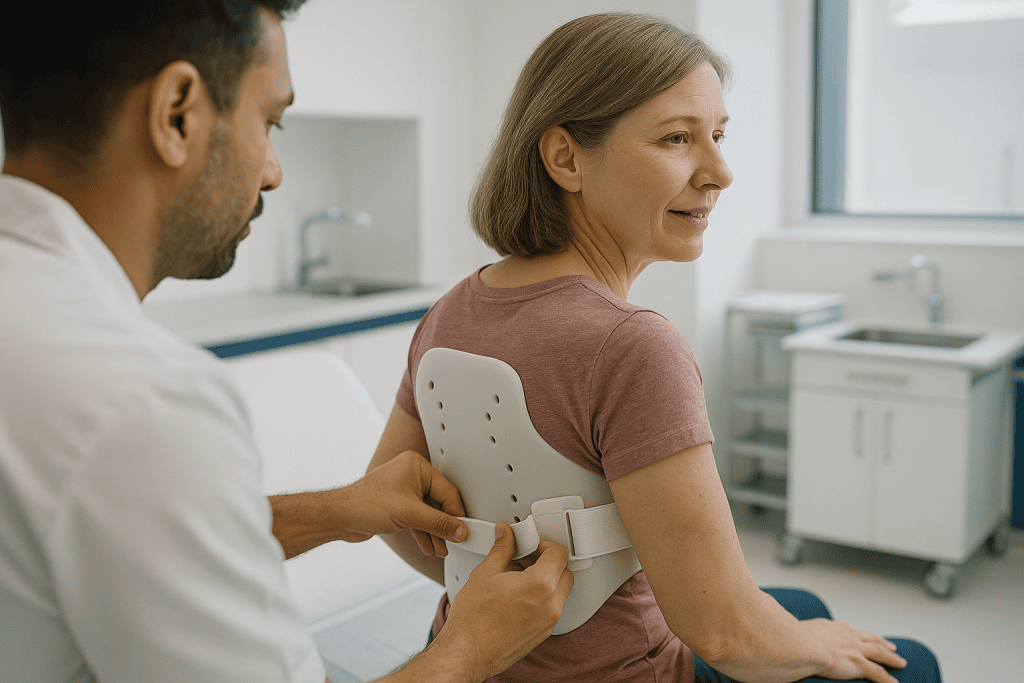
Spine surgery in Turkey covers procedures from microdiscectomy to multi-level fusion, carried out after a confirmed diagnosis that matches your symptoms and imaging. International patients usually begin with a remote review of scans, then travel for in-person examination, pre-operative testing, surgery and a first follow-up visit before flying home. Total time in country depends on the operation and how your recovery progresses.
You may be weighing up back or neck surgery abroad, and wondering how much of it can realistically be settled before you board a plane. Quite a lot can, and some things cannot. This guide separates the two, so you can plan spine surgery in Turkey with clear expectations rather than guesswork.
It explains when surgery is considered, which operations exist, how the evaluation works for international patients, what the hospital stay involves, and how recovery shapes your travel dates. It does not tell you whether you need surgery. That decision belongs to a spine specialist who has examined you.
At a glance
- Procedure type: Surgical treatment for spinal conditions; may be microsurgical, endoscopic, minimally invasive or open, depending on the diagnosis
- Purpose: To relieve nerve compression, stabilise the spine, correct deformity, treat fractures, or manage selected tumours, infections and degenerative conditions
- Anaesthesia: Usually general anaesthesia; some limited procedures may use regional or local techniques when medically appropriate
- Hospital stay: From same-day discharge for small procedures to several nights for fusion, deformity or revision surgery
- Estimated recovery: Early recovery takes days to weeks; deeper healing and rehabilitation often continue for months
- Return to daily life: Light activity resumes gradually with medical approval; work and travel timing depend on the operation
- Final result timeline: Pain and nerve symptoms improve at different speeds; function is usually assessed over weeks to months
- Suitable department: Neurosurgery, Orthopaedics and Traumatology, Spine Surgery, Physical Medicine and Rehabilitation, Pain Medicine when needed
- International patient support: Interpreter assistance, appointment coordination, transfer and accommodation guidance, remote follow-up support
What is this treatment?
Spine surgery is not one operation. It is a family of procedures used to treat problems in the bones, discs, joints, nerves and supporting structures of the neck, mid-back and lower back. The goal is never to operate on an MRI picture alone. A scan finding only matters when it matches your symptoms and your neurological examination: a principle that shapes how any credible spine surgery programme selects its patients.
Common reasons for surgery include herniated discs, spinal stenosis, nerve root compression, instability between vertebrae, fractures, deformities such as scoliosis or kyphosis, and selected tumours and infections. Some patients need surgery to reduce pain and restore function. Others need it to protect nerves or stabilise the spine before symptoms progress.
For international patients considering spine surgery in Turkey, the medical logic is identical to anywhere else. What changes is the logistics: your diagnosis must be reviewed before travel, your surgery confirmed after an in-person examination, and your flight home cleared by the surgeon who operated. This guide walks through each of those stages.
When is it recommended?
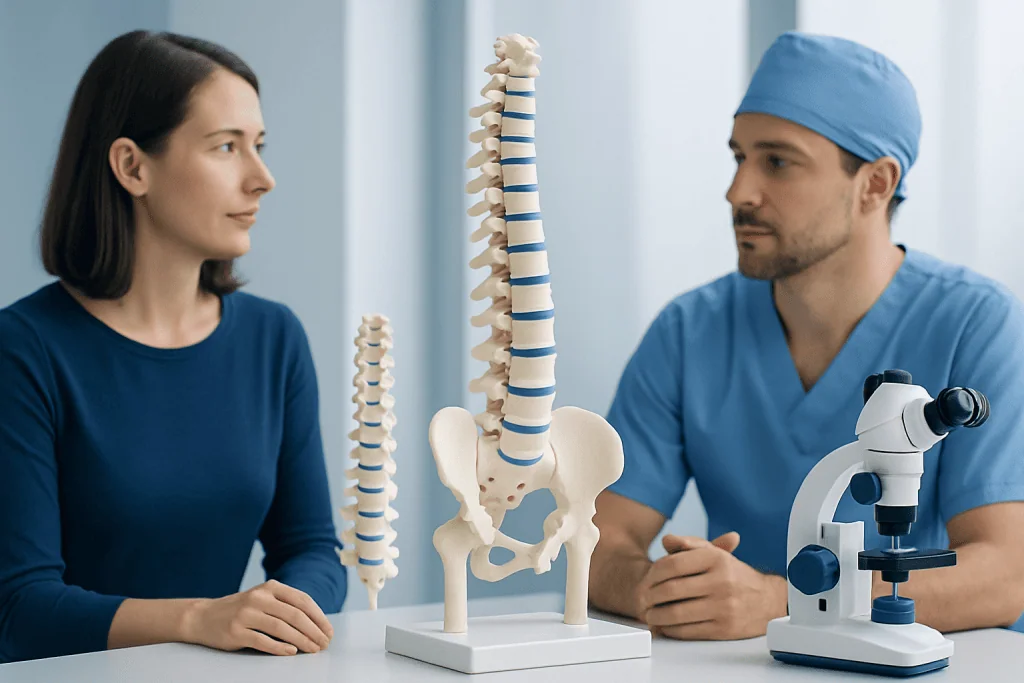
Most spine surgery is elective, in the medical sense: it is planned, not forced. Surgeons typically consider it when non-surgical care, medication, physical therapy, activity modification, injections or structured pain managementhas not brought enough relief, and symptoms interfere meaningfully with walking, sleep or work.
Some situations change the timetable. Surgeons treat progressive weakness, spinal cord compression, unstable fractures, infection with neurological involvement, tumour-related compression and cauda equina syndrome, a condition affecting bladder and bowel control, as urgent rather than elective. These cases are prioritised differently in clinical practice, and they are also the reason a confirmed diagnosis matters before any travel plan is made.
The decision is always individual. A physician weighs your diagnosis, how long symptoms have lasted, the neurological examination, imaging findings, general health, occupation and previous treatment. At Acibadem, complex cases can be reviewed jointly by neurosurgery, orthopaedic spine surgery, radiology, anaesthesiology and rehabilitation physicians before a recommendation is made.
Who is a good candidate?

A good surgical candidate has a specific structural problem, a compressed nerve, an unstable segment, a correctable deformity, that plausibly explains their symptoms and that surgery can reasonably address. Just as important, a good candidate understands what surgery cannot do: it does not stop age-related spinal change, and it does not promise a pain-free life.
General health shapes the plan. Diabetes, heart disease, clotting disorders, osteoporosis, obesity, smoking and previous spinal infections all influence how surgery is planned and how recovery unfolds. These factors rarely rule surgery out on their own, but they may require extra preparation, additional specialist input or a modified technique.
Surgery is sometimes advised against. If symptoms are mild, if the imaging does not match the complaints, or if the likely benefit is smaller than the risk, the honest recommendation is further diagnosis, rehabilitation or watchful follow-up, not an operation. A programme that says no in these cases is behaving correctly.
Treatment options
The right operation depends entirely on the problem. For a herniated disc pressing on a nerve root, surgeons may consider microdiscectomy or endoscopic discectomyremoving the disc fragment causing the compression through a small approach. For spinal stenosis, decompression procedures such as laminectomy, laminotomy or foraminotomy create more space for the nerves.
When the spine is unstable, deformed or painful with movement between vertebrae, spinal fusion with instrumentation may be recommended: screws, rods, cages and bone graft material support healing and alignment. Deformity surgery for scoliosis or kyphosis may involve correction and stabilisation across multiple levels, which is among the larger operations in this field.
Minimally invasive techniques use smaller incisions and specialised instruments, and can reduce tissue disruption in suitable patients. Two honest caveats apply. First, minimally invasive is not automatically better, visibility, nerve protection and long-term stability matter more than incision length. Second, not every problem can be treated this way; the diagnosis, not the marketing, determines the approach.
Other procedures include vertebral fracture treatment, tumour decompression, surgery for spinal infection, and revision surgery after previous operations. Revision cases are typically more complex because of scar tissue and altered anatomy, and they need particularly careful pre-operative review.
Is Turkey a sensible place for spine surgery?
Two questions come up constantly: which country is best for spinal surgery, and which hospital is best in the world. The honest answer to both is that no country or single hospital is objectively “best”. Outcomes in spine surgery depend far more on the individual surgeon’s experience with your specific condition, the team around them, the hospital’s imaging and intensive care infrastructure, and the quality of follow-up than on the flag outside the building.
Turkey is an established destination for spine surgery, with large hospital groups, modern operating theatre technology and teams accustomed to treating international patients. Whether it is a good idea for you depends on the same tests you would apply anywhere: is the diagnosis confirmed rather than assumed, has a specialist reviewed your actual imaging, is there enough time in the plan for in-person assessment and post-operative follow-up, and is the recommendation based on your case rather than a package?
Travelling for surgery becomes a poor idea when the timetable is compressed, when the decision is driven by price alone, or when there is no plan for who manages your recovery after you fly home. If you want a structured way to evaluate a surgeon and a hospital, our guide on how to choose the right surgeon for spine surgery in Turkey covers the questions worth asking.
Online evaluation before travel
For international patients, treatment planning normally begins with a remote review. This is built on your MRI, CT or X-ray files in digital format, the written radiology reports, a summary of your symptoms and treatments so far, and your medical history. The more complete this picture, the more useful the preliminary opinion.
Be clear about what a remote review is and is not. It can indicate whether surgery is plausibly on the table and roughly what kind of operation might be considered. It is not a diagnosis and not surgical approval. A spine specialist still needs to examine you in person, review the original imaging in full resolution and complete pre-operative testing before anything is confirmed. If your scans are old, incomplete or do not explain your symptoms, updated imaging may be requested, sometimes after you arrive.
This staging matters for planning: your travel dates should assume that the plan can change after the in-person consultation, because occasionally it does. Building a day or two of flexibility into your itinerary is more realistic than booking everything around a provisional opinion.
Before the treatment
Pre-operative preparation covers your diagnosis, medications, allergies, previous operations and general fitness for anaesthesia. Expect blood tests, an ECG, chest imaging and an anaesthesia assessment; patients with heart, lung or endocrine conditions may need additional specialist consultations. The surgeon may also request updated MRI, CT or dynamic X-ray films of the spine.
Tell the team about everything you take: blood thinners, anti-inflammatory medicines, supplements, long-term medications. Some of these affect surgical planning, and any adjustment is decided and timed by your treating doctor, never change medication on your own initiative before surgery. Mention smoking and alcohol use honestly; if fusion is planned, stopping smoking may support wound healing and bone fusion, and your team will discuss this with you.
You will also receive fasting instructions, admission timing and an outline of the expected hospital stay. Practical preparation helps: comfortable clothing, shoes you can put on without deep bending, your imaging files, and a written list of questions for the consultation.
What happens during the treatment
On the day of surgery, the nursing and anaesthesia teams confirm your identity, the planned procedure, the surgical level and your consent. Marking the correct spinal level is a formal safety step, checked more than once. Most spine operations are performed under general anaesthesia, so you are asleep throughout.
What happens next depends on the operation. In decompression, the surgeon removes the bone or tissue pressing on nerves. In discectomy, the herniated fragment is removed. In fusion and deformity surgery, implants are placed to stabilise or correct the spine. In selected cases, intraoperative imaging and neuromonitoring, continuous electrical monitoring of nerve function during the operation, are used to support precision and nerve protection.
Afterwards, you move to a recovery area where breathing, circulation, pain and neurological status are monitored. The team checks movement and sensation in your limbs and adjusts pain control to your needs before you return to the ward.
Hospital stay and discharge
Length of stay tracks the size of the operation. Small procedures such as a single-level discectomy may allow discharge the same day or after one night. Fusion, multi-level deformity correction and revision surgery usually mean several nights, with closer monitoring and early rehabilitation support on the ward.
During the stay, nurses and physicians monitor the wound, pain control, neurological function, mobility and bladder function. A physiotherapist typically teaches you the early essentials: how to get in and out of bed safely, how to walk with the spine protected, and which movements to avoid. Early walking is encouraged after many procedures, on the surgeon’s instruction.
Discharge comes with written guidance on wound care, medication use, activity restrictions and follow-up timing. For international patients, discharge from hospital is not the same as clearance to fly: those are separate decisions, and the second one comes later.
Recovery timeline
Recovery is highly individual. It depends on the diagnosis, the procedure, how compressed the nerves were before surgery, your age, bone quality, smoking status and how consistently you follow rehabilitation instructions. One pattern is worth knowing in advance: nerve symptoms such as numbness or weakness often improve more slowly than pain, and sometimes only partially.
| Timeframe | What to expect |
|---|---|
| First 24 hours | Monitoring in recovery or on the ward, pain control, neurological checks, and first gentle movement when approved. |
| First week | Walking increases gradually, wound care begins, sitting time may be limited, and bending, lifting and twisting precautions apply. |
| Weeks 2–4 | Most patients manage light daily activities with more independence; fatigue is normal. A first control visit is usually scheduled in this window. |
| Months 1–3 | Rehabilitation progresses, return to work is discussed, and imaging or clinical checks may follow fusion and complex cases. |
| Beyond 3 months | Fusion healing, nerve recovery and strength rebuilding continue. Functional results are judged over months, not weeks. |
Your surgeon gives instructions specific to your operation. A patient after single-level lumbar discectomy and a patient after multi-level scoliosis correction are on entirely different timelines, comparing yourself to someone else’s recovery is usually misleading.
What to avoid after treatment
In the early phase, the standard restrictions are heavy lifting, sudden twisting, deep bending, running, high-impact sport and long unbroken sitting. If you have had fusion or instrumentation, restrictions are typically stricter and last longer, because the fusion needs time to consolidate.
Driving waits until your surgeon confirms it is safe, particularly while you are taking pain medication that affects alertness. Long flights and road journeys are planned with medical approval, regular movement breaks and clot-prevention measures where appropriate.
Keep the incision out of baths, pools and the sea until your doctor confirms it has healed; showering guidance is given at discharge. Avoid smoking, follow the medication plan exactly as prescribed, and when in doubt about a specific activity, ask before doing it rather than after.
Risks and possible complications
All surgery carries risk, and spine surgery is no exception. Possible complications include bleeding, infection, blood clots, anaesthesia-related problems, wound healing issues, spinal fluid leakage, nerve irritation, and persistent or incomplete relief of pain, numbness or weakness. Some symptoms improve slowly; some may not fully resolve, especially where nerves were compressed for a long time before surgery.
Fusion and implant surgery add specific considerations: implant-related problems, non-union (the fusion failing to heal solidly), adjacent segment degeneration over the years, and the possibility of further surgery. Revision operations carry their own added complexity because of scar tissue.
Patients often ask specifically about L4–L5 surgery, because this lower lumbar level is one of the most common sites for disc herniation and stenosis. The risk is not defined by the level itself but by the procedure performed there: a microdiscectomy and a multi-level fusion at L4–L5 are very different undertakings, and by your anatomy and general health. The general risks above apply, alongside the possibility of recurrent herniation after discectomy. Your surgeon should explain the risks of your specific operation, at your specific level, in plain terms before you consent. Careful planning, imaging review, anaesthesia assessment and post-operative monitoring exist to reduce the avoidable part of that risk.
What your discharge instructions will cover
Before you leave hospital, your team gives you written aftercare instructions, and part of that document lists the changes they want reported during recovery. Knowing this in advance helps you understand what the follow-up period actually involves. Discharge instructions after spine surgery typically ask patients to monitor for:
- New or worsening weakness in the arms or legs
- Changes in bladder or bowel control
- New numbness around the groin or inner thighs
- Fever, chills or feeling generally unwell
- Increasing redness, swelling, warmth, drainage or opening of the wound
- A severe headache that worsens on sitting or standing
- Calf swelling or pain, chest pain or shortness of breath
- Sudden, severe worsening of back, neck, arm or leg pain
Your own instructions may differ depending on the procedure. They will also tell you exactly whom to notify and how, including arrangements that account for the fact that you may be back in your home country when a question arises.
Results and expectations
What surgery can achieve depends on why it was done. Arm or leg pain from nerve compression often responds earlier than numbness or weakness, which recover on the nerve’s timetable, not the calendar’s. Decompression for stenosis aims to improve walking capacity. Fusion aims to stabilise a painful or unstable segment: it does not recreate a young spine.
Realistic expectations are part of a good result. Surgery addresses a defined structural problem; it does not remove every source of pain, reverse long-standing nerve damage or prevent future age-related change. Rehabilitation, posture habits, weight, muscle strength and smoking status all influence how comfortable your spine is in the years after the operation.
Revision surgery is sometimes needed if symptoms persist, recur or a new problem develops at another level. A candid surgeon discusses this possibility before the first operation, not after it.
International patient travel planning
Plan the trip around the medicine, not the other way round. You will usually need to arrive before the planned procedure for the in-person examination, imaging review, anaesthesia assessment and pre-operative tests. Complex and revision cases may need more evaluation time before surgery is confirmed, build that into your booking.
After surgery, you stay in Turkey until the surgeon confirms your wound, mobility and general condition are suitable for travel. The required stay varies by procedure, but it should always include the first control visit. Booking a fixed, non-changeable return flight before surgery is a common and avoidable mistake.
Travel with recovery in mind: luggage you can manage without heavy lifting, airport assistance where useful, and ideally a companion for larger operations. Acibadem International’s coordination services, interpreters, transfers, accommodation guidance, exist to remove the practical friction so you can concentrate on recovering.
Cost and how quotations work
The cost of spine surgery is driven by the clinical facts of the case: the diagnosis, the type of procedure, the number of spinal levels involved, whether implants are needed and which kind, the surgical approach, the expected hospital stay, imaging and anaesthesia requirements, any intensive monitoring, rehabilitation support and whether this is first-time or revision surgery. A single-level discectomy and a multi-level deformity correction are entirely different undertakings, and their quotations reflect that.
A quotation for international patients typically sets out the medical services tied to the planned procedure: hospital admission, operating theatre services, surgeon and anaesthesia fees, standard nursing care and routine in-hospital tests and medications within stated conditions. Read the inclusions line by line before you travel.
Equally important is what may sit outside the quotation: additional consultations, unexpected medical needs, extra hospital days, non-routine imaging, implants beyond the original plan, extended rehabilitation, flights, accommodation outside the hospital and companion costs. Quotations are prepared individually after medical review of your records, because the procedure, and therefore the scope, cannot be defined before the case is understood.
Why choose Acibadem
Spine surgery rewards institutions that combine careful diagnosis with coordinated aftercare. Acibadem hospitals bring neurosurgery, orthopaedic spine surgery, radiology, anaesthesia, intensive care, rehabilitation and nursing together under one roof, so a complex case can be reviewed by every relevant specialty before and after the operation.
For international patients, the coordination layer is designed to reduce uncertainty: medical record collection, appointment planning, interpreter support, transfer and accommodation guidance, and remote follow-up communication after you return home.
The working principle is suitability, not volume. If conservative care, further diagnosis or a different pathway serves you better than an operation, that is what the medical team will say. The final recommendation follows physician evaluation and a shared decision, not the other way round.
Medical review and disclaimer
This guide has been reviewed by the Acibadem International medical team and provides general information for patients considering spinal surgery abroad. It is not a personal diagnosis, a treatment plan or a promise of any particular outcome.
Spine conditions are complex, and suitability for surgery can only be established by a qualified physician after reviewing your symptoms, examination findings, imaging, medical history and expectations. Always follow the advice of your treating physician, and ask questions whenever something is unclear: a good surgical team expects them.
Step by step
- Initial enquiry. The process opens with your symptoms, existing diagnosis, previous treatments and preferred travel timing.
- Medical records and imaging. MRI, CT or X-ray files, radiology reports, medication lists and previous surgery records form the basis of the review.
- Preliminary medical review. A relevant spine specialist assesses whether an in-person evaluation in Turkey is appropriate.
- Provisional plan and quotation. If surgery is plausibly suitable, an initial plan and an individualised quotation are prepared based on the expected procedure.
- Travel planning. Coordinators arrange appointment scheduling, interpreter planning and transfer and accommodation guidance.
- Arrival. You are guided to your appointments, with support for hospital navigation and communication.
- In-person consultation. The surgeon examines you, reviews the original imaging and confirms, or revises, the preliminary plan.
- Pre-operative tests. Blood tests, anaesthesia assessment and any imaging updates or specialist consultations are completed.
- Surgery. The operation is performed to the confirmed plan, with the anaesthesia and surgical teams monitoring safety throughout.
- Hospital stay. Pain control, wound status, neurological function and mobility are monitored, and early rehabilitation begins when appropriate.
- First control visit. The surgeon checks your wound, symptoms and early recovery, adjusting activity instructions where needed.
- Discharge and travel clearance. You receive discharge documents, follow-up instructions and confirmation of fitness to travel.
- Remote follow-up. After returning home, recovery updates and control imaging can be shared through coordinated remote follow-up when appropriate.
Your checklist
- Passport with sufficient validity for travel
- Recent MRI, CT or X-ray images in digital format, plus written radiology reports
- Summary of current symptoms: pain location, numbness, weakness and walking limits
- Medical history, including chronic conditions such as diabetes, heart disease or osteoporosis
- Complete list of current medications, blood thinners, supplements and pain treatments
- Known allergies to medications, latex, contrast dye or anaesthesia agents
- Records of previous spine surgery, injections, physical therapy or hospital admissions
- Recent blood tests or cardiac reports if you have significant medical conditions
- Smoking status, mobility aids used, and typical daily activity level
- Contact details for your local doctor and for a companion or emergency contact
Key takeaways
- Spine surgery is considered when symptoms, examination and imaging point to the same problem, especially after conservative care has not helped or where there is neurological risk.
- The technique follows the diagnosis: discectomy, decompression, fusion, deformity correction, tumour surgery or minimally invasive approaches each suit different problems.
- For spine surgery in Turkey, planning starts with remote review of your imaging and history, but nothing is final until an in-person examination.
- Recovery varies enormously by procedure; walking often starts early, while bending, lifting, twisting and long sitting are restricted in the first phase.
- Discharge from hospital and clearance to fly are separate decisions, allow enough time in the country for the first control visit.
- Quotations are individual and depend on procedure type, levels, implants and length of stay; check inclusions and exclusions before travel.
Frequently asked questions
Which country is best for spinal surgery?
There is no objectively best country. Outcomes depend on the individual surgeon’s experience with your condition, the team and infrastructure around them, and the quality of follow-up, not on geography. Turkey is an established destination with modern spine centres; the sensible question is whether a specific surgeon and hospital fit your specific case.
Is it a good idea to get surgery in Turkey?
It can be, when the diagnosis is confirmed by a specialist review of your actual imaging, the plan includes in-person assessment and post-operative follow-up, and your itinerary allows enough recovery time before flying. It is a poor idea when the timetable is compressed or the decision is driven by price alone.
How risky is L4–L5 surgery?
The risk depends on the procedure performed at that level, not the level itself: a microdiscectomy and a multi-level fusion at L4–L5 are very different operations. General surgical risks such as infection, bleeding, nerve irritation and recurrent herniation apply, alongside your personal health factors. Your surgeon explains the risks of your specific operation before consent.
Is minimally invasive spine surgery always better?
No. Minimally invasive techniques can benefit selected patients, but nerve protection, visibility and long-term stability matter more than incision size. The safest approach is dictated by your anatomy and diagnosis, and some conditions still require open surgery.
Will spine surgery completely remove my pain?
Not necessarily. Pain from a clear nerve compression often responds well, but numbness, weakness and long-standing nerve damage may improve slowly or only partially. Surgery addresses a defined structural problem; it does not stop age-related spinal change. Realistic expectations are set case by case with your surgeon.
How long should I stay in Turkey for spine surgery?
Long enough for the in-person consultation, pre-operative testing, the operation, the hospital stay and the first control visit. Small procedures need a shorter stay; fusion, deformity and revision surgery need more time before travel clearance. Your surgeon confirms the timing after medical review, avoid booking non-changeable return flights before then.
When can I fly after spine surgery?
Only after your surgeon confirms fitness to travel. Timing depends on the procedure, wound healing, mobility, clot risk and your general health. You may be advised to move regularly during the journey, avoid lifting heavy luggage and follow specific clot-prevention precautions.
What affects the cost of spine surgery in Turkey?
The procedure type, number of spinal levels, implants required, surgical approach, hospital stay, imaging and anaesthesia needs, rehabilitation support, and whether the case is first-time or revision surgery. Quotations are prepared individually after medical review; always check what is included and what may be billed separately.
Add us as a Preferred Source to see more of our trusted health content across Google Search, AI Overviews and Discover.

Update history
- PublishedJune 9, 2026
- Medical review approvedAugust 30, 2026
- Last content updateAugust 30, 2026
References2
- Lumbar decompression surgery: NHS nhs.uk
- Spinal Stenosis: MedlinePlus medlineplus.gov
More Patient Guides

HoLEP in Turkey: How It Compares With TURP and What Recovery Involves
HoLEP in Turkey treats enlarged prostate tissue with laser enucleation; learn how it compares with TURP, recovery, travel and follow-up.

Porcelain Veneers in Turkey: Who Is Suitable and How Many Visits Are Needed?
Porcelain veneers in Turkey can enhance tooth shape and colour in two visits for suitable patients after a personalised dental assessment.

How to Prepare for a Sedation Procedure in Turkey
Prepare safely for a sedation procedure in Turkey with guidance on fasting, medicines, travel, recovery and follow-up.

Treatment Delays in Turkey: What Happens If Tests or Recovery Change Your Schedule
Treatment delays in Turkey can happen if tests or recovery change your plan. Learn how to manage appointments, travel, accommodation and follow-up.