

Surgery in Turkey After 60: Travel and Recovery Planning for Older International Patients
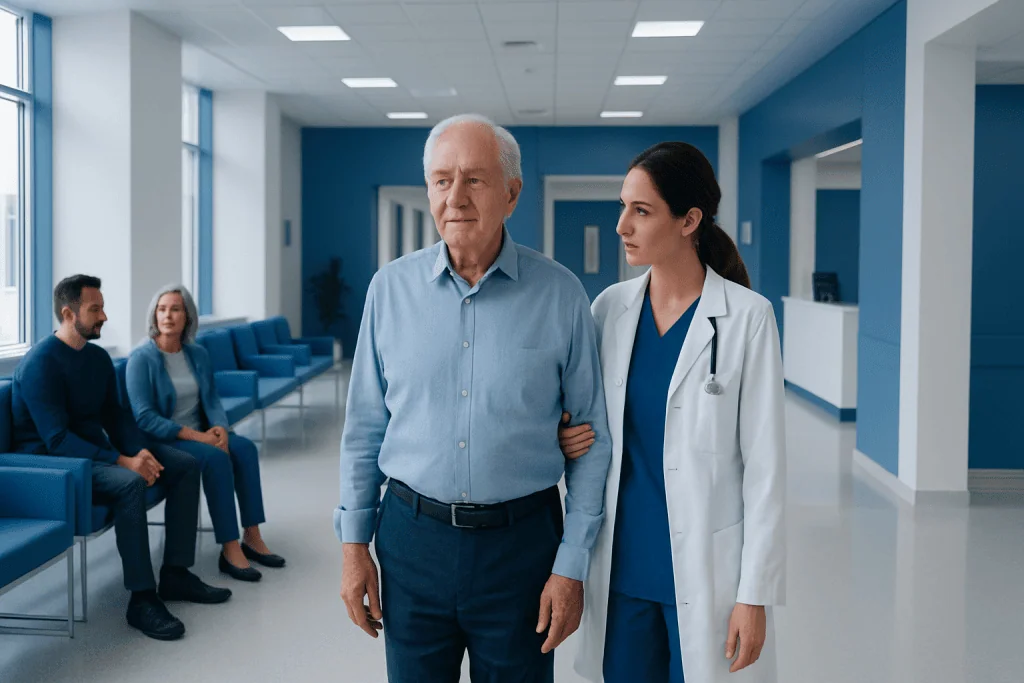
Most people over 60 can manage surgery in Turkey if the trip is planned around their health rather than around cheap flights. That means a pre-travel medical review, a complete medication and records file, the simplest possible route, accommodation near the hospital, help arranged for the first days after discharge, and a return date flexible enough to absorb a slower recovery.
Wondering whether you can manage the flight, the hotel and the first days after an operation at your age? Most patients over 60 can, but not on a rushed itinerary. The trip works when you build in extra time, carry clear medical information, and arrange practical help for the days between discharge and the flight home.
This guide walks through each stage of surgery in Turkey after 60: deciding whether you are fit to travel, booking the least tiring route, setting up a recovery-friendly stay, and getting home without drama. Plan it this way and the journey becomes calmer for you and for whoever travels with you.
At a glance
- Best approach: Plan earlier than feels necessary, flights, mobility assistance and recovery days all benefit from lead time.
- Most important document: A current medical summary covering diagnoses, medications, allergies and recent test results.
- Travel tip: Choose a direct flight where possible and avoid tight connections; the airport is often harder work than the aircraft.
- Recovery priority: Arrange help with walking, bathing, meals and transport for the first days after discharge.
- Companion advice: If mobility, hearing, vision or communication may be difficult, travel with a companion or replace that support with formal arrangements.
- Hospital support: International patient teams can coordinate interpreters, transfers and appointment logistics so you are not managing everything alone.
Why surgery in Turkey after 60 needs a different plan
Age by itself is not the obstacle. Surgeons operate on people in their sixties, seventies and beyond every day. What changes after 60 is the margin around the operation: you may be balancing medication schedules, a heart or lung condition, arthritis, reduced stamina or a slower return of energy. None of these rules out treatment abroad, but each one narrows the room for improvisation.
The encouraging part is that most of the extra strain in surgery in Turkey after 60 is practical rather than medical. Airport distances, hotel stairs, traffic between appointments, carrying luggage on a travel day: these are the points where older travellers most often struggle, and every one of them can be planned away. Airport assistance, lift access, a room near the hospital and a companion for the first days remove most of the friction before it appears.
It helps to think of the journey in three stages: getting there rested, recovering comfortably, and going home at the right time rather than the booked time. The sections below take each stage in turn.
Are surgeries in Turkey safe for older patients?
Safety is not a property of a country. It depends on the individual hospital’s standards, the surgeon’s experience with your specific procedure, how thoroughly you are assessed beforehand, and how honestly you present your medical history. That is true in Turkey, and it is equally true at home. Large hospital groups in Turkey treat international patients routinely and run the same kind of pre-operative assessment, blood tests, anaesthetic review, cardiology input where indicated, that you would expect anywhere.
For a patient over 60, the pre-operative assessment matters more, not less. Chronic conditions, previous operations and current medications all shape the anaesthetic plan and the recovery plan. A treating team can only account for what it knows about, which is why the medical file you bring is the single most useful thing you pack. Some patients also spend a period in intensive care as a planned part of major surgery; if that applies to your procedure, it is worth reading in advance what ICU care after surgery in Turkey typically involves, so a monitored first night does not come as a surprise.
No surgery anywhere is free of risk, and no responsible team will tell you otherwise. What good planning does is remove the avoidable risks, travelling too soon, hiding a condition, flying home before you are ready, so the remaining ones are the properly managed clinical kind.
Before you book: health checks, records and realistic timing
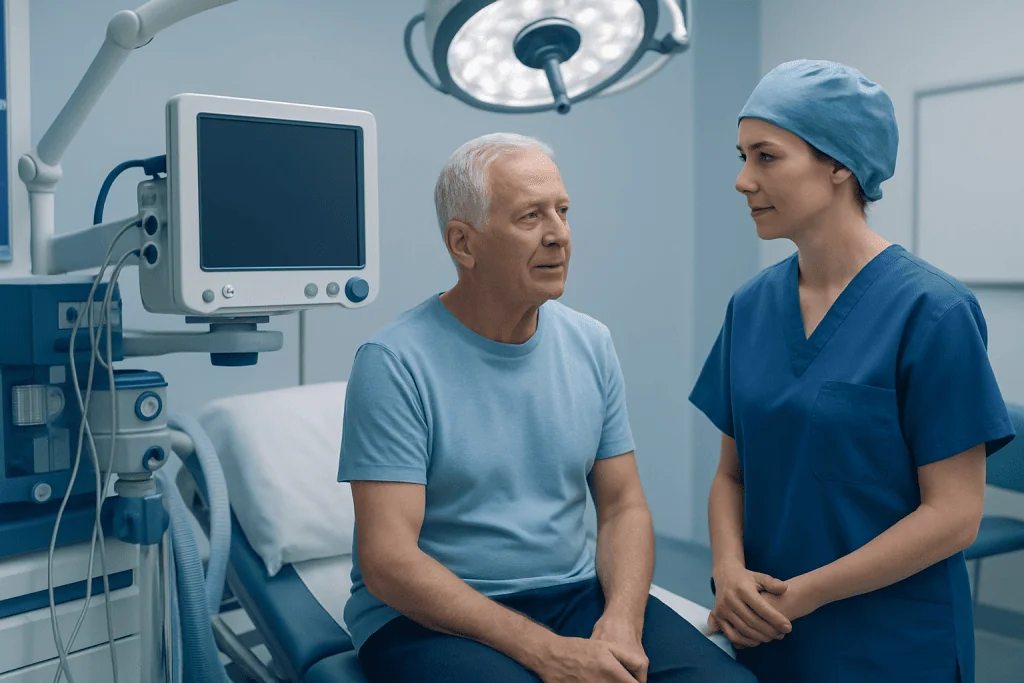
Before you confirm flights, give the treating team a full picture of your health. If you have high blood pressure, diabetes, heart disease, kidney disease, breathing problems, sleep apnoea or limited mobility, gather recent clinic letters, investigation results and a precise medication list. This lets the team in Turkey judge your baseline and flag any extra assessments before you commit to dates.
Ask your regular doctor whether you are fit for the flight involved and whether any medication timing needs reviewing across time zones: that conversation belongs with the doctor who prescribes for you, not with a booking form. If you use blood thinners, insulin, CPAP, oxygen, hearing aids or a walking frame, raise these early rather than assuming they can be sorted at the last minute. CPAP machines and oxygen in particular need airline notice.
Timing is where older travellers most often cut too fine. Plan to arrive a day or two before admission so you are not going into surgery straight off a flight, and leave the return loose around your expected discharge date. A few extra days give your body time to recover energy and absorb any small change of plan without a scramble to rebook.
What surgeries are popular in Turkey, and how quotes actually work
International patients travel to Turkey for a wide range of treatment: plastic, reconstructive and aesthetic surgery, orthopaedic procedures such as joint replacement, eye and dental work, cardiovascular surgery, bariatric procedures and general surgery. For patients over 60, joint, eye, cardiac and reconstructive procedures are common reasons to travel, though the sensible question is never what is popular: it is what is right for your diagnosis and your overall health.
On cost, be wary of any figure quoted before anyone has seen your records. A meaningful quote depends on the specific procedure and technique, the anaesthetic required, expected length of hospital stay, whether intensive care is planned, implants or materials involved, and what the package does and does not include, transfers, accommodation, follow-up visits, interpreter support. Two patients having “the same operation” can need quite different plans, especially at older ages where co-existing conditions shape the hospital stay. The practical rule: get the quote after your records have been reviewed, and ask explicitly what is excluded, not only what is included.
Choosing flights, transfers and accommodation with comfort in mind

The smoothest journey is the one with the fewest moving parts. Choose a direct flight or the simplest connection, even when it is not the cheapest option. Long walks between gates, repeated security queues and rushed boarding tire most people over 60 far more than the hours in the air do.
Request airport wheelchair or mobility assistance in advance if there is any chance you will need it, even temporarily. The service covers check-in, security, gate transfers and boarding, and there is no penalty for using it as a precaution. Pack light: a smaller case, essentials within easy reach, and a companion carrying anything heavy matter more than spare outfits.
For accommodation, prioritise function over style. You want lift access, a walk-in shower if possible, minimal stairs, reliable heating or air conditioning, and space for any mobility aid, close enough to the hospital that follow-up appointments do not mean long stretches in traffic. Our hotel recovery room setup checklist covers how to arrange the room itself for the days after discharge.
Many patients prefer coordinated door-to-door transfers over hailing taxis after surgery. International patient teams routinely arrange transport around admission and discharge, which is especially useful on arrival in Istanbul when you are tired and carrying documents you do not want to lose track of.
Medication, mobility and the details that make recovery easier
Carry all regular medicines in their original packaging in your hand luggage, never in the checked bag. Bring a written list with exact drug names, doses and schedule, plus allergies and any previous reactions to medicines or anaesthesia. Keep reading glasses, hearing aids, dentures and mobility devices accessible throughout the journey.
Think concretely about the first week after surgery. Can you get in and out of bed unaided? Shower safely? Put on socks, prepare food, reach the bathroom at night? A folding cane, non-slip slippers, loose front-opening clothing and a small cross-body bag for essentials make a disproportionate difference. There is a fuller list in our guide to packing for recovery after surgery in Turkey.
Hydration, food and rest need more deliberate attention in older adults. Appetite often dips for a few days after travel and treatment, so keep water and simple food within reach of the bed rather than relying on trips out. Pain relief is part of this too: understanding how pain control after surgery is managed in Turkey before you travel makes it easier to describe your pain accurately and follow the plan you are given.
If you need language support, ask for it in advance. Instructions about wound care, movement limits and follow-up only help if you fully understand them, and interpreters are easiest to arrange before the day you need them.
- Pack more medication than the trip should need, in case your return is delayed.
- Carry a printed medical summary as well as digital copies.
- Wear supportive shoes that are easy to put on and remove.
- Keep emergency contacts on paper, not only on your phone.
Should you travel alone or with a companion?
Some people over 60 travel independently without difficulty, particularly for shorter procedures. But if you have reduced mobility, significant hearing or vision impairment, memory concerns, travel anxiety or a complex medical history, a companion earns their seat. Their value is practical as much as emotional: bags, medication reminders, transport, meals, and a second set of ears when instructions are given.
If a family member or friend is coming, agree expectations before departure. They may need to help you physically in the first days, handle paperwork, liaise with the international patient team and stay nearby around surgery and discharge. Make sure they know where your documents, insurance details, medication list and emergency numbers are kept.
If you must travel alone, replace informal support with formal planning: assisted airport services, pre-booked transfers, accommodation within a short ride of the hospital, and a clear picture, asked for in advance, of what practical support is available during your stay.
Planning your stay in Turkey after surgery
Design the days after your operation around recovery, not sightseeing. Even if you feel well, traffic, crowds, uneven pavements, heat and long periods upright are harder after surgery than on an ordinary holiday. Short, regular walks near your accommodation usually serve you better than a full itinerary.
Ask your team specifically what level of walking is encouraged, whether stairs, showering, lifting or long car journeys should be limited, and what signs should prompt review. Older adults benefit from explicit pacing advice, because overdoing the first days tends to stretch the whole recovery. For a general sense of the usual sequence, moving, eating, washing, then travelling, see when you can walk, eat, shower and travel after surgery in Turkey, and treat your own team’s instructions as the version that applies to you.
Sort the final leg before you feel ready for it. How will you reach the airport? How early should you arrive? Will you need wheelchair assistance there too? If the discharge date shifts, can the room be extended easily? These questions are easiest to settle while help is still around you.
Going home safely and preparing for follow-up
Returning home is a planned stage, not an afterthought. Before leaving Turkey, make sure you understand your discharge papers, any medication changes your team has made, activity limits, wound-care instructions and the follow-up plan, and who to contact with questions once you are home, including whether remote follow-up is possible in your case.
Keep the travel day simple: extra airport time, assistance requested again if needed, no heavy bags in your hands. On longer flights, follow your team’s specific advice about movement, hydration, compression stockings and any restrictions particular to your operation, long periods of immobility deserve respect after recent surgery, and your surgeon’s guidance on when to fly is the guidance that counts.
Once home, do not expect your normal routine on day one. If you live alone, arrange help in advance for groceries, meals, laundry and transport. If your local doctor will handle aftercare, send the treatment summary promptly so everyone works from the same information. A well-organised return does not remove every uncertainty, but it removes the avoidable stress, which is most of it.
Step by step
- 1. Gather your medical information early. Build a simple folder with diagnoses, past operations, medication list, allergies, recent test results and your regular doctor’s contact details, before booking travel, so the treating team can advise on timing and any extra assessments.
- 2. Check fitness for travel and recovery needs. Ask your usual doctor whether flying is appropriate for you and whether any condition needs closer monitoring around surgery. Be honest with yourself about stamina, balance, memory, hearing and mobility so support is arranged before it is needed.
- 3. Book the least tiring route. Direct flights or the simplest connection, airport assistance requested in advance, transfers pre-booked so you are not negotiating transport while tired or sore.
- 4. Choose recovery-friendly accommodation. Close to the hospital, lift access, safe bathing, room to move. A practical room near your appointments beats a scenic one across the city.
- 5. Pack for function, not just for travel. Medicines, records, glasses, hearing aids, chargers and valuables in hand luggage; loose clothes, supportive shoes and any mobility aids you rely on at home.
- 6. Arrange support for the first recovery days. Travel with a companion where possible, or line up help for meals, dressing, transport and follow-up visits. Even confident solo travellers appreciate help in the days straight after discharge.
- 7. Confirm the return-home plan before discharge. Understand medicines, movement advice, warning signs and follow-up arrangements before you leave the hospital, and keep the return flexible enough for an extra day or two if your team recommends it.
Your checklist
- Passport, visa documents if needed, and travel insurance details
- Printed medical summary, medication list, allergy list and recent test results
- Enough regular medication for the full trip plus extra in case of delays
- Direct or low-stress flight itinerary with airport assistance requested if needed
- Accommodation close to the hospital with lift access and a safe bathroom setup
- Loose clothing, supportive slip-on shoes, glasses, hearing aids and chargers
- Companion plan or practical support plan for meals, mobility and transport
- Emergency contacts saved on your phone and written on paper
- Return travel kept flexible in case recovery takes longer than expected
Key takeaways
- Age alone does not decide fitness for surgery abroad; health, mobility and the quality of planning do.
- A clear medical file and up-to-date medication list are the foundation of surgery in Turkey after 60.
- Simple routes, nearby accommodation and pre-arranged assistance matter as much as the hospital stay itself.
- A companion is valuable if mobility, hearing, vision or communication may be difficult; formal planning can substitute if you travel alone.
- Keep the return date flexible and make sure you fully understand discharge instructions before flying home.
Frequently asked questions
Is 60 or older too old to travel to Turkey for surgery?
Age alone does not decide it. What matters is your general health, mobility, medical history and how realistically the trip and recovery are planned. A pre-travel review with your regular doctor and an unhurried itinerary carry far more weight than the number on your passport.
What is the average cost of surgery in Turkey?
There is no honest single figure, and any price quoted before your records are reviewed should be treated with caution. A real quote depends on the procedure and technique, anaesthetic, length of hospital stay, any planned intensive care, materials or implants, and what the package includes, transfers, accommodation, interpreter support, follow-up. Ask what is excluded as well as what is included.
Are surgeries in Turkey safe?
Safety depends on the individual hospital and surgeon, the thoroughness of your pre-operative assessment, and how complete the information is that you provide: the same factors that govern safety anywhere. No operation in any country is free of risk; careful patient selection, honest medical history and sensible travel timing remove the avoidable part of it.
What surgeries are popular in Turkey?
International patients commonly travel for aesthetic and reconstructive procedures, orthopaedic operations such as joint replacement, eye and dental treatment, cardiovascular surgery, bariatric surgery and general surgery. For patients over 60, joint, eye, cardiac and reconstructive procedures are frequent reasons to travel, but the right question is what suits your diagnosis, not what is popular.
Is Turkey or Mexico better for surgery?
Neither destination is better as a category. Judge any country by the same tests: the specific hospital’s standards, the surgeon’s experience with your procedure, how your records are assessed before quoting, language support, and how follow-up will work once you are home. A destination that answers those questions clearly is a better choice than one that leads with price.
How long should I plan to stay in Turkey after surgery?
It depends on the procedure, your overall health and how recovery actually goes. Older patients usually benefit from allowing days beyond the minimum estimate so the return flight is not a deadline. Your treating team advises when travel home is appropriate for your specific operation.
Should I bring a companion with me?
If you may need help with walking, dressing, transport, hearing instructions or managing medication, yes: a companion is often the single most useful arrangement you can make. If you cannot bring someone, replace that support with formal planning: assisted airport services, pre-booked transfers and accommodation close to the hospital.
What if I live alone when I get back home?
Arrange at least a few days of practical support before you travel, even if you normally manage well. Help with meals, shopping, transport and household tasks makes early recovery smoother, and sharing your discharge documents with your local doctor promptly keeps everyone working from the same information.
Add us as a Preferred Source to see more of our trusted health content across Google Search, AI Overviews and Discover.

Update history
- PublishedJuly 8, 2026
- Medical review approvedSeptember 13, 2026
- Last content updateSeptember 12, 2026
References2
- CDC Yellow Book: Older Travelers wwwnc.cdc.gov
- MedlinePlus: Older Adult Health medlineplus.gov
More Patient Guides

Airport Wheelchair Assistance: How to Book It for a Medical Trip
Airport wheelchair assistance is free, it exists at every commercial airport, and airlines are legally required to provide it, yet half…

Travelling With a Stoma: Flights, Supplies and Airport Screening
Traveling to Turkey with a stoma is manageable with the right supplies, airport screening plan, and recovery support in Istanbul or Turkey.
Mobility Aids in Turkey: Renting a Wheelchair, Walker, or Crutches
Mobility aids in Turkey can be rented through medical suppliers, pharmacies, and hospital-linked services in Istanbul and other cities.
Traveling to Turkey with Food Allergies or Special Diet Needs
Traveling to Turkey with food allergies or special diet needs is manageable with planning, translated allergy cards, and hotel and hospital support…