

Traveling to Turkey with Recent Scan Results: How Current Your Imaging Needs to Be

There is no universal expiry date for medical imaging. How recent your scans need to be depends on your condition, your symptoms and the decision the scan will support. Bring the newest images and reports you have, in DICOM format where possible, and have them reviewed before you book flights. Fast-changing conditions and surgical planning usually need newer imaging; stable conditions often allow more time.
You had an MRI three months ago. Will it still be accepted, or will you land in Istanbul only to be sent straight back to the scanner? It is one of the most common questions international patients ask before flying, and the honest answer is: it depends on what the scan is for.
The working rule is straightforward. Bring the newest, best-quality imaging you have, together with the written report and the date it was performed. Whether that imaging is still suitable depends on your condition, how your symptoms have behaved since the scan, and the decision the hospital needs to make. That is why a pre-travel review of your records is worth more than any general cut-off date you find online.
At a glance
- Main question: How recent your MRI, CT, ultrasound, X-ray or PET-CT should be before you travel for treatment
- Short answer: There is no universal expiry date, suitability is judged against your condition and the planned treatment
- Best first step: Have your scan files, written reports and a symptom update reviewed before you book flights
- Bring with you: DICOM image files, radiology reports, lab results, medication list and prior medical notes
- Why timing matters: Some conditions change quickly, so older imaging may no longer reflect your current situation
- If scans are outdated: Repeat imaging in Turkey may be needed before final treatment planning
Why the date of your scan matters
Traveling to Turkey with recent scan results is usually the best possible starting point for your treatment. Existing imaging lets the receiving specialist understand your case before you arrive, shortlist the likely options, and tell you whether the trip makes sense at all. But there is a distinction that catches many patients out: a scan can be good enough for an initial specialist opinion and still not be current enough for a final treatment decision.
The reason is simple. The body is not static. A tumour, a joint problem, a spinal finding, a vascular abnormality or an abdominal condition can look different after weeks or months, particularly if symptoms have progressed or treatment has already started elsewhere. A surgeon planning an operation, or an oncology team confirming a stage, needs images that describe your situation now, not your situation as it was when the scan happened to be booked.
So when a hospital tells you that your imaging is “suitable for review but may need repeating”, it is not a polite brush-off. It is an accurate description of how imaging works in clinical decision-making. The type of scan matters, but so does when it was done, why it was done, and what has changed since.
For anyone traveling to Turkey with recent scan results, the practical goal before departure is to answer three questions: is this imaging recent enough for my condition, is it complete and technically usable, and does it still match my current symptoms? The rest of this guide walks through each one.
How current your imaging usually needs to be
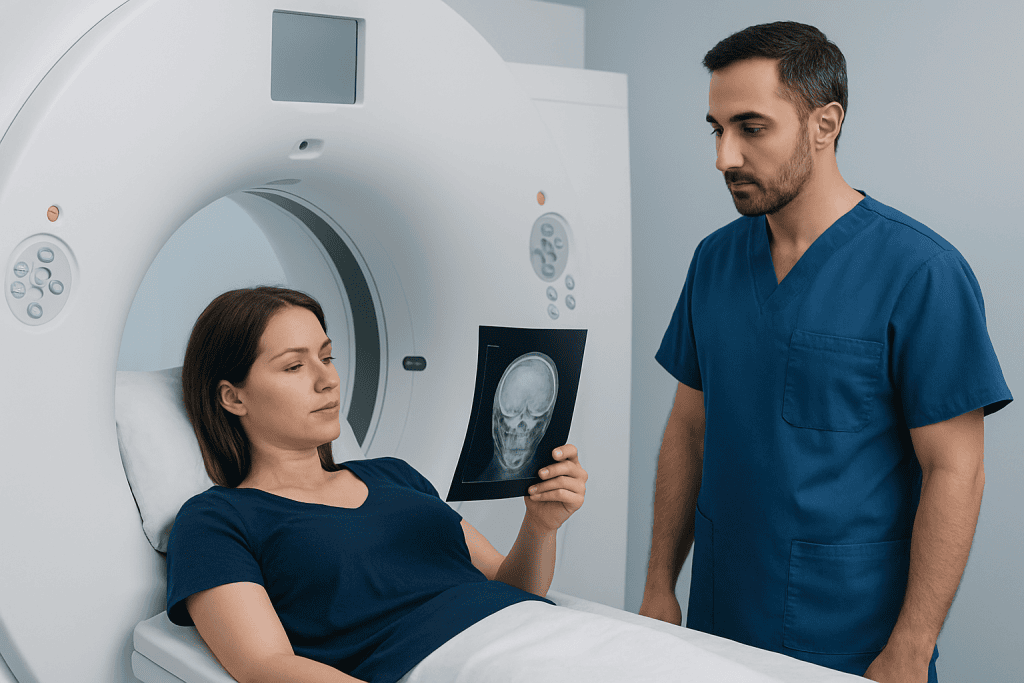
There is no single rule that applies to every patient, and any website that gives you a fixed number of weeks is oversimplifying. A scan done very recently may already be unsuitable if your condition has changed since, while a scan from several months ago may still be perfectly usable for a stable, slow-changing problem. The clinical context decides: your diagnosis, your current symptoms, the treatment being considered, and whether any change in the meantime could affect safety or the surgical approach.
That said, some patterns hold across most hospitals. Imaging generally needs to be more recent when it will be used to make surgical decisions, confirm disease stage, investigate a new or worsening symptom, or guide a procedure directly. It also needs to be repeated, regardless of age, when the images are incomplete, of low quality, missing contrast where contrast is required, or supplied in a format the clinical team cannot open and measure properly.
| Scan type | What tends to affect how long it stays useful |
|---|---|
| MRI | Reviewed closely for timing when surgery, spinal, joint or oncology decisions depend on it; protocol and sequence details matter as much as the date |
| CT | Often needs to be current for staging and pre-operative planning; contrast phase and slice thickness are frequently checked |
| Ultrasound | More often repeated because results depend heavily on the operator and the machine; still useful as background |
| X-ray | Can remain useful longer in some stable orthopaedic cases, but not when symptoms have changed or measurements are needed |
| PET-CT | Timing expectations are set by the condition being assessed and any treatment given since; the full image dataset is usually required, not just the report |
If your case involves PET-CT imaging or contrast studies, expect the receiving team to look at the acquisition details, not only the calendar date. Two scans performed on the same day can differ enormously in what they allow a specialist to conclude.
A reasonable rule of thumb: the more active, complex or fast-moving the condition, the more important it is for the imaging to be current. The more stable and chronic the condition, the more likely older imaging remains usable. If you are unsure which category you fall into, do not guess. Ask the hospital that will treat you to look at the files before you commit to flights, and ask specifically whether the imaging is acceptable for consultation only, for treatment planning, or for both. Those are different thresholds, and knowing which one your scans meet changes how you plan the trip.
What to send before you travel

The single most common gap in patient records is this: the report arrives, the images do not. A radiology report is a summary written for the doctors who ordered the scan. The specialist planning your treatment usually needs to examine the original images, measure them, compare them, look at areas the report did not focus on. Both together are far more useful than either alone.
The images should ideally be the DICOM files from the imaging centre. DICOM is the standard hospital format and contains the full dataset a radiologist needs. Photographs of a screen, printed films alone, or PDF snapshots lose most of that information. Your imaging centre can normally provide DICOM files on a CD, USB stick or download link, ask for them by name. If your reports were issued in a language other than English, a clear translation speeds everything up, though original-language reports are still worth sending in the meantime.
Alongside the imaging, write a short medical summary in plain language. Include your diagnosis if known, the symptoms you have now, when those symptoms last changed, any operations or biopsies you have had, recent blood test results, and the medications you currently take. This context is what allows the reviewing specialist to judge whether a scan from ten weeks ago still describes the patient sitting on the plane. For a full walkthrough of formats, folders and naming, see the guide on how to organise your reports and images before flying.
If you are gathering documents from several clinics, or several countries, start early. Imaging centres do not always release files quickly, and a missing CD discovered two days before departure is a stress you can avoid.
Common reasons hospitals repeat imaging in Turkey
Even recent, well-performed scans are sometimes repeated after arrival. This is normal, and it rarely means the original scan was poor. The receiving hospital may need a specific protocol, additional views, a contrast phase the first study did not include, more precise measurements, or imaging that matches its own treatment-planning standards so results can be compared consistently over time.
Change over time is the other major reason. When symptoms have progressed since a scan, pain that has worsened, new neurological signs, weight loss, a lump that has changed: the earlier imaging may simply no longer tell the whole story. In that situation, repeating the scan is a safety step in the treatment process, not an inconvenience or an upsell. It protects the accuracy of the decision being made about your body.
Technical problems account for a further share: outside images that cannot be opened, incomplete series, missing key sequences, or studies performed with settings that make measurement unreliable. This is exactly why DICOM files matter and why a pre-travel review is so useful, most of these problems can be identified before you fly rather than after. The separate guide on why blood tests and scans may be repeated before treatment in Turkey covers the reasoning in more depth.
At large multidisciplinary hospitals, repeat imaging can often be coordinated with consultations on the same day where schedules allow, which helps you use limited travel time efficiently. It is worth asking in advance whether that is realistic for your case rather than assuming it.
How to carry your imaging safely and practically
Bring your imaging in more than one format. The most resilient approach is three layers: digital scan files in secure cloud storage you can reach from your phone, a physical CD or USB stick, and the radiology reports as both PDFs and printed copies. Keep everything in your hand luggage, never in checked baggage. A lost suitcase should never mean lost medical records.
Label everything clearly. A folder, physical or digital, that shows the scan type, body area, date, hospital name and your full name saves real time at the other end. If you have several studies spread over months or years, arrange them chronologically; comparison between old and new imaging is often exactly what the specialist wants to do. The dedicated guide on traveling to Turkey with X-rays, MRI and CT scans goes into packing detail.
Pack the supporting records that change what a scan means: pathology and biopsy reports, discharge summaries, operation notes, blood results and your current medication list. Imaging is most powerful when it can be read against the rest of your history, not in isolation. A CT with no pathology report behind it answers far fewer questions than the same CT with one.
One reassurance for the airport: CDs, USB sticks and printed films pass through security scanners without any effect on the data. There is nothing on an imaging disc that airport screening can damage.
Planning your timing, flights and first appointment
Try not to finalise complex travel plans until your records have had at least an initial review. Traveling to Turkey with recent scan results that turn out to be unsuitable is an avoidable outcome: a review before booking tells you whether your first visit is likely to be consultation only, consultation plus same-day repeat imaging, or consultation followed by imaging on another day. Each of those implies a different trip length.
If there is any chance you will need fresh scans after arrival, build slack into your schedule. Allow time for registration, the imaging itself, radiology reporting, specialist review and any additional tests that follow from it. Results do not always arrive the same day; the guide on getting lab and imaging results during treatment in Turkey explains what turnaround typically looks like and how results are shared with you.
If you are traveling with a companion, set expectations honestly: the first day or two may be about assessment and planning rather than treatment. That is not lost time. It is the part of the process that makes everything after it safer and better targeted. Book flexible or refundable travel where you can, and avoid tight return flights until the treatment timeline is confirmed.
Step by step
- Gather your newest imaging and reports. Start with the most recent scans relevant to your condition: MRI, CT, ultrasound, X-ray or PET-CT. Include both the image files and the written report; one without the other is often not enough for a proper review.
- Request DICOM files from your imaging centre. Ask for the full digital dataset on CD, USB or download link. Screenshots and printed films alone lose the detail specialists need to measure and compare.
- Write a short symptom and treatment update. Note what symptoms you have now, when they last changed, and any treatment started since the scan. This tells the reviewer whether the imaging still matches your current picture.
- Have everything reviewed before booking flights. Ask specifically whether your scans are suitable for consultation only, for treatment planning, or both, and whether repeat imaging after arrival is likely.
- Plan for the possibility of repeat scans. Even good outside imaging is sometimes repeated for timing or technical reasons. Build enough flexibility into your schedule that additional imaging does not derail the trip.
- Travel with backups in multiple formats. Cloud storage plus a physical CD or USB, with reports on your phone and on paper. Everything goes in hand luggage.
- Bring the rest of your records. Pathology, operation notes, discharge summaries, blood results and your medication list let the team interpret the imaging quickly and safely.
- Confirm your first-day plan shortly before travel. Knowing whether day one is consultation only or consultation plus tests helps you manage meals, medication timing, companion plans and transfers.
Your checklist
- Most recent scan files in DICOM format where available
- Written radiology report for each scan
- List of scan dates and where each was performed
- Short summary of current symptoms and recent changes
- Medication list, including blood thinners, plus allergy information
- Recent blood test results and key medical notes
- Pathology or biopsy reports, if relevant
- Cloud backup plus a physical copy of imaging files
- Translations of reports where possible
- Passport and appointment confirmations, all in hand luggage
Key takeaways
- How recent a scan needs to be depends on the condition, the symptoms and the decision it supports, not just the calendar date.
- A scan can be suitable for an initial opinion yet still need repeating before final treatment planning.
- Outside imaging is most useful as DICOM files with the written report; both together, in hand luggage, in multiple formats.
- Repeat imaging in Turkey is sometimes needed for safety, protocol or technical reasons, and can often be scheduled around consultations.
- Have your records reviewed before you confirm flights, and build flexibility into the first days of your trip.
Frequently asked questions
How old can my scan be if I am traveling to Turkey for treatment?
There is no universal cut-off. A scan from several months ago may still be usable for a stable, slow-changing condition, while a much newer scan may already be unsuitable if symptoms have progressed or if it will guide surgery or oncology planning. Suitability is judged case by case, which is why a pre-travel review of the actual files matters more than any fixed rule.
Is the radiology report enough, or do I need the actual images too?
Bring both whenever possible. The report is a summary written for the doctors who ordered the scan. Specialists planning treatment usually need the original images to measure findings, compare studies over time and decide whether further imaging is needed.
Why would I need another scan in Turkey if I already had one at home?
Common reasons include time passing since the original scan, symptoms that have changed, a need for a different protocol or contrast phase for treatment planning, or technical problems such as incomplete series or files that cannot be opened. Repeating a scan in these situations is a safety and accuracy step, not a judgement on the original imaging.
What file format should I bring for MRI or CT scans?
DICOM is the most useful format because it contains the full image dataset needed for proper review. Ask your imaging centre for DICOM files on CD, USB or a download link. If all you have is printed film or screenshots, bring them, but request the digital files and the official report as well.
Should I wait to book flights until my scans are reviewed?
For complex or time-sensitive cases, yes: that is the sensible order. An initial review can tell you whether your imaging is likely to be accepted, whether repeat scans are expected after arrival, and how many days to allow for assessment before treatment can start. Booking after that review usually saves money and stress rather than costing time.
Do I need translations for my scan reports?
Reports in English are reviewed fastest, so a clear translation is very helpful. If translation is not possible before you travel, original-language reports are still worth sending alongside the images: the images themselves are language-independent, and translation can often be arranged later.
Will airport security damage my imaging CD or USB stick?
No. Standard airport scanners do not affect the data on CDs, USB sticks or printed films. The real risk to your records is checked baggage going astray, which is why everything medical should travel in your hand luggage.
Can I skip bringing scans and just have everything done in Turkey?
You can, but it is rarely the best approach. Existing imaging lets specialists assess your case before you arrive, shows how findings have changed over time and can shorten the assessment phase of your trip. Even if some scans end up being repeated, your previous studies remain valuable for comparison.
Add us as a Preferred Source to see more of our trusted health content across Google Search, AI Overviews and Discover.

Update history
- PublishedJuly 8, 2026
- Medical review approvedSeptember 1, 2026
- Last content updateSeptember 1, 2026
References2
- MRI Scans: MedlinePlus medlineplus.gov
- CT Scans: MedlinePlus medlineplus.gov
More Patient Guides

CyberKnife Radiosurgery in Turkey: Candidacy, Treatment Schedule, and Travel Plans
CyberKnife radiosurgery in Turkey involves eligibility review, several planning steps and short outpatient visits; international patients can arrange care in Istanbul.

Traveling to Turkey for Biopsy Review: What Happens Before Treatment Is Confirmed
Biopsy review in Turkey helps confirm your diagnosis before treatment, using pathology slides, reports and specialist assessment in Istanbul.

Flying to Turkey with Recent Scan Results: How to Organize Reports and Images
Organize recent scan results for travel to Turkey by bringing reports, original image files, dates, and a clear medical summary for your…

Complications During Treatment Abroad: How International Patients in Turkey Can Prepare
Complications during treatment abroad can be managed with planning, clear contacts and follow-up support for international patients in Turkey.