

Treatment in Turkey for International Patients: Step-by-Step Journey

Treatment in Turkey for international patients follows a predictable sequence: you share medical records for a remote review, receive a preliminary plan and quotation, travel once the timeline is clear, then confirm the plan at an in-person consultation. Treatment, recovery and control visits happen in Turkey; follow-up can continue remotely after you fly home. Final decisions always depend on physician evaluation on the ground.
Most international patients ask the same first question: how much needs to be organised before booking a flight? It is a fair question, and the honest answer is: more than you might expect, but less than you might fear. This guide walks through the full journey of treatment in Turkey for international patients, from record review and remote evaluation through travel, hospital care, discharge and follow-up, so you know what happens at each stage, what depends on the medical team, and what depends on you.
The guide is deliberately general. It covers the parts of the journey that stay the same whether you are coming for surgery, diagnostics, IVF, cancer care, orthopaedics or something else. Where your treatment changes the picture, we say so.
At a glance
- What this guide covers: The full journey of planned treatment in Turkey as an international patient, not a single procedure
- Typical sequence: Record review → preliminary plan → travel → in-person consultation and tests → treatment → recovery → travel clearance → remote follow-up
- Anaesthesia: Depends on the procedure; local, sedation, regional or general anaesthesia may be used
- Hospital stay: Ranges from same-day discharge to several days, depending on the treatment
- Length of stay in Turkey: Usually longer than the hospital stay, allow time for consultation, tests, control visits and travel clearance
- Preliminary plans: Based on records reviewed before travel; may change after in-person examination
- Suitable department: Varies; may involve surgical, medical, diagnostic, rehabilitation or multidisciplinary teams
- International patient support: Interpreter services, transfers, accommodation guidance, scheduling coordination and remote follow-up
How treatment in Turkey works for international patients
Treatment in Turkey for international patients almost always begins before travel. You share your medical history, current symptoms, medication list and any recent reports or imaging. A specialist reviews this material and gives a preliminary opinion: whether your case appears suitable for planned treatment, which department should see you, what further records would help, and roughly how long you would need to stay for consultation, treatment and early recovery.
This remote review is planning, not diagnosis. It sets a direction. The confirmed plan comes only after an in-person examination in Turkey, often supported by updated tests. That distinction matters for everything that follows, including when you book flights, how flexibly you should plan your return, and how you should read a preliminary quotation.
At Acibadem, this process is coordinated by dedicated international patient teams working alongside specialist doctors, nurses and, where a case requires it, multidisciplinary boards. The clinical decisions belong to the doctors; the practical machinery around them, interpreting, scheduling, transfers, accommodation guidance, is what the coordination teams handle.
When travelling for treatment is worth considering
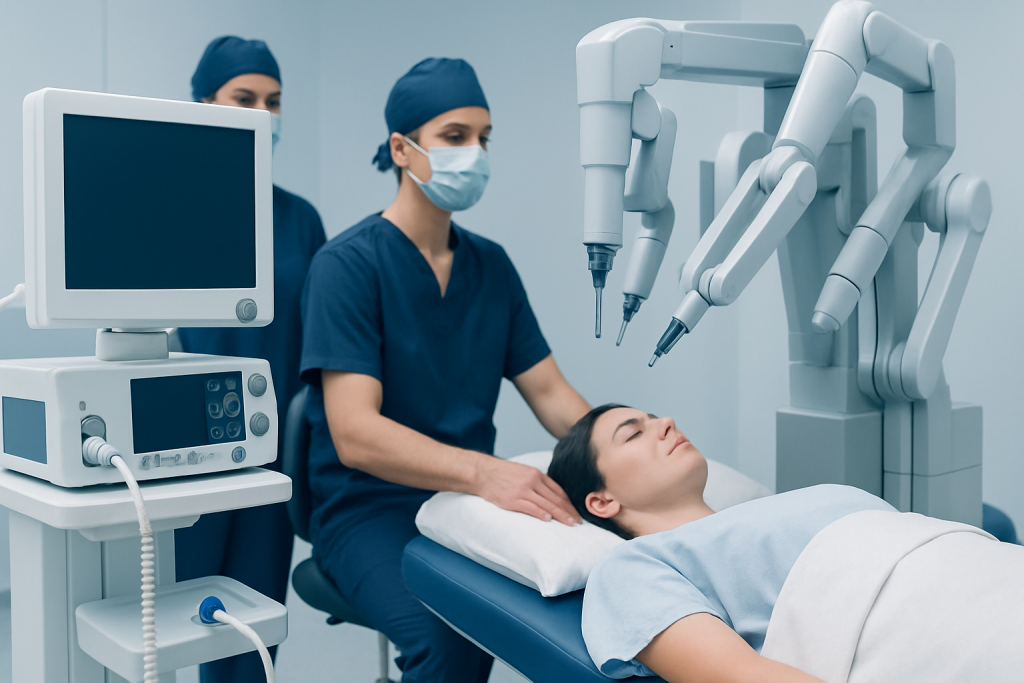
Patients travel to Turkey for many reasons: timely access to a specialist, a second opinion, advanced diagnostics, planned surgery, or a treatment pathway that needs several disciplines coordinated in one place. For complex cases, that last point is often the real advantage, imaging, laboratory work, specialist consultation, surgery and rehabilitation can be organised within a single hospital network rather than pieced together across providers.
Travelling for treatment is not right for every situation. If a condition is medically unstable, needs emergency care, or makes flying unsafe, planned travel is the wrong tool, and local assessment comes first. A proper medical review is always needed to decide whether treatment abroad is appropriate and how to plan it safely. No responsible provider skips that step.
Who tends to manage the journey well

The patients who have the smoothest experience share a few practical traits. Their condition is stable enough for planned travel. Their records can be reviewed in advance and are reasonably complete. They can allow flexible dates, stay for the recommended recovery period, and attend control visits before flying home. And they follow pre-treatment and post-treatment instructions carefully.
A good candidate is not the same as a perfectly healthy person. Many people who travel for treatment have diabetes, heart disease, previous surgeries or other chronic conditions. What matters is whether your overall health, diagnosis and fitness to travel make the journey reasonable after physician evaluation, not whether your medical history is short.
Can foreigners use hospitals in Turkey?
Yes. Foreign nationals can be treated in Turkish hospitals, and private hospitals in particular routinely care for international patients. You do not need residency or Turkish citizenship for planned treatment; a valid passport, your medical records and, where required, a visa or e-visa are the essentials. Larger private hospital groups run dedicated international departments with interpreters, so consultations, consent discussions and discharge instructions can happen in a language you understand.
Turkey also has hospitals with international-sounding names. Names like this refer to the individual institution’s history, not to a government affiliation. When comparing hospitals, the useful questions are about the specific department, the specialists, the infrastructure behind them and how international patients are supported, not the name on the building.
What is Turkey known for medically?
Turkey has become a major destination for planned care across a wide range of specialties. Internationally, demand is strongest in areas such as hair restoration, dental treatment, eye surgery, plastic and reconstructive surgery, IVF and fertility care, bariatric surgery, orthopaedics, cardiology and cardiac surgery, oncology, and organ-specific surgery. Large hospital groups also see steady demand for advanced diagnostics and second opinions in complex cases.
What this means for you is straightforward: for most planned treatments, established pathways for international patients already exist, interpreters, coordinators, standard document requirements, typical timelines. You are rarely the first person from your country to make the journey you are planning.
The remote review before you travel
The quality of your remote review depends heavily on what you send. Useful material includes a short medical history, current symptoms and how long you have had them, your medication and supplement list, allergies, previous operation notes, imaging reports and the images themselves, pathology results, and photographs where relevant to the treatment. Our guide to sending medical records to Turkey securely explains formats, file handling and what reviewers actually need to see.
Expect the review to take longer if your case is complex, because more than one specialist may need to assess it. Expect follow-up questions; they are a good sign, not a delay tactic. And expect the output to be a preliminary plan with a likely length of stay and an outline quotation, not a final commitment. If a provider offers a fixed, detailed plan for a complex condition without ever asking a question, treat that as a warning rather than efficiency.
Preparing before treatment
Most patients need an in-person consultation and updated tests after arrival, even if they had similar tests at home recently. Doctors need to confirm your current condition, not your condition three months ago. Depending on the treatment, this can include blood tests, ECG, imaging, an anaesthesia review or specialty-specific assessments. Our guide to pre-op tests in Turkey covers what is commonly requested and why repetition is sometimes unavoidable.
If surgery is planned, your team will give exact instructions about fasting, and about smoking, alcohol and supplements in the run-up to the procedure. Any decision about pausing, continuing or adjusting medicines, including blood thinners, belongs to your treating doctor, who will weigh it against your full history. Pre-treatment preparation affects anaesthesia planning, bleeding risk and recovery, so the instructions you receive are specific to you and worth following exactly.
Practically: bring comfortable clothing, chargers, copies of your reports, and a companion if one is recommended. Do not lock in rigid sightseeing or tight return flights early. Medical schedules move, because of test results, your response to treatment, or the need for extra observation, and a plan with slack in it absorbs those changes calmly.
What happens on treatment day
For non-surgical treatment, the day may consist of consultation, preparation, the treatment itself, a short observation period and same-day discharge. For surgery, it usually includes admission, identity and consent checks, pre-operative preparation, an anaesthesia review, the procedure, and monitored recovery afterwards.
Before anything proceeds, your doctor and nursing team explain the planned treatment, its expected duration, the alternatives and the key risks. If general or regional anaesthesia is involved, the anaesthesia team reviews your history and monitors you throughout. Afterwards, you are observed until your pain, vital signs, hydration and mobility are stable enough for transfer to a room or for discharge. Some patients go home, or back to their hotel, with drains, dressings, compression garments, specific medications or breathing exercises; complex cases may spend time in a higher-observation area or intensive care. The pathway is built around your treatment and your safety needs, which is why two patients having the “same” procedure can have different days.
Hospital stay and discharge
Length of stay varies from a few hours to several days. It depends on the procedure, your pain control, mobility, wound care needs, test results and any underlying conditions that need monitoring. On the admission side, having the right paperwork ready shortens the process considerably, see the documents international patients should bring for hospital admission in Turkey.
Before discharge, the team usually confirms that you are medically stable, can eat and drink where appropriate, can manage pain with suitable medication, and understand your care instructions. You leave with a discharge summary, prescriptions, dressing guidance, activity restrictions and a date for your first control visit. That summary is worth reading properly: it describes what your normal recovery should look like, what falls outside it, and what your follow-up schedule is.
One point deserves emphasis: discharge from hospital does not mean fitness to fly. Many patients remain in Turkey for several more days for wound review, control visits and travel clearance. The safe time to fly depends on your procedure and your recovery, and your doctor will tell you when that point is reached.
Recovery timeline
Recovery is individual. It depends on the treatment, whether anaesthesia was used, your overall health and how your body heals. The table below is a general shape, not a personal schedule: your doctor’s advice replaces it in every case.
| Timeframe | What to expect |
|---|---|
| First 24 hours | Monitoring, rest, pain or symptom control, hydration, and first instructions from your care team. |
| First week | Tiredness, swelling and discomfort are common; activity is reduced; dressings, medications and one or more control visits depending on the treatment. |
| Weeks 2–4 | Gradual return to routine activities for many treatments, though lifting, sport, driving or work may still be restricted. |
| Months 1–3 | Continued healing, improving strength and comfort, and a clearer picture of the treatment’s effect. |
| Final result | Immediate for some treatments; gradual over weeks or months for others, depending on tissue healing, rehabilitation and the nature of the condition. |
Before leaving Turkey, ask what normal recovery looks like for your treatment, when you can bathe, travel, work and exercise, and whether follow-up will be remote, local, or back in Turkey.
What to avoid after treatment
The most common mistake is assuming recovery is complete because the first few days feel fine. Healing continues beneath the surface long after you feel better. Overexertion, missed medications, smoking, alcohol, dehydration and ignored wound-care instructions all work against it.
Depending on your treatment, you may need to avoid heavy lifting, strenuous exercise, swimming, driving, long periods of immobility, direct sun exposure or pressure on the treated area for a defined period. If you had surgery, there may be specific positioning or movement instructions.
Travel itself is a recovery factor. Long flights, luggage and airport transfers are tiring after treatment. Fly home when your doctor says it is appropriate, and ask in advance whether you need compression measures, walking breaks during the flight, or medical documents for the journey.
Risks and possible complications
Every medical treatment carries some risk, however carefully planned. The nature of that risk depends on your condition, the treatment, the anaesthesia, your age and your general health, particularly conditions such as diabetes, heart or lung disease, and clotting disorders.
Possible complications include bleeding, infection, pain, swelling, delayed healing, medication reactions, anaesthesia-related issues, blood clots, scarring after surgery, or results that are less complete than hoped. Sometimes additional treatment, a longer stay or a revision is needed. A remote review before travel cannot predict every issue; once you are examined in person, your doctor may revise the plan or decide a different approach is safer. A frank discussion of risks, benefits and alternatives is not a formality: it is part of what safe care looks like, and it is your right to have it before you consent to anything.
Results and expectations
Results vary with the diagnosis, the method chosen, your health and how you heal. Some treatments bring quick relief; others improve gradually. After surgery, swelling, bruising and temporary functional limits can make early results look worse than the eventual outcome.
Realistic expectations matter. A good result does not always mean perfection, and some conditions need staged care, rehabilitation or longer follow-up before the outcome is clear. In some cases, treatment improves symptoms and quality of life rather than removing the underlying condition entirely. Your doctor should be able to tell you what success means in your specific case and what the milestones along the way look like. No honest clinician, anywhere, will promise an outcome, and you should be wary of any provider that does.
Planning the travel itself
Where possible, wait until the preliminary review is complete before booking flights. This avoids rushed travel and repeated rebooking if the medical team requests more records or a different timeline. Plan around the whole pathway, not just the treatment day: first consultation, pre-treatment tests, the treatment, early recovery and at least one control visit before you fly.
For surgery or complex treatment, a companion is often genuinely useful, for mobility, communication and simple practical support. Travelling alone is possible for many consultations and lighter procedures; if that is your situation, our guide to travelling to Turkey for surgery alone covers how to plan it sensibly. Check your insurance position too: standard holiday policies often exclude planned treatment abroad, so read what to check in travel insurance for treatment in Turkey before you rely on an existing policy.
Acibadem support teams help coordinate interpreters, airport–hospital–hotel transfers and accommodation guidance. Istanbul is a major travel hub, but distances, traffic and post-treatment fatigue are real; build them into your schedule rather than discovering them.
How cost and quotations work
The cost of treatment in Turkey depends on medical and practical factors: the diagnosis, whether one specialist or a multidisciplinary team is needed, procedure complexity, anaesthesia type, operating room requirements, length of hospital stay, implants or devices where relevant, intensive care needs, pathology and imaging, and the number of follow-up visits before travel home.
A preliminary quotation reflects the information available before travel. If in-person evaluation leads to additional tests, unexpected findings, extra hospital days or a revised procedure, the cost structure can change with it. Packages for international patients commonly bundle hospital-based medical services, a standard room stay, planned consultations, the procedure and routine nursing care, sometimes with transfers or coordination included. What they often do not include: flights, hotels outside the hospital, companion expenses, visa costs, personal spending, treatment of unrelated conditions, extended rehabilitation, emergency care outside the planned package, or tests not originally anticipated.
Always ask for a written statement of what is included, what is excluded, and under what circumstances the plan can change. Our guide to the hidden costs patients often miss in a medical travel budget lists the items that most frequently catch people out.
Why choose Acibadem
If you are weighing options for treatment in Turkey as an international patient, the useful comparison points are clinical organisation and international-patient experience. Acibadem operates a network of hospitals and specialist teams across multiple disciplines, which means a complex case can involve radiology, laboratory services, anaesthesia, surgery, intensive care, rehabilitation and follow-up within one system rather than fragmented across providers.
The practical side matters as much as the medical side when you are far from home. Dedicated coordinators, interpreter services, transfer support, accommodation guidance and remote follow-up planning are standing parts of how international patients are supported here, not add-ons arranged case by case. That structure is most valuable exactly when a journey is complicated: surgery, cancer care, complex diagnostics, or treatment spanning several appointments.
Medical review and disclaimer
This guide has been medically reviewed by the Acibadem International medical team. It provides general, practical information about the international patient journey in Turkey and is intended to help you prepare informed questions before travel.
It does not replace a consultation, diagnosis or personalised treatment plan. Suitability for travel, testing, treatment, anaesthesia and recovery timing depends on your medical history, examination findings and current health, as assessed by a physician. Your doctor may recommend a different pathway, additional tests, a longer stay, postponed travel or an alternative treatment based on what is safest for you.
Step by step
- Initial contact. The journey starts when the international patient team receives your treatment interest, diagnosis if known, and basic travel preferences.
- Medical record submission. You share available reports, imaging, pathology, medication details, symptoms, and photos where relevant.
- Preliminary medical review. The appropriate specialist or team reviews your case and assesses whether planned treatment in Turkey appears suitable.
- Treatment plan and quotation. You receive a preliminary pathway, a likely length of stay, and a written outline of included and excluded services.
- Travel planning. With a clearer timeline, you arrange flights, accommodation, visa needs if applicable, and a companion if recommended.
- Arrival. Transfer and coordination arrangements take you from the airport to your hotel or the hospital.
- In-person consultation. Your specialist examines you, reviews your records, and confirms or adjusts the proposed plan.
- Pre-treatment tests. Updated blood tests, imaging, ECG, anaesthesia review or specialty-specific assessments are completed where needed.
- Treatment. The planned procedure, surgery or medical treatment takes place with monitoring by the clinical team.
- Hospital stay. You are discharged the same day or remain in hospital for observation, depending on the treatment.
- First control visit. Your doctor checks early recovery, symptoms, wound status and test results, and sets next steps.
- Discharge and travel clearance. When medically appropriate, you receive discharge documents, medications, instructions and advice on when flying home is safe.
- Remote follow-up. After you return home, follow-up may continue by message, call or record-sharing, with advice on any checks needed locally or in Turkey.
Your checklist
- Valid passport, and visa or e-visa if your nationality requires one
- Brief medical history and current diagnosis if known
- List of current medications and supplements
- Known allergies or previous reactions to medication or anaesthesia
- Details of previous surgeries or hospitalisations
- Description of current symptoms and how long you have had them
- Blood test results, imaging reports, pathology reports or clinic letters
- Imaging files or photo documentation where relevant
- Contact details for your treating doctor at home
- Insurance details, plus travel dates, companion details and accommodation preferences if already known
Key takeaways
- The journey usually starts with a remote record review before you travel; this is planning, not diagnosis.
- Foreign nationals can be treated in Turkish hospitals; a passport, records and any required visa are the essentials.
- Expect updated tests after arrival, even if you had similar tests at home recently.
- Discharge from hospital is not the same as fitness to fly, build slack into your return plans.
- Costs depend on diagnosis, complexity, hospital stay and what a package includes; always get inclusions and exclusions in writing.
- The final treatment plan is confirmed only after in-person physician evaluation in Turkey.
Frequently asked questions
Can foreigners go to hospital in Turkey?
Yes. Foreign nationals can receive care in Turkish hospitals, and private hospitals routinely treat international patients for planned care. You do not need residency; a valid passport, your medical records and any required visa are the essentials. Larger hospital groups provide interpreters and dedicated international patient departments.
How much does medical treatment cost in Turkey?
There is no single answer, because cost depends on the diagnosis, procedure complexity, anaesthesia, hospital stay length, implants or devices where relevant, and follow-up needs. Quotations are prepared from your records before travel and can change after in-person evaluation. Ask for a written list of what is included and excluded before committing.
What medical treatment is Turkey famous for?
International demand is strongest in hair restoration, dental treatment, eye surgery, plastic and reconstructive surgery, IVF, bariatric surgery, orthopaedics, cardiology, and oncology. Established pathways for international patients exist across these and many other specialties, including advanced diagnostics and second opinions.
Do international-sounding hospital names mean international standards?
No. Such names reflect an institution’s history rather than a government affiliation or a quality standard. More broadly, many private Turkish hospitals serve English-speaking international patients. When comparing hospitals, focus on the department, the specialists and the support structure rather than the name.
How long should I plan to stay in Turkey?
It depends on the treatment, whether surgery is involved, and how many control visits are needed before flying home. Some patients stay a few days; others need longer for tests, treatment and early recovery. Your preliminary plan will include a likely length of stay, treat it as a minimum with flexibility built in.
Will the final treatment plan match the preliminary one?
Not always. The preliminary plan is based on records reviewed before travel. After in-person examination and updated tests, your doctor may confirm it, refine it, or recommend a different approach if that is safer or more appropriate. This is a normal part of careful medicine, not a sign that something has gone wrong.
Is it safe to fly home right after treatment?
Often not. Discharge from hospital does not mean fitness to fly, and many patients stay in Turkey for additional days for wound review, control visits and travel clearance. The safe time to fly depends on your procedure, your recovery and your individual risk factors, and your doctor will advise when that point is reached.
Can I travel alone for treatment?
For consultations, tests and some minor procedures, travelling alone is realistic with good planning. For surgery, sedation or treatments that reduce mobility, a companion is often genuinely helpful for the first days of recovery. If you are unsure, raise it during planning so the recommendation reflects your specific treatment.
Add us as a Preferred Source to see more of our trusted health content across Google Search, AI Overviews and Discover.

Update history
- PublishedJune 22, 2026
- Medical review approvedSeptember 13, 2026
- Last content updateSeptember 12, 2026
References2
- CDC Yellow Book: Medical Tourism wwwnc.cdc.gov
- GOV.UK: Foreign travel advice: Turkey gov.uk
More Patient Guides

HoLEP in Turkey: How It Compares With TURP and What Recovery Involves
HoLEP in Turkey treats enlarged prostate tissue with laser enucleation; learn how it compares with TURP, recovery, travel and follow-up.
Porcelain Veneers in Turkey: Who Is Suitable and How Many Visits Are Needed?
Porcelain veneers in Turkey can enhance tooth shape and colour in two visits for suitable patients after a personalised dental assessment.

How to Prepare for a Sedation Procedure in Turkey
Prepare safely for a sedation procedure in Turkey with guidance on fasting, medicines, travel, recovery and follow-up.

Treatment Delays in Turkey: What Happens If Tests or Recovery Change Your Schedule
Treatment delays in Turkey can happen if tests or recovery change your plan. Learn how to manage appointments, travel, accommodation and follow-up.