

What to Bring for a Day Procedure in Turkey
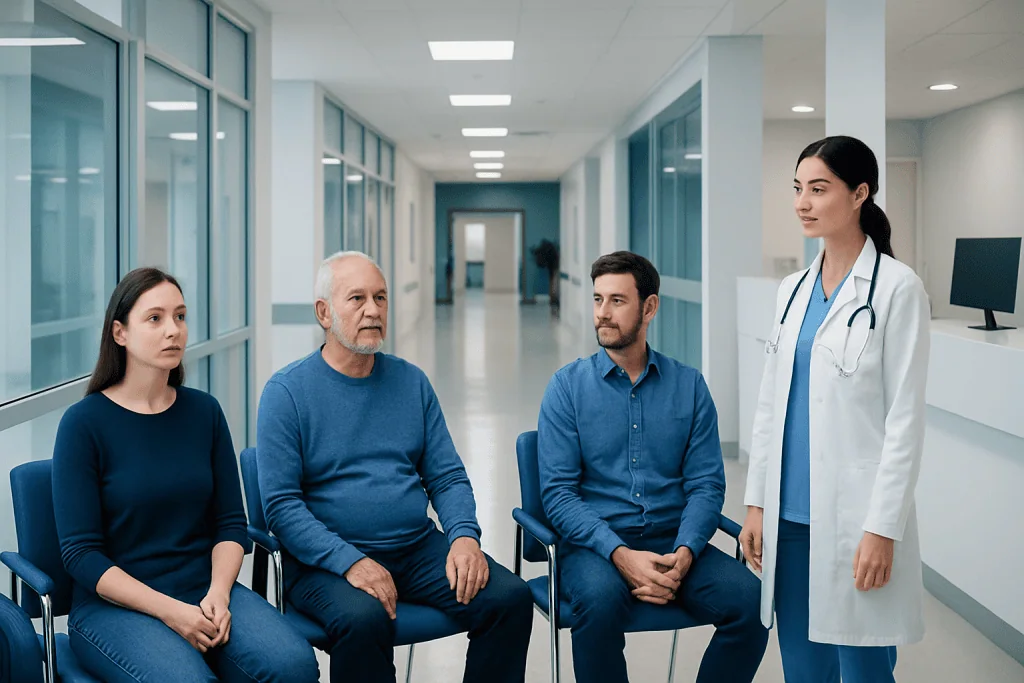
Bring your passport or ID, appointment confirmation, relevant medical records, a written medication list, your regular medicines in original packaging, glasses or hearing aids, a phone and charger, and loose comfortable clothing. If sedation or anaesthesia is planned, arrange a responsible adult and transport back to your hotel. Leave jewellery, large bags and unnecessary valuables behind.
Flying in for a procedure and going back to your hotel the same day? The night before, most patients ask the same question: what actually needs to go in the bag, and what can stay behind?
The honest answer is: less than you think, but the right items matter more than the quantity. This guide sets out exactly what to bring for a day procedure in Turkey — documents, medication, clothing, money arrangements and the transport plan that many patients forget until discharge. It also tells you what to leave at your hotel, because a heavy bag is its own problem on procedure day.
At a glance
- Best for: International patients having a same-day procedure or outpatient treatment in Turkey
- Bring first: Passport or ID, appointment confirmation, relevant medical records, a written medication list and insurance or payment documents
- Medicines: In original packaging, in your hand luggage, taken on the day only as your doctor has instructed
- Wear: Loose, comfortable clothing, flat slip-on shoes and a light extra layer
- Do not forget: A responsible adult and a confirmed ride back if sedation or anaesthesia is planned
- Leave behind: Jewellery, large electronics, suitcases and any cash beyond what the day requires
The essentials: what to bring for a day procedure in Turkey
Start with identity and paperwork. Bring your passport, or another form of identification the hospital has told you it accepts. As an international patient you will typically need it at registration, and you may be asked for it again before certain steps in your care. Keep your appointment confirmation with it — a printed copy or a saved message both work, but a printed copy does not depend on your battery or the hospital Wi-Fi.
Next come your medical documents. Bring anything directly relevant to the procedure: referral letters, recent test results, imaging reports, allergy information and a short summary of past operations or ongoing conditions. If your records are in another language, bring the originals anyway; if you have translated summaries, keep both versions together in the same folder. You do not need your full medical history from years back — relevance beats volume. If you are unsure which papers matter most, our guide to travelling to Turkey with medical records goes through this in detail.
Third, your medication list. Write down every medicine, vitamin, supplement and injection you use, with the dose and the time of day you take it. Brand names differ between countries, so the generic (active ingredient) name is the most useful thing on that list. Add your allergies and an emergency contact. This single sheet of paper answers more clinical questions at check-in than almost anything else you can bring for a day procedure in Turkey.
Finally, keep your hotel address, a local contact number and your return transport details somewhere you can reach with one hand. After a procedure you may be tired, and the last thing you want is to dig through a bag for an address you could have written on the front of your folder.
Bring medications safely and clearly labelled
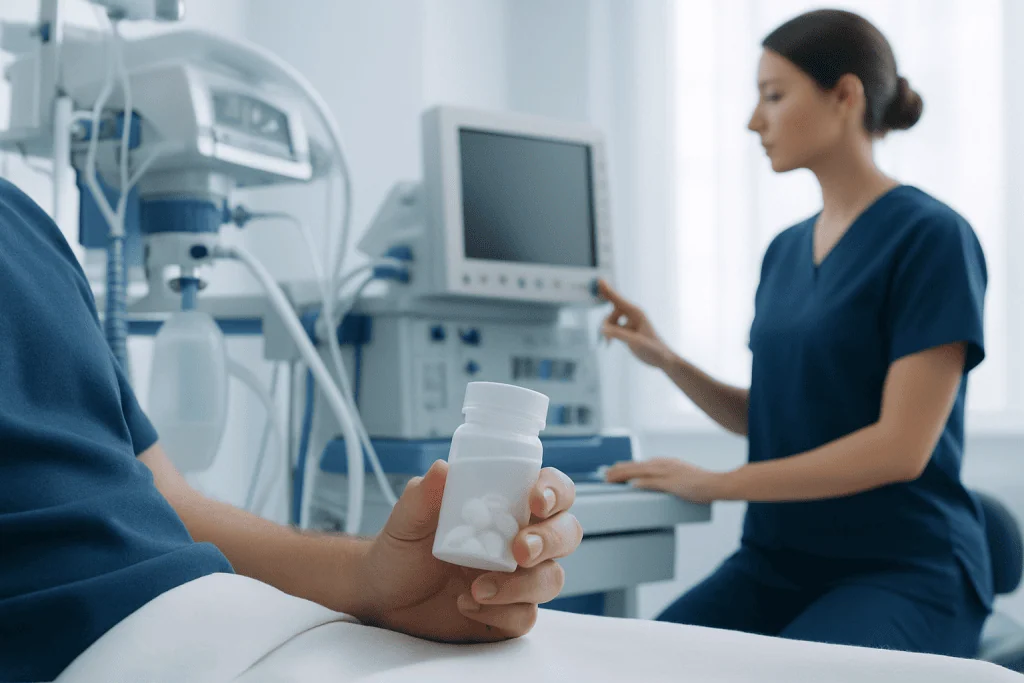
If you take regular medication, bring it in its original packaging wherever possible. Original boxes show the active ingredient, the strength and the prescriber’s instructions, which lets the care team confirm exactly what you use without guessing at unfamiliar brand names. Keep medicines in your hand luggage rather than checked baggage, and keep them separate from snacks and toiletries so they are easy to show if asked at the airport or the hospital.
Do not assume you should take all of your usual medicines on the morning of the procedure. Some medicines — blood thinners, diabetes treatments and certain supplements among them — are sometimes paused or adjusted before a procedure. That decision belongs to your treating doctor, and it should already be written in your pre-procedure instructions. Follow those instructions exactly as given; if anything about them is unclear, clarify it with the hospital before the day, not on the morning itself. Patients travelling with diabetes have some extra planning to do around medication timing, so this is worth confirming as soon as your pre-procedure instructions arrive.
Glasses, hearing aids and other devices
Bring whatever you need to see, hear and communicate clearly. Glasses, hearing aids, inhalers and mobility aids may not be needed during the procedure itself, but they matter a great deal during check-in, the consent discussion and discharge — the moments when you need to understand and be understood. If you normally wear contact lenses, bring your glasses and a lens case as well, because many procedures require lenses to come out. A short written note listing any medical devices you use is helpful for the team. If you are travelling with larger equipment, such as CPAP machines or injectable medication that needs cooling, read how to bring medical devices for treatment travel to Turkey before you fly.
Dress for comfort, easy changing and discharge

Choose loose, comfortable clothing that is easy to take off and easy to put back on. Soft trousers with an elastic waist, a loose top, a zip-up or button-front layer and flat slip-on shoes are the practical combination. You may be changing into a gown and back again while tired or slightly sore, so avoid tight waistbands, fiddly fastenings, clothes that pull over a fresh dressing, and anything you would struggle with one-handed.
Depending on the procedure, you may be asked to remove contact lenses, jewellery, dentures, nail polish or make-up. The simplest approach is to arrive without them: wear no jewellery you would mind taking off, skip the nail polish, and keep make-up minimal. Wedding rings can sometimes be taped rather than removed, but that is the team’s call on the day, not something to count on.
Turkey’s weather varies considerably by season and city, and hospital interiors often feel cooler than the street. A light cardigan or zip-up layer earns its place in the bag: you can add it in a chilly waiting area and remove it in seconds when called through. If part of your body will be treated or dressed afterwards — an arm, the face, the abdomen — pick clothing that will not press on or rub against that area on the way back.
Pack for the trip home, not for an overnight stay
A day procedure does not need a hospital bag in the traditional sense. Think instead about the few hours between discharge and your hotel room. That usually means: your phone and a charger, tissues or wet wipes, lip balm, a clean face mask if you prefer one, and a bottle of water for after discharge if your team confirms drinking is allowed. If your throat, the treated area or your general energy may be affected, a light bag makes the journey noticeably easier.
Choose a small cross-body bag or a compact backpack that leaves your hands free, and give your passport, phone and cards one dedicated zipped pocket so you are never searching for them at a desk or in a taxi. Anything you are given at discharge — written aftercare instructions, prescriptions, follow-up details — goes straight into your document folder, not loose into the bag.
If sedation or anaesthesia is planned, expect to feel sleepy, slow or a little uncomfortable afterwards. That is normal and it is exactly why the bag should be simple. It is also why pain relief after your procedure is planned in advance rather than improvised afterwards — your written discharge instructions will typically cover it, and they belong in your document folder, not memorised through a post-anaesthesia haze. And if your travel plans include a flight soon after treatment, keep those plans flexible until your care team confirms when flying is advisable for your specific procedure.
Food, drink and fasting: what not to pack
Do not bring food into the hospital unless you have been told it is acceptable. Many day procedures — particularly anything involving sedation or anaesthesia — require fasting for a set period beforehand, and eating or drinking at the wrong time can delay or postpone your procedure for safety reasons. The fasting window you are given is specific to you and your procedure; follow it as written. Our guide on when to stop eating, drinking or smoking before a procedure in Turkey explains why these windows exist and how they typically work.
A simple snack for after discharge is a reasonable thing to have in the bag — something plain, in case your care team says eating is allowed and the trip back is long. Keep it sealed and out of sight until then. The point is not that food is forbidden; the point is that timing is clinical, and the safest position is to let the team tell you when.
Your companion, interpreter and the ride back
The most important thing to bring may not be an object at all. If your procedure involves sedation or anaesthesia, you will usually be told not to travel back alone. That means arranging a responsible adult in advance: someone who can be reachable by phone during the procedure, meet you at discharge, listen to the aftercare instructions alongside you and get you back to your accommodation. Preparing for sedation itself — fasting, escorts, what the drowsiness feels like — is covered in how to prepare for a sedation procedure in Turkey, and there is a practical breakdown of what your companion can do on procedure day.
If English is not your preferred language, ask about interpreter support well before the day. Acibadem’s international patient teams routinely coordinate interpreters, transport planning and the practical sequence of a treatment day for overseas patients, so that consent discussions and discharge instructions are understood rather than merely translated. Raising language needs early is far easier than raising them at the registration desk.
Before you leave for the hospital, confirm the return trip in concrete terms: who is driving or which service you will use, where the pickup point is, roughly how long the journey takes, and whether stairs or walking distances are involved at either end. A smooth discharge depends less on what is in your bag and more on how clearly the trip back has been arranged.
Money, cards and payment paperwork
Bring your insurance documents or payment confirmation if your treatment involves either, plus a bank card and a modest amount of cash for incidentals — a pharmacy stop, a drink after discharge, a taxi. Avoid carrying large amounts of cash or anything you would be upset to lose. Hospitals handle patient belongings carefully, but a small, well-organised set of essentials is easier for you to manage and easier to keep secure than a full wallet and a laptop bag.
On cost more generally: there is no meaningful single figure for what treatment in Turkey costs, because a quote depends on the specific procedure, the type of anaesthesia, the facilities and equipment involved, the specialists taking part, and whether tests, follow-up visits or accommodation support are included. The practical step for a traveller is to obtain a written, itemised quote before flying and to understand exactly what it does and does not include — then the only money question left on procedure day is small change.
What to leave at your hotel
For a same-day visit, less is better. Leave behind jewellery, watches, large electronics, paper files you do not need and anything sentimental that could be misplaced during a change of clothes. Leave your suitcase at the hotel unless you have been specifically told to bring it; if your schedule runs airport-to-hospital or hospital-to-airport, ask in advance about luggage timing and storage rather than wheeling a case into a day unit.
Leave behind assumptions, too. Do not assume you can eat, do not assume you can take your usual morning tablets, and do not assume you can get a taxi alone afterwards. Each of those has a specific answer in your pre-procedure instructions, and each is easy to confirm the day before. If an overnight stay is a realistic possibility in your case, ask beforehand what to prepare — packing for it by default only adds weight to a day that should stay light.
Step by step
- Re-read your hospital instructions the day before. Check the fasting window, the medication instructions and the arrival time, even if you read them when they arrived. Clarify anything unclear before the day, not on the morning.
- Build one document folder. Passport or ID, appointment confirmation, insurance or payment papers, relevant medical records, and a written list of medications, allergies and emergency contacts. One folder, always in the same pocket of your bag.
- Pack your medicines correctly. Original packaging, hand luggage, easy to reach. Take them on the day only as your doctor has instructed.
- Lay out procedure-day clothing. Loose trousers, a loose top, a zip-up layer, flat slip-on shoes. No jewellery, no nail polish, glasses instead of contact lenses.
- Confirm the ride back. If sedation or anaesthesia is involved, confirm your companion, the pickup point and the route to your hotel before you leave for the hospital.
- Empty the bag of everything else. Valuables, extra electronics and unnecessary paperwork stay at the hotel. A light bag is easier to manage and harder to lose things from.
Your checklist
- Passport or government-issued ID
- Appointment confirmation and hospital contact details
- Relevant medical reports, test results and imaging summaries
- Written list of medications (generic names), allergies and conditions
- Regular medicines in original packaging, in hand luggage
- Insurance or payment documents, one card, small cash
- Loose, comfortable clothing and flat, easy-to-remove shoes
- Glasses, hearing aids or other essential personal devices
- Phone, charger and your hotel address written down
- A companion or confirmed transport back if sedation or anaesthesia is planned
Key takeaways
- Your most important items are ID, relevant records, a clear medication list and a confirmed plan for the trip back.
- Bring regular medicines in original packaging, and take them on the day only as your treating doctor has instructed.
- Wear loose, practical clothing; leave jewellery, valuables and suitcases at the hotel.
- Fasting instructions are specific to you and your procedure — follow them as written, and do not pack food unless told it is acceptable.
- If sedation or anaesthesia is planned, a responsible adult companion and arranged transport are part of the packing list, not an optional extra.
Frequently asked questions
Do I need to bring my passport for a day procedure in Turkey?
Yes. Bring your passport or another form of identification the hospital has confirmed it accepts. International patients are typically also asked for booking, insurance or payment documents, so keep everything together in one folder.
Can I go back to my hotel alone after a day procedure?
It depends on the procedure and whether sedation or anaesthesia is used. Many patients are advised not to travel alone afterwards, so the safe approach is to arrange a companion and transport in advance and confirm the discharge instructions with your care team on the day.
Should I bring food and water with me?
Only if the hospital has said it is acceptable. Many procedures require fasting beforehand, and eating or drinking at the wrong time can delay treatment for safety reasons. A sealed snack for after discharge is reasonable, but keep it put away until your team says eating is allowed.
What if I do not speak Turkish?
Ask about language support before your appointment. Acibadem’s international patient teams routinely coordinate interpreters for overseas patients, which makes registration, consent discussions and discharge instructions much easier to follow.
Do I need an overnight bag just in case?
Most day procedures do not require one, and carrying too much adds stress. If there is a realistic chance your team may want to observe you longer, ask beforehand what to prepare rather than bringing a suitcase into the hospital.
What are the most popular medical procedures in Turkey for international patients?
International patients commonly travel to Turkey for dental treatment, eye procedures, hair restoration, cosmetic surgery, bariatric surgery and a range of diagnostics and same-day interventions. Whatever the procedure, the packing principles are the same: documents, medication details, practical clothing and a discharge plan.
What is the average cost of surgery in Turkey?
There is no meaningful single average. Every quote depends on the specific procedure, the anaesthesia involved, the facilities and specialists required, and what the quote includes — tests, follow-up, accommodation support. Ask for a written, itemised quote before you travel and confirm exactly what it covers.
Do Americans go to Turkey for plastic surgery?
Yes — patients from the United States, the UK, Europe, the Gulf and elsewhere travel to Turkey for cosmetic and many other kinds of treatment. If your cosmetic procedure is done as a day case, this guide’s checklist applies directly; procedures involving sedation still require an escort and arranged transport back.
Add us as a Preferred Source to see more of our trusted health content across Google Search, AI Overviews and Discover.

Update history
- PublishedAugust 6, 2026
- Medical review approvedSeptember 1, 2026
- Last content updateSeptember 1, 2026
References2
More Patient Guides
HoLEP in Turkey: How It Compares With TURP and What Recovery Involves
HoLEP in Turkey treats enlarged prostate tissue with laser enucleation; learn how it compares with TURP, recovery, travel and follow-up.
13 min read
Porcelain Veneers in Turkey: Who Is Suitable and How Many Visits Are Needed?
Porcelain veneers in Turkey can enhance tooth shape and colour in two visits for suitable patients after a personalised dental assessment.
14 min read
How to Prepare for a Sedation Procedure in Turkey
Prepare safely for a sedation procedure in Turkey with guidance on fasting, medicines, travel, recovery and follow-up.
12 min read
Treatment Delays in Turkey: What Happens If Tests or Recovery Change Your Schedule
Treatment delays in Turkey can happen if tests or recovery change your plan. Learn how to manage appointments, travel, accommodation and follow-up.
8 min read