

Hollywood Smile in Turkey: What It Involves and Hospital Care
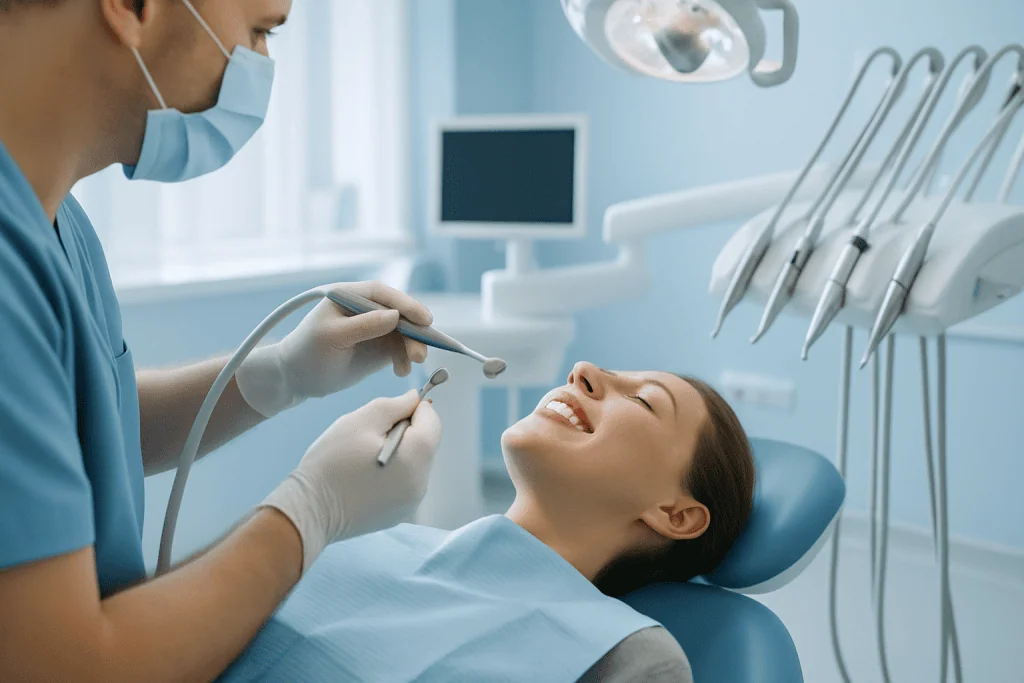
A Hollywood smile in Turkey is the everyday name for a smile makeover: a personalised cosmetic dental plan that can combine whitening, veneers, bonding, crowns, gum contouring or orthodontic options to improve the colour, shape and harmony of the teeth. Many adults from the United Kingdom and the United States consider having this work done in Istanbul, and the same questions come up each time: what the treatment actually involves, how it is planned, what can go wrong, and how the pathway compares with private dentistry at home.
This guide answers those questions from the perspective of hospital dentistry. Acıbadem is a network of more than 20 hospitals, 7 of them JCI-accredited, with 3,300+ physicians; cosmetic dental work is delivered within that setting rather than in a stand-alone clinic. The verified price band appears beneath the sections, and a personal quote follows a free medical review.
What a Hollywood smile is and who it suits
A smile makeover is not a single procedure. It is a plan drawn up for one person, combining whatever the dentist judges appropriate: professional whitening to lift tooth colour, bonding to repair small chips, veneers to reshape the front surfaces, crowns for teeth that need more structural cover, gum contouring to even out the gum line, or orthodontic options to move teeth rather than mask their position. The aim is harmony between the teeth, the lips and the face, not a uniform row of identical teeth.
Who it tends to suit
- Adults with healthy gums and sound tooth structure who are unhappy with discolouration, uneven edges, small gaps or worn teeth.
- People who have completed any restorative dentistry they need and want a cosmetic finishing stage.
- Those able to attend several appointments over one to three weeks and to maintain good oral hygiene afterwards.
Who should pause or reconsider
- Anyone with active decay, gum disease or infection; these must be treated first.
- People who grind or clench heavily without a management plan, because restorations are placed under repeated load.
- Patients whose main concern is alignment and who may be better served by orthodontic treatment than by covering misaligned teeth.
- Anyone expecting a result copied from a photograph rather than a design agreed on their own teeth.
A dentist’s assessment of oral health, bite, tooth colour, gum line and facial proportions decides which options are suitable, and it is normal for the final plan to be less extensive than the patient first imagined. Preserving natural tooth tissue where possible is a reasonable priority, and a dentist who suggests doing less is often acting in the patient’s interest.
Why UK and US patients choose Türkiye for a smile makeover
The reasons UK and US patients give are practical. In the UK, cosmetic dentistry is not available on the NHS, so the choice is private treatment at home or private treatment abroad; in the US the position is similar, with dental insurance rarely covering elective cosmetic work. Beyond cost, which the price band below sets out, several features of the Turkish pathway attract people.
- Hospital medicine rather than a shopfront. At Acıbadem the dental department sits inside a hospital. Anaesthesia teams, intensive care and imaging are on site, which matters for patients with medical conditions, for anxious patients who ask about sedation, and in the rare event of a complication.
- JCI accreditation. Seven Acıbadem hospitals hold Joint Commission International accreditation, which audits infection control, medication safety, record-keeping and patient rights against an international standard.
- One network, one record. Diagnostics, treatment and follow-up sit within the same system, so a dentist can see a patient’s imaging and medical history without chasing it between providers.
- Experience with international patients. Coordinators, interpreters and English-speaking clinicians are part of the routine, not an add-on.
- No waiting list. Planning starts when the patient is ready, and appointments are scheduled to fit a single trip.
- Proximity. Istanbul is about 4 hours from London and about 10 hours from New York, which makes a return visit realistic if one is ever needed.
None of this removes the need to check credentials, ask hard questions and involve your own dentist before and after. It does change the environment in which the work is done, and for many patients that environment is the deciding factor.
How a Hollywood smile in Turkey works with Acıbadem, step by step
- Remote medical review. You send recent photographs, any X-rays you have and a short medical history. A dentist reviews them and outlines what is likely to be possible. This is free and involves no commitment.
- Personal plan. You receive a written proposal: which teeth, which techniques, how many appointments and how long to stay. The quote follows this review, not the other way round.
- Arrival and coordinator. A patient coordinator meets you, arranges transfers and interprets where needed. You know before you fly who this person is and how to reach them.
- Consultation and pre-operative tests. The dentist examines you in person, checks oral health, bite, tooth colour, gum line and facial proportions, and takes X-rays, photographs and digital impressions. Any decay, gum disease or infection found is treated first. The design is agreed with you before any tooth is touched.
- Treatment. Work proceeds over two to five appointments under local anaesthesia. Between appointments you may wear temporary restorations.
- Recovery in Istanbul. You stay long enough for final fitting and adjustment, typically one to three weeks depending on the plan.
- Follow-up after returning home. Remote check-ins, written records for your own dentist, and a clear route for questions or concerns.
Patients sometimes ask whether the whole thing can be done in a long weekend. Where the plan involves laboratory-made restorations, whitening that needs to stabilise before shade matching, or gum contouring that needs to settle, compressing the timetable is not in the patient’s interest, and the dentist should say so plainly. A plan that cannot fit your available dates is a reason to adjust the dates or the plan, not to cut corners.
The procedure: techniques, anaesthesia and appointments
A smile makeover is classed as non-surgical dentistry and is performed in the dental chair under local anaesthesia. You are awake, the treated area is numb, and you go home the same day; there is no overnight stay.
Techniques that may be combined
- Whitening to improve tooth colour, often carried out first so that later restorations can be matched to the new shade.
- Bonding to repair chips, close small gaps or reshape edges using tooth-coloured material.
- Veneers to change the shape and colour of the visible front surfaces of teeth.
- Crowns where a tooth needs more structural cover than a veneer can give.
- Gum contouring to even out the gum line where it makes teeth look short or uneven.
- Orthodontic options where the underlying issue is tooth position rather than surface.
Appointments and timing
Treatment usually takes two to five appointments over one to three weeks. The number depends on how many techniques are combined and whether laboratory work is involved. Between appointments you may have temporary restorations in place and will be given instructions on how to look after them, including which foods to avoid.
Before treatment begins
Your dentist evaluates oral health, bite, tooth colour, gum line and facial proportions, and may take X-rays, photographs and digital impressions to design the new smile. Any active decay, gum disease or infection is treated before cosmetic work starts. This sequencing is not optional: cosmetic restorations placed over untreated disease fail early, and treating disease first is a mark of a properly run department rather than an inconvenience.
Recovery and aftercare timeline
Recovery from a smile makeover is measured in days to two weeks rather than months, but it varies with what was done and how many teeth were involved.
The first 24 to 48 hours
- Numbness from local anaesthesia wears off within hours; avoid chewing on the treated side until it does.
- Sensitivity to hot and cold is common after whitening and after tooth preparation for veneers or crowns.
- If gum contouring was carried out, mild soreness is expected.
The first week
- Follow your dentist’s instructions on oral hygiene and on caring for temporary restorations.
- Avoid very hard foods, which can dislodge temporaries or chip new bonding.
- Avoid strongly staining foods and drinks, such as coffee, red wine and curry, especially after whitening or bonding.
- Speech and chewing may feel slightly different at first; most people adapt within days.
Weeks two and beyond
- Sensitivity settles for most patients; persistent sharp pain on biting should be reported.
- Any adjustment to the bite is usually made at the final appointment before you fly.
- Regular check-ups and professional cleaning at home help maintain the result over the long term.
Practical points: bring a soft toothbrush, plan meals around softer foods for the first days, and do not book your return flight for the morning after the final fitting if you can avoid it, so that a last adjustment is possible. Acıbadem provides written aftercare instructions in English and a contact route for questions once you are home, and your own dentist should receive a copy of what was done.
What it costs: UK, US and Türkiye
Typical self-pay ranges from the Turkey Medical Price Index. Türkiye figures are guide ranges for hospital treatment; your personal quote follows a free medical review.
Source: Turkey Medical Price Index (quarterly edition). Ranges depend on the extent of treatment, materials and hospital stay; they are not a quote.
Safety and risks
Cosmetic dentistry is low-risk compared with surgery, but it is irreversible wherever tooth tissue is removed, and it can go wrong. Being clear about this is part of informed consent.
Who is not suitable
- Patients with untreated decay, gum disease or infection.
- Patients with severe grinding or clenching that has not been assessed.
- Patients whose expectations cannot be met by the treatment proposed, or who are seeking treatment during a period of emotional distress.
- Patients with conditions affecting healing or bleeding that have not been discussed with the dentist and their own physician.
Complications
- Prolonged sensitivity after tooth preparation or whitening.
- Chipping, debonding or fracture of veneers, bonding or crowns.
- Gum inflammation where restoration margins are poorly finished or hygiene is difficult.
- Nerve irritation in a prepared tooth, occasionally requiring root canal treatment later.
- Colour or shape that does not match what was agreed.
- Over-preparation of healthy teeth, which cannot be undone.
What problem cases abroad usually share
When patients return to the UK with problems after dental treatment abroad, certain patterns recur. Planning was rushed, with design and treatment compressed into a very short stay. Existing disease was not treated first. Healthy teeth were cut down aggressively when a less invasive option existed. There was no medical backup for a patient with an unrelated condition. And there was no follow-up: no records, no contact, nobody to call.
How a hospital setting changes that
A hospital dental department is subject to the same clinical governance, infection control and record-keeping as the rest of the hospital. Anaesthesia and emergency teams are in the building. Imaging is on site, so a plan can be based on complete information. The patient leaves with records that a UK dentist can read. This does not eliminate risk, and no honest clinician will say otherwise, but it addresses the specific failures that most often lead to regret.
UK and US vs Türkiye
How the pathway differs
In the UK, cosmetic dentistry is private whether you have it at home or abroad; the NHS does not fund it. Private practices at home often spread treatment over several weeks or months of separate appointments, which suits some patients and frustrates others. In the US, dental insurance seldom covers elective cosmetic work, and patients are self-paying in either case. In Türkiye the same treatment is concentrated into one planned trip, with the review done remotely beforehand and follow-up shared between the treating team and your own dentist afterwards.
Hollywood smile Turkey price: what the difference does and does not mean
The price band below sets out verified figures for the UK, the US and Türkiye side by side. The gap between countries reflects lower salaries, rents and overheads in Türkiye. In a hospital setting it does not reflect different materials: the same categories of ceramic and bonding materials are available to dentists in Istanbul as in London or New York. A lower price is therefore not in itself a warning sign. A very low price offered with no pre-treatment review, no written plan and no hospital affiliation should, however, prompt questions.
What to compare like for like
- The written plan: which teeth, which technique for each, and why.
- The dentist’s qualifications and experience in restorative or cosmetic dentistry.
- The materials proposed and whether the laboratory is named.
- Whether existing disease will be treated first and how that is charged.
- The aftercare arrangement once you are home, and who pays if something needs redoing.
- Travel, accommodation and time off work, which belong in the total.
A personal quote from Acıbadem follows a free medical review, so that the figure you compare relates to your own teeth rather than to a generic package.
Planning the trip to Istanbul
- Passport. Valid for the whole trip; some airlines expect at least six months’ validity, so check yours early.
- Visa. UK, Irish, US, Canadian and Australian passport holders enter Türkiye visa-free for up to 90 days. Rules change, so confirm current requirements before you book.
- Length of stay. Plan for one to three weeks depending on your written plan. Ask the coordinator to confirm the earliest sensible return date after the final fitting, and build in a buffer day.
- Companion. Not clinically required for dentistry under local anaesthesia, but useful for company, for practical help, and for the occasional day when you feel sore or tired.
- Travel insurance. Standard holiday policies exclude planned treatment. Look for a policy that specifically covers elective medical or dental travel, including complications and changes to travel dates, and read the exclusions before paying.
- Medications and records. Bring a list of current medications, any recent dental X-rays, and a letter from your GP if you have a relevant condition such as a bleeding disorder or diabetes.
- Practicalities. Soft foods for the first days, a soft toothbrush, a card with the hospital address in Turkish, and a way to contact your coordinator. Acıbadem Maslak Hospital, for example, is on the European side of the city, and the coordinator can advise on accommodation within easy reach.
Flights from London take about 4 hours and from New York about 10 hours. Arriving a day before your first appointment allows you to rest, adjust to the time difference and attend the consultation with a clear head, which matters when you are agreeing a design that is difficult to reverse.
Back home: follow-up, records and insurance
Treatment does not end when you land. Arrange a review with your own dentist within a few weeks of returning, and share the written records Acıbadem gives you: the treatment plan, the materials used, the shade selected and any X-rays. A dentist who knows what was done can look after it properly at routine check-ups and can identify early any issue that needs attention.
When to seek help
- Sharp pain on biting that persists beyond the first couple of weeks.
- A restoration that feels loose, has chipped or has come away.
- Swelling, bleeding gums that do not settle, or a bad taste, which may indicate infection.
- A bite that feels uneven or causes jaw discomfort.
Contact the Acıbadem team as well as your own dentist in any of these situations; most concerns can be assessed remotely with a photograph and a description.
Insurance, NHS and your own doctor
Private medical and dental insurance in the UK rarely covers elective treatment abroad, and cosmetic dentistry is usually excluded altogether; check with your provider before you travel. The NHS does not fund cosmetic dentistry, but if a complication arises after treatment abroad the NHS treats you as it would any other patient with a dental or medical problem. For US readers, whether Health Savings Account or Flexible Spending Account funds can be used for treatment abroad, and whether a travel-medical policy covers complications, varies by plan and by provider; confirm in writing. Whatever your position, keep your own dentist informed before and after, because continuity of care at home is what protects the result over the years.
Questions to ask before deciding
Whether you are considering a Hollywood smile in Turkey or private cosmetic dentistry at home, the same questions apply. Put them to any provider and judge the answers, not the marketing.
- Which of my teeth will be treated, with which technique, and why that technique rather than a less invasive one?
- How much natural tooth will be removed, and could whitening or bonding achieve enough on its own?
- Will you treat any decay or gum disease first, and is that included in the plan?
- What materials will be used, and which laboratory makes the restorations?
- How many appointments will I need and how many days should I stay?
- Who is the treating dentist, what are their qualifications, and will the same person carry out every stage?
- Is treatment delivered inside a hospital, with anaesthesia and emergency teams on site?
- What happens between appointments, and what should I avoid eating?
- What written records will I receive for my own dentist?
- How do I contact you once I am home, and what is the arrangement if something needs adjusting or redoing?
- Does the quote I have been given follow a review of my own photographs and X-rays, or is it a standard package?
Clear, specific answers to these questions are a better guide than any gallery or testimonial. Take the answers to your own dentist and discuss them before committing, and be cautious of any provider who discourages that conversation. Suitability for a smile makeover is determined by a physician’s evaluation of your oral health, bite and expectations, not by the wish for a particular look.
What is a Hollywood smile in Turkey?
It is the informal name for a smile makeover, a personalised cosmetic dental plan that can combine whitening, veneers, bonding, crowns, gum contouring or orthodontic options. The aim is to improve tooth colour, shape and harmony with the face. Which techniques are used depends on a dentist's assessment of your teeth, gums and bite.
How long does a smile makeover in Turkey take?
Treatment usually takes two to five appointments spread over one to three weeks. The exact number depends on how many techniques are combined and whether laboratory-made restorations are involved. Plan your stay around the written plan rather than the other way round.
Is a Hollywood smile painful?
The work is carried out under local anaesthesia, so the treated area is numb during each appointment. Afterwards, sensitivity to hot and cold and mild gum soreness are common for a few days. Persistent sharp pain on biting is not expected and should be reported.
How much does a Hollywood smile in Turkey cost?
The verified price band beneath these sections shows how the UK, the US and Türkiye compare. A personal quote follows a free medical review of your photographs and X-rays, because the cost depends on which teeth are treated and with which techniques. Compare written plans like for like rather than headline figures.
Do my teeth have to be filed down?
Not always. Whitening and bonding involve little or no removal of tooth tissue, while veneers and crowns require some preparation of the tooth surface. A responsible dentist proposes the least invasive option that meets your goals and explains how much tooth will be removed before you agree.
Can I have a smile makeover if I have gum disease or decay?
Not until it has been treated. Active decay, gum disease or infection must be dealt with before cosmetic work begins, otherwise restorations fail early. This may add appointments to your plan, and a provider who skips this step is not acting in your interest.
How long do the results last?
Longevity depends on the techniques used, how you care for your teeth and whether you grind or clench. Following aftercare instructions, avoiding very hard and staining foods early on, and keeping up regular check-ups and professional cleaning all help. Restorations can be repaired or replaced over time, so continuity with your own dentist matters.
Will my UK dentist look after work done in Turkey?
Most dentists will provide routine care and check-ups for restorations placed elsewhere, particularly when you bring full written records of what was done and which materials were used. Share the plan and X-rays from Acıbadem at your first appointment back home. If a complication arises, the NHS treats you as it would any other patient with a dental problem.
Your care team
Physicians of the Acıbadem network who perform this treatment in Istanbul.
 Where it is performed Acibadem Maslak Hospital İstanbul · JCI-accredited hospitals

Clinical guide & data
The evidence-based pages behind this guide.
Planning tools for this treatment
Indicative figures for orientation only: your written plan and quote follow a free medical review.