

Turkey Teeth: What It Means, the Risks and a Safer Approach
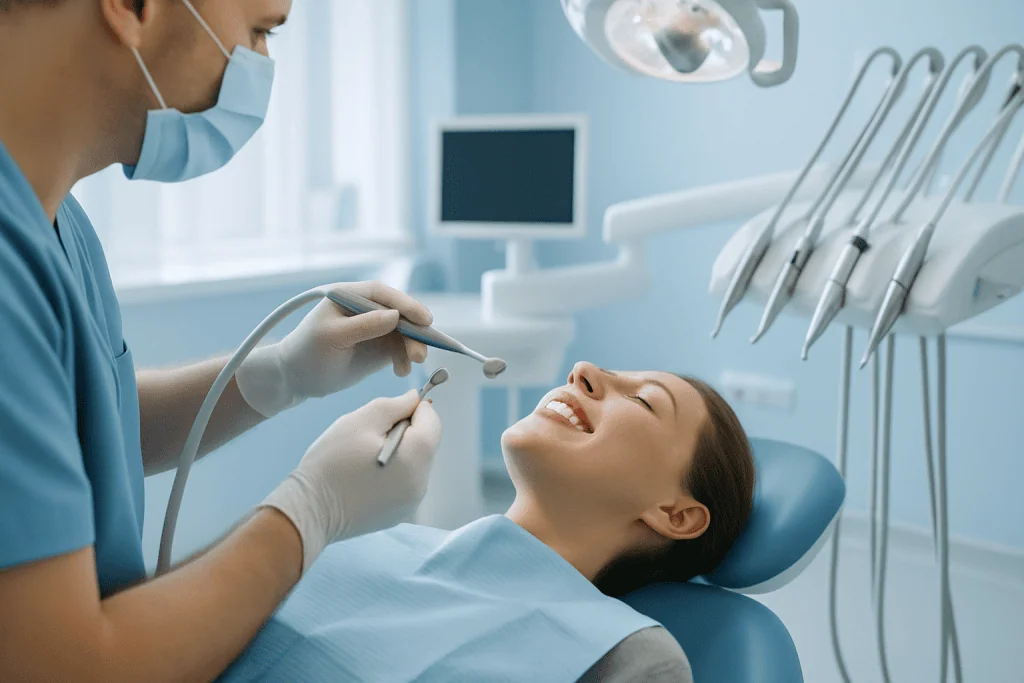
‘Turkey teeth’ has become one of the most searched dental phrases in the UK, yet it is not a treatment and not a clinical term. It describes a look, a row of identical, very white front teeth, and, increasingly, a story: someone who flew to Türkiye for a long weekend, came home with a full set of crowns, and later discovered sensitivity, gum problems or the need for root canal treatment on teeth that had been healthy.
This page separates the phrase from the dentistry. It explains what a smile makeover actually involves, who it suits and who it does not, why cases go wrong, how a hospital-based pathway differs from a shopfront clinic, and what to compare before you decide. It does not quote prices: a personal quote follows a free medical review, and the site’s Price Index shows verified ranges separately.
What are turkey teeth, and who is a smile makeover for?
‘Turkey teeth’ grew up on British social media to describe a very uniform, very white set of front teeth, usually crowns or veneers fitted abroad in a short visit. Over time it has come to carry two meanings: a particular look, and a warning about how that look was achieved.
What dentists actually offer is a smile makeovera personalised cosmetic dental plan that can combine whitening, veneers, bonding, crowns, gum contouring or orthodontic options to improve tooth colour, shape and harmony. The word ‘combine’ matters. A well-planned makeover uses the least invasive option that meets the goal, and different teeth in the same mouth may need different treatments.
Who it may suit
- Adults with healthy gums and treated decay who are unhappy with discolouration, chips, gaps, uneven edges or worn teeth.
- People with a stable bite who understand that veneers and crowns are restorations that need care and will eventually need replacement.
- Patients willing to spend one to three weeks in Istanbul rather than a long weekend.
Who should not have it
- Anyone with untreated gum disease, active decay or infection: these must be treated first.
- People who grind or clench heavily without a plan to protect the new restorations.
- Children and teenagers, and adults whose main problem is crowding or misalignment that orthodontics would address without cutting healthy enamel.
- Anyone expecting a fixed number of crowns regardless of what the examination shows.
The decision about which option is appropriate for each tooth belongs to a dentist who has examined you, not to a package description or a social media trend.
Why patients from the UK and the US travel to Türkiye for their teeth
Cosmetic dentistry in the UK and the US is almost entirely self-funded, and in the UK it sits outside NHS provision for adults except in specific clinical circumstances. That has pushed many people to look overseas, and Türkiye has become a frequently discussed destination, for good and for bad reasons.
The reasons patients choose a hospital group rather than a standalone dental clinic are practical:
- Hospital medicine, not a shopfront. Dentistry within Acıbadem sits inside general hospitals with anaesthesia, intensive care, radiology and laboratory services on the same site. For routine cosmetic work you will not need them; if a medical problem arises, they are there.
- JCI accreditation. Seven Acıbadem hospitals hold Joint Commission International accreditation, within a network of more than 20 hospitals and 3,300+ physicians. JCI standards cover infection control, patient identification, record keeping and consent: the processes that tend to fail when treatment abroad goes wrong.
- Experience with international patients. Interpreters, coordinators and written records in English are standard rather than an add-on.
- No waiting list. Appointments are scheduled around your travel dates, not a queue.
- Distance. Istanbul is roughly four hours from London and about ten from New York, which makes a proper stay and a later review visit realistic.
None of this makes treatment abroad automatically better than treatment at home. It does mean that the safeguards people assume when they see a UK or US dentist, regulation, records, someone to call, can be present in Türkiye too, if you choose the setting deliberately.
Getting teeth done in Turkey with Acıbadem: step by step
- Remote medical review. You send recent photographs, any X-rays you have and a description of what you dislike about your smile. A dentist reviews them and tells you honestly whether a makeover is appropriate and which options are likely to be involved. If gum treatment or orthodontics should come first, you will be told so.
- Personal plan. You receive a written treatment outline and a quote based on your case. It remains provisional until you are examined in person.
- Arrival and coordinator. A patient coordinator meets you, arranges transfers and appointments and is your single point of contact throughout the stay.
- Consultation and pre-operative tests. Your dentist evaluates oral health, bite, tooth colour, gum line and facial proportions. X-rays, photographs and digital impressions may be taken to design the new smile. Any active decay, gum disease or infection is treated before cosmetic work begins, even if that changes the timetable.
- The treatment. Two to five appointments over one to three weeks, under local anaesthesia, as an outpatient. Between appointments you may wear temporary restorations.
- Recovery in Istanbul. You remain in the city while final restorations are fitted and checked, so any adjustment is made by the dentist who placed them.
- Follow-up after returning home. You leave with a written record, images and details of the materials used, plus a named route for contacting your dentist. Your own dentist in the UK or US can then monitor the work.
A word on ‘turkey teeth packages’
Bundled logistics, hotel, transfers, interpreter, are reasonable and common. A package that specifies the number of crowns or veneers before anyone has looked in your mouth is not. Read a fixed treatment count as a warning sign rather than a convenience: the plan should follow the examination, never the other way round.
The procedure: veneers, crowns, whitening and other options
A smile makeover is a non-surgical treatment carried out under local anaesthesia. According to the treatment information used across our hospitals, it typically takes two to five appointments spread over one to three weeks, with no overnight stay: you return to your hotel after each visit.
What can be combined
- Whiteningfor colour alone, without altering tooth shape.
- Bondingcomposite added to repair chips or close small gaps.
- Veneersthin facings for the front surface of teeth, addressing colour, shape and minor alignment.
- Crownsfull coverage for teeth that are heavily worn, broken or already extensively filled.
- Gum contouringreshaping the gum line where it is uneven or shows too much.
- Orthodontic optionsmoving teeth rather than covering them, where alignment is the main issue.
Much of the ‘turkey teeth veneers’ discussion online is actually about crowns, which involve more tooth reduction than veneers. Asking which is proposed for each tooth, and why, is one of the most useful questions you can put to any dentist.
Turkey teeth implants
Dental implants replace missing teeth and are a separate treatment with their own assessment and timeline; they are not part of the smile makeover facts described here. If you have missing teeth, say so at the remote review stage so that implants can be considered alongside the cosmetic plan rather than added later.
Digital design, photographs, X-rays and digital impressions, lets you see the intended result before any tooth is prepared and gives your home dentist a record to work from.
Recovery and aftercare timeline
Recovery from a smile makeover is usually measured in days rather than weeks; the treatment information gives a range of a few days to two weeks, depending on what was done.
During the treatment weeks
- Follow your dentist’s instructions on oral hygiene, temporary restorations and food restrictions after each step.
- Temporaries are weaker than the final work: avoid hard or sticky foods and cut food into smaller pieces.
- Some sensitivity to hot and cold is common after tooth preparation and usually settles.
The first two weeks after final fitting
- Avoid very hard or staining foods, coffee, red wine, strongly coloured sauces, during the early period, especially after veneers, bonding or whitening.
- Your bite may feel unfamiliar for a few days; report any high spot or discomfort so it can be adjusted before you fly.
- Mild gum tenderness after gum contouring is expected; persistent bleeding or swelling is not.
Long term
- Regular dental check-ups and professional cleaning help maintain results.
- A night guard may be advised if you clench or grind.
- Veneers and crowns are restorations, not natural teeth: they can chip, debond or need replacement, and the teeth beneath them still need care.
How long turkey teeth last is a common question. The honest answer is that it depends on the material chosen, how much natural tooth was preserved, your bite and your maintenance, which is why planning matters more than the destination.
What it costs: UK, US and Türkiye
Typical self-pay ranges from the Turkey Medical Price Index. Türkiye figures are guide ranges for hospital treatment; your personal quote follows a free medical review.
Source: Turkey Medical Price Index (quarterly edition). Ranges depend on the extent of treatment, materials and hospital stay; they are not a quote.
Safety and risks
Are turkey teeth safe? The procedures themselves, whitening, bonding, veneers, crowns, are standard dentistry performed worldwide. The risk lies in how they are planned and delivered, not in the country.
Who is not suitable
Patients with untreated gum disease, active decay, medical conditions that impair healing, heavy grinding without protection, or unrealistic expectations should not proceed until those issues are addressed. Nor should anyone whose problem would be better solved by orthodontics.
Complications
- Sensitivity that persists beyond the early weeks.
- Nerve damage from over-preparation, which can lead to root canal treatment.
- Gum inflammation where margins are poorly fitted or bulky.
- Bite problems, jaw discomfort or fractured restorations.
- Debonding of veneers or loss of crowns.
- Infection under a crown, sometimes months later.
What ‘turkey teeth gone wrong’ cases usually share
- Rushed planningtreatment squeezed into a long weekend, with no time for gum treatment, healing or a second look.
- Over-treatmentcrowns on healthy teeth that needed whitening or minimal veneers, removing enamel that cannot be replaced.
- No hospital backupnowhere to turn if a medical or anaesthetic problem arises.
- No follow-upa clinic that cannot be reached once the patient has flown home, leaving a UK dentist to repair work they did not plan.
How a hospital setting changes that
Within a hospital, the dentist works under the same clinical governance as every other department: written consent, sterilisation protocols, documented materials, imaging on site and a medical team nearby. Treatment is staged over one to three weeks, so decay and gum problems are dealt with first and final work is checked before you travel. You leave with records and a named route for contact afterwards. That does not remove risk, no dentistry does, but it addresses the specific failures behind many of the stories.
UK and US vs Türkiye
The pathway differs in three practical ways: access, aftercare and cost.
Access and waiting
In the UK, cosmetic dentistry is not available on the NHS for adults except in limited clinical circumstances, so almost everyone pays privately and may wait weeks or months for a specialist. In the US it is also self-pay in most cases, with dental insurance rarely covering cosmetic work. In Türkiye there is no waiting list; the constraint is your travel dates.
Aftercare and travel
At home, your dentist is a short journey away if a veneer loosens. Abroad, you need to plan for reviews, either a return visit or a UK or US dentist willing to take over routine maintenance. Build that into your decision rather than discovering it later.
Turkey teeth cost: what it means and what it does not
‘How much are turkey teeth’ is the question behind many searches, and it deserves a straight answer about why the difference exists. Lower professional salaries, lower property and staffing overheads and a lower general cost of living in Türkiye reduce the price of a dentist’s time. They do not change the materials: the ceramic systems, adhesives and laboratory equipment are sourced from the same international manufacturers. A lower cost therefore does not by itself indicate lower quality, nor does it indicate good planning. No figures appear on this page; a personal quote follows a free medical review, and the Price Index shows verified ranges separately.
Compare like for like
- Veneers versus crowns, and how many teeth each covers.
- The named material and laboratory.
- Whether gum treatment, X-rays and temporaries are included.
- Whether a package is fixed before examination or finalised after it.
- What happens, and who pays, if a restoration fails in the early months.
Planning the trip
Getting teeth done in Turkey works better when the travel side is as carefully planned as the dental side.
- Passport and entry. UK, Irish, US, Canadian and Australian passport holders enter Türkiye visa-free for up to 90 days; check current rules before you travel and make sure your passport has enough validity.
- How long to stay. Plan for the full treatment window, typically one to three weeks, rather than the minimum. Rushing to a flight is how adjustments get missed.
- A companion. Not medically necessary for local-anaesthetic dentistry, but useful for company and practical help on long appointment days.
- Travel insurance. Standard policies exclude planned treatment abroad and often exclude its complications. Look for a specialist policy that covers elective treatment, and read what happens if you need to stay longer.
- What to bring. Recent dental X-rays, a list of medications, details of allergies, your GP’s and dentist’s contact details, a night guard if you have one, and photographs of your teeth as they are now.
- Accommodation. Choose somewhere close to the hospital, for example, near Acıbadem Maslak Hospital in Istanbul, so that appointments and any unplanned visit are straightforward.
- Food. Plan soft meals for the days around preparation appointments and while wearing temporaries.
Discuss flying with your dentist. There is no general restriction after local-anaesthetic dentistry, but you should not leave with an unresolved bite problem or unfinished temporaries, and your return flight should sit after the final check rather than the final fitting.
Back home: follow-up, records and when to seek help
The work is not finished when you land. Turkey teeth in the UK context often means a patient arriving at a local practice with no notes and no idea what was placed; the aim is to avoid being that patient.
Follow-up with your own dentist
Book a check-up with your UK or US dentist within a few weeks of returning and tell them exactly what was done. Take the written record, images and material details you were given. Many dentists are wary of treating work they did not plan; complete documentation makes that conversation much easier.
When to seek help
- Pain that is worsening rather than settling.
- Swelling, pus or a bad taste from around a crown.
- A loose or lost veneer or crown.
- Bleeding gums that do not improve with good hygiene.
- Difficulty biting together evenly.
Contact your treating dentist in Istanbul as well: a photograph and a description are often enough to advise you.
Insurance, NHS and your own doctor
Private dental and medical insurance in the UK rarely covers elective treatment abroad or its complications; check your policy wording before you book. The NHS will treat a dental infection or emergency as it would for any other patient, but routine repair or replacement of cosmetic work is not covered and will usually be private. For urgent problems, NHS 111 or an emergency dental service is the right route. US readers: HSA and FSA eligibility for treatment abroad varies, and travel-medical policies differ widely on complications of planned treatment, confirm in writing. Keep your GP informed too, particularly if you take medication or have a condition that affects healing.
Questions to ask before deciding
Before committing to teeth in Turkey, with any provider, put these questions in writing and expect written answers.
- Which treatment is proposed for each tooth, and why that one rather than a less invasive option?
- How much healthy tooth will be removed, and how many teeth are actually involved?
- Will decay or gum disease be treated first, and how does that affect the schedule?
- Who will carry out the work, what are their qualifications, and is the dentistry within an accredited hospital?
- Which material and laboratory will be used, and will this be written in my record?
- How many appointments over how many days, and what happens if healing takes longer?
- What is included in the quote, and what is not?
- Can I see a digital design before any tooth is prepared?
- What is the process if something fails after I return home, and who do I contact?
- Will I receive X-rays, photographs and a written summary for my own dentist?
A provider comfortable with these questions is telling you something about how they work. One that answers with a price and a date is telling you something too.
A smile makeover can be planned carefully and delivered in a hospital setting, but no web page can tell you whether it is right for your teeth. Suitability is determined by a physician’s evaluation of your oral health and medical history.
What are turkey teeth?
‘Turkey teeth’ is a British slang term, not a dental one. It describes very uniform, bright-white front teeth, usually crowns or veneers, fitted abroad in a short trip, and it is often used to imply the work was over-treated or poorly planned. The actual treatment is a smile makeover, which combines options such as whitening, veneers, bonding, crowns, gum contouring or orthodontics chosen tooth by tooth.
Are turkey teeth safe?
The procedures are standard dentistry performed worldwide; the risk lies in planning and delivery rather than geography. Cases that go wrong usually share rushed timetables, crowns placed on healthy teeth, no hospital backup and no follow-up. A hospital-based pathway with pre-treatment examination, staged appointments over one to three weeks and written records addresses those specific failures, although no dentistry is risk-free.
How much are turkey teeth, and why is the cost lower?
We do not publish prices on this page. A personal quote follows a free medical review, and the site’s Price Index shows verified ranges separately. The cost difference comes from lower salaries, overheads and living costs in Türkiye, not from different materials, ceramic systems and adhesives come from the same international manufacturers.
How long do turkey teeth last?
There is no fixed figure. Veneers and crowns are restorations that eventually need replacement, and their lifespan depends on the material, how much natural tooth was preserved, your bite and your maintenance. Regular check-ups, professional cleaning and a night guard if you grind help protect them.
Are turkey teeth implants part of a smile makeover?
No. Dental implants replace missing teeth and are a separate treatment with their own assessment and timeline. If you have missing teeth, mention them at the remote review stage so implants can be considered alongside the cosmetic plan rather than added afterwards.
What should I look for in turkey teeth packages?
Bundled logistics such as hotel, transfers and an interpreter are reasonable. A package that fixes the number of crowns or veneers before a dentist has examined you is a warning sign, because the plan should follow the examination. Ask what is included, what is not, and what happens if the examination changes the plan.
How long do I need to stay in Istanbul for teeth in Turkey?
The treatment information describes two to five appointments over one to three weeks, all as an outpatient with no overnight stay. Plan for the full window rather than the minimum, so that gum treatment, temporaries and final adjustments are not rushed. Your return flight should follow the final check, not the final fitting.
What happens if my turkey teeth go wrong once I am back in the UK?
Contact your treating dentist in Istanbul first, and see your own dentist promptly with the records you were given. The NHS will treat infection or an emergency as it would for any patient, but repair or replacement of cosmetic work is usually private. Private insurance rarely covers complications of elective treatment abroad, so check your policy before travelling.
Your care team
Physicians of the Acıbadem network who perform this treatment in Istanbul.
 Where it is performed Acibadem Maslak Hospital İstanbul · JCI-accredited hospitals

Clinical guide & data
The evidence-based pages behind this guide.
Planning tools for this treatment
Indicative figures for orientation only: your written plan and quote follow a free medical review.