Sleep and Neurology Evaluation: What Happens at Your First Visit

The first visit usually includes a detailed sleep history and a neurological examination. Patients may be asked about snoring, breathing pauses, insomnia, daytime sleepiness, movements, headaches, and medications.
Key Takeaways
- The first visit usually includes a detailed sleep history and a neurological examination.
- Patients may be asked about snoring, breathing pauses, insomnia, daytime sleepiness, movements, headaches, and medications.
- Not everyone needs a sleep study right away; testing depends on symptoms and medical history.
- Keeping a sleep diary and bringing medication lists can make the appointment more useful.
- Many sleep problems are treatable with lifestyle steps, behavioral care, devices, medication, or targeted neurological treatment.
A sleep and neurology evaluation is a structured first appointment that looks at sleep patterns, symptoms, and the nervous system to understand why sleep is disrupted. Most first visits focus on listening, asking detailed questions, and deciding whether testing or lifestyle changes may help next.
Overview: What a Sleep and Neurology Evaluation Is
A sleep and neurology evaluation is a medical assessment for people whose sleep concerns may be linked to the brain, nerves, breathing during sleep, body movements, or the body’s internal sleep-wake timing. It is often recommended for symptoms such as chronic insomnia, excessive daytime sleepiness, loud snoring, pauses in breathing, unusual nighttime behaviors, restless legs, morning headaches, or suspected narcolepsy.
The first visit is usually a conversation-focused appointment rather than a procedure-heavy one. The specialist aims to understand what is happening during the night, how the person feels during the day, and whether a neurological or sleep-related condition could explain the pattern. This helps guide the next step, which may include reassurance, monitoring, sleep testing, or treatment planning.
Because sleep and brain function are closely connected, this type of evaluation often looks beyond bedtime habits alone. Sleep disorders can affect concentration, mood, memory, balance, and cardiovascular health, while neurological conditions can interfere with normal sleep. A careful first assessment helps connect these pieces in a clear, individualized way.
Common Reasons for the First Visit
People are referred for a sleep and neurology evaluation for many different reasons. Some struggle to fall asleep or stay asleep, while others sleep for many hours but still wake feeling unrefreshed. Bed partners may notice snoring, choking sounds, breathing pauses, kicking, acting out dreams, or episodes of confusion during the night.
Other reasons include sudden sleep attacks, severe fatigue, leg discomfort in the evening, repeated awakenings, sleepwalking, vivid dreams, or trouble keeping a regular sleep schedule. In some cases, symptoms such as tremor, headaches, seizures, memory problems, stroke history, Parkinsonism, or nerve disorders may also affect sleep and prompt a more specialized review.
The visit may also be part of the work-up for a suspected sleep disorder such as sleep apnea, restless legs syndrome, circadian rhythm sleep-wake disorders, REM sleep behavior disorder, or narcolepsy. In some patients, the goal is to understand whether sleep disruption is the main problem or whether it is a clue to an underlying neurological condition.
What to Expect During the Appointment

The first appointment usually begins with a detailed history. The specialist may ask what time the person goes to bed, how long it takes to fall asleep, how often they wake up, whether they snore, and how they feel on waking. Questions often cover weekday and weekend schedules, shift work, naps, caffeine, alcohol, travel, and screen use before bed.
The doctor will also ask about symptoms during the day, including sleepiness, fatigue, reduced concentration, mood changes, headaches, and safety concerns such as drowsy driving. Family observations can be very helpful, especially if a partner has noticed breathing pauses, jerking movements, dream enactment, or episodes of confusion at night.
A general physical and neurological examination may follow. Depending on symptoms, this can include checking alertness, eye movements, strength, reflexes, sensation, coordination, gait, and signs that suggest airway narrowing or movement disorders. The examination is usually straightforward and noninvasive.
Patients are often asked to bring useful background information, such as:
- A list of current medications, supplements, and sleep aids
- Previous sleep study or medical test results
- A sleep diary from 1 to 2 weeks, if available
- Information from a bed partner or family member
- Details about work schedule, travel, and lifestyle habits
Questions the Specialist May Ask
The questions during a sleep and neurology evaluation can be very specific, because the timing and pattern of symptoms often matter as much as the symptoms themselves. A specialist may ask whether the problem began suddenly or gradually, whether it worsens in certain positions, and whether there are triggers such as stress, illness, medication changes, or irregular sleep hours.
There may also be questions about mood, anxiety, pain, reflux, nasal congestion, menopause, and chronic medical conditions. These issues can strongly affect sleep quality even when the main complaint seems neurological. The goal is not simply to label a symptom, but to understand the whole sleep-health picture.
Some examples of common discussion points include:
- Difficulty falling asleep versus waking too early
- Loud snoring, gasping, or witnessed breathing pauses
- Leg discomfort or an urge to move in the evening
- Acting out dreams, talking, or walking during sleep
- Morning headaches or dry mouth
- Sudden muscle weakness, vivid dreamlike experiences, or sleep paralysis
- Use of sleeping tablets, stimulants, antidepressants, or other medicines
These questions help the specialist decide whether the concern fits better with insomnia, obstructive breathing problems, a movement disorder, a circadian rhythm issue, medication effects, or a neurological cause that needs additional evaluation.
Possible Tests After the First Visit
Not every patient needs testing immediately. Sometimes the first visit points clearly toward lifestyle adjustment, behavioral treatment, or a medication review. In other cases, tests are helpful to confirm a diagnosis, measure severity, or rule out related conditions.
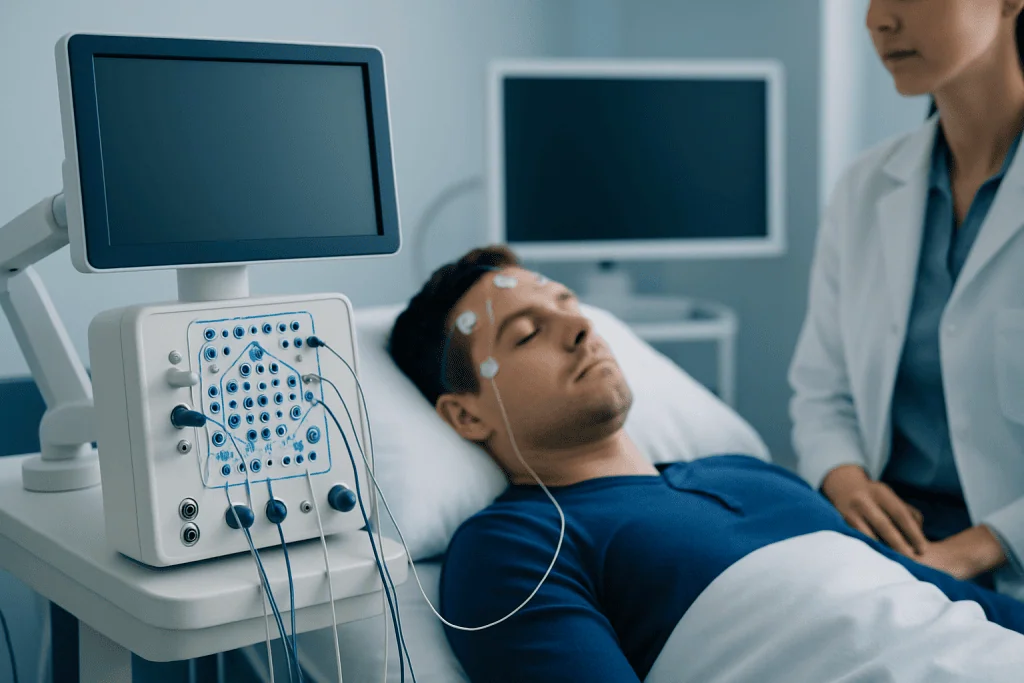
A common next step is a sleep study. This may be an overnight in-laboratory study or, for selected patients, a home-based test for suspected obstructive sleep apnea. A laboratory sleep study records breathing, oxygen levels, heart rhythm, brain activity, eye movements, and muscle activity during sleep. This can help assess snoring, breathing pauses, unusual behaviors, and some movement disorders. When appropriate, the specialist may recommend sleep study polysomnography as part of the diagnostic plan.
If excessive daytime sleepiness is a major concern, the doctor may consider daytime testing after an overnight sleep study to look for conditions such as narcolepsy. In some situations, blood tests, imaging, seizure evaluation, or referral to another specialty may be advised based on the person’s symptoms and examination findings.
When breathing-related sleep problems are likely, the evaluation may also lead to discussion of sleep apnea treatment options if testing confirms the diagnosis. The exact plan depends on the individual and is usually explained step by step to avoid unnecessary procedures.
How Treatment Planning Is Decided
Treatment after a sleep and neurology evaluation depends on the cause of the symptoms, their severity, and how much they affect daily life. Some people benefit most from improving sleep habits, keeping a regular schedule, and reducing factors that interfere with sleep. Others may need a more targeted plan for a specific disorder.
For insomnia, treatment may include education, stress management, and structured behavioral approaches such as cognitive behavioral therapy for insomnia. For breathing-related disorders, treatment may involve positional strategies, weight management, oral devices, or positive airway pressure therapy. Movement-related sleep problems may improve with correcting contributing factors and treating the underlying disorder.
If a neurological condition is contributing to poor sleep, the treatment plan may also include care for that condition itself. For example, patients with headache, movement disorders, seizure conditions, or neurodegenerative disease may need coordinated care across specialties. Good sleep can improve daytime function, and treating the neurological issue may also improve nighttime symptoms.
Near the end of the process, some patients benefit from multidisciplinary follow-up. Acibadem International’s multidisciplinary specialists and JCI-accredited hospitals diagnose and treat sleep-related neurological conditions for international patients when this level of coordinated care is needed.
Preparing for the Visit and Self-Care Tips
Simple preparation can make the first visit more productive. Keeping a brief sleep diary for 1 to 2 weeks can help show patterns in bedtime, wake time, naps, awakenings, and daytime sleepiness. Patients should also note snoring, dream enactment, leg symptoms, caffeine use, alcohol use, and any medicines taken to help sleep.
It can also help to think about what matters most before the appointment. For one person, the main concern may be unrefreshing sleep; for another, it may be safety, work performance, memory, or strain on relationships. Clear priorities help the doctor focus on the most important symptoms first.
While waiting for evaluation, general self-care steps may support better sleep:
- Keep a regular sleep and wake schedule when possible
- Limit late caffeine, nicotine, and alcohol
- Create a quiet, dark, comfortable sleep environment
- Avoid heavy meals close to bedtime
- Use screens less in the hour before bed if they delay sleep
- Do not drive or operate machinery when severely sleepy
These measures are helpful for many people, but they do not replace professional assessment when symptoms are persistent, severe, or linked to breathing pauses, sudden sleep episodes, or unusual nighttime behaviors.
When to Seek Medical Advice Promptly
Many sleep problems can be evaluated in a routine outpatient visit, but some symptoms deserve earlier medical attention. Prompt advice is important if there is severe daytime sleepiness that affects driving or work safety, witnessed breathing pauses with choking, sudden loss of muscle control, violent dream enactment, or repeated confusion during the night.
Medical review is also important if sleep changes occur alongside new neurological symptoms, such as weakness, numbness, seizures, worsening headaches, memory decline, fainting, or changes in walking and balance. In children, older adults, and people with complex medical conditions, sleep symptoms may present differently and should still be assessed carefully.
If symptoms involve chest pain, severe shortness of breath, a suspected stroke, or another emergency, urgent medical care is needed rather than waiting for a sleep clinic appointment. For non-emergency concerns that continue for weeks or interfere with quality of life, a sleep and neurology evaluation can be a practical next step toward diagnosis and relief.
Frequently asked questions
What is a sleep and neurology evaluation?
It is a medical assessment that looks at sleep symptoms together with brain and nervous system health. The goal is to understand whether poor sleep is due to a primary sleep disorder, a neurological condition, or several factors happening at the same time.
Will a sleep study happen at the first visit?
Usually not. The first visit is most often focused on taking a detailed history, reviewing symptoms, and doing an examination. A sleep study may be recommended afterward if the doctor thinks it will help confirm the diagnosis.
How should someone prepare for the appointment?
It helps to bring a list of medications, previous test results, and notes about sleep patterns. A sleep diary and observations from a bed partner can be especially useful, because many nighttime symptoms are easier for another person to notice.
What symptoms suggest a person should see a sleep neurology specialist?
Common reasons include persistent insomnia, excessive daytime sleepiness, loud snoring, breathing pauses during sleep, unusual nighttime behaviors, or repeated leg movements. Referral may also be helpful when sleep changes occur with headaches, seizures, memory concerns, movement symptoms, or other neurological issues.
Can sleep problems be related to neurological disorders?
Yes. Conditions affecting the brain, nerves, and movement systems can interfere with sleep quality, timing, or breathing during sleep. At the same time, poor sleep can worsen concentration, mood, memory, and daytime neurological symptoms.
What treatments might be recommended after evaluation?
Treatment depends on the diagnosis and may include sleep hygiene measures, behavioral therapy, medication review, devices for breathing-related sleep disorders, or treatment for an underlying neurological condition. The plan is usually individualized and may change as more information becomes available.
References
- American Academy of Sleep Medicine
- National Institute of Neurological Disorders and Stroke
- National Heart, Lung, and Blood Institute
- MedlinePlus
- Mayo Clinic
This article is for general information only and is not a substitute for professional medical advice. Please consult a qualified doctor about your individual situation.
Explore treatments in Turkey — costs, top hospitals & a free quote
JCI-accredited · board-certified surgeons · reply within 24h
Add us as a Preferred Source to see more of our trusted health content across Google Search, AI Overviews and Discover.