Psoriasis Treatment: Early Signs, Risk Factors, and How It Is Treated

Psoriasis is a long-term inflammatory skin condition that is not contagious. Early signs often include well-defined red patches with silvery scale, itching, burning, or cracking skin.
Key Takeaways
- Psoriasis is a long-term inflammatory skin condition that is not contagious.
- Early signs often include well-defined red patches with silvery scale, itching, burning, or cracking skin.
- Psoriasis treatment depends on severity, body areas involved, and whether joints or nails are affected.
- Common flare triggers include stress, skin injury, infections, smoking, heavy alcohol use, and some medicines.
- A dermatologist can confirm the diagnosis and help choose a treatment plan that balances benefit, safety, and convenience.
Psoriasis treatment is aimed at calming skin inflammation, clearing or reducing plaques, easing itching, and lowering the chance of future flares. Care is tailored to the type and severity of psoriasis and may include skin creams, light therapy, oral medicines, or biologic treatments.
Overview: What psoriasis treatment does
Psoriasis treatment helps manage a chronic inflammatory condition in which skin cells build up too quickly, leading to thickened, scaly patches called plaques. The main goals are to reduce inflammation, relieve itching or discomfort, help the skin heal, and keep symptoms under better long-term control. Because psoriasis can vary widely from person to person, treatment is usually individualized rather than one-size-fits-all.
Some people have only a few small plaques on the elbows or scalp, while others have more extensive skin involvement, nail changes, or joint symptoms. A treatment plan may therefore range from moisturizers and prescription creams to phototherapy, oral medicines, or targeted biologic therapies. Many people need treatment adjustments over time as symptoms change, triggers are identified, or response to therapy improves or fades.
Psoriasis is not an infection and cannot be passed from person to person. It is considered an immune-mediated condition, and it sometimes occurs alongside other health issues such as obesity, metabolic syndrome, depression, or inflammatory arthritis. In some cases, doctors also assess for related conditions such as psoriatic arthritis when joint pain, stiffness, or swelling is present.
Early signs and symptoms
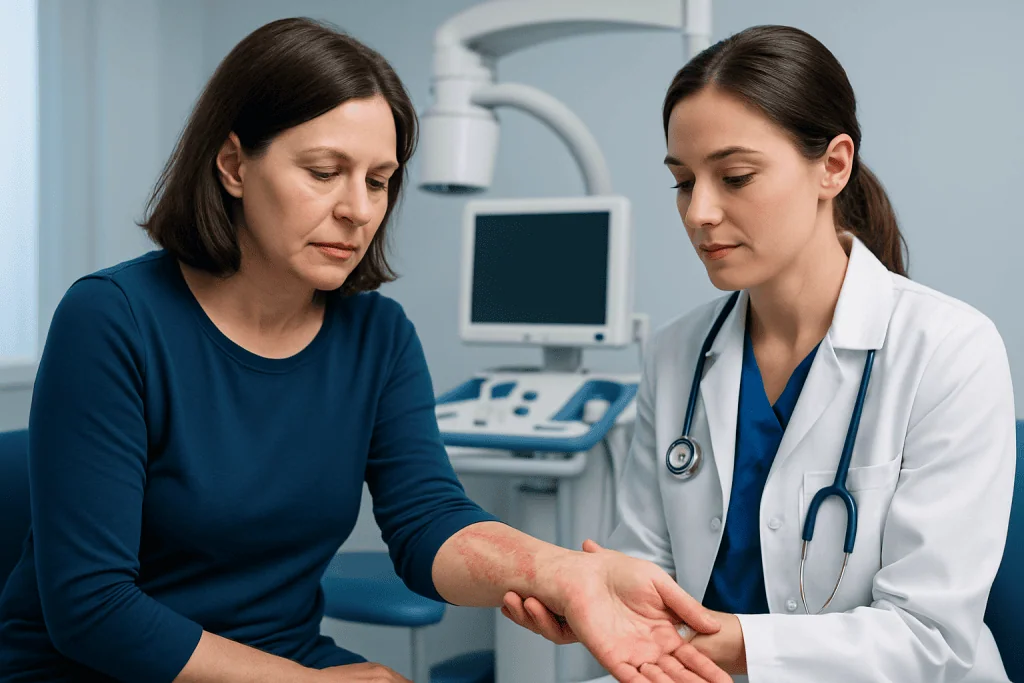
Early psoriasis can begin gradually or appear after a trigger such as infection, emotional stress, or injury to the skin. A common first sign is a patch of red or pink skin with a sharply defined border and a silvery-white scale on top. These areas may itch, sting, crack, or feel sore, especially in dry weather or after friction.
Plaque psoriasis is the most common form. It often affects the scalp, elbows, knees, lower back, hands, feet, or skin folds, though plaques can appear almost anywhere. In people with darker skin tones, affected areas may look purple, brown, or darker than the surrounding skin rather than bright red, which can delay recognition if psoriasis is only described in lighter skin.
Other features can include nail pitting, nail thickening, separation of the nail from the nail bed, or scalp flaking that is more persistent than ordinary dandruff. Some people also notice joint stiffness, especially in the morning, which may point to psoriatic arthritis rather than skin-limited disease alone.
- Red, pink, purple, or darker patches with scale
- Dry, cracked skin that may bleed
- Itching, burning, or tenderness
- Scalp scaling or flakes beyond typical dandruff
- Nail pitting, ridging, or lifting
- Joint pain or stiffness in some patients
Why psoriasis happens: causes and risk factors

Psoriasis develops through a combination of immune system activity and inherited susceptibility. The immune system becomes overactive in the skin, speeding up the life cycle of skin cells and causing inflammation. A family history of psoriasis can increase risk, but not everyone with psoriasis has a known affected relative.
Several external and internal factors can trigger new lesions or worsen existing disease. These include stress, smoking, heavy alcohol use, cold and dry weather, skin injury such as cuts or sunburn, and certain infections such as strep throat. Some medicines may also trigger or aggravate psoriasis in susceptible people, so a medication review can be important.
Psoriasis may also be associated with broader inflammatory health concerns. People with moderate to severe disease can have a higher chance of conditions such as obesity, high blood pressure, diabetes, and mood disorders. This is one reason psoriasis treatment often includes attention to general health, not just the appearance of the skin.
Although flare patterns are individual, many patients benefit from learning their own triggers and keeping symptoms, lifestyle changes, and treatments in a simple diary. Over time, this can make it easier to recognize whether stress, illness, weather changes, or a new product seems to be worsening the skin.
How psoriasis is diagnosed
Psoriasis is usually diagnosed by a dermatologist through a medical history and skin examination. Doctors look at the shape, color, scaling, distribution, and borders of the affected areas, and they may ask about itching, pain, nail changes, joint symptoms, family history, and possible triggers. In many cases, the typical appearance is enough to make the diagnosis.
Sometimes psoriasis resembles other skin conditions such as eczema, fungal infections, seborrheic dermatitis, or lichen planus. If the diagnosis is unclear, the doctor may perform a skin biopsy to examine a small sample under a microscope. This can help confirm psoriasis and exclude look-alike conditions.
Assessment often includes more than the skin itself. A dermatologist may evaluate how much body surface is involved, whether sensitive sites such as the face, genitals, palms, or soles are affected, and how strongly symptoms interfere with sleep, work, exercise, or emotional well-being. If joint symptoms are reported, referral for further evaluation may be recommended so that inflammation-related arthritis is not missed.
Psoriasis treatment options
Psoriasis treatment is chosen according to disease severity, body areas affected, age, overall health, and patient preferences. Mild psoriasis often responds to topical therapy, while more extensive or resistant disease may need phototherapy or systemic treatment. The best plan is one that improves symptoms while fitting safely and realistically into daily life.
Topical treatments are usually the first step for limited disease. These can include medicated creams or ointments such as corticosteroids, vitamin D analogs, calcineurin inhibitors for selected sensitive areas, salicylic acid, coal tar preparations, and regular moisturizers to reduce dryness and scaling. For scalp involvement, medicated shampoos, foams, oils, or solutions can be especially helpful.
When plaques are widespread, thick, or difficult to control, doctors may recommend supervised light-based therapy such as phototherapy to slow skin cell turnover and calm inflammation. If psoriasis is moderate to severe, systemic treatment may be considered, including traditional oral medicines or targeted biologic therapy that acts on specific parts of the immune response. These treatments can be very effective, but they require medical monitoring to balance benefits and potential side effects.
Some patients may also need care for stubborn localized areas or for symptoms affecting quality of life in a major way. Treatment can overlap with approaches used in broader dermatology care for inflammatory skin disease. In complex cases, multidisciplinary review may be useful, especially when psoriasis coexists with joint disease, nail disease, or other chronic conditions.
Prevention, flare control, and self-care
Psoriasis cannot always be prevented, but many people can reduce flares and support treatment success with consistent skin care. Daily use of fragrance-free moisturizers can soften scale, reduce cracking, and improve the skin barrier. Gentle cleansing, short lukewarm showers, and avoiding harsh scrubbing are often recommended.
Identifying and limiting personal triggers is also important. Managing stress, avoiding smoking, limiting alcohol, and protecting the skin from cuts, friction, and sunburn may help reduce flare frequency. Because some infections can trigger psoriasis, timely treatment of sore throat or other suspected infections may also be helpful when clinically appropriate.
Healthy routines can support overall well-being and may improve inflammatory health more broadly. Maintaining a healthy weight, staying physically active, getting enough sleep, and discussing mental health concerns with a clinician can all form part of a practical self-care plan. Patients should avoid stopping prescription treatments abruptly unless a doctor advises this, because symptoms can rebound or worsen.
Over-the-counter products can be useful for mild dryness or scaling, but persistent or extensive lesions should not be self-treated indefinitely. A dermatologist can help distinguish psoriasis from eczema, fungal infections, or contact dermatitis and guide safer long-term use of medicated products.
When to seek medical care
Medical care is appropriate when a new rash is persistent, spreading, painful, or difficult to identify. A person should also arrange an evaluation if home skin care is not helping, if the scalp or nails are worsening, or if symptoms are affecting sleep, work, confidence, or daily activities. Early assessment can help confirm the diagnosis and start treatment before plaques become more disruptive.
Prompt medical advice is especially important if there is joint pain, swelling, morning stiffness, or reduced movement, since these may suggest psoriatic arthritis. A clinician should also review any sudden severe flare, signs of skin infection, or widespread redness and irritation. People taking systemic medicines for psoriasis should keep follow-up appointments for monitoring and should ask a doctor before making major treatment changes.
Near the end of the care pathway, some patients may benefit from multidisciplinary support. Acibadem International’s dermatology and related specialists in JCI-accredited hospitals diagnose and treat psoriasis for international patients, including cases that need coordinated skin and joint evaluation.
Frequently asked questions
Can psoriasis be cured completely?
Psoriasis is generally considered a long-term condition, so treatment is focused on control rather than permanent cure. Many people can achieve long periods of clearer skin and fewer symptoms with the right plan and regular follow-up.
What is the best psoriasis treatment?
The best psoriasis treatment depends on how severe the disease is, where it appears, and whether the nails or joints are involved. Mild disease may improve with topical medicines, while moderate to severe psoriasis may need phototherapy or systemic treatment.
Is psoriasis contagious?
No, psoriasis is not contagious. It is an immune-mediated inflammatory condition and cannot be spread by touch, shared clothing, or close contact.
What can trigger a psoriasis flare?
Common triggers include stress, skin injury, cold or dry weather, smoking, heavy alcohol use, some infections, and certain medicines. Triggers vary by person, so tracking patterns over time can be useful.
How is psoriasis different from eczema?
Psoriasis often causes more sharply bordered plaques with thicker silvery scale, while eczema tends to be more intensely itchy and may look less well defined. However, the two conditions can sometimes resemble each other, so a dermatologist may be needed to confirm the diagnosis.
When should joint symptoms be checked?
Joint pain, swelling, stiffness, or reduced movement should be evaluated, especially if symptoms are worse in the morning or occur with nail changes. These features can suggest psoriatic arthritis, which benefits from early diagnosis and treatment.
References
- American Academy of Dermatology
- National Institute of Arthritis and Musculoskeletal and Skin Diseases
- National Psoriasis Foundation
- Mayo Clinic
- MedlinePlus
This article is for general information only and is not a substitute for professional medical advice. Please consult a qualified doctor about your individual situation.
Explore treatments in Turkey — costs, top hospitals & a free quote
JCI-accredited · board-certified surgeons · reply within 24h
Add us as a Preferred Source to see more of our trusted health content across Google Search, AI Overviews and Discover.
Check your numbers in seconds
BMI, calories, due date, blood pressure and 30+ more clinical calculators — free, instant, doctor-reviewed ranges.