Meniscus Tear — Explained by Medical Evidence, Not Myths

A meniscus tear affects the cartilage pads that help absorb shock in the knee. Symptoms often include joint line pain, swelling, stiffness, and catching or locking.
Key Takeaways
- A meniscus tear affects the cartilage pads that help absorb shock in the knee.
- Symptoms often include joint line pain, swelling, stiffness, and catching or locking.
- Diagnosis is based on history, physical examination, and sometimes MRI imaging.
- Treatment may include activity changes, physiotherapy, medication, injections, or surgery.
- Not every meniscus tear needs surgery; treatment is individualized.
- Prompt medical assessment is important if the knee locks, gives way, or cannot bear weight.
A meniscus tear is a common knee injury involving the cartilage that cushions and stabilizes the joint. Some tears heal with rest and rehabilitation, while others need procedural or surgical treatment depending on the tear pattern, symptoms, and the patient’s age and activity level.
What a Meniscus Tear Means
A meniscus tear is a tear in one of the two C-shaped pieces of cartilage inside the knee. These structures sit between the thigh bone and shin bone and act as shock absorbers, helping spread weight across the joint and improve stability. A tear can happen suddenly during twisting or pivoting, or it can develop gradually as the cartilage weakens with age.
Many people assume every torn meniscus needs surgery, but that is not always true. The best treatment depends on where the tear is, how large it is, whether the knee is stable, and how much the symptoms affect daily life. Some tears settle with conservative care, while others are more likely to need repair or partial removal.
Understanding the meniscus helps explain why symptoms vary so much. The outer part has a better blood supply and may heal more readily, while the inner part has less blood flow and is less likely to heal on its own. This is one reason doctors look closely at the tear pattern rather than relying on symptoms alone.
Symptoms and How They May Feel Day to Day
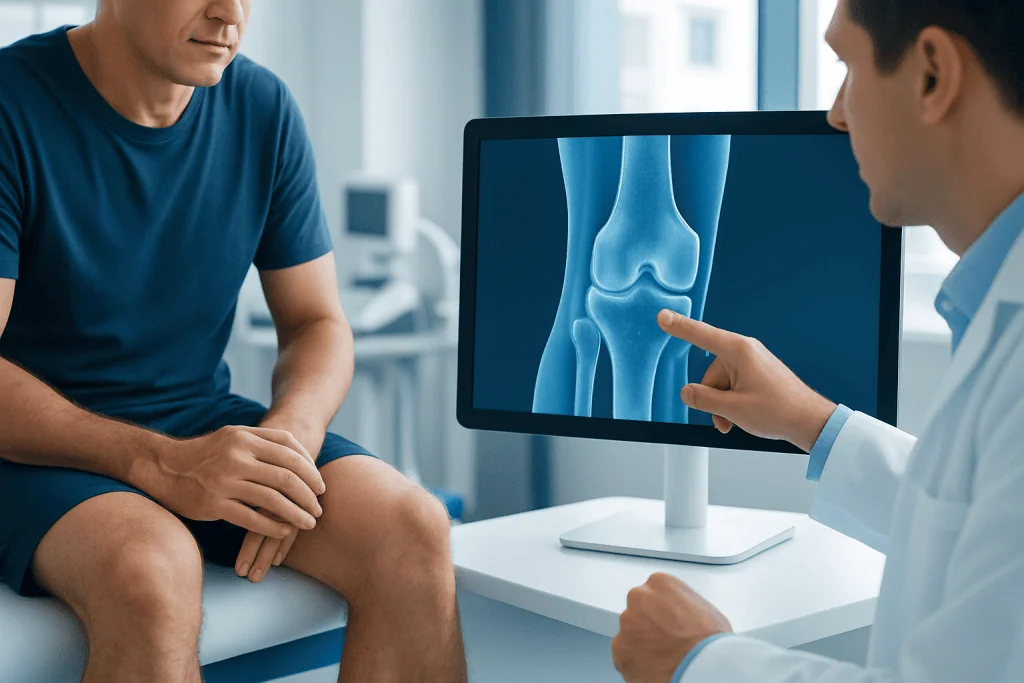
Meniscus tear symptoms can appear immediately after an injury or develop over several hours to days. Common complaints include pain along the inner or outer side of the knee, swelling, stiffness, and discomfort when squatting, twisting, or going up and down stairs. Some people describe a popping sensation at the time of injury, although this is not present in every case.
Mechanical symptoms are especially important. A torn meniscus may cause the knee to catch, click, feel unstable, or in some cases lock so that it cannot fully straighten or bend. Locking suggests that a displaced fragment may be interfering with normal joint movement and should be assessed by a doctor.
Symptoms do not always match the size of the tear. A small tear in a key location can be very bothersome, while a larger degenerative tear may cause mild symptoms or even be found incidentally on imaging. People who also have knee pain from arthritis or ligament injury may notice overlapping symptoms, which is why a proper examination matters.
- Pain with twisting, pivoting, or deep bending
- Swelling that may develop within hours or over a day
- Reduced range of motion
- Catching, locking, or a feeling that the knee may give way
Causes, Tear Types, and Risk Factors
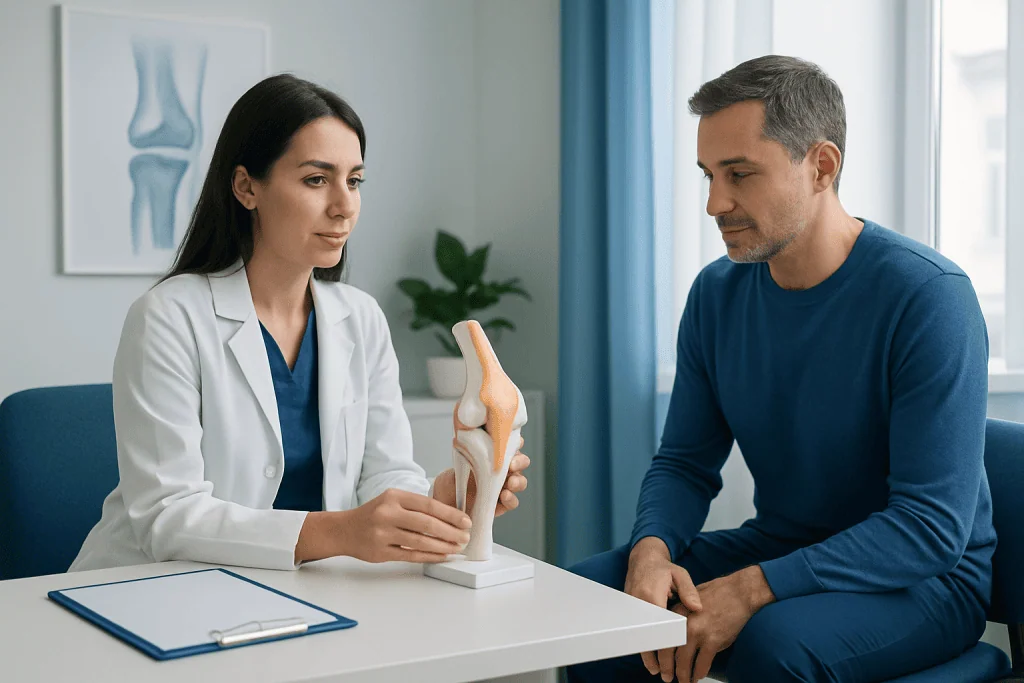
A meniscus tear can be traumatic or degenerative. Traumatic tears are more common in younger, active people and often happen during sports that involve pivoting, sudden stops, or awkward landings. Degenerative tears are more common in middle age and older adulthood, when the meniscus becomes less resilient and may tear during a relatively minor movement such as kneeling or turning.
Doctors also classify tears by pattern. Common types include longitudinal, radial, horizontal, flap, and bucket-handle tears. These names describe the shape and direction of the tear, and they help guide treatment decisions. For example, a bucket-handle tear can sometimes block motion and lead to true locking, while a degenerative horizontal tear may be managed differently.
Risk factors include sports participation, repetitive kneeling or squatting, weak supporting muscles, prior knee injury, and age-related cartilage wear. Meniscus tears may also occur alongside other knee problems, especially ligament injuries such as an ACL tear. In these combined injuries, the plan often considers both stability and cartilage preservation.
How Doctors Diagnose a Meniscus Tear
Diagnosis starts with a detailed medical history. A doctor will ask how the injury happened, whether swelling appeared quickly, whether the knee locks or gives way, and what movements trigger pain. Physical examination often includes checking the joint line for tenderness, assessing range of motion, and performing maneuvers that place the meniscus under stress.
Imaging is sometimes helpful, but it is usually interpreted together with the examination rather than on its own. Plain X-rays do not show the meniscus directly, but they can help rule out fractures or show signs of arthritis. MRI is the most commonly used imaging test to evaluate a suspected meniscus tear because it can show cartilage, ligaments, bone bruising, and other soft-tissue injuries.
An important point is that MRI findings do not always explain symptoms. Degenerative meniscal changes are common with aging and may appear even in people without knee pain. For that reason, treatment decisions are usually based on the whole clinical picture: symptoms, function, physical findings, activity goals, and imaging together.
When knee symptoms are complex or persistent, a specialist may recommend further evaluation through orthopedic assessment and, when appropriate, advanced MRI imaging.
Treatment Options: From Rest and Rehabilitation to Surgery
Meniscus tear treatment is individualized. Many people start with conservative care, especially if the tear is stable, symptoms are manageable, and there is no true locking. Early treatment may include relative rest, temporary reduction in aggravating activities, ice, and a gradual return to movement. Over-the-counter pain relief or anti-inflammatory medication may be considered if suitable for the individual, under a doctor’s guidance.
Structured rehabilitation is central to recovery. Physiotherapy focuses on reducing swelling, restoring knee motion, and strengthening the quadriceps, hamstrings, hips, and core to improve joint control. This approach can be very effective for many degenerative tears and for some traumatic tears once the acute pain settles. Weight management and adjusting high-impact activities may also reduce ongoing stress on the joint.
In selected cases, injections may be considered to help with pain related to inflammation or coexisting osteoarthritis, although they do not repair the tear itself. If the knee locks, remains unstable, or continues to be painful despite well-directed rehabilitation, surgery may be discussed. The main surgical options are meniscus repair, which aims to preserve tissue, and partial meniscectomy, which removes the damaged portion when repair is not feasible.
When surgery is recommended, preserving as much meniscal tissue as possible is generally preferred because the meniscus helps protect the joint over time. Patients who need a procedure may be evaluated for knee arthroscopy, which allows diagnosis and treatment through small incisions. In some cases with advanced joint wear rather than an isolated tear, a broader plan related to knee treatment options may be considered.
Recovery, Prevention, and Self-care
Recovery time varies widely. A mild tear managed without surgery may improve over several weeks, while surgical recovery depends on the procedure performed. Meniscus repair often requires a more protective rehabilitation plan than partial meniscectomy because the tissue needs time to heal. Return to sports or demanding work should follow the advice of the treating team rather than a fixed timeline from the internet.
Self-care is most effective when it supports healing without complete inactivity. Gentle movement within a comfortable range can help prevent stiffness, while guided strengthening improves support around the knee. Activities that repeatedly provoke pain, deep squatting, pivoting, or impact should usually be limited during the early recovery phase.
Prevention focuses on knee conditioning rather than avoiding all activity. Helpful measures include warming up before exercise, building leg and hip strength, improving balance and movement mechanics, and progressing training loads gradually. Good footwear and attention to form during sports and work tasks may also help reduce strain on the knee.
- Keep thigh and hip muscles strong
- Increase activity gradually after time off
- Use proper technique for lifting, pivoting, and landing
- Address persistent knee pain early rather than pushing through it
When to Seek Medical Care
Medical assessment is important if knee pain and swelling do not improve within a few days, if walking is difficult, or if the knee repeatedly catches or gives way. Prompt evaluation is especially important after a sports injury or a twist followed by significant swelling, reduced motion, or difficulty bearing weight.
Urgent care should be sought if the knee is truly locked and cannot fully move, if there is severe pain after trauma, or if there are signs that another injury may be present, such as a major ligament injury or fracture. New redness, fever, or marked swelling also needs medical attention because not every painful swollen knee is due to a meniscus problem.
For people with ongoing symptoms, an orthopedic specialist can help distinguish a meniscus tear from arthritis, ligament injury, or other causes of knee pain and tailor treatment to the person’s goals. Acibadem International’s multidisciplinary specialists and JCI-accredited hospitals diagnose and treat knee conditions for international patients using evidence-based evaluation and care planning.
Frequently asked questions
Can a meniscus tear heal on its own?
Some meniscus tears can improve without surgery, especially small stable tears and certain tears near the outer edge where blood supply is better. Even when the tissue does not fully heal, symptoms may settle with rehabilitation and activity modification.
Is walking good or bad for a torn meniscus?
Gentle walking is often acceptable if it does not sharply increase pain, swelling, or instability. However, painful twisting, deep squatting, running, and pivoting usually need to be limited until a doctor or physiotherapist gives guidance.
How is a meniscus tear different from knee arthritis?
A meniscus tear is an injury or wear-related change in the knee cartilage pad, while arthritis is broader joint degeneration involving cartilage loss, inflammation, and bone changes. The two can occur together, which is why symptoms and scans need to be interpreted carefully.
Does every meniscus tear need surgery?
No. Many people improve with conservative treatment such as physiotherapy, temporary activity changes, and symptom control. Surgery is more often considered when symptoms persist, the knee locks, or the tear pattern is unlikely to improve without repair or trimming.
What does a locked knee mean?
A locked knee usually means the joint cannot fully straighten or bend because something is mechanically blocking movement. In a meniscus tear, this can happen if a torn piece is displaced, and it should be assessed promptly by a medical professional.
How long does recovery from a meniscus tear take?
Recovery depends on the type of tear and the treatment used. Some people improve in weeks with non-surgical care, while recovery after surgery may take longer, particularly after meniscus repair, which often needs a more gradual rehabilitation program.
References
- American Academy of Orthopaedic Surgeons
- National Institute of Arthritis and Musculoskeletal and Skin Diseases
- American College of Radiology
- National Health Service
- OrthoInfo
This article is for general information only and is not a substitute for professional medical advice. Please consult a qualified doctor about your individual situation.
Joint and spine care in Turkey — expert assessment & treatment
JCI-accredited · board-certified surgeons · reply within 24h
Add us as a Preferred Source to see more of our trusted health content across Google Search, AI Overviews and Discover.