Melanoma: Symptoms, Causes, and Treatment Options

Melanoma is a serious form of skin cancer that can spread if not treated early. A changing mole, a new dark spot, or a lesion that looks different from others should be checked by a doctor.
Key Takeaways
- Melanoma is a serious form of skin cancer that can spread if not treated early.
- A changing mole, a new dark spot, or a lesion that looks different from others should be checked by a doctor.
- Diagnosis usually involves a skin examination and biopsy.
- Treatment depends on the stage and may include surgery, immunotherapy, targeted therapy, radiation, or other cancer care.
- Sun protection and regular skin checks can help lower risk and support early detection.
Melanoma is a type of skin cancer that can start in a mole or appear as a new dark spot on the skin. It is often highly treatable when found early, so noticing changes and getting prompt medical evaluation are important.
Overview
Melanoma is a cancer that begins in melanocytes, the cells that make the pigment giving skin its color. It most often develops in the skin, but it can also arise in the eye, under a nail, or more rarely in mucosal surfaces such as the mouth or genital area. Compared with some other skin cancers, melanoma is more likely to grow deeper and spread to other parts of the body if it is not found early.
Many melanomas are first noticed as a new spot or a change in an existing mole. A lesion may become darker, larger, uneven in shape, or different from other marks on the skin. Early-stage melanoma may be treated successfully with surgery alone, which is why prompt evaluation of suspicious skin changes matters.
Melanoma can affect people of any skin tone. While lighter skin and a history of significant sun exposure increase risk, people with darker skin can also develop melanoma, sometimes in less sun-exposed areas such as the palms, soles, or under the nails. Awareness of what is normal for an individual’s skin is an important part of early detection.
Symptoms and Warning Signs
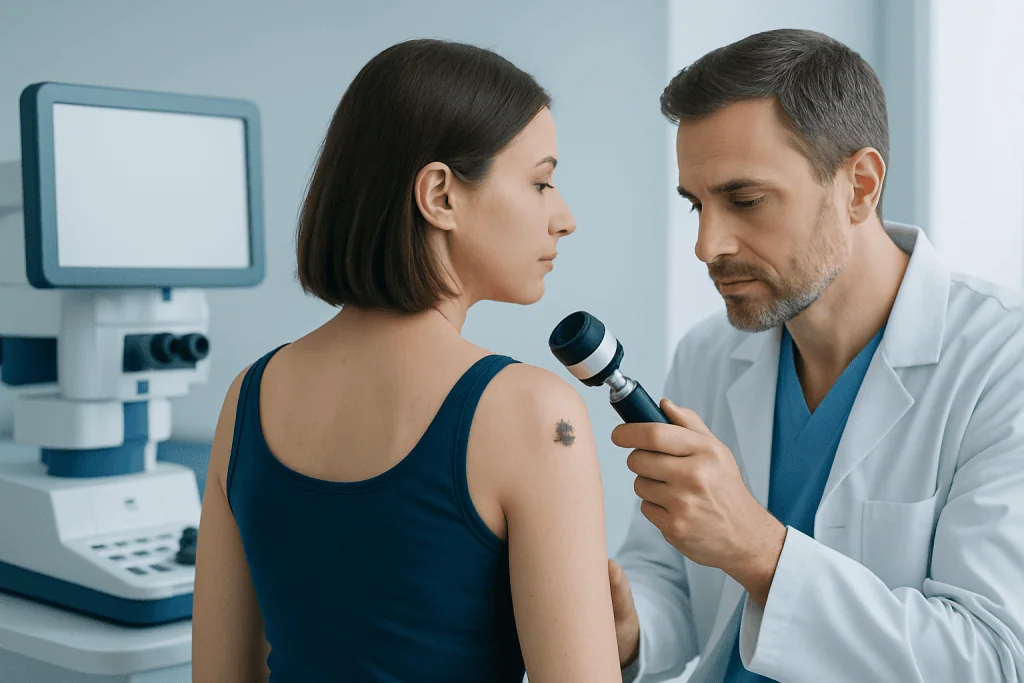
The most common sign of melanoma is a new pigmented spot or a change in a mole already present on the skin. Doctors often use the ABCDE guide to describe suspicious features: asymmetry, border irregularity, color variation, diameter that is increasing, and evolving over time. Another helpful clue is the “ugly duckling” sign, meaning one spot looks noticeably different from a person’s other moles.
Melanoma does not always look dark brown or black. It may be tan, red, pink, blue, skin-colored, or nearly colorless. Some lesions itch, bleed, crust, or do not heal normally. Nail melanoma may appear as a dark streak under the nail or cause nail distortion.
Possible warning signs include:
- A new mole or spot appearing in adulthood
- A mole that changes in size, shape, or color
- Irregular or poorly defined borders
- Multiple colors within one lesion
- Itching, tenderness, bleeding, or crusting
- A sore that does not heal
Not every unusual spot is melanoma, and many harmless skin lesions can look concerning. However, because melanoma can resemble other conditions and may progress silently, a dermatologist or qualified doctor should evaluate any suspicious change.
Causes and Risk Factors
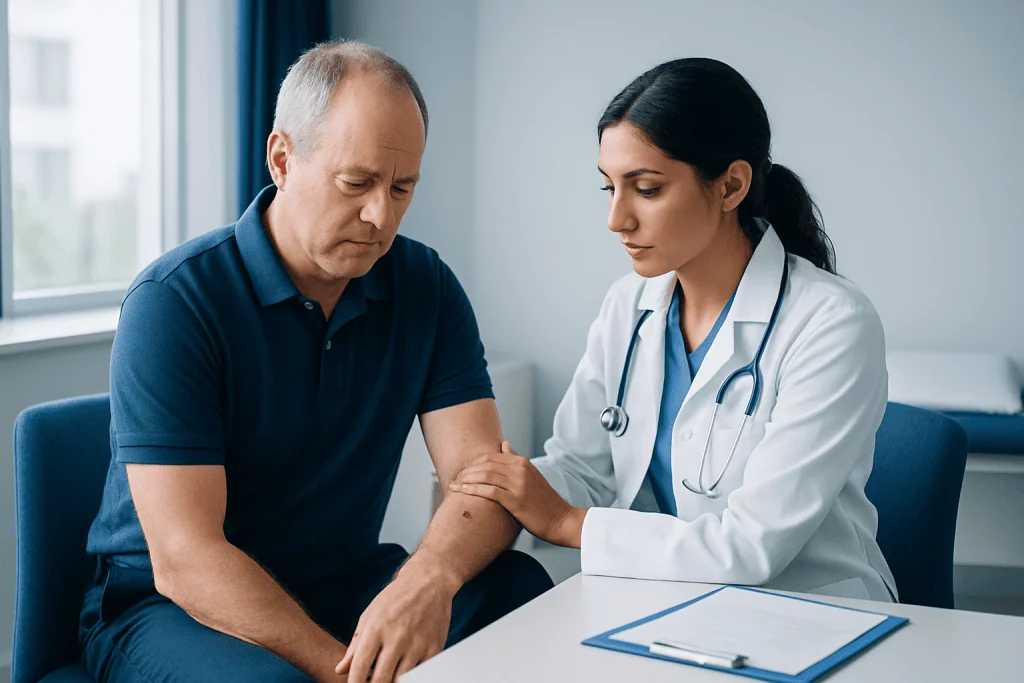
Melanoma develops when melanocytes acquire DNA damage that allows them to grow in an uncontrolled way. Ultraviolet (UV) radiation from sunlight or tanning beds is a major risk factor because it can damage skin cell DNA. Still, melanoma is not caused by one factor alone. It usually reflects a combination of environmental exposure, inherited traits, and chance changes in cells over time.
Risk is higher in people with fair skin, light eyes, red or blond hair, or skin that burns easily. A personal or family history of melanoma, having many moles, or having atypical moles also increases risk. People whose immune systems are weakened may have a higher chance of developing melanoma and other skin cancers.
Melanoma can occur in areas with heavy sun exposure, but it may also appear where the sun has little effect. This is one reason routine skin checks should include the back, scalp, feet, nails, and areas not commonly seen. Related skin cancers, including skin cancer, may share some of the same risk factors, but melanoma has its own behavior and treatment decisions.
Common risk factors include:
- Intense or repeated UV exposure
- History of sunburns, especially blistering sunburns
- Indoor tanning
- Many moles or atypical moles
- Personal or family history of melanoma
- Weakened immune system
How Melanoma Is Diagnosed and Staged
Diagnosis starts with a medical history and a careful skin examination. A doctor may inspect the lesion visually and use dermoscopy, a handheld magnifying tool that helps reveal patterns not visible to the naked eye. If a spot appears suspicious, the next step is usually a biopsy, which is the only way to confirm whether melanoma is present.
In a biopsy, all or part of the lesion is removed and examined in a laboratory by a pathologist. The report helps determine important features such as tumor thickness, ulceration, and how quickly cells are dividing. These details guide staging and treatment planning.
If melanoma is confirmed, staging describes how far the cancer has spread. Early-stage melanoma is limited to the skin, while more advanced stages may involve nearby lymph nodes or distant organs. Depending on the stage and features of the tumor, doctors may recommend imaging studies or a sentinel lymph node biopsy to look for spread. Broader cancer evaluation may be part of care when melanoma is advanced.
Because melanoma treatment depends strongly on stage, accurate assessment is essential. Patients may benefit from care coordinated among dermatology, pathology, surgical oncology, and medical oncology teams.
Treatment Options
Treatment for melanoma depends on the size and depth of the tumor, whether it has spread, the results of any molecular testing, and the person’s overall health. For many early melanomas, surgery is the main treatment. The goal is to remove the melanoma completely along with a margin of normal-looking skin around it.
If there is concern that melanoma cells may have reached nearby lymph nodes, a sentinel lymph node biopsy may be advised at the time of surgery. Some patients may need further surgery if lymph nodes are involved. Surgical care may be part of a personalized oncology treatment plan developed after staging.
For melanoma that is high risk, has spread, or has returned after treatment, additional therapies may be used. These can include immunotherapy, targeted therapy for tumors with certain genetic changes, radiation therapy in selected situations, and less commonly chemotherapy. Treatment choices are individualized, and the possible benefits and side effects should be reviewed carefully with the care team.
Supportive care is also important. This may involve scar care after surgery, help managing treatment side effects, and follow-up skin exams to detect recurrence or new melanomas. In advanced disease, therapies such as medical oncology and radiation oncology may play a role as part of multidisciplinary care.
Prevention and Self-care
Melanoma cannot always be prevented, but several steps can reduce risk and improve the chance of finding it early. Protecting the skin from UV radiation is a practical place to start. This includes seeking shade during peak sun hours, wearing protective clothing and a wide-brimmed hat, and using broad-spectrum sunscreen as directed on exposed skin.
Indoor tanning should be avoided because tanning beds expose the skin to UV radiation that can increase melanoma risk. Parents and caregivers can help children build sun-safe habits early, since repeated UV damage over time contributes to skin cancer risk later in life.
Regular self-examination can be helpful. People can check the entire skin surface once a month if possible, including the scalp, back, soles of the feet, and under the nails. Taking photos may make it easier to notice changes over time. Anyone with many moles, atypical moles, or a prior melanoma may need professional skin exams at intervals recommended by a doctor.
Self-care after melanoma treatment usually includes wound care, protecting healing skin from the sun, and keeping follow-up appointments. Emotional support may also matter, as a cancer diagnosis can bring uncertainty even when treatment is successful.
When to Seek Medical Care
Medical care should be sought if a mole or skin spot changes in size, shape, or color, or if a new lesion appears and looks different from the rest. It is also wise to arrange an appointment if a spot itches, bleeds, forms a crust, becomes painful, or does not heal. Prompt evaluation does not mean a lesion is cancerous, but it helps avoid delay if treatment is needed.
People with a personal or family history of melanoma, many moles, or a weakened immune system should discuss a skin surveillance plan with a doctor. A dermatologist may recommend regular total-body skin examinations and photographs to monitor changes over time.
If melanoma is diagnosed, timely consultation with specialists is important so that staging and treatment planning can begin without unnecessary delay. Acibadem International’s multidisciplinary specialists and JCI-accredited hospitals diagnose and treat melanoma for international patients, including surgical and systemic cancer care when appropriate.
Frequently asked questions
What does melanoma look like?
Melanoma often appears as a new dark spot or a changing mole with uneven shape, irregular borders, or more than one color. Some melanomas are pink, red, or skin-colored rather than dark, so any evolving lesion should be assessed by a doctor.
Is melanoma always caused by sun exposure?
No. Ultraviolet exposure is a major risk factor, but melanoma can also develop in areas with little sun exposure and in people with inherited risk factors. Family history, many atypical moles, and immune suppression can also contribute.
Can melanoma be cured?
Many early melanomas can be treated successfully, often with surgery alone. Outcomes are generally better when melanoma is found before it spreads, which is why early evaluation is so important.
How is melanoma confirmed?
Melanoma is confirmed with a biopsy. A doctor removes all or part of the suspicious lesion, and a pathologist examines the tissue under a microscope to determine whether melanoma is present.
What is the first treatment for melanoma?
For most early-stage melanomas, the first treatment is surgery to remove the lesion with a margin of normal skin. Additional treatment depends on the stage, biopsy findings, and whether the melanoma has spread.
Should every changing mole be checked?
Yes, especially if the mole is changing in shape, size, or color, or if it bleeds, itches, or looks different from other moles. Most changing spots are not melanoma, but only a medical evaluation can determine this reliably.
References
- American Cancer Society
- National Cancer Institute
- American Academy of Dermatology
- National Comprehensive Cancer Network
- World Health Organization
This article is for general information only and is not a substitute for professional medical advice. Please consult a qualified doctor about your individual situation.
Melanoma in Turkey — costs, top hospitals & a free quote
JCI-accredited · board-certified surgeons · reply within 24h
Add us as a Preferred Source to see more of our trusted health content across Google Search, AI Overviews and Discover.

Medical Oncology Department
Medical treatment of cancer with chemotherapy, immunotherapy and targeted therapies under a multidisciplinary tumor board.
60 specialists in this unitMore from the Health Library



Related Specialists

Prof. Dr. Sabahattin Umman
Cardiology
Fzt. Ömür Akgül
Physical Medicine & Rehabilitation
Prof. Dr. Tolga Tüzüner
Orthopedic Surgery & Traumatology
Prof. Dr. Sema Aydoğdu
Pediatric Gastroenterology