Hiatal Hernia: What Patients Need to Know

A hiatal hernia occurs when part of the stomach moves through the diaphragm into the chest area. Some hiatal hernias cause no symptoms, while others are linked with reflux, heartburn, regurgitation, or trouble swallowing.
Key Takeaways
- A hiatal hernia occurs when part of the stomach moves through the diaphragm into the chest area.
- Some hiatal hernias cause no symptoms, while others are linked with reflux, heartburn, regurgitation, or trouble swallowing.
- Diagnosis may involve a physical assessment, endoscopy, barium swallow imaging, or tests that measure acid reflux and esophageal function.
- Treatment depends on symptoms and type of hernia, ranging from lifestyle changes and medicines to surgery in selected cases.
- Urgent medical attention is important for severe chest pain, persistent vomiting, bleeding, or sudden difficulty swallowing.
A hiatal hernia is a condition in which part of the stomach pushes up through the opening in the diaphragm. Many people have no symptoms, but some develop acid reflux, heartburn, swallowing discomfort, or chest pressure that may need medical evaluation and treatment.
Overview
A hiatal hernia is a condition in which part of the stomach moves upward through the diaphragm, the muscle that separates the chest from the abdomen. This happens at the hiatus, a natural opening where the esophagus passes before joining the stomach. Small hiatal hernias are common and may never cause symptoms, while larger ones can contribute to digestive discomfort.
There are different types of hiatal hernia. The most common is a sliding hiatal hernia, in which the junction between the esophagus and stomach moves above the diaphragm. A less common paraesophageal hiatal hernia occurs when part of the stomach pushes up beside the esophagus; this type may be more likely to cause complications in some patients.
Hiatal hernia is often discussed alongside reflux because the change in anatomy can make it easier for stomach acid to move into the esophagus. This can lead to symptoms similar to gastroesophageal reflux disease and may affect eating, sleep, or comfort after meals. Even so, not every person with a hiatal hernia has reflux, and not every person with reflux has a hiatal hernia.
Symptoms and How They May Feel

Many hiatal hernias do not cause symptoms and are found incidentally during tests done for another reason. When symptoms do occur, they are often related to reflux or irritation of the esophagus. People may notice heartburn, a sour taste in the mouth, regurgitation of food or liquid, bloating, burping, or discomfort after eating.
Some patients describe pressure or pain in the upper abdomen or lower chest, especially when bending over, lying down, or after large meals. Trouble swallowing, a sensation that food is getting stuck, chronic throat clearing, hoarseness, or a persistent cough can also occur when reflux is present. These symptoms can overlap with other digestive disorders, which is why medical assessment is helpful when symptoms are frequent or persistent.
A paraesophageal hiatal hernia may sometimes cause a feeling of fullness soon after starting a meal, chest pressure, nausea, or vomiting. Symptoms do not always reflect the size of the hernia, and mild discomfort can still deserve attention if it continues or interferes with daily life.
- Heartburn or burning behind the breastbone
- Regurgitation or sour fluid in the throat
- Chest or upper abdominal discomfort
- Difficulty swallowing
- Feeling full quickly
- Cough, hoarseness, or throat irritation related to reflux
Why Hiatal Hernia Happens
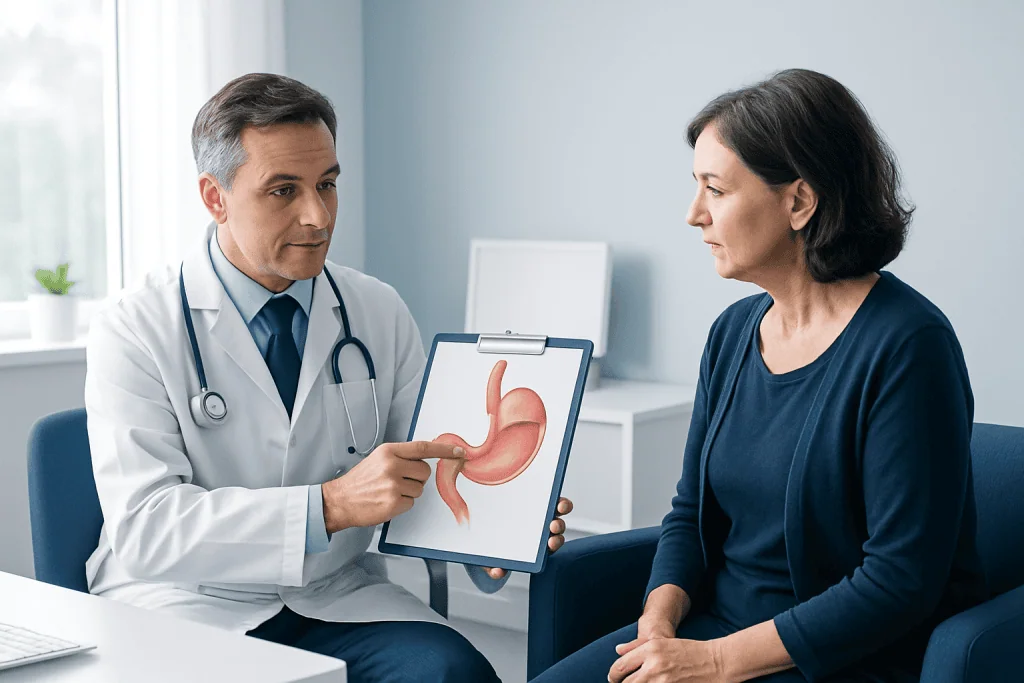
A hiatal hernia develops when the tissues around the hiatus weaken or when pressure inside the abdomen increases. Aging can make the supporting tissues less firm over time, which is one reason the condition becomes more common in adults as they get older. Some people may also have a naturally wider hiatus or an inherited tendency that makes a hernia more likely.
Factors that increase abdominal pressure may contribute to the stomach moving upward. These can include obesity, pregnancy, repeated heavy lifting, frequent coughing, chronic constipation with straining, or vomiting. Previous injury or surgery in the area may also play a role in some cases.
Having a hiatal hernia does not automatically mean a person will develop severe symptoms. The impact depends on the hernia type, its size, and whether the lower esophageal sphincter is affected. That is why treatment is guided by symptoms and complications rather than by imaging findings alone.
How Doctors Diagnose It
Diagnosis usually begins with a discussion of symptoms, eating patterns, and any warning signs such as weight loss, bleeding, or trouble swallowing. A doctor may ask whether symptoms worsen after meals, when lying down, or during the night. Because chest discomfort and upper digestive symptoms can have more than one cause, the evaluation may need to rule out other conditions as well.
Several tests can help confirm a hiatal hernia or assess reflux-related damage. Upper endoscopy allows a clinician to look at the esophagus and stomach, identify inflammation or ulcers, and check for complications. A barium swallow X-ray can show how the esophagus and stomach move during swallowing and may clearly outline the hernia.
In some patients, additional testing is needed to understand the degree of reflux or how the esophagus is working. These tests may include ambulatory pH monitoring for acid exposure and esophageal manometry to measure muscle contractions and valve function. If symptoms are significant or surgery is being considered, careful evaluation helps guide the most appropriate plan.
Treatment Options
Treatment for hiatal hernia depends on the type of hernia, the severity of symptoms, and whether complications are present. For many people with mild or moderate reflux-related symptoms, treatment focuses first on reducing acid exposure and improving daily habits. This often helps control discomfort without invasive procedures.
Doctors may recommend medicines that reduce stomach acid, such as antacids, H2 blockers, or proton pump inhibitors, depending on the person’s symptoms and medical history. If reflux is persistent, a specialist may assess for related conditions and discuss options used in GERD treatment. Medicines can ease symptoms, but they do not physically repair the hernia itself.
Surgery may be considered when symptoms remain troublesome despite treatment, when there is significant regurgitation, when swallowing is affected, or when a paraesophageal hernia creates a risk of obstruction or reduced blood supply. Surgical repair aims to return the stomach to its normal position, narrow the opening in the diaphragm if needed, and sometimes add an anti-reflux procedure. In appropriate patients, minimally invasive approaches such as laparoscopic surgery may be used as part of hiatal hernia repair after specialist evaluation.
People who have anemia, ulcers, severe esophagitis, or suspected complications may need more structured follow-up. Treatment decisions are individualized, and a gastroenterologist or surgeon can explain the expected benefits and limitations of each option.
Daily Habits That Can Help
Self-care cannot remove a hiatal hernia, but it can reduce symptoms and improve comfort. Many patients feel better when they eat smaller meals, avoid lying down soon after eating, and identify foods that trigger reflux. Common triggers include large fatty meals, alcohol, chocolate, mint, caffeine, spicy foods, and acidic foods, although triggers vary from person to person.
Weight management can be useful when excess abdominal pressure is contributing to symptoms. Elevating the head of the bed may reduce nighttime reflux, while avoiding tight clothing around the waist can lessen pressure on the abdomen. Quitting smoking is also important because smoking can worsen reflux and irritate the digestive tract.
Constipation and repeated straining may increase abdominal pressure, so maintaining good hydration, dietary fiber, and bowel regularity can help. People who frequently lift heavy objects may benefit from discussing safer lifting techniques. If symptoms continue despite healthy habits, medical review is the best next step rather than simply increasing over-the-counter treatments on their own.
When to Seek Medical Care
Medical care is appropriate if reflux, chest discomfort, or swallowing symptoms happen often, disturb sleep, or affect eating and daily activities. A doctor should also evaluate symptoms that begin later in life, do not improve with simple measures, or return repeatedly after treatment. Persistent symptoms deserve attention because they may reflect irritation of the esophagus or another digestive condition.
Urgent assessment is important for severe or sudden chest pain, repeated vomiting, vomiting blood, black stools, marked trouble swallowing, or the inability to keep food down. These symptoms can point to bleeding, blockage, or another condition that needs prompt care. Chest pain should never be assumed to be digestive without proper medical evaluation.
For international patients who need evaluation or treatment, Acibadem International’s multidisciplinary specialists and JCI-accredited hospitals provide diagnosis and care for digestive conditions, including hiatal hernia. Depending on the findings, care may involve advanced endoscopy assessment and specialist input from gastroenterology and surgery teams.
Frequently asked questions
Is a hiatal hernia dangerous?
Most hiatal hernias are not dangerous and many cause no symptoms at all. However, some can lead to significant reflux, irritation of the esophagus, or less commonly complications such as obstruction or reduced blood supply, which need prompt medical care.
Can a hiatal hernia go away on its own?
A hiatal hernia usually does not disappear on its own. Symptoms may improve with lifestyle changes and medicines, but the hernia itself generally remains unless it is repaired surgically.
What is the difference between a hiatal hernia and GERD?
A hiatal hernia is a structural change in which part of the stomach moves through the diaphragm. GERD is a condition in which stomach contents repeatedly flow back into the esophagus; a hiatal hernia can contribute to GERD, but they are not the same diagnosis.
Does every hiatal hernia need surgery?
No, surgery is not needed for every hiatal hernia. Many people are treated successfully with lifestyle changes and acid-reducing medicines, while surgery is usually reserved for ongoing symptoms, large paraesophageal hernias, or complications.
Can a hiatal hernia cause chest pain?
Yes, some people feel chest discomfort, pressure, or burning, especially after meals or when lying down. Because chest pain can also come from heart or lung problems, it should be assessed by a doctor, particularly if it is new, severe, or accompanied by shortness of breath.
What foods should be avoided with a hiatal hernia?
There is no single diet that works for everyone, but many patients do better when they limit foods that trigger reflux symptoms. Common examples include large fatty meals, alcohol, chocolate, mint, caffeine, spicy foods, and acidic foods such as citrus or tomato products.
This article is for general information only and is not a substitute for professional medical advice. Please consult a qualified doctor about your individual situation.
Hiatal Hernia in Turkey — costs, top hospitals & a free quote
JCI-accredited · board-certified surgeons · reply within 24h
Add us as a Preferred Source to see more of our trusted health content across Google Search, AI Overviews and Discover.

General Surgery
Open, laparoscopic and robotic surgery for a broad range of abdominal and soft-tissue conditions.
119 specialists in this unitMore from the Health Library

Apricot: A Complete Medical Overview

Bims Score: What Patients Need to Know

Foot Blister: What Patients Need to Know

Anaphylactic: What Patients Need to Know

Extra Virgin Olive Oil Benefits — Explained by Medical Evidence, Not Myths