Scoliosis: Early Signs, Risk Factors, and How It Is Treated
Scoliosis is a three-dimensional spinal deformity, not simply poor posture. Many mild cases cause few symptoms and are managed with observation and regular follow-up.
Key Takeaways
- Scoliosis is a three-dimensional spinal deformity, not simply poor posture.
- Many mild cases cause few symptoms and are managed with observation and regular follow-up.
- Bracing may help some growing children and teens keep the curve from worsening.
- Surgery is usually reserved for larger, progressive, or symptomatic curves.
- Early evaluation is helpful when shoulders, ribs, or hips look uneven or back pain persists.
Scoliosis is a sideways curvature of the spine that can appear in children, teens, or adults. Treatment depends on the cause, the degree of curvature, growth stage, and whether the curve is stable, causing symptoms, or progressing over time.
Overview
Scoliosis is a condition in which the spine curves sideways and may also rotate. This means the backbone does not simply lean to one side; it changes shape in three dimensions. In practice, scoliosis can range from a small curve found on a routine exam to a more noticeable deformity that affects posture, balance, comfort, or, in severe cases, breathing mechanics.
The condition is most often identified during late childhood or adolescence, especially during growth spurts. However, scoliosis can also occur in younger children and in adults. Some adult cases are a continuation of curves that began earlier in life, while others develop later because of age-related changes in the spine such as disc degeneration and arthritis.
One important point for patients and families is that scoliosis is not the same as slouching or bad posture. A person may stand unevenly because of the shape of the spine itself, not because they are failing to stand up straight. Understanding this can help reduce blame and encourage timely assessment by a qualified clinician.
Early Signs and Symptoms
In many people, especially children and teens, early scoliosis causes no pain and is first noticed by a parent, school screening, or clinician. Visible signs can be subtle at first. Clothing may hang unevenly, one shoulder blade may seem more prominent, or the waist may look asymmetrical.
Common early signs include uneven shoulders, one hip appearing higher than the other, a rib cage that looks more prominent on one side, or the head not appearing centered over the pelvis. When bending forward, one side of the back may rise higher than the other. These changes happen because the spine curves and rotates, altering the shape of the trunk.
Symptoms vary by age and curve type. Children may have no discomfort at all, while adults are more likely to report back pain, stiffness, fatigue with standing, or leg symptoms if nerves are affected by degenerative changes. Severe curves can sometimes reduce chest space and contribute to shortness of breath during activity.
- Uneven shoulders or shoulder blades
- One hip higher than the other
- Waist asymmetry
- Rib prominence on one side
- Back pain or fatigue, more common in adults
- Rarely, breathing difficulty in severe deformity
Causes and Risk Factors
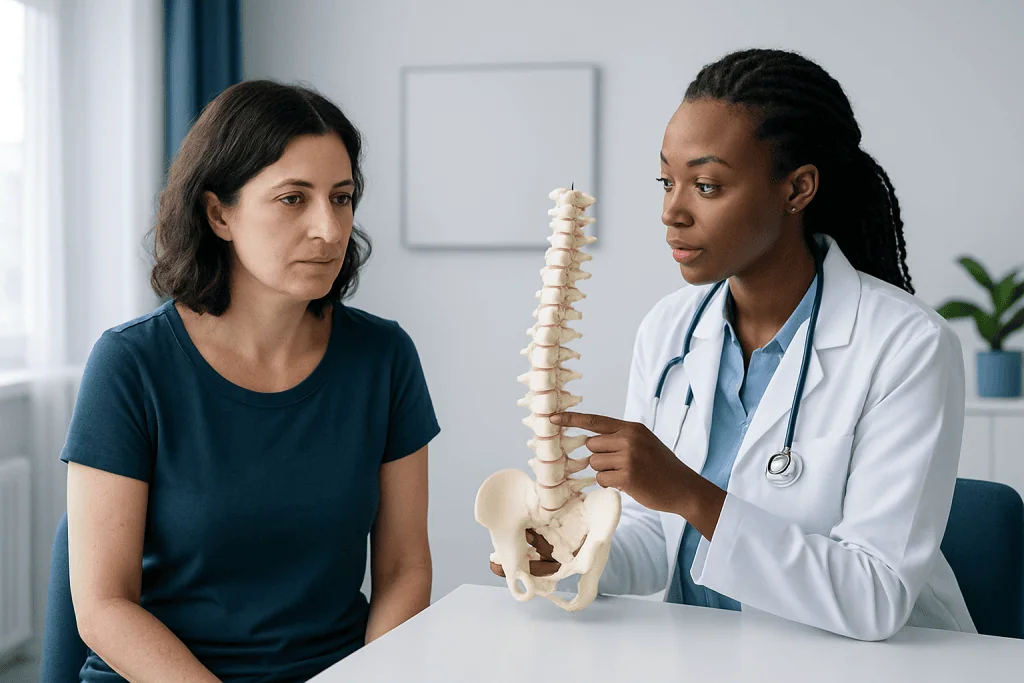
Scoliosis is not a single disease with one cause. The most common form is adolescent idiopathic scoliosis, which means it develops in otherwise healthy children for reasons that are not fully understood. Researchers believe genetics play a role, and scoliosis sometimes runs in families, but no single cause explains every case.
Other forms have clearer underlying reasons. Congenital scoliosis is present from birth and results from vertebrae that did not form normally during fetal development. Neuromuscular scoliosis can occur in people with conditions that affect the brain, spinal cord, or muscles, such as cerebral palsy or muscular dystrophy. In older adults, degenerative scoliosis may develop as discs, joints, and supporting structures of the spine wear down over time.
Risk factors differ by type. Rapid growth during puberty increases the chance that an existing adolescent curve may worsen. Female sex is associated with a higher likelihood of curve progression in idiopathic scoliosis. Family history, certain birth anomalies, connective tissue disorders, and age-related spinal degeneration can also increase risk. When scoliosis is linked to another medical problem, the care team may also assess for related conditions such as spina bifida or other structural spine disorders.
How Scoliosis Is Diagnosed
Diagnosis begins with a medical history and physical examination. A clinician looks at posture, shoulder and hip height, spinal alignment, and whether the trunk rotates during the forward bend test. They may also check leg length, balance, walking pattern, flexibility, and a basic neurologic exam to look for signs that suggest an underlying cause.
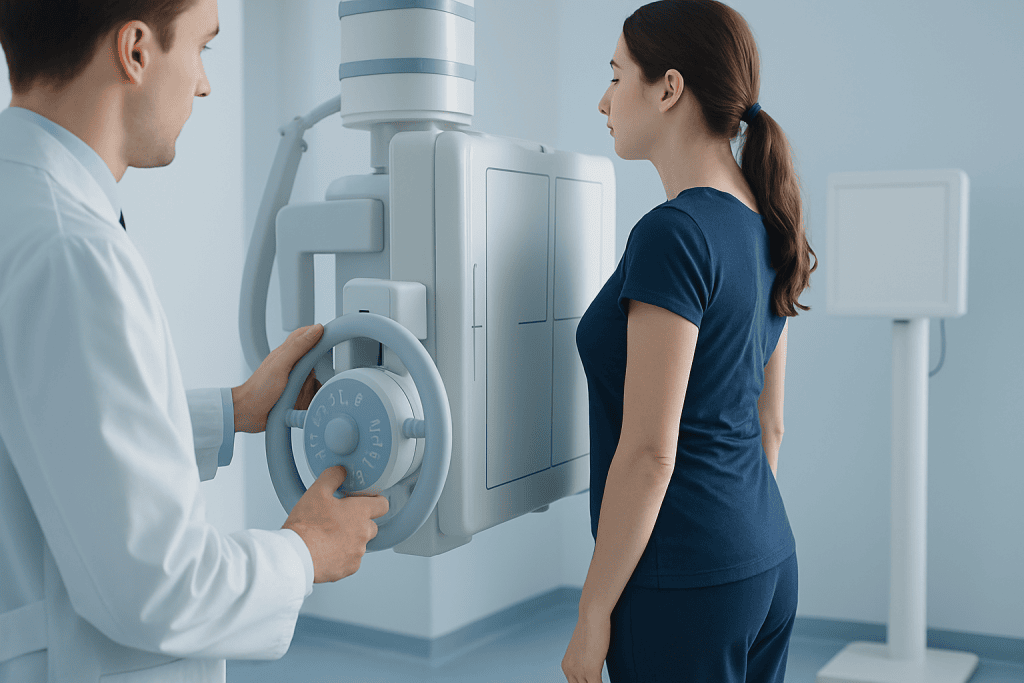
If scoliosis is suspected, imaging is usually needed to confirm it and measure the curve. Standard standing spine X-rays help determine the Cobb angle, which is the main way clinicians describe curve size. The images also show where the curve is located and whether there are unusual vertebral shapes or signs of spinal imbalance.
Further testing is not needed for everyone. Magnetic resonance imaging may be recommended when symptoms are atypical, neurologic findings are present, pain is unusual for age, or surgery is being considered. In selected cases, the specialist may evaluate related issues affecting the spinal cord or surrounding structures, and this can overlap with the workup of spinal deformities. Accurate diagnosis matters because treatment decisions depend on age, remaining growth, curve severity, and whether the scoliosis is likely to progress.
Treatment Options
Treatment is individualized rather than one-size-fits-all. The main questions are whether the curve is mild or severe, whether the person is still growing, whether symptoms are present, and whether the curve is stable or getting worse. For many children with small curves, careful observation is appropriate. Follow-up visits and repeat imaging allow the team to monitor growth and check for progression.
Bracing may be advised for some growing children and adolescents when the goal is to prevent the curve from worsening enough to require surgery. A brace does not usually straighten the spine permanently, but it can be effective at slowing progression in the right patient. Success depends on factors such as curve type, growth remaining, and how consistently the brace is worn.
Physical therapy can support posture, flexibility, core strength, and symptom control, especially in adults or in children who need guidance on safe movement. In some cases, a specialist may recommend physical therapy and rehabilitation as part of a broader plan. Pain relief measures for adults may include exercise, activity modification, and carefully selected medications under medical supervision.
Surgery is usually considered for larger curves, curves that continue to progress despite bracing, or scoliosis that significantly affects function, balance, or appearance. Surgical planning depends on the exact pattern and cause of the deformity. Some patients may benefit from advanced spine surgery to correct and stabilize the spine, often using rods, screws, and bone fusion techniques. For international patients who need evaluation, Acibadem International’s multidisciplinary specialists in JCI-accredited hospitals diagnose and treat scoliosis with individualized care plans.
Prevention and Self-care
There is no proven way to prevent most cases of idiopathic scoliosis because it does not arise from carrying backpacks, sports participation, or ordinary posture habits. Even so, early recognition is valuable. Parents, coaches, school health professionals, and adults noticing persistent body asymmetry can help by seeking assessment before a growing curve becomes more established.
Self-care focuses on protecting comfort, function, and overall spine health. Regular exercise, good general fitness, and maintaining a healthy body weight can support back strength and mobility. Adults with scoliosis often benefit from low-impact physical activity such as walking, swimming, or guided core strengthening. Good sleep support, sensible lifting habits, and smoking avoidance are also helpful for long-term spine health.
It is important not to rely on unproven claims that exercises, braces bought without supervision, or alternative treatments can cure scoliosis on their own. Some people with pain from associated spinal changes may need specialist input, including assessment for related conditions such as herniated disc if nerve symptoms are present. A structured plan with orthopedic or spine professionals is the safest approach.
When to Seek Medical Care
Medical care should be sought if a child or teenager develops uneven shoulders, a rib hump, a tilted waistline, or any visible trunk asymmetry. Evaluation is also wise if there is a strong family history of scoliosis or if a known curve appears to be changing during periods of rapid growth. Early review does not always mean treatment will be needed, but it helps clarify the diagnosis and monitoring plan.
Adults should seek care for persistent back pain, worsening posture, reduced walking tolerance, numbness, weakness, or pain traveling into the legs. These symptoms may reflect adult scoliosis itself or additional spine problems that need attention. Severe or rapidly changing symptoms deserve prompt assessment.
Urgent evaluation is important if scoliosis is accompanied by significant weakness, bowel or bladder changes, unexplained fever, major trauma, or severe breathing difficulty. These features are not typical of uncomplicated scoliosis and may point to another condition. Depending on the findings, a clinician may recommend advanced imaging or referral for orthopedic rehabilitation or surgical consultation.
Frequently asked questions
What is scoliosis in simple terms?
Scoliosis is a condition where the spine curves sideways and may also rotate. The curve can be mild or more pronounced, and it can appear in children, teenagers, or adults.
Can scoliosis go away on its own?
A structural scoliosis curve usually does not disappear on its own. Some mild curves stay stable and only need monitoring, while others may progress and require treatment.
Does scoliosis always cause back pain?
No. Many children and teens with scoliosis have little or no pain, especially in early stages. Back pain is more common in adults, particularly when age-related changes affect the spine.
How is scoliosis treated in children and teens?
Treatment depends on the size of the curve and how much growth remains. Options may include observation, bracing, and sometimes surgery if the curve is large or continues to worsen.
Can exercise cure scoliosis?
Exercise does not usually cure structural scoliosis, but it can improve strength, posture awareness, flexibility, and comfort. A clinician or physical therapist can advise which exercises are appropriate for the individual.
When is scoliosis surgery needed?
Surgery is generally considered when a curve is large, progressing, or causing significant symptoms or imbalance. The decision is individualized and based on age, curve pattern, growth stage, and overall health.
References
- Scoliosis Research Society
- American Academy of Orthopaedic Surgeons
- National Institute of Arthritis and Musculoskeletal and Skin Diseases
- National Health Service
- American Academy of Pediatrics
This article is for general information only and is not a substitute for professional medical advice. Please consult a qualified doctor about your individual situation.
Joint and spine care in Turkey — expert assessment & treatment
JCI-accredited · board-certified surgeons · reply within 24h
Add us as a Preferred Source to see more of our trusted health content across Google Search, AI Overviews and Discover.