Pterygium: A Complete Medical Overview

Pterygium is a benign growth on the eye surface, often related to UV light and environmental irritation. Common symptoms include redness, dryness, a gritty feeling, and sometimes blurred vision.
Key Takeaways
- Pterygium is a benign growth on the eye surface, often related to UV light and environmental irritation.
- Common symptoms include redness, dryness, a gritty feeling, and sometimes blurred vision.
- Mild cases may improve with lubricating drops and eye protection, while larger or vision-affecting growths may need surgery.
- Prevention focuses on UV-blocking sunglasses, hats, and reducing exposure to wind, dust, and dry conditions.
- An eye specialist can confirm the diagnosis and decide whether monitoring or treatment is the best approach.
Pterygium is a common, noncancerous growth of tissue on the white part of the eye that can extend toward the cornea. It is often linked to long-term sun, wind, and dust exposure, and while many cases are mild, some need medical treatment to relieve symptoms or protect vision.
Overview
Pterygium is a wedge-shaped growth of fleshy tissue that starts on the conjunctiva, the clear membrane covering the white of the eye, and may gradually grow onto the cornea. It is noncancerous, but it can become uncomfortable, affect appearance, and in some cases interfere with vision if it extends toward the center of the cornea.
This condition is sometimes called “surfer’s eye” because it is more common in people who spend a lot of time outdoors in sunny, windy, dusty, or dry environments. Although it can affect one or both eyes, it often develops more on the side of the eye closest to the nose.
Pterygium does not always need active treatment. Many people only need symptom relief and regular eye checks, while others may benefit from procedures if the growth becomes large, repeatedly inflamed, or starts changing the shape of the cornea in a way that affects vision.
What pterygium feels and looks like
A pterygium may first be noticed as a small, raised patch on the white part of the eye. Over time, it can look more visible, pink, or slightly thickened. Some people are mainly concerned by its appearance, while others notice persistent irritation.
Symptoms vary from person to person. Common complaints include:
- Redness of the eye
- A gritty, sandy, or burning sensation
- Dryness or irritation
- Itching or mild discomfort
- Feeling like something is in the eye
- Blurred vision if the cornea is affected
Symptoms may flare in dry weather, air-conditioned environments, after long periods outdoors, or when exposed to smoke, wind, or dust. A pterygium can also become inflamed from time to time, causing more noticeable redness and sensitivity.
If the growth pulls on the tear film or changes the cornea’s curvature, a person may develop astigmatism or fluctuating vision. These changes can occur gradually, which is one reason regular eye examinations are helpful when pterygium is present.
Causes and risk factors

The exact cause of pterygium is not completely understood, but long-term ultraviolet (UV) light exposure is considered one of the strongest contributing factors. This helps explain why it is seen more often in people who live in sunny climates or work outdoors for many years.
Environmental irritation also appears to play an important role. Wind, dust, sand, smoke, and dry air can repeatedly stress the eye surface. Chronic irritation may contribute to inflammation and abnormal tissue growth over time.
Risk factors include:
- Frequent outdoor work or sports
- Living in regions with strong sunlight
- Long-term exposure to wind, dust, or dry conditions
- Limited use of UV-protective sunglasses or hats
- Chronic eye surface irritation or dryness
Pterygium can sometimes be confused with other eye surface conditions. For example, a yellowish bump that does not grow onto the cornea may be a pinguecula, which is related but different. Because several eye surface conditions can look similar, an eye specialist should make the diagnosis.
How doctors diagnose pterygium
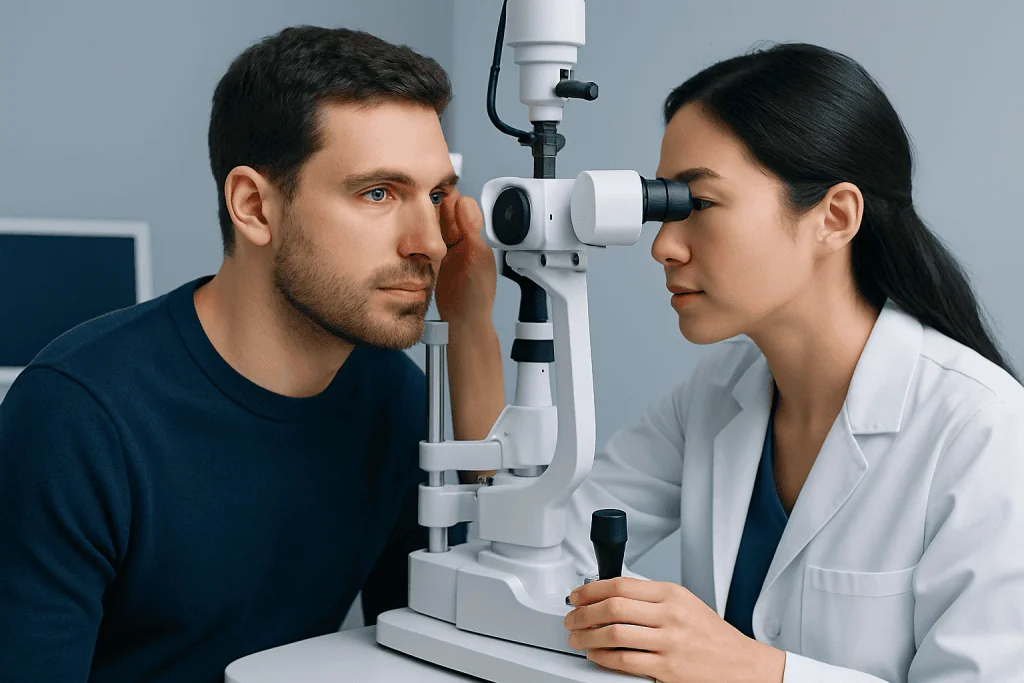
Pterygium is usually diagnosed during a routine eye examination. An ophthalmologist or eye specialist examines the front of the eye with a slit lamp, which is a microscope with a bright light that allows detailed assessment of the conjunctiva and cornea.
The doctor will look at the size, thickness, location, and extent of the growth. They may also check whether it is causing inflammation, affecting the tear film, or extending toward the visual axis, the central part of the cornea that is most important for clear sight.
Vision testing is also important. If the pterygium is large enough to alter the shape of the cornea, the doctor may measure refractive error or corneal curvature. This helps identify astigmatism or vision changes caused by the growth rather than by another eye problem.
In some cases, doctors also assess for related dry eye or irritation. If symptoms are persistent, a full eye examination can help rule out other causes of redness, discomfort, or blurred vision and guide the most appropriate treatment plan.
Treatment options and when surgery is considered
Treatment depends on symptoms, the size of the pterygium, and whether it affects vision. Mild cases are often managed conservatively. Artificial tears or lubricating eye drops may reduce dryness, burning, and the gritty sensation. During flare-ups, a doctor may recommend short-term anti-inflammatory treatment, but these medications should be used under medical supervision.
Avoiding triggers is also part of treatment. Protective eyewear, reducing exposure to wind and dust, and taking breaks from dry or harsh environments can make a noticeable difference. For many people, these steps keep symptoms manageable without the need for a procedure.
Surgery may be recommended if the pterygium grows toward the center of the cornea, causes significant or repeated irritation, affects vision, interferes with contact lens wear, or is a major cosmetic concern. The goal of surgery is to remove the abnormal tissue while helping preserve a smooth, healthy eye surface. In suitable cases, eye surgery may be discussed as the next step after medical treatment has been tried.
Even after removal, pterygium can come back. Modern surgical techniques are designed to lower the chance of recurrence, often by covering the area with healthy tissue from the eye surface. Recovery and follow-up are important, and the treating ophthalmologist will explain how to protect the eye during healing.
Prevention and daily self-care
Prevention focuses on reducing the eye’s exposure to the factors most strongly linked to pterygium. The most helpful everyday step is wearing sunglasses that block UV rays. Wraparound styles can provide extra protection from side exposure, wind, and dust.
A wide-brimmed hat can further reduce direct sunlight reaching the eyes. This can be especially useful for people who spend many hours outdoors, such as drivers, athletes, gardeners, sailors, or construction workers.
Simple self-care habits can also improve comfort if pterygium is already present:
- Use lubricating drops if the eyes feel dry or irritated
- Avoid rubbing the eyes
- Protect the eyes in dusty, smoky, or windy settings
- Take breaks in dry indoor environments and stay well hydrated
- Follow prescribed treatment exactly as advised by an eye doctor
People with ongoing eye surface irritation or dry eye may need additional support to keep the eyes comfortable. Treating underlying dryness can help reduce symptoms and improve day-to-day quality of life, even though it does not remove the growth itself.
When to seek medical care
Medical advice should be sought if a growth on the eye is new, becoming more noticeable, or causing ongoing discomfort. An eye doctor can confirm whether it is pterygium and check whether it is affecting the cornea or vision.
Prompt assessment is especially important if there is blurred vision, increasing redness, recurrent inflammation, a rapidly enlarging growth, or difficulty wearing contact lenses. Sudden eye pain, a major drop in vision, or marked light sensitivity should also be evaluated quickly, as these symptoms can point to other eye conditions that need urgent care.
People who have repeated irritation despite using lubricating drops should not assume the problem is harmless. A professional assessment can identify whether symptoms are due to pterygium alone or whether another condition is contributing. When specialist care is needed, Acibadem International’s multidisciplinary eye specialists in JCI-accredited hospitals diagnose and treat eye surface conditions, including pterygium, for international patients.
Frequently asked questions
Is pterygium dangerous?
Pterygium is usually not dangerous and is not a cancer. However, it can become uncomfortable and may affect vision if it grows onto the cornea or changes the shape of the eye surface. That is why regular eye checks are important.
Can pterygium go away on its own?
Pterygium does not usually disappear on its own. Mild cases may remain stable for long periods, especially when the eyes are protected from sun and irritation. Treatment often focuses on symptom control unless the growth progresses.
What is the main cause of pterygium?
Long-term exposure to ultraviolet light is considered one of the main contributing factors. Wind, dust, dry air, and chronic eye irritation may also increase the risk. Often, several environmental factors act together over time.
When is surgery needed for pterygium?
Surgery may be considered if the growth affects vision, keeps getting inflamed, causes persistent discomfort, or grows toward the center of the cornea. Some people also choose surgery for significant cosmetic reasons. The decision should be made with an ophthalmologist after a careful eye examination.
Can pterygium come back after surgery?
Yes, pterygium can recur after removal. The chance of recurrence depends on factors such as the surgical method used, healing, and continued exposure to sun and irritation. Careful follow-up and eye protection are important after treatment.
How can pterygium be prevented?
The best prevention is to protect the eyes from UV light and environmental irritation. Wearing UV-blocking sunglasses, using a hat outdoors, and reducing exposure to wind and dust can help. Lubricating drops may also support comfort in dry conditions.
This article is for general information only and is not a substitute for professional medical advice. Please consult a qualified doctor about your individual situation.
Explore treatments in Turkey — costs, top hospitals & a free quote
JCI-accredited · board-certified surgeons · reply within 24h
Add us as a Preferred Source to see more of our trusted health content across Google Search, AI Overviews and Discover.

More from the Health Library

Night Blindness: What Patients Need to Know

Tamiflu: What Patients Need to Know

Plateauing: A Complete Medical Overview

What are gyno? A Doctor-Reviewed Answer

Cholecystostomy: A Complete Medical Overview