Night Blindness: What Patients Need to Know

Night blindness means reduced vision in dim light, not total blindness at night. Common causes include cataracts, uncorrected nearsightedness, retinal disorders, and vitamin A deficiency.
Key Takeaways
- Night blindness means reduced vision in dim light, not total blindness at night.
- Common causes include cataracts, uncorrected nearsightedness, retinal disorders, and vitamin A deficiency.
- An eye examination can help identify the underlying cause and guide treatment.
- Treatment depends on the reason for symptoms and may involve glasses, nutrition support, or specialist eye care.
- Sudden worsening, trouble driving at night, or vision loss should be assessed by a doctor.
Night blindness is difficulty seeing in low light, such as at dusk, in dim rooms, or while driving at night. It is a symptom rather than a disease itself, and it can be linked to treatable vision problems, retinal conditions, or nutritional deficiency.
Overview: what night blindness means
Night blindness is the common term for difficulty seeing in low-light settings. A person with night blindness may struggle to move around in dark rooms, adapt after entering a dim space, or see clearly while driving at night. It does not usually mean complete inability to see in darkness; rather, it describes reduced visual function when light is limited.
Doctors may use the term nyctalopia. Night blindness is not a diagnosis on its own. Instead, it is a symptom that can happen for several reasons, including common eye problems, retinal diseases, or, less often, nutritional deficiency. Because the causes vary, a careful eye assessment is important.
Many patients first notice night blindness in everyday situations. Street signs may be harder to read, glare from headlights may seem more intense, or steps and curbs may be difficult to judge in the evening. Some people also find that their eyes take longer than expected to adjust when moving from a bright place into a darker one.
Symptoms and how it may affect daily life
The main symptom of night blindness is poor vision in dim lighting. This may be mild at first and become more noticeable over time. Some people only realize there is a problem when driving at night becomes stressful or unsafe.
Other symptoms can appear alongside night blindness depending on the cause. These may include blurred vision, increased sensitivity to glare, reduced side vision, trouble recognizing faces in low light, or slower adjustment when lights are turned down. If cataracts are involved, vision may also seem cloudy. If a retinal condition is present, there may be progressive changes in peripheral or central vision.
- Difficulty driving after dark
- Trouble seeing in movie theaters or dim restaurants
- Slow adaptation from bright to dark environments
- Problems walking in poorly lit areas
- Increased glare from headlights or streetlights
Symptoms can affect independence, work, and safety. For this reason, patients should not ignore ongoing night vision problems, especially if they are worsening or interfering with routine activities.
Causes and risk factors

Night blindness can develop when the eye has trouble using limited light effectively. The retina, especially rod cells, plays a key role in seeing in dim conditions. Anything that affects these structures or prevents light from reaching the retina clearly may lead to symptoms.
Common causes include uncorrected nearsightedness, cataracts, and some retinal disorders. Cataracts can cloud the eye’s natural lens and reduce the amount and quality of light reaching the retina. Retinal conditions, including inherited disorders such as retinitis pigmentosa, can impair dark adaptation and night vision. In some cases, diseases affecting the cornea or previous refractive surgery may also contribute to glare and poor low-light vision.
Vitamin A deficiency is another recognized cause because vitamin A is important for normal retinal function. This cause is less common in many settings but may be seen in people with poor nutrition, certain digestive disorders that reduce nutrient absorption, or after some types of gastrointestinal surgery. Less often, glaucoma medications that constrict the pupil, diabetes-related eye disease, or other retinal problems may also be involved.
- Increasing age
- Family history of inherited retinal disease
- Cataracts or other lens changes
- Uncorrected refractive errors such as myopia
- Poor nutrition or conditions affecting nutrient absorption
- Existing eye disease, including retinal disorders
How doctors diagnose night blindness
Diagnosis begins with a detailed history. A doctor will ask when symptoms started, whether they are stable or worsening, and if they affect one eye or both. They may also ask about family history of eye disease, nutrition, medications, and any associated symptoms such as peripheral vision loss, glare, or daytime blurred vision.
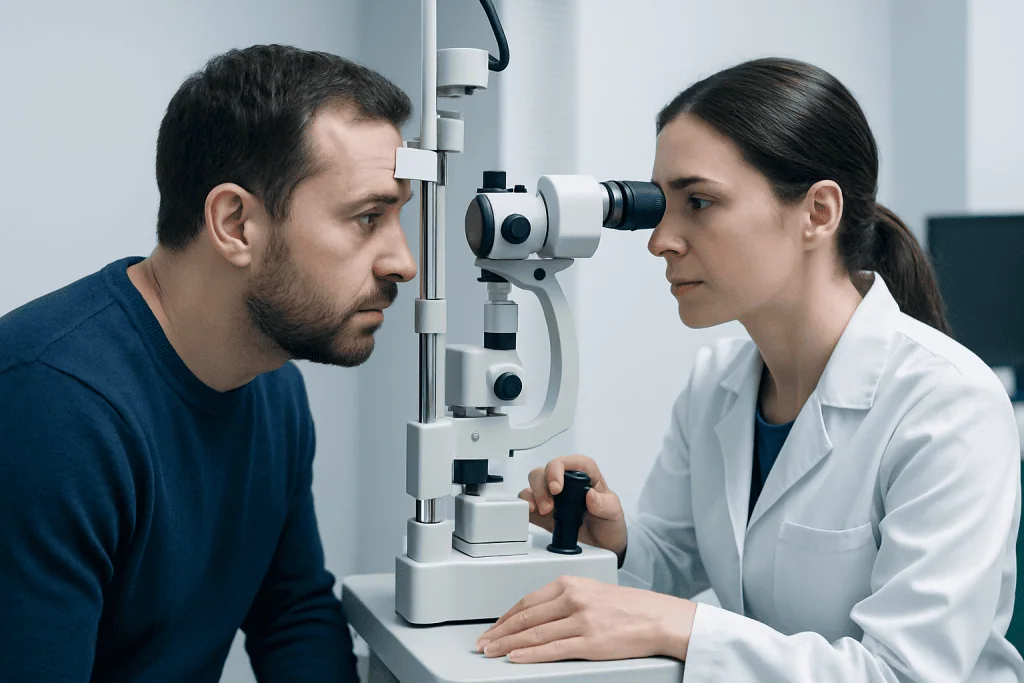
A comprehensive eye examination usually includes visual acuity testing, refraction to check whether glasses are needed, slit-lamp examination of the front of the eye, and examination of the retina after dilating the pupils. These steps help identify common causes such as cataracts, retinal disease, or refractive error. If a retinal disorder is suspected, the patient may need advanced retinal imaging or functional tests.
Depending on the case, doctors may also recommend blood tests to look for nutritional deficiency or other health issues. If symptoms suggest an inherited retinal condition, genetic counseling or further specialist evaluation may be discussed. Patients with significant visual symptoms may be referred for more specialized eye examination and retinal assessment to clarify the cause.
Treatment options and what to expect
Night blindness treatment depends on the underlying cause. If the problem is due to uncorrected nearsightedness, updated glasses or contact lenses may improve night vision. When cataracts are responsible, doctors may discuss whether cataract surgery is appropriate. If vitamin A deficiency is identified, treatment focuses on correcting the deficiency under medical guidance and addressing any reason for poor absorption or intake.
When night blindness is related to retinal disease, treatment may be more complex. Some inherited retinal conditions cannot be reversed, but regular follow-up can help monitor progression, support visual function, and guide daily safety measures. Other retinal disorders may need targeted care from an ophthalmologist. In selected cases, doctors may evaluate the retina with specialized testing and imaging similar to care used for retina treatment.
Even when a cure is not possible, management can still make a meaningful difference. Better lighting at home, reducing glare, using the correct prescription lenses, and avoiding driving in poorly lit conditions can improve confidence and safety. Treatment plans are individualized, and patients should follow their doctor’s advice rather than self-treating with supplements or over-the-counter products.
Self-care, prevention, and living with night vision problems
Not all causes of night blindness can be prevented, especially inherited retinal disorders. Still, there are sensible steps that may help protect eye health and reduce risk from reversible causes. Regular eye checkups are important, especially for older adults, people with diabetes, and anyone who notices new visual changes.
A balanced diet that includes vitamin A and other nutrients that support eye health may be helpful. Foods such as eggs, dairy products, leafy green vegetables, orange-colored vegetables, and fish can be part of an overall healthy diet. Patients should not start high-dose vitamin supplements without medical advice, as unnecessary supplementation can be harmful.
Practical changes can also make daily life easier. These include improving home lighting, using handrails in dim stairways, cleaning glasses regularly, and planning travel during daylight if night driving feels difficult. If glare is a problem, anti-reflective lenses may help some people, though they do not treat the underlying cause.
For patients who have an identified eye condition, keeping follow-up appointments matters. Monitoring can help doctors adjust treatment, assess whether symptoms are changing, and support safe daily activities.
When to seek medical care
A doctor should assess night blindness if it is new, getting worse, or affecting routine tasks such as driving, walking outside after dark, or moving around safely at home. Medical attention is also important if the symptom occurs with blurred vision, narrowing side vision, eye pain, flashes, floaters, or sudden changes in sight.
Urgent assessment is especially important when symptoms appear suddenly or are accompanied by rapid vision loss. While some causes are gradual and manageable, others may need prompt specialist care. An ophthalmologist can help determine whether the problem is related to the lens, retina, nutrition, or another part of eye health.
Near the end of the care pathway, some patients may need coordinated support from ophthalmology, nutrition, or other specialties. Acibadem International’s multidisciplinary specialists and JCI-accredited hospitals diagnose and treat eye conditions for international patients when further evaluation is needed.
Frequently asked questions
Is night blindness the same as being blind at night?
No. Night blindness usually means difficulty seeing in dim light, not complete absence of vision at night. Many people with this symptom can still see, but their eyes do not adapt well to low-light conditions.
What is the most common cause of night blindness?
Several causes are common, including cataracts, uncorrected nearsightedness, and retinal disorders. The most likely cause depends on the person's age, eye health, medical history, and whether symptoms are gradual or sudden.
Can vitamin A deficiency cause night blindness?
Yes. Vitamin A is needed for normal retinal function, especially in low light. However, not everyone with night blindness has a vitamin A deficiency, so a doctor should identify the cause before treatment begins.
Can night blindness be treated?
Often, yes, if the underlying cause is treatable. For example, updated glasses, cataract treatment, or correction of a nutritional deficiency may improve symptoms. Some inherited retinal disorders may not be reversible, but monitoring and supportive care can still help.
Should someone with night blindness stop driving at night?
If night vision problems make driving feel unsafe, it is wise to avoid driving after dark until a doctor has assessed the issue. Safety should come first, especially if glare, blurred vision, or difficulty judging distance is present.
How is night blindness diagnosed?
Doctors diagnose it through a medical history and a full eye examination. Additional tests may include vision testing, retinal examination, imaging, and sometimes blood tests if nutritional deficiency or another medical cause is suspected.
This article is for general information only and is not a substitute for professional medical advice. Please consult a qualified doctor about your individual situation.
Explore treatments in Turkey — costs, top hospitals & a free quote
JCI-accredited · board-certified surgeons · reply within 24h
Add us as a Preferred Source to see more of our trusted health content across Google Search, AI Overviews and Discover.

More from the Health Library

Winking of Left Eye — Explained by Medical Evidence, Not Myths
Intubated: What Patients Need to Know
Adrenaline: What Patients Need to Know

Hives on Black Skin: An Evidence-Based Guide for Patients

Nightshade Vegetables: An Evidence-Based Guide for Patients