Dermatologist: An Evidence-Based Guide for Patients

A dermatologist manages medical, surgical, and preventive care for skin, hair, and nail conditions. Common reasons to see a dermatologist include acne, eczema, psoriasis, suspicious moles, chronic rashes, and hair or nail changes.
Key Takeaways
- A dermatologist manages medical, surgical, and preventive care for skin, hair, and nail conditions.
- Common reasons to see a dermatologist include acne, eczema, psoriasis, suspicious moles, chronic rashes, and hair or nail changes.
- Early assessment can improve comfort, reduce scarring, and help detect serious conditions such as skin cancer sooner.
- Diagnosis may involve a skin examination, dermoscopy, patch testing, blood tests, or a biopsy depending on the problem.
- Treatment plans often combine skin-care guidance, prescription medicines, procedures, and long-term follow-up when needed.
A dermatologist is a doctor who diagnoses and treats conditions affecting the skin, hair, nails, and related mucous membranes. They help with common concerns such as acne, eczema, rashes, and hair loss, and they also check for signs of skin cancer and other less common diseases.
Overview: what a dermatologist does
A dermatologist is a medical doctor trained to diagnose, treat, and help prevent diseases of the skin, hair, nails, and sometimes the lining of the mouth and genitals. In practical terms, this means they care for both common conditions, such as acne and dandruff, and more complex disorders, such as autoimmune skin disease or skin cancer.
Dermatology combines careful visual examination with medical judgment. Because the skin can reflect internal health as well as local irritation or infection, a dermatologist often looks at patterns, timing, symptoms, family history, medicines, and lifestyle factors before deciding on the most likely cause.
Many people think of a dermatologist only for cosmetic concerns, but their role is much broader. They treat itching, rashes, pigment changes, chronic wounds, hair shedding, nail problems, allergic reactions, infections, and suspicious growths. They also advise on sun protection, skin surveillance, and strategies to reduce flare-ups of long-term conditions.
What conditions can a dermatologist treat?
Dermatologists treat a wide range of conditions that vary from temporary irritation to chronic inflammatory disease. Common examples include acne, rosacea, eczema, contact dermatitis, fungal infections, warts, hives, psoriasis, excessive sweating, hair loss, brittle or discolored nails, and cysts.
They also assess growths such as moles, skin tags, and lesions that change in size, shape, or color. This is important because some skin changes are harmless while others may need closer follow-up or testing for skin cancer. A dermatologist may also recognize signs of systemic illnesses that first appear on the skin.
Some conditions overlap with other specialties, but the dermatologist usually leads skin-specific diagnosis and treatment. Examples include chronic itching without a clear cause, recurring infections, medication-related rashes, and inflammatory conditions such as psoriasis or eczema. In children and adults alike, specialist review can be helpful when symptoms are persistent, severe, or affecting sleep, work, or confidence.
- Acne, acne scars, and rosacea
- Eczema, contact dermatitis, and hives
- Psoriasis and other inflammatory skin diseases
- Fungal infections, viral warts, and bacterial skin infections
- Hair loss, scalp disorders, and nail changes
- Suspicious moles, non-healing sores, and skin cancer screening
Signs that suggest a dermatology visit may help

Not every skin change needs specialist care, but some symptoms are more likely to benefit from a dermatologist’s expertise. A rash that does not improve, acne that is leaving marks, severe itching, painful cracking, or recurring flares can all be good reasons to book an appointment. These problems may need a more precise diagnosis or prescription treatment.
Changes in moles or spots should also be checked. Warning features include asymmetry, irregular borders, uneven color, a growing diameter, or a lesion that evolves over time. Bleeding, crusting, or a sore that does not heal deserves medical review as well, especially in people with high sun exposure or a personal or family history of skin cancer.
Hair and nail symptoms are another common reason to seek help. Sudden hair shedding, patchy hair loss, scalp scaling, nail thickening, discoloration, separation from the nail bed, or painful inflamed skin around the nails can all have several possible causes. Early assessment may make treatment more effective and help avoid unnecessary products that can worsen irritation.
How a dermatologist evaluates skin, hair, and nail problems
A dermatology visit usually begins with a focused history and close examination. The dermatologist may ask when the problem started, whether it itches or hurts, what makes it better or worse, what treatments have already been tried, and whether there is any family history of allergies, autoimmune disease, or skin cancer.
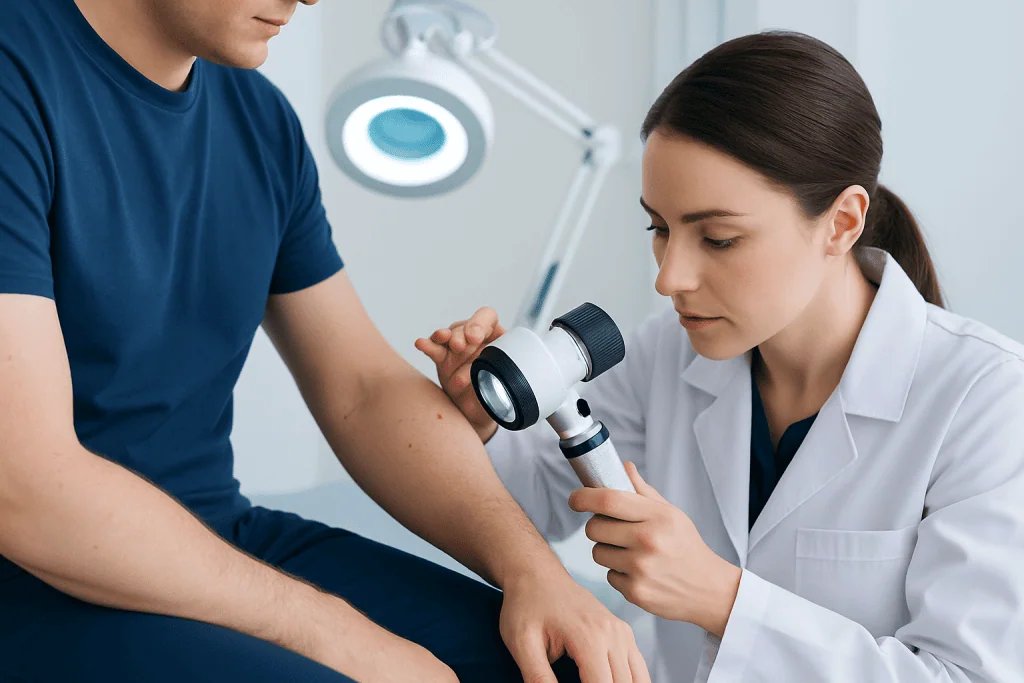
The skin examination may include the scalp, nails, and sometimes the whole body if the concern could affect multiple areas. A handheld magnifying device called a dermatoscope is often used to look more closely at pigmented lesions and other changes. Photographs may be taken for monitoring over time, especially when tracking moles, rashes, or response to treatment.
Additional tests are selected only when they are likely to help. These may include a skin swab, scraping for fungus, patch testing for contact allergy, blood tests, or a biopsy. A biopsy means taking a small sample of skin under local anesthesia so it can be examined under a microscope. When needed, dermatologists may coordinate care with pathology, allergy, rheumatology, endocrinology, or oncology teams.
Treatment options a dermatologist may recommend
Treatment depends on the diagnosis, the severity of symptoms, the body area involved, and the person’s age, medical history, and preferences. Many conditions improve with a combination of gentle skin care and targeted medicines. These may include moisturizers, medicated shampoos, creams or ointments, oral medicines, and advice on avoiding triggers such as fragrances, harsh cleansers, or prolonged sun exposure.
For acne, eczema, psoriasis, and some infections, the goal is often to control inflammation, restore the skin barrier, and prevent recurrence. If scarring, persistent lesions, or uncertain diagnosis are concerns, in-office procedures may be useful. Depending on the problem, a dermatologist may discuss dermatology care, minor surgical removal of a lesion, cryotherapy for warts, drainage of cysts, or a diagnostic skin biopsy.
Suspicious or confirmed skin cancers may need a more structured treatment plan, ranging from local excision to wider multidisciplinary care. In selected cases, patients may be referred for skin cancer treatment or coordinated evaluation through a broader oncology program. The aim is to match treatment intensity to the condition while protecting both health and quality of life.
Prevention and self-care between appointments
Healthy skin habits can reduce irritation, support treatment, and lower the risk of future problems. Daily sun protection is one of the most important steps. Broad-spectrum sunscreen, shade, protective clothing, and avoiding tanning devices all help reduce sun damage and lower the risk of skin cancer.
For people with sensitive or eczema-prone skin, simple routines are often best. Fragrance-free cleansers, regular moisturizing, lukewarm showers instead of very hot water, and avoidance of known irritants can help protect the skin barrier. Those with acne may benefit from non-comedogenic skin-care and hair-care products, while people with scalp symptoms should avoid overusing harsh styling products or strong anti-dandruff treatments without guidance.
Self-checks are also useful. Looking at the skin regularly can help a person notice new moles, changing spots, persistent sores, or unusual hair and nail changes. It can be helpful to take clear photos in consistent lighting to monitor change over time, but self-monitoring should not replace professional evaluation when a lesion appears suspicious or symptoms are worsening.
When to seek medical care
A prompt medical review is appropriate if a mole or spot is changing, a sore is not healing, a rash is widespread or painful, or itching is severe enough to disturb sleep. Medical attention is also important for blistering, signs of infection such as increasing redness or pus, sudden swelling of the lips or face, or a skin reaction that starts soon after a new medicine.
People should also consider seeing a dermatologist when symptoms are affecting daily life, confidence, school, or work, even if the problem is not dangerous. Early treatment may reduce discomfort, prevent scarring, and shorten the time spent trying products that are unlikely to help.
For international patients who need specialist evaluation, Acibadem International’s multidisciplinary specialists and JCI-accredited hospitals diagnose and treat a wide range of dermatologic conditions, from chronic inflammatory disease to suspicious skin lesions, with coordinated care when other specialties are involved.
Frequently asked questions
What is a dermatologist?
A dermatologist is a doctor who specializes in conditions affecting the skin, hair, nails, and related tissues. They diagnose common and complex problems, recommend treatment, and help monitor changes that may need further testing.
Do you need a dermatologist for acne?
A dermatologist can be very helpful for acne that is severe, painful, scarring, or not improving with over-the-counter care. Specialist treatment may reduce inflammation more effectively and help prevent long-term marks or discoloration.
Can a dermatologist check moles for skin cancer?
Yes. Dermatologists are trained to examine moles and other lesions, often using dermoscopy to look more closely at suspicious features. If needed, they may recommend a biopsy to confirm whether a lesion is benign or cancerous.
What happens at a first dermatology appointment?
The dermatologist usually asks about symptoms, medical history, current medicines, skin-care products, and any family history of skin disease. They then examine the affected area and may check other areas of skin, hair, or nails depending on the concern.
Should hair loss be evaluated by a dermatologist?
Yes, especially if hair loss is sudden, patchy, associated with scalp symptoms, or causing distress. Hair shedding and thinning can have many causes, and a dermatologist can help identify whether the issue is inflammatory, hormonal, nutritional, genetic, or related to stress or medication.
When should a rash be seen by a doctor?
A rash should be assessed if it is persistent, spreading, very itchy, painful, blistering, or associated with fever or signs of infection. A doctor should also evaluate a rash that develops after starting a new medication.
References
- American Academy of Dermatology
- National Cancer Institute
- American Cancer Society
- National Eczema Association
- British Association of Dermatologists
This article is for general information only and is not a substitute for professional medical advice. Please consult a qualified doctor about your individual situation.
Hair transplant in Turkey — costs, graft counts & a free assessment
JCI-accredited · board-certified surgeons · reply within 24h
Add us as a Preferred Source to see more of our trusted health content across Google Search, AI Overviews and Discover.